Shop on Lazada
EXEDY products
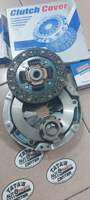
Mitsubishi Mirage G4/Hatchback 12up Clutch kit set (PlateLiningRelease bearing ) Exedy brand MBC650TYD014TKS50-33K
₱6,200.00
Buy on Lazada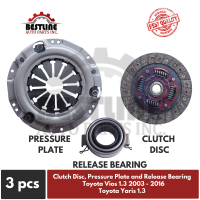
Clutch Disc Exedy Pressure Plate Exedy Release Bearing GMB for Toyota Yaris 1.3 & Toyota Vios 2003 to 2016
₱3,000.00
Buy on Lazada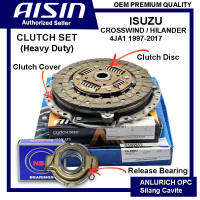
CLUTCH SET ISUZU CROSSWIND/HILANDER 4JA1 2001-2015 (CLUTCH COVERCLUTCH DISCRELEASE BEARING)
₱5,995.00
Buy on Lazada
Suzuki DA63DA64DA17 K6A F6A Clutch cover (Pressure plate) SZC537 exedy brand made in japan
₱1,900.00
Buy on Lazada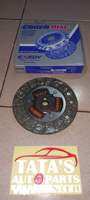
clutch disc /clutch lining (Exedy brand )made in japan suzuki f6a/K6a Da63 DA64 every/multicabs/transformer/big eye/
₱1,600.00
Buy on Lazada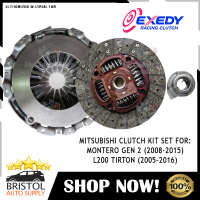
EXEDY CLUTCH KIT FOR Montero/Strada 4d56U (2008-2015)(Pressure Plate Clutch Disc Release Bearing)
₱8,999.00₱10,999.00
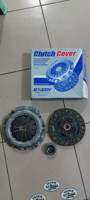
Clutch kit set Suzuki APV all (PlateliningRelease bearing )Exedy brand made in japan
₱5,900.00
Buy on Lazada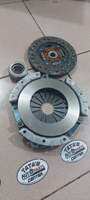
Mitsubishi Lancer 1993-2001 1.6 Glxi Clutch kit set (plateLiningrelease bearing )exedy brand made in japan
₱3,900.00
Buy on LazadaAbout EXEDY
Overview
EXEDY Corporation is a Japanese manufacturer of automotive and drivetrain components best known for its clutches, torque converters, and power-transmission technologies. Established in July 1950 as Daikin Manufacturing Co., Ltd., the company adopted the EXEDY name in 1995.1 It currently operates through 59 companies across 26 countries and employs more than 14,000 people worldwide.1
While widely recognised in the Philippines as an aftermarket replacement and performance clutch brand, EXEDY also functions as an original equipment (OE) supplier to vehicle manufacturers globally.1 Its product portfolio spans manual and automatic transmissions, motorcycles, construction machinery, agricultural vehicles, and industrial applications.1
Quick facts
| Category | Information |
|---|---|
| Official name | EXEDY Corporation |
| Former name | Daikin Manufacturing Co., Ltd. |
| Founded | July 1950 |
| Headquarters | Neyagawa, Osaka, Japan |
| Industry | Automotive / drivetrain components |
| Main products | Clutches, torque converters, clutch packs, drivetrain components |
| Other markets | Motorcycles, construction machinery, agricultural machinery, industrial applications |
| Global presence | 59 companies in 26 countries |
| Employees | 14,137 (as of 31 March 2026) |
| FY2025 consolidated sales | ¥303.9 billion |
| President & CEO | Tetsuya Yoshinaga |
| Corporate capital | ¥8.284 billion |
Core technology and business scope
EXEDY is fundamentally a drivetrain technology company. Its components are positioned between the engine or motor and the transmission or wheels, controlling how power is transferred. Key products include manual-transmission clutches, clutch discs and covers, dual-mass flywheel damping technologies, torque converters, automatic-transmission clutch components, motorcycle clutches, and drivetrain parts for construction, industrial, and agricultural vehicles.1
The company’s technical capabilities centre on three core disciplines:
- Friction: Development of friction materials and surfaces capable of reliable power transmission under heat, pressure, wear, repeated engagement, high rotational speeds, and varying torque loads.
- Vibration: Damping technologies designed to absorb or control engine and drivetrain vibration, improving driving comfort, noise characteristics, durability, and shift quality.
- Fluid: Analysis and control of fluid behaviour inside torque converters, which transfer engine power through hydraulic means rather than mechanical contact alone.1
History
Foundation and early development (1950s)
EXEDY traces its origins to July 1950, when Daikin Manufacturing Co., Ltd. was established in Japan with a focus on clutch manufacturing.1 During this decade, the company developed anti-vibration clutch discs, coil-spring-type clutch covers, and other components aimed at reducing drivetrain rattle and improving operational smoothness.1
Expansion and internationalisation (1960s–1970s)
In 1963, the headquarters relocated to Neyagawa City, Osaka. The company began establishing an international presence in 1967 by sending personnel to Chicago, United States.1 Technological developments during this period included diaphragm-spring clutch covers, semi-automatic clutch-control systems, and additional vibration-control technologies.
The 1970s marked a significant diversification beyond conventional manual clutches. Daikin RM (now DYNAX) was established in 1973, followed by the commencement of torque converter production for automatic transmissions in 1975. Production of powershift transmissions for construction machinery and industrial vehicles began in 1976, and Daikin Clutch U.S.A. was established in 1977.1
Global growth and rebranding (1980s–1990s)
International expansion accelerated during the 1980s and 1990s. Indonesia became the site of EXEDY’s first overseas manufacturing base in 1985.12 The company also developed Silent Disc technology during this period to enhance drivetrain noise and vibration isolation.1
In 1995, Daikin Manufacturing changed its corporate name to EXEDY Corporation, marking the beginning of its modern identity. The company subsequently listed on the Tokyo Stock Exchange and Osaka Securities Exchange in 1996 and 1997.1
Recent milestones
EXEDY reached cumulative production of 100 million torque converters in 2014 and 300 million clutch discs in 2015.1 In 2009, it supplied a dry-type multi-plate clutch for FIAT YAMAHA MotoGP, demonstrating its capabilities in high-performance motorcycle applications.1 Throughout the 2020s, the company has expanded into hybrid damper technology, EV drive systems, Universal e-Drive Units, motors for drones and assistive mobility devices, and wide-range EV drive systems.1
Product categories
Manual transmission
Manual transmission components remain the product category most closely associated with EXEDY. Offerings include clutch discs, covers, assemblies, dampers, friction materials, and performance clutch systems. These components allow the engine and manual gearbox to be temporarily separated for smooth gear selection.1
Automatic transmission
EXEDY produces torque converters, clutch packs, lock-up mechanisms, and related friction components for automatic transmissions. Torque converter production commenced in 1975, with cumulative output reaching 100 million units by 2014.1
Motorcycle clutches
The company manufactures clutch systems for both conventional and high-performance motorcycles, including the dry-type multi-plate clutch supplied for FIAT YAMAHA MotoGP in 2009.1
Industrial and construction machinery
Beyond passenger vehicles, EXEDY supplies drivetrain components for construction equipment, industrial machinery, agricultural vehicles, powershift transmissions, and other specialised applications.1
OEM and aftermarket presence
EXEDY operates as both an OE supplier and an aftermarket brand. Its products and technologies are used as original equipment by automobile manufacturers worldwide, meaning components are designed and supplied for installation on new vehicles during manufacturing.1
In the aftermarket sector, EXEDY offers OEM-replacement clutch kits, performance and sports clutches, racing clutches, clutch discs and covers, flywheel-related products, and motorcycle clutch components. This makes the brand prominent among manual-transmission vehicle owners, automotive enthusiasts, performance builders, motorsport teams, repair shops, and transmission specialists.1
Motorsport involvement
EXEDY maintains an active presence in motorsport and performance applications. Participation in demanding environments helps develop and validate technologies for conditions involving extreme temperatures, high torque, rapid clutch engagement, high rotational speeds, and aggressive shifting. The 2009 MotoGP application is one example of this performance-oriented engineering heritage.1
Global network
As of its current corporate profile, the EXEDY group comprises 59 companies in 26 countries.1 Its overseas operations span:
- North America: United States, Mexico
- Europe: United Kingdom and other European operations
- Asia: Thailand, Malaysia, Singapore, Indonesia, Vietnam, China, India, Cambodia
- Oceania: Australia, New Zealand
Key overseas entities include EXEDY Globalparts Corporation, EXEDY Clutch Europe Ltd., EXEDY (Thailand) Co., Ltd., PT. EXEDY Manufacturing Indonesia, PT. EXEDY PRIMA INDONESIA, and EXEDY India Ltd.1
Operations in Indonesia
Indonesia holds particular significance within EXEDY’s Asian network as the location of its first overseas manufacturing base, established in 1985.12 Current Indonesian operations include PT. EXEDY Manufacturing Indonesia and PT. EXEDY PRIMA INDONESIA. The latter was established in 2014 through investment involving EXEDY and Indonesia’s Indoprima Group, focusing on friction-material manufacturing.2
Corporate philosophy and management
EXEDY’s corporate philosophy is centred on “Satisfaction in Creation,” aiming to generate value for society, customers, and employees. Its stated management principles include safety first, highest quality, strict adherence to deadlines, competitive manufacturing, speed, employee fulfilment, and a focus on ESG. The company refers to this prioritisation framework as the “EXEDY Way.”1
Adaptation to electrification
As the automotive industry shifts towards hybrid, plug-in hybrid, and battery-electric vehicles, EXEDY has expanded its technological scope beyond traditional clutches. Development activities now encompass hybrid-vehicle damper technology, EV-related drive systems, Universal e-Drive Units, motors, drone motors and propellers, motors for assistive mobility devices, and wide-range EV drive systems. These initiatives reflect the company’s strategy of applying its drivetrain expertise to future mobility solutions.1
Position in the automotive supply chain
EXEDY occupies a distinct position within the automotive supply chain, operating deeper than consumer-facing vehicle brands. While end users may recognise marques such as Toyota, Honda, Nissan, BMW, or Ford, EXEDY provides critical drivetrain technologies—including clutches, torque converters, friction materials, dampers, and clutch packs—that sit between the vehicle manufacturer’s transmission systems and the wheels. This positioning explains why the brand is highly familiar to mechanics, transmission specialists, automotive engineers, and performance enthusiasts, even if less visible to the general motoring public.1
Key historical milestones
| Year | Milestone |
|---|---|
| 1950 | Daikin Manufacturing established |
| 1950s | Early clutch and anti-vibration technologies developed |
| 1960s | Manufacturing expansion and overseas activities begin |
| 1973 | Daikin RM established (later DYNAX) |
| 1975 | Torque-converter production begins |
| 1977 | Daikin Clutch U.S.A. established |
| 1985 | First overseas manufacturing base established in Indonesia |
| 1995 | Daikin Manufacturing becomes EXEDY Corporation |
| 1996/97 | Stock-market listings on Tokyo and Osaka exchanges |
| 2009 | MotoGP dry-type multi-plate clutch application |
| 2014 | 100-million-unit cumulative torque-converter milestone |
| 2015 | 300-million-unit cumulative clutch-disc milestone |
| 2020s | Expansion into hybrid, EV, and next-generation mobility technologies |