Shop on Lazada
eyekey products
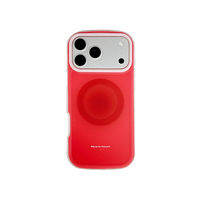
eyekey | Aesthetic Gradient Color Phone Case
₱586.00₱974.00
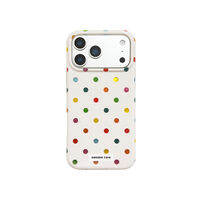
eyekey | Elegant Gold Polka Dot Anti-Shock Phone Case
₱360.00₱820.00
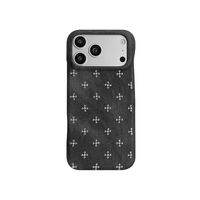
eyekey | Elegant Cross Jewel Case for iPhone Latest Models
₱497.00₱734.00
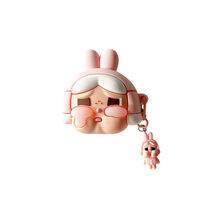
eyekey | Cute Anime Cartoon Crybaby Case
₱403.00₱700.00
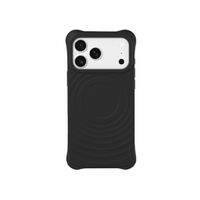
eyekey | Magnetic Liquid Silicone Full Cover Hard Case
₱443.00₱804.00
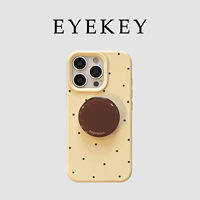
eyekey | INS Style Simple Yellow Polka Dot Letter Stand Cover Soft Silicone Full Protection Case
₱318.00₱734.00
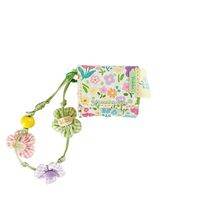
eyekey | Floral Design AirPods Case Universal Fit
₱444.00₱686.00
eyekey | Floral Anti-Drop Cartoon Earphone Case
₱396.00₱712.00
About eyekey
Eyekey is a visual-acuity testing optotype designed primarily for children, preschoolers, and individuals who cannot read or are unfamiliar with the Latin alphabet. It consists of recognizable line drawings used in place of conventional alphabetic letters on an eye chart. Eyekey is developed and distributed by ISOeyes, a company specializing in standardized vision-testing charts and equipment.
Unlike conventional pediatric picture charts, Eyekey is designed around principles intended to make the symbols comparable in visual difficulty to standardized letter optotypes. ISOeyes states that the figures are calibrated so that visual-acuity results remain comparable when a patient transitions between Eyekey and adult letter-based charts.
It is important to distinguish this optotype system from other entities sharing the name. Eyekey is not a consumer eyewear brand; it is strictly a professional medical testing instrument. Unrelated trademarks and companies using the name “eyekey” exist in sectors such as access control, biometrics, automotive forums, digital art, and corporate services, but these have no connection to the ISOeyes vision-testing product.
Overview
| Category | Information |
|---|---|
| Name | Eyekey |
| Type | Visual-acuity optotype |
| Industry | Ophthalmology / optometry / vision screening |
| Primary users | Children, preschoolers, non-readers, and people unfamiliar with the Latin alphabet |
| Developer / supplier | ISOeyes |
| Primary application | Visual-acuity testing |
| Format | Picture-based eye-chart symbols |
| Typical testing distance | 3 metres |
| Measurement systems | LogMAR, decimal, fraction, VAR |
| Related products | ISOeyes eye charts, OpticianA, Similar, HOTV, Tumbling E |
| Main predecessor it aims to replace | Østerberg-style pediatric picture charts |
Concept and purpose
In ophthalmology, an optotype is a standardized symbol used to measure visual acuity. The familiar letters on a Snellen chart are examples of optotypes. Eyekey applies this concept to recognizable drawings rather than alphabetic letters, making it possible to test individuals who cannot reliably identify letters.
ISOeyes describes Eyekey as being intended for children and non-readers, featuring easily recognizable line drawings. The company positions it as an alternative to traditional pediatric picture charts, particularly the Danish Østerberg chart.
Traditional eye charts generally rely on letters or standardized symbols, such as the Snellen chart which uses rows of progressively smaller letters. This approach presents challenges when testing preschool children, individuals who have not learned to read, those unable to read, people unfamiliar with the Roman/Latin alphabet, or patients for whom letter recognition would interfere with the vision test.
Picture-based pediatric charts were developed to address these limitations. However, ISOeyes argues that many traditional picture charts have shortcomings because individual pictures may differ substantially in complexity and recognizability. Eyekey was developed to solve this problem through more systematic construction and calibration of the symbols.
Design philosophy
A defining characteristic of Eyekey is that its symbols are not simply enlarged children’s pictures. According to ISOeyes, the figures are designed and calibrated to provide consistent visual-acuity measurements rather than merely making images easier for children to recognize.
ISOeyes states that Eyekey is designed using a 5×5 grid, following the same general construction principle used for standardized letter optotypes. The company asserts that its symbols have been calibrated to be recognizable at a level comparable with Sloan letters. This distinguishes it from ordinary children’s picture charts where a child might recognize one object much more easily than another.
The design goals include:
- Visually standardized symbols
- Consistent sizing
- Consistent visual challenge
- Recognizability without reliance on reading ability
- Suitability for quantitative visual-acuity measurement
The intention is to measure eyesight itself, rather than a child’s vocabulary or familiarity with particular objects.
Testing methodology
During a visual-acuity test, the patient is positioned at a predetermined distance from the chart. Symbols appear in rows of progressively smaller sizes, and the patient identifies them by naming or indicating what they see. The smallest correctly identified symbols determine the patient’s visual acuity.
ISOeyes lists Eyekey charts using several measurement systems, including LogMAR, decimal visual acuity, fractional visual acuity, and VAR (Visual Acuity Rating). A standard Eyekey configuration is designed for a 3-metre testing distance, although versions adapted to other distances are also available.
The fundamental problem Eyekey addresses is the difficulty of obtaining comparable visual-acuity measurements from people who cannot read letters. If a child is first tested using a poorly standardized picture chart and later using an alphabetic chart, a change in measured visual acuity could reflect differences between the charts rather than an actual change in eyesight. ISOeyes emphasizes the need for optotypes that produce comparable results across different chart types, with the stated goal that a child should be able to move from Eyekey to an adult letter-based chart without introducing an artificial shift in measured acuity.
Relationship with the Østerberg chart
Eyekey is positioned as an alternative to the Østerberg eye chart, a traditional pediatric picture-based vision chart. ISOeyes criticizes traditional pediatric charts on the grounds that their pictures may not provide sufficiently standardized visual difficulty. The Eyekey system instead uses figures specifically designed and calibrated for visual-acuity testing. ISOeyes emphasizes that these figures are constructed to maintain consistent visual-acuity measurement rather than serving as simple enlargements of standard pictures.
Product ecosystem
Eyekey is part of the broader ISOeyes ecosystem, which specializes in vision-testing charts designed around ISO 8596 and logarithmic visual-acuity measurement. The product range includes illuminated eye-chart systems, chart inserts, pediatric optotypes, adult optotypes, and combined adult/child charts.
Related optotypes
- OpticianA: An adult-oriented optotype described as a development of the ETDRS character set and an alternative to the traditional Snellen character set.
- Similar: A newer pediatric optotype series developed as a further evolution of Eyekey. The figures are designed to resemble letters more closely. ISOeyes reports testing the Similar series with more than 206 children, indicating it produced even better comparable results than the original Eyekey series.
- HOTV: A letter-based chart using H, O, T, and V, commonly used with children.
- Tumbling E: Uses the direction of the letter E rather than requiring the patient to read letters.
While Eyekey represents an established technology, Similar is promoted as a newer option aimed at improving comparability between pediatric and adult visual-acuity measurements.
Formats and specifications
Eyekey is available in several physical eye-chart configurations. ISOeyes lists standalone Eyekey chart fronts in sizes including 30 × 60 cm, 45 × 45 cm, 60 × 60 cm, and 25 × 100 cm, alongside other replacement-chart formats.
Charts can also be combined with OpticianA, allowing a single chart to serve both children and adults. For example, ISOeyes offers a 45 × 45 cm Eyekey + OpticianA chart designed for dual use. Combination charts in 60 × 60 cm format for a 3-metre testing distance are also available through regional distributors.
Illuminated systems
Eyekey is integrated into illuminated LED eye-chart systems. Some systems combine Eyekey and OpticianA on a single panel, allowing practitioners to test children and adults without changing charts. These LED systems use controlled illumination designed around logarithmic visual-acuity charts. ISOeyes states that its panels use 72 small prisms to produce uniform illumination across the panel.
Users and applications
Eyekey is principally relevant to professional environments including optometry practices, ophthalmology clinics, pediatric eye-care services, schools, vision-screening programs, hospitals, occupational or public-health screening, and research involving visual acuity.
Its target population comprises young children, non-readers, and people unfamiliar with Latin letters. ISOeyes notes that the charts can also be useful for adults who are not familiar with the Roman alphabet.
Standards and significance
Standardization is central to the product philosophy. ISOeyes states that its charts support the logarithmic LogMAR scale and are designed with reference to ISO 8596, an international standard relating to visual-acuity testing. LogMAR provides a more systematic progression of optotype size than traditional visual-acuity representations.
Eyekey functions as a quantitative measurement instrument rather than a collection of illustrations. Its significance lies in its approach to pediatric vision testing: using symbols designed specifically for visual-acuity measurement reduces the influence of object familiarity, language, reading ability, differences in picture complexity, and inconsistent symbol scaling.
Brand identity and disambiguation
From a branding perspective, Eyekey is categorized as professional medical/optical equipment rather than consumer eyewear. Its core proposition is standardized visual-acuity testing for people who cannot use conventional letter charts. The primary differentiation is the use of picture-based optotypes designed and calibrated specifically for vision measurement. The target market is B2B/professional healthcare, with customers including optometrists, ophthalmologists, clinics, hospitals, and screening organizations.
Readers should note that multiple unrelated entities use the name “eyekey.” Historical trademark filings exist for access-control and biometric technologies under this name. Additionally, unrelated profiles appear in automotive forums, digital art portfolios, corporate registries, and computer vision research. None of these are associated with the ISOeyes optotype system discussed in this article.
As of 2026, Eyekey remains part of ISOeyes’ commercially offered portfolio, listed alongside newer products like Similar. It is viewed as an established component of the company’s evolving pediatric vision-testing range.