Shop on Lazada
Fairy products
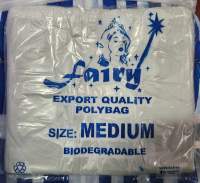
Fairy Plastic Sando Bag Transparent
₱28.00₱44.00
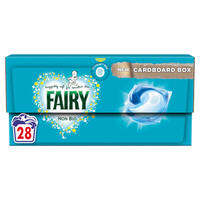
Fairy Non Bio Laundry Pods 28 Washes
₱1,989.00₱2,299.00
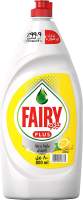
ALL NEW! FAIRY PLUS Dishwashing Liquid with Alternative Power of Bleach 600ml 3 VARIANTS
₱479.00₱490.00
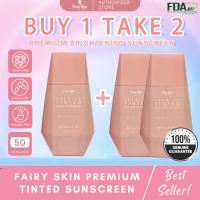
(Buy 1 Take 2) Fairy Skin Premium Tinted Sunscreen 100% Original SPF50 PA++++ Whitening Moisturizing
₱256.41₱599.00
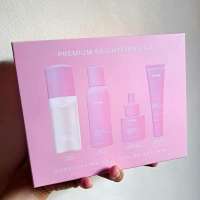
FAIRY SKIN SET (PREMIUM DERMA AND MILD SET)
₱300.00
Buy on Lazada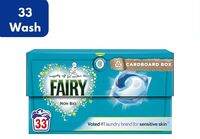
Fairy Non Bio Laundry Pods 33 Loads
₱2,299.00₱2,499.00
![[BUY1 TAKE1]Fairy Skin Premium Tinted Sunscreen Spf50 PA++++ Whitening Moisturizing and Brightening](https://ph-live.slatic.net/p/98f80cdb3e90880fb99d36050824397b.jpg_200x200q80.jpg)
[BUY1 TAKE1]Fairy Skin Premium Tinted Sunscreen Spf50 PA++++ Whitening Moisturizing and Brightening
₱544.00₱2,720.00
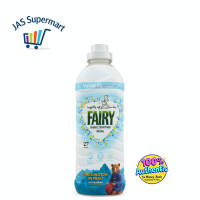
Fairy Fabric Softener Original 27 Wash 891mL – Long-Lasting Freshness & Softness
₱335.00₱659.00
About Fairy
Fairy is a British-origin household cleaning brand best known for its dishwashing liquid, dishwasher detergents, and related dish-care products. It is owned by Procter & Gamble (P&G), the American multinational consumer goods company. The brand traces its origins to 1898 in the United Kingdom, where it was originally established as a soap brand by Thomas Hedley & Co.1
While Fairy is most prominent in the UK and Ireland, it is also sold under the Fairy name in various European, Middle Eastern, Australasian, and other international markets. In certain territories, P&G markets closely related dishwashing products under different brand names such as Dreft, Yes, or JAR.1
Quick facts
| Attribute | Information |
|---|---|
| Brand | Fairy |
| Industry | Consumer goods / Home care |
| Main category | Dishwashing and dish-care products |
| Origin | United Kingdom |
| Founded / introduced | 1898 |
| Original company | Thomas Hedley & Co. |
| Current owner | Procter & Gamble |
| Best-known product | Fairy Liquid |
| Major market | United Kingdom |
| Related P&G brands | Dawn, Dreft, Yes, JAR |
| Iconic brand asset | Green Fairy Liquid bottle and Fairy baby character |
History
Origins: 1898
The history of Fairy began in 1898 when Thomas Hedley & Co., a soap manufacturer based in Newcastle upon Tyne, introduced Fairy soap products in Britain. The original range was not initially the dishwashing liquid recognised today but was instead associated with general soap and household cleaning.1
Early branding focused on mildness and versatility. Fairy soap was available in forms intended for both household and personal use, which helped establish an association between the Fairy name and gentle cleaning.2
P&G acquisition
Procter & Gamble acquired Thomas Hedley & Co. and integrated Fairy into its portfolio between 1927 and 1930, though sources differ on the precise date. Following the acquisition, P&G developed the brand into a broader household cleaning franchise.1
Fairy Liquid
A significant transformation occurred in the 1950s when P&G introduced Fairy Liquid in Britain. This product helped popularise purpose-made liquid dishwashing detergent as an alternative to traditional household soaps.1
Fairy Liquid became associated with two primary consumer benefits:
- Strong grease and food-cleaning performance
- Relative mildness on users’ hands
This combination became central to the brand’s positioning and distinguished it from competing household detergents.1
Brand identity
Fairy maintains a highly recognisable visual identity that has evolved while retaining core elements.
The green bottle
The green Fairy Liquid bottle is one of the brand’s most enduring assets in Britain. Alongside the distinctive typography, this packaging has provided continuity across generations. Although P&G and its design partners have periodically redesigned the packaging, they have consistently preserved the visual elements strongly associated with the brand.3
The Fairy baby
The Fairy baby, traditionally depicted as a walking infant, is another iconic symbol. P&G states that the character first appeared in a cartoon strip in 1932 and became known as “Bizzie”. The character was used to communicate the brand’s longstanding message of gentleness and care, reinforcing claims that the product was effective yet mild.1
Expansion beyond soap
Although now primarily associated with dishwashing, the Fairy brand historically covered several household categories.
Laundry
In Britain and Ireland, Fairy was used for laundry products, including Fairy Snow, a soap-based washing powder. The brand later developed Fairy Non-Bio, a laundry detergent range positioned around gentleness and suitability for sensitive clothing. This business reinforced the brand’s historical association with mildness.2
Dishwashers
Fairy expanded from hand dishwashing into automatic dishwasher detergents, including tablets and other machine-washing formats. This allowed the brand to compete across the broader dish-care category rather than relying exclusively on traditional washing-up liquid.1
Power Spray
A more recent innovation is Fairy Skip The Soak (also marketed as Fairy Power Spray). P&G developed this product to address the common habit of soaking dishes before washing, aiming to tackle stubborn grease and food residue more quickly. Consumer research indicated that soaking was a widespread practice in Europe, prompting the development of a solution designed to eliminate this step.4
International development
Fairy eventually expanded beyond Britain, though P&G does not use the Fairy name universally. Related products often appear under different local brands within P&G’s global portfolio:
- Fairy – UK and many European/international markets
- Dreft – Used in markets including Belgium and the Netherlands
- Yes – Used in Sweden and Norway
- JAR – Used in countries including Czechia, Slovakia, Hungary, Croatia, and Slovenia
- Dawn – The closely related P&G dishwashing brand used primarily in North America
While these brands share a global platform, individual products, formulations, and packaging can differ significantly between markets.1
Fairy in Spain
Spain represents one of Fairy’s most notable advertising successes. P&G introduced Fairy dishwashing liquid to the Spanish market in 1982. In 1991, the company launched the famous Villarriba and Villabajo campaign, which depicted two fictional villages competing during a fiesta. When tasked with cleaning a large paella pan, villagers using Fairy finished significantly faster than those using a competitor’s detergent. This campaign became a defining moment in the brand’s history and was subsequently adapted for other markets.1
Marketing strategy
Fairy’s marketing has historically revolved around a specific value proposition: a small amount of product can effectively clean a large volume of dirty cookware. Rather than positioning dishwashing detergent purely as a commodity, the brand emphasises performance and reliability.
Advertising commonly highlights:
- Grease-cutting power
- Long-lasting cleaning performance
- Concentrated formulas
- Effectiveness on difficult cookware
- Mildness on hands
- Speed and ease of use
- Household trust
The combination of performance and gentleness is strategically important, as consumers typically seek a detergent powerful enough to remove grease yet gentle enough for frequent hand washing.
Product portfolio
Depending on the market, the Fairy portfolio has included various product types:
- Fairy Liquid – Traditional hand dishwashing liquid
- Fairy Platinum / premium variants – Higher-performance dishwashing products
- Dishwasher tablets/capsules – Automatic dishwasher products
- Dishwasher detergents – Machine-washing formulations
- Power Spray / Skip The Soak – Spray-format cleaning products
- Fairy Non-Bio – Laundry detergent in the UK and Ireland
- Historical products – Soaps and washing powders
Exact product names and formulations vary considerably by country.1
Innovation and sustainability
Fairy’s development reflects broader trends in the household cleaning industry. P&G has applied concentrated formulations and water-reduction technologies across several brands, including Fairy. Corporate history identifies Fairy as a key beneficiary of initiatives to reduce packaging and water consumption.1
Recent innovation has focused on convenience. The Skip The Soak concept exemplifies this approach; rather than simply increasing detergent strength, P&G studied actual dishwashing behaviours to design a product that eliminates a specific step in the cleaning process.4
Relationship with P&G’s Dawn brand
Fairy and Dawn are closely related within P&G’s global dish-care portfolio. P&G operates a global dishwashing platform but adapts branding to specific regions. Dawn is primarily associated with the United States, while Fairy serves as the major identity in Britain and many European markets. Other territories use brands such as Dreft, Yes, or JAR.1
These products should not be assumed identical; formulas, fragrances, packaging, claims, and ranges often vary by country.
Brand positioning
Fairy’s long-term positioning is defined by powerful cleaning without sacrificing gentleness. This distinguishes the brand in the household cleaning market, as it is not marketed solely on price but rather on performance, concentration, reliability, and familiarity. The brand’s longevity ensures that consumers who encountered Fairy decades ago can still recognise its name, colour scheme, and core promise today.
Current status
As of 2026, Fairy remains an active P&G brand with particular importance in UK and European dish-care markets. P&G continues to introduce new formats and technologies under the Fairy name. Recent innovations, such as Fairy Skip The Soak, demonstrate that the brand continues to evolve beyond conventional washing-up liquid.4
The brand represents a long-running household care franchise spanning more than a century, with roots in Victorian-era British soapmaking and a modern portfolio centred on dishwashing and cleaning.
Timeline
- 1898 – Fairy brand originates in Britain through Thomas Hedley & Co.1
- 1927–1930 – Thomas Hedley & Co. and the Fairy business become part of Procter & Gamble.1
- 1932 – The Fairy baby character appears in a cartoon strip.1
- 1950s – Fairy Liquid is introduced, helping to popularise liquid dishwashing detergent in Britain.1
- 1960s onward – Fairy becomes a major British washing-up liquid brand.
- 1982 – Fairy dishwashing liquid launches in Spain.1
- 1991 – The Villarriba/Villabajo advertising campaign begins in Spain.1
- 2000s–2010s – Fairy expands its dishwashing and dishwasher portfolio internationally.
- 2020s – P&G continues packaging, formulation, and product format innovation under the Fairy brand.1
- 2025–2026 – Fairy Skip The Soak / Power Spray becomes a prominent example of the brand’s newer innovation strategy.4