Shop on Lazada
Fisher-Price products
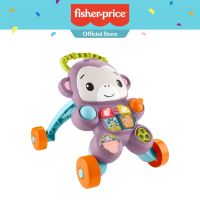
Fisher-Price Learn With Me Purple Monkey Walker Baby Activity Toy With Music & Lights
₱2,000.00₱2,499.00
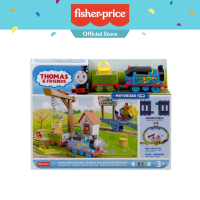
Thomas & Friends Motorized Train Set Topsy Turvy Paint Delivery with Battery Powered Thomas & Troublesome Truck for Kids Ages 3+ Years
₱2,000.00₱2,499.00
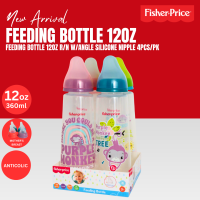
Fisher Price Feeding Bottle 12oz R/N w/Angle Silicone Nipple 4pcs/pk (FP-FB202506)
₱462.00₱660.00
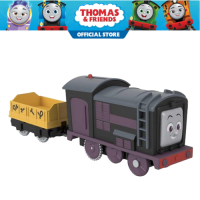
Thomas and Friends Motorized Core 5 Engine Die Cast Toy Train Engines Assorted Engines (Kana Percy Nia Thomas Diesel Gordon Whiff Mieff Toby) reat Gift for Boys Great Gift for Girls Toys for Girls Toys for Boys Kids ages 3 years and above
₱700.00₱899.75
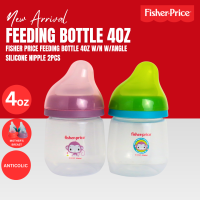
Fisher Price Feeding Bottle 4oz W/N w/Angle Silicone Nipple 2pcs/pk
₱272.82₱389.75

Fisher Price Feeding Dish Suction Bowl w/ Spoon
₱202.82₱289.75
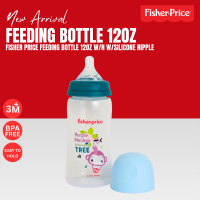
Fisher Price Feeding Bottle 12oz W/N w/Silicone Nipple Blue (FP-FB202513)
₱216.82₱309.75
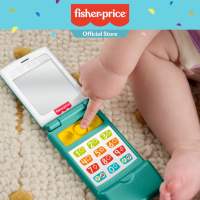
Fisher-Price Laugh & Learn Flip Phone Baby & Toddler Musical Learning Activity Toy
₱854.00₱899.00
About Fisher-Price
Fisher-Price is an American brand of toys and baby products best known for its developmental toys, playsets, and gear designed for infants, toddlers, and preschool children. Established in 1930 in East Aurora, New York, the company evolved from a small wooden toy manufacturer into one of the most recognized early-childhood brands globally. Since 1993, Fisher-Price has operated as a wholly owned subsidiary of Mattel, Inc.1
The brand’s identity is deeply rooted in the philosophy that children learn through play. Mattel currently positions Fisher-Price as a brand dedicated to the first five years of childhood, with products centred on developmental learning, exploration, imagination, and age-appropriate engagement.2
Basic information
| Field | Information |
|---|---|
| Brand name | Fisher-Price |
| Company | Fisher-Price, Inc. |
| Founded | 1930 |
| Founders | Herman Fisher, Irving Price, Margaret Evans Price, Helen Schelle |
| Origin | East Aurora, New York, United States |
| Industry | Toys, baby products, children’s products |
| Main audience | Infants, toddlers, and preschoolers |
| Parent company | Mattel, Inc. |
| Parent since | 1993 |
| Core age focus | Approximately 0–5 years |
| Major product areas | Infant toys, preschool toys, developmental toys, playsets, baby gear |
| Notable lines | Little People, Laugh & Learn, Power Wheels, Imaginext |
| Known for | Durable toys, developmental play, colourful designs, classic toddler toys |
Mattel classifies Fisher-Price as a core component of its Infant, Toddler & Preschool portfolio.
History
Founding and early years
Fisher-Price was established in 1930 during the Great Depression in East Aurora, New York. The founding team comprised four individuals with complementary expertise:
- Herman Fisher, a seasoned businessman with experience in marketing and selling games.
- Irving Price, a former retail executive who later served as mayor of East Aurora.
- Margaret Evans Price, Irving’s wife and an accomplished illustrator and children’s book artist who became the company’s first art director.3
- Helen Schelle, a toy shop owner with extensive knowledge of children’s merchandise.
The founders built the company on the principle that toys should be enjoyable while simultaneously fostering child development. Early corporate values emphasised intrinsic play value, ingenuity, sturdy construction, good value, and action.4
The name Fisher-Price combines the surnames of Herman Fisher and Irving Price, though Margaret Evans Price and Helen Schelle were equally instrumental to the company’s founding and early success.
First products and market entry
In 1931, the founders debuted 16 wooden toys at the American International Toy Fair in New York City. These initial offerings garnered significant attention and secured the company’s place in the toy industry.3 The first Fisher-Price toy sold was Dr. Doodle, a pull-along toy.
Unlike many modern plastic alternatives, early Fisher-Price toys were constructed primarily from ponderosa pine, heavy steel components, and colourful lithographic decorations. These materials were selected specifically for durability, ensuring the toys could withstand rough handling by young children while remaining visually appealing.4 This combination of durability, simple mechanical action, and attractive design became a cornerstone of the Fisher-Price identity.
Growth during the Great Depression
Despite launching during one of the most challenging economic periods in American history, Fisher-Price continued to develop new products. Its early toys were relatively inexpensive, durable, and provided entertainment without relying on sophisticated technology. Although the company faced initial financial difficulties, its reputation grew steadily. The foundational concept of creating toys that were fun, durable, imaginative, and developmentally beneficial remained a consistent theme throughout its history.5
Transition from wood to plastic
During the 1950s, Fisher-Price began incorporating plastic into its manufacturing processes. This shift enabled the creation of brighter colours, more complex shapes, longer-lasting decorative elements, and new mechanical possibilities, all at a lower production cost. Buzzy Bee was among the early examples featuring plastic components. Through this transition, Fisher-Price played a significant role in the industry-wide move from traditional wooden toys to modern plastic manufacturing.6
Key product lines and innovations
Little People
One of Fisher-Price’s most enduring innovations is the Little People line. Introduced in 1959, this concept paired small human figures with play environments such as vehicles and buildings.7 Little People transformed pretend play for preschoolers by allowing children to create miniature worlds featuring families, farms, schools, shops, and community workers, thereby encouraging storytelling and social role-play.
For over six decades, Little People has remained a signature brand, with modern sets generally targeted at children aged 1 to 5 years. In 1997, the figures underwent a major redesign to appear more realistic and diverse, reflecting an evolution towards greater representation and inclusion.8
Iconic classic toys
Throughout its history, Fisher-Price has produced numerous toys that have achieved cultural icon status:
- Rock-a-Stack: Introduced in 1961, this developmental toy consists of coloured rings placed on a central post. It helps young children practise hand-eye coordination, grasping, visual recognition, sequencing, and problem-solving.
- Chatter Telephone: Also introduced in 1961, this pull-along toy resembles a telephone and combines pretend play with physical movement.9
- Corn Popper: A push-along toy famous for its distinctive popping sound and sensory feedback.
- Xylophone: A colourful, easy-to-use instrument that introduces musical play.
Mattel continues to identify Snap-Lock Beads, Corn Popper, and Xylophone as classic Fisher-Price toys that have endured across generations.
Modern product families
Following its acquisition by Mattel, Fisher-Price expanded into a comprehensive umbrella for infant and preschool products. Major contemporary lines include:
- Laugh & Learn: Electronic and interactive toys introducing babies and toddlers to numbers, letters, words, music, and everyday objects.
- Power Wheels: Battery-powered ride-on vehicles, including miniature versions inspired by real automotive designs.
- Imaginext: Action-oriented playsets featuring characters, superheroes, animals, and fantasy worlds.
- Thomas & Friends: Preschool products based on the popular franchise.
Mattel lists Laugh & Learn, Little People, Thomas & Friends, Power Wheels, and Imaginext as key pillars of the current Fisher-Price portfolio.13
Corporate history and ownership
Acquisition by Quaker Oats
In 1969, following Herman Fisher’s retirement, Fisher-Price was acquired by the Quaker Oats Company.10 This acquisition facilitated expansion beyond wooden preschool toys into a broader consumer products business serving the wider children’s market.
Public listing and Mattel acquisition
Quaker Oats later spun off Fisher-Price as an independent publicly traded entity in 1991. However, this period of independence was brief. In 1993, Mattel acquired Fisher-Price, integrating it into a corporate family that included Barbie, Hot Wheels, Matchbox, American Girl, UNO, and Masters of the Universe.1112
Crucially, Fisher-Price retained its distinct brand identity within Mattel rather than being absorbed. Today, it serves as a primary pillar of Mattel’s preschool and early-childhood business. The corporate structure places Fisher-Price as a major owned brand under Mattel, Inc., alongside other portfolios ranging from fashion dolls to collectible vehicles.21
Product development and philosophy
The Play Lab
A defining characteristic of Fisher-Price is its emphasis on observing children during the design process. Established in 1961, the Play Lab allows designers and child-development researchers to observe children interacting with prototypes and finished products.14 According to Mattel, more than 100,000 babies and preschoolers have participated in testing over the years, with annual feedback gathered from over 1,800 parents.15
This approach ensures that product development is driven by actual play patterns rather than adult assumptions, reinforcing the brand’s positioning as a leader in developmentally appropriate toys.
Brand philosophy and target audience
Fisher-Price operates on the core belief that play is a fundamental method of learning. Products are designed around specific developmental stages to encourage abilities such as fine and gross motor skills, sensory exploration, language development, problem-solving, and early numeracy and literacy.16
The primary audience spans from birth to approximately five years old. However, because purchasing decisions are made by adults—including parents, grandparents, and caregivers—the brand maintains a dual focus: products must be engaging for children while meeting adult priorities regarding safety, durability, educational value, and ease of cleaning.
Design language
Fisher-Price products share a distinctive visual and tactile design language characterised by:
- Bright colours: High-visibility reds, yellows, blues, and greens.
- Rounded forms: Avoidance of sharp or overly complex shapes for safety and accessibility.
- Large controls: Buttons, levers, and handles sized for small hands.
- Cause-and-effect interaction: Simple mechanisms where a child’s action (push, press, turn) elicits an immediate response, helping young children understand consequences.
Safety, legacy, and cultural significance
Given its focus on very young children, safety and durability are central to the brand proposition. Historical emphasis on strong construction continues today through adherence to modern safety standards. The durability of classic toys has also fostered an emotional connection, with many items being passed down through generations.
This intergenerational recognition creates a powerful cycle where parents who played with Fisher-Price toys introduce the brand to their own children. Products like Little People, Rock-a-Stack, and Chatter Telephone evoke strong nostalgia, distinguishing Fisher-Price from brands focused solely on current trends or licensed characters.
Fisher-Price today
As of 2026, Fisher-Price remains a leading global brand within Mattel’s Infant, Toddler & Preschool category.17 Its headquarters and campus remain in East Aurora, New York, which Mattel highlights as the centre for Fisher-Price design facilities.18
The brand continues to balance innovation with heritage. In 2024, for example, Fisher-Price introduced a new range of premium wooden toys, reconnecting its contemporary development with its historical roots.19 Current offerings span traditional toys, electronic learning products, role-play sets, vehicles, figures, and baby gear.
Major milestones
| Year | Event |
|---|---|
| 1930 | Fisher-Price founded in East Aurora, New York |
| 1931 | 16 original wooden toys presented at the American International Toy Fair |
| 1931 | Dr. Doodle becomes the first Fisher-Price toy sold |
| 1950s | Incorporation of plastic into toy manufacturing begins |
| 1959 | Little People concept introduced |
| 1961 | Play Lab established; Chatter Telephone and Rock-a-Stack introduced |
| 1969 | Quaker Oats acquires Fisher-Price |
| 1991 | Fisher-Price becomes a publicly traded company |
| 1993 | Mattel acquires Fisher-Price |
| 1997 | Little People figures redesigned for realism and diversity |
| 2020 | Fisher-Price celebrates its 90th anniversary |
| 2024 | New premium wooden toy collection introduced |
| 2026 | Continues as a major Mattel infant, toddler, and preschool brand |
The chronology above combines Mattel’s corporate records with Fisher-Price’s historical accounts.20
Distinctive market position
Compared to other major toy brands, Fisher-Price is distinguished by its specific developmental focus. While brands like Barbie focus on fashion and storytelling, Hot Wheels on racing, or LEGO on construction, Fisher-Price centres on a specific stage of childhood rather than a single fictional universe. This strategic focus on the developmental needs of infants and preschoolers remains its primary differentiator in the global toy market.22
After more than nine decades, Fisher-Price’s legacy rests on establishing the preschool toy as a major industry category, combining learning with entertainment, creating durable classics, and institutionalising child observation in product development. Its official philosophy continues to reflect the founders’ original vision: making toys that are genuinely fun while helping children learn, explore, and develop.23
References
- About Fisher-Price
- Fisher-Price
- Margaret Evans Price
- About the Fisher-Price Brand History and Mission | Mattel
- Fisher-Price, Inc. | Encyclopedia.com
- Fisher-Price: 90 years of building classic toys – CBS News
- Fisher Price Little People Toys & Playsets | Mattel
- Fisher-Price
- Fisher-Price | Careers | Mattel, Inc.
- Fisher-Price looks back at its 90-year history – Toys n Playthings
- Fisher-price Inc | Encyclopedia.com
- The Classic Childhood Toys of Fisher-Price
- Fisher-Price Announces Global Collaboration with Shakira and the Barefoot Foundation for Its New “Best Possible Start” Campaign
- Fisher-Price – WikiZero
- About the Fisher-Price Brand History and Mission | Mattel
- About the Fisher-Price Brand History and Mission | Mattel Canada
- Over het merk Fisher-Price Geschiedenis en missie | Mattel
- Acerca de la marca Fisher-Price Historia y misión | Mattel
- À propos de la marque Fisher-Price Histoire et mission | Mattel
- Fisher Price Little People Toys & Playsets | Mattel
- Mattel and Fisher-Price Customer Center
- Storia e missione del marchio Fisher-Price | Mattel
- Fisher-Price Little People