Shop on Lazada
Fiskars products
About Fiskars
Fiskars is a Finnish design and consumer-goods brand best known for its distinctive orange-handled scissors, gardening tools, cutting implements, kitchen products, and creative craft supplies. Its history traces back to 1649, when an ironworks was established in the village of Fiskars in Finland. Today, the Fiskars brand is owned by Fiskars Group, a publicly listed Finnish consumer-products company that manages a portfolio of international lifestyle brands.1
The brand’s identity is strongly associated with functional Scandinavian design, ergonomics, durability, simplicity, and practical innovation. Its famous orange-handled scissors, introduced in 1967, have become one of the most recognizable examples of Finnish industrial design. Fiskars states that more than 1 billion pairs of its orange-handled scissors have been sold worldwide.2
Basic information
| Category | Information |
|---|---|
| Brand | Fiskars |
| Origin | Finland |
| Founded | 1649 |
| Original business | Ironworks / metalworking |
| Founder | Peter Thorwöste |
| Parent company | Fiskars Corporation / Fiskars Group |
| Headquarters of parent | Helsinki, Finland |
| Main categories | Gardening, cooking, cutting, crafting/creating, outdoor |
| Most famous product | Orange-handled scissors |
| Design tradition | Nordic / Scandinavian functional design |
| Global reach | Products sold in more than 100 countries |
| Parent-company employees | 6,594 at Dec. 31, 2025 |
| Parent-company 2025 net sales | €1.1402 billion |
The figures above concerning the wider Fiskars Group are derived from the company’s current corporate information and 2025 reporting.3
Origins: 1649
Fiskars is unusual among modern consumer brands because its history does not begin with scissors, gardening, or household products, but rather as an ironworks.
In 1649, Swedish authorities granted Peter Thorwöste permission to establish a blast furnace and bar hammer at Fiskars in what is now southern Finland. At the time, Finland was part of the Swedish realm. The location was advantageous due to its forests, which provided fuel; water power; access to transportation routes; and proximity to natural resources. The resulting ironworks became the foundation of what would eventually become Fiskars.4
Consequently, the Fiskars name is more than 375 years old. The company celebrated its 375th anniversary in 2024. Fiskars describes itself as one of the oldest companies and brands in Finland and among the oldest businesses in the Western world.5
From iron to household products
During the eighteenth and nineteenth centuries, Fiskars evolved considerably. In 1783, the ironworks was acquired by the Björkman family, and production shifted toward processing copper ore from the nearby Orijärvi mine. Later, as copper resources became depleted, the operation returned its emphasis to ironworking.6
A particularly important period began in 1822, when Johan Jacob Julin acquired Fiskars. Under Julin, the company became increasingly industrialized and diversified. In 1832, it established Finland’s first cutlery mill, producing knives, forks, and scissors. This era helped establish an important characteristic of Fiskars that remains visible today: using industrial technology and design to make ordinary household tasks easier.7
Fiskars also became involved in agricultural equipment. Its plough manufacturing became significant enough that the company eventually produced more than one million ploughs.8
Becoming a corporation
Following Julin’s death, Fiskars was reorganized as a limited company in 1883. The company subsequently expanded its industrial activities and became an important Finnish manufacturer. In 1915, Fiskars was listed on the Helsinki Stock Exchange, establishing the corporate structure that ultimately evolved into today’s publicly traded Fiskars Corporation.9
The company therefore underwent a remarkable transformation from an ironworks to a metal manufacturer, then to an agricultural equipment maker, a household-product manufacturer, and finally an international consumer-goods group.
The orange-handled scissors revolution
The segment of Fiskars history most commonly associated with the brand began in 1967, when the company introduced a new type of lightweight scissors featuring plastic handles. At the time, scissors were traditionally relatively heavy metal products. The Fiskars design made them substantially lighter and more comfortable to use.
The designer originally considered several handle colors, including black, red, and green. During prototyping, an orange color already present in a machine was used. Orange and black proved particularly popular, and an internal vote ultimately selected orange.10 The result was the now-famous Fiskars Orange-Handled Scissors, which became an icon of industrial and product design. Fiskars subsequently registered the distinctive orange color for scissors in Finland, the United States, and Canada.11
Today, the classic scissors are still sold more than five decades after their introduction, and Fiskars reports that over one billion pairs have been sold.12
Factors behind the scissors’ success
The success of Fiskars scissors was not solely due to their color. Their significance stemmed from combining several principles:
Ergonomics
The handles were designed to be comfortable and easy to control.
Lightweight construction
Plastic handles reduced weight compared with traditional all-metal scissors.
Cutting performance
Blade geometry and manufacturing were designed around efficient cutting.
Visual identity
The orange handle made Fiskars scissors immediately recognizable.
Everyday usefulness
Rather than being a luxury object, the product improved an ordinary household task.
This combination became a template for the broader Fiskars design philosophy: make familiar tools simpler, more comfortable, and more effective.
International expansion
The transformation of Fiskars into an international consumer brand accelerated during the second half of the twentieth century. One important step was the establishment of a scissors factory in the United States in 1977. The U.S. became an important market and eventually one of the largest for Fiskars.13
Fiskars also expanded through acquisitions and diversification:
- 1986: Gerber was acquired.
- 2007: Iittala Group was acquired.
- 2013: Royal Copenhagen was acquired.
- 2015: Fiskars acquired WWRD, bringing brands including Waterford, Wedgwood, Royal Doulton, and Royal Albert into the group.
- 2023: Fiskars Group acquired Danish luxury design brand Georg Jensen.14
These moves transformed Fiskars Corporation from essentially a manufacturer associated with tools into a multi-brand consumer and lifestyle group.
Fiskars today
It is necessary to distinguish between the consumer brand and the corporate group.
Fiskars the brand
This is the consumer brand responsible primarily for products such as scissors, gardening tools, axes, pruning tools, cutting tools, cooking tools, craft and creative products, and outdoor products. Fiskars itself describes the brand as a premium lifestyle brand focused on gardening, cooking, and creating.15
Fiskars Group
This is the larger corporate organization that owns Fiskars and several other brands. As of 2026, the portfolio includes brands such as Fiskars, Gerber, Georg Jensen, Royal Copenhagen, Wedgwood, Moomin Arabia, Iittala, and Waterford. The company operates these through two principal business areas: Vita and Fiskars.16 Therefore, Georg Jensen is not a “Fiskars product” in the ordinary consumer sense; it is a separate brand belonging to Fiskars Group.
Main product categories
Scissors and cutting
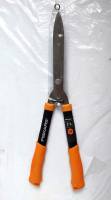
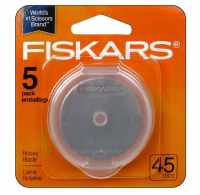
This remains the category most strongly associated with Fiskars. Products include general-purpose scissors, fabric scissors, sewing scissors, children’s scissors, precision scissors, craft scissors, paper-cutting tools, and rotary cutting tools. The orange-handled scissors remain the flagship symbol of the company.
Gardening
Gardening has become one of the most important areas for Fiskars. The portfolio includes pruners, loppers, hedge shears, garden scissors, axes, saws, shovels, spades, rakes, weeders, watering products, and other garden tools. The philosophy mirrors that of the scissors: reduce effort while improving control and usability.
Cooking
Fiskars also produces kitchen tools and equipment. Depending on the market, this can include kitchen scissors, knives, cutting tools, cookware, utensils, and food-preparation tools. This category connects directly with the original history of Fiskars in cutlery manufacturing.17
Creating and crafts
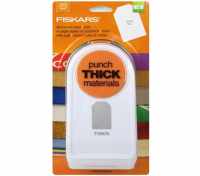
Fiskars has a particularly strong presence in creative activities. Products include tools for scrapbooking, paper crafts, sewing, quilting, school projects, cutting, and decorative crafting. This makes Fiskars unusual because its products appeal both to professional users and ordinary consumers doing creative activities at home.
Outdoor
Through Fiskars and its wider group, the company maintains a substantial outdoor-tool presence. Axes, saws, and other cutting tools are particularly important examples. Gerber, another Fiskars Group brand, further strengthens the group’s position in outdoor and utility products.
Design philosophy
The design philosophy of Fiskars can broadly be summarized as: Function first, but function made beautiful. The company emphasizes timeless design, functionality, ergonomics, durability, intuitive use, simplicity, responsible design, and innovation. Fiskars Group describes its broader design philosophy as creating products with “timeless, purposeful, and functional beauty.”18
This approach is closely related to the broader tradition of Finnish and Nordic industrial design, where unnecessary decoration is often avoided in favor of practical functionality.
The Fiskars orange
The orange color deserves special attention as it has become integral to the brand’s identity. Unlike many brands that rely primarily on a logo, Fiskars can often be recognized without seeing the Fiskars name. A pair of orange-handled scissors immediately suggests Fiskars, making the handle function almost like a visual trademark. The color also contributes to the product’s practical identity by making scissors easier to locate among other objects. Fiskars states that the orange color for its scissors has been registered in Finland, the United States, and Canada.19
Manufacturing philosophy
Fiskars combines its own manufacturing with external suppliers. According to its 2025 annual report, Fiskars Group operated 13 of its own manufacturing units across Europe, Asia, and the United States, alongside selected suppliers.20
For Business Area Fiskars specifically, the company reported that its 2025 supply base consisted of approximately 60% finished-goods suppliers and 40% own manufacturing. It operated four of its own manufacturing units in Europe and the U.S. for that business area.21
Sustainability
Sustainability has become a major part of the current corporate strategy of Fiskars. The company frames this around the idea of challenging throwaway culture through products that are designed to last. Current environmental targets include:
- Having a majority of net sales come from circular products and services by 2030.
- Reducing Scope 1 and 2 greenhouse-gas emissions by 60% from the 2017 baseline by 2030.
- Reducing transportation and distribution Scope 3 emissions by 30% from the 2018 baseline by 2030.
- Having 80% of suppliers by spend covering purchased goods and services set science-based targets by 2029.
This focus is particularly relevant to Fiskars because durability is central to the brand’s historical positioning.
Fiskars Group’s current scale
The distinction between the brand and the corporation is particularly important when examining financial figures. For 2025, Fiskars Group reported net sales of €1.1402 billion, 6,594 employees, a presence in 29 countries, products available in more than 100 countries, and approximately 500 own physical stores. These figures cover Fiskars Group as a whole, not the Fiskars consumer brand alone.22
In 2025, the Group’s two business areas generated the following results:
| Business area | 2025 net sales | Major brands |
|---|---|---|
| Vita | €613 million | Georg Jensen, Royal Copenhagen, Wedgwood, Moomin Arabia, Iittala, Waterford |
| Fiskars | €522 million | Fiskars, Gerber |
Corporate strategy
Modern Fiskars Group is no longer attempting to be simply a giant general-purpose manufacturer. Its strategy is increasingly brand-driven. The company has organized its portfolio around strong, recognizable brands rather than treating everything as one Fiskars identity. This creates a structure where Fiskars and Gerber cover tools, gardening, outdoor, creating, and cooking, while Vita brands cover premium and luxury homeware, tableware, jewelry, and lifestyle.
The company’s stated purpose is: “Pioneering design to make the everyday extraordinary.”24
Fiskars as a Finnish design icon
Fiskars holds a special position in Finland. It is not merely an old company that happens to be Finnish; its products have become strongly associated with Finnish design and everyday life. The orange scissors are particularly significant because they demonstrate how an extremely ordinary object can become a design icon.
Fiskars has also retained a connection with Fiskars Village, the historical birthplace of the company. The village has evolved from an industrial community into an important Finnish art and design destination, while the historical presence of Fiskars remains part of its identity. Fiskars itself states that in 2023 it was selected as Finland’s most valued brand for the fifth time.
Distinctive characteristics
Several characteristics distinguish Fiskars from ordinary tool manufacturers:
- Extremely long history: The brand’s heritage goes back to 1649, giving it more than three centuries of accumulated manufacturing experience.
- Iconic product design: The orange scissors are recognizable worldwide.
- Ergonomics: Fiskars frequently designs around how a person physically interacts with a tool.
- Everyday positioning: Products are intended for ordinary activities rather than being purely industrial equipment.
- Finnish/Nordic design identity: The brand emphasizes simplicity, functionality, and restrained aesthetics.
- Product longevity: Significant emphasis is placed on durable products and reducing disposable consumption.
- Diversified ecosystem: Through Fiskars Group, the company has expanded from tools into premium homeware and lifestyle brands.
Important milestones
- 1649 — Fiskars ironworks founded by Peter Thorwöste.
- 1783 — Ironworks acquired by the Björkman family; copper processing becomes important.
- 1822 — Johan Jacob Julin acquires Fiskars.
- 1832 — Finland’s first cutlery mill established at Fiskars.
- 1883 — Fiskars becomes a limited company.
- 1915 — Fiskars is listed on the Helsinki Stock Exchange.
- 1967 — Iconic orange-handled scissors introduced.
- 1977 — Fiskars establishes a scissors factory in the United States.
- 1986 — Gerber acquired.
- 2007 — Iittala Group acquired.
- 2013 — Royal Copenhagen acquired.
- 2015 — WWRD acquired, bringing major luxury homeware brands into the group.
- 2023 — Georg Jensen acquired.
- 2024 — Fiskars celebrates its 375th anniversary.
- 2025 — Fiskars Group records €1.1402 billion in net sales and 6,594 employees.
Brand positioning
A useful way to understand the market position of Fiskars is as a progression from a traditional tool manufacturer to a functional consumer tool brand, and finally to a design-led lifestyle and tool brand. It sits somewhere between a conventional hardware company and a design brand.
A pair of Fiskars scissors is not normally purchased as a luxury object. However, the company treats the design, ergonomics, materials, and user experience as important enough that the product can become a design object in its own right. The central idea behind Fiskars is to take an ordinary everyday tool and make it significantly better.
Overall assessment
Fiskars is one of the world’s more unusual consumer brands because its history, product design, and corporate identity span more than three centuries. It began as a small Finnish ironworks in 1649, developed into an industrial manufacturer, became a producer of agricultural and household equipment, and ultimately created one of the world’s most recognizable consumer-tool designs with its 1967 orange-handled scissors.
Today, the Fiskars brand focuses primarily on gardening, cooking, creating, and outdoor products, while Fiskars Group has evolved into a much broader international portfolio of design-driven lifestyle brands. In summary, Fiskars represents Finnish heritage, functional design, ergonomics, everyday tools, iconic orange scissors, and long-term durability. Its most important achievement may be turning something as mundane as a pair of scissors into a globally recognized example of product design.
References
- Our story – Fiskars Group
- Fiskars – Fiskars Group
- Pioneering design to make the everyday extraordinary – Fiskars Group
- About us – Fiskars Group
- Fiskars Corporation’s Annual Report 2025 published – Fiskars Group
- Our heritage – Fiskars Brand Site
- Fiskars turns 375 – Fiskars Group
- Fiskars Group – 171123_Fiskars_company_presentation.pdf
- Our brands – Fiskars Group
- Fiskars Brand Site
- Our purpose and values – Fiskars Group
- Annual Report
- Investors – Fiskars Group
- Fiskars Corporation to publish its Financial Statement Release 2025 on February 5, 2026 – Fiskars Corporation
- Fiskars Corporation to publish its Financial Statement Release 2025 on February 5, 2026 – Inderes
- Fiskars Corporation: Financial reporting and Annual General Meeting in 2026 – Fiskars Corporation
- Fiskars Corporation’s Annual Report 2024 published – Fiskars Group
- Annual and Interim Reports – Fiskars Group
- Reports and presentations – Fiskars Group
- Historiamme – Fiskars Group
- Vuosikertomukset ja osavuosikatsaukset – Fiskars Group
- Fiskars Brand Site
- Nordic Heritage – Fiskars Brand Site
- #fiskarsgroup #annualreport | Fiskars Group