Shop on Lazada
Fossil products
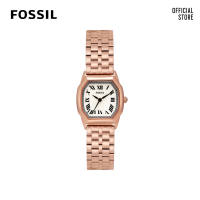
Fossil Harlow Stainless Steel Watch
₱10,755.00₱11,950.00
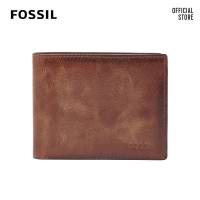
Fossil Derrick RFID Flip ID Bifold ML3681200
₱3,050.00
Buy on Lazada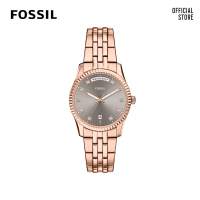
Fossil Scarlette Stainless Steel Watch
₱10,755.00₱11,950.00
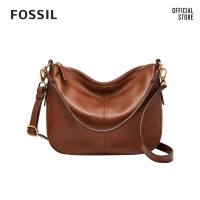
Fossil Jolie Leather Crossbody Bag ZB7716200
₱9,150.00
Buy on Lazada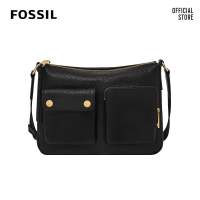
Fossil Maysen Leather Cargo Crossbody Bag ZB11209001
₱9,150.00
Buy on Lazada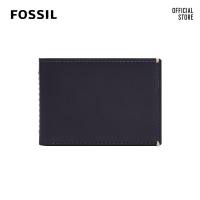
Fossil Westover Front Pocket Wallet ML4684545
₱2,650.00
Buy on Lazada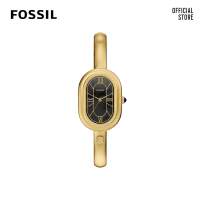
Fossil Sloan Stainless Steel Watch
₱13,950.00
Buy on Lazada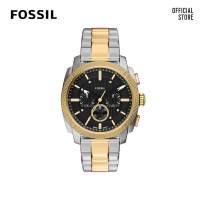
Fossil Machine Silver Stainless Steel Watch
₱12,015.00₱13,350.00
About Fossil
Fossil is an American lifestyle and fashion accessories brand best known for its watches, though it also produces leather goods, handbags, jewellery, and other accessories. Founded in 1984, Fossil built its identity on accessible, fashion-oriented design combined with an American vintage aesthetic. Today, the brand operates as part of Fossil Group, Inc., a global design, marketing, distribution, and innovation company headquartered in Richardson, Texas.1
Fossil at a glance
| Information | Details |
|---|---|
| Brand name | Fossil |
| Founded | 1984 |
| Country of origin | United States |
| Headquarters | Richardson, Texas, USA |
| Industry | Fashion, watches, lifestyle accessories |
| Parent company | Fossil Group, Inc. |
| Key founder | Tom Kartsotis |
| Best known for | Fashion watches |
| Other products | Handbags, wallets, leather goods, jewellery, accessories |
| Current CEO of Fossil Group | Franco Fogliato |
| Brand positioning | Accessible / mid-market lifestyle and fashion |
| Official website | Fossil official website |
Fossil describes its identity as rooted in American creativity and ingenuity, stating that its goal is to create quality, fashionable pieces with a timeless character.2
History
Founding
Fossil was established in 1984 in the United States. Its origins are closely associated with entrepreneur Tom Kartsotis, who identified an opportunity to import fashion-oriented watches from Asia and sell them at comparatively accessible prices.
Rather than competing directly with traditional Swiss luxury watchmakers, the company pursued a different proposition: watches as fashion accessories. This approach helped distinguish Fossil from brands that primarily marketed watches based on technical horology.
The company originally operated under the name Overseas Products International before building the Fossil brand. Its early watches were particularly associated with retro-inspired designs.3
Development of the Fossil aesthetic
During the 1980s and 1990s, Fossil developed an aesthetic strongly influenced by American vintage culture, mid-century graphics, retro advertising, and nostalgic packaging.
This became a defining element of the brand’s identity. Instead of treating the watch merely as a precision instrument, Fossil positioned it as an element of personal style.
The strategy proved successful enough that Fossil expanded beyond watches. By 1990, the company had introduced leather goods under the Fossil name and broadened its product portfolio.4
Going public
Fossil Group went public in 1993, marking an important transition from a relatively young watch company into a larger publicly traded accessories business.5
Over subsequent decades, the company expanded both its proprietary brands and its licensed-brand business, eventually becoming a major global operator in watches and lifestyle accessories.
The Fossil brand concept
A key characteristic of Fossil is that it is not positioned primarily as a traditional luxury watchmaker.
Instead, Fossil occupies the space between:
fashion brand → lifestyle brand → watch/accessories company
Its watches are designed to be visually distinctive and fashionable while remaining considerably more accessible than traditional luxury brands such as Rolex, Omega, or Cartier.
Fossil describes its products as items intended to accompany important moments in people’s lives, emphasising self-expression, craftsmanship, and everyday wear.6
This gives the brand a distinct identity compared to manufacturers whose primary selling point is mechanical watchmaking.
Products
Watches
Watches remain Fossil’s defining category.
The company produces a broad range of men’s and women’s watches, including:
- Classic watches
- Chronographs
- Automatic/mechanical watches
- Sport watches
- Dive-inspired watches
- Rugged watches
- Fashion watches
- Shaped-case watches
- Digital and hybrid styles
Fossil’s current line-up emphasises a mixture of traditional watch design and contemporary fashion. The company describes its collections as covering categories such as Sport, Rugged, Automatic, Dive, Shaped, and Classic.7
Historically, Fossil also invested heavily in smartwatches and connected wearables. However, this became less central to the business. Fossil Group’s fiscal 2025 results showed that smartwatch sales had fallen substantially and that the company was exiting the smartwatch category.8
Consequently, Fossil’s current strategy is much more focused on traditional watches.
Leather goods
Leather goods became an important extension of the Fossil identity.
The category includes:
- Wallets
- Card holders
- Handbags
- Backpacks
- Briefcases
- Crossbody bags
- Belts
- Small leather accessories
Fossil’s own description emphasises leather quality, functional design, and silhouettes intended for everyday use.9
This is significant because Fossil is no longer simply a watch company; it is better understood as a lifestyle accessories brand centred historically around watches.
Jewellery
Fossil also produces jewellery for men and women.
Its jewellery tends to follow the same philosophy as its watches: relatively accessible pricing combined with fashion-oriented styling.
The company describes its jewellery collections as ranging from delicate designs to more sculptural and bold pieces.10
Design philosophy
Fossil’s design language can broadly be described as:
American + vintage-inspired + casual + functional + fashion-conscious
Several characteristics frequently appear in Fossil products:
Vintage influence
Fossil has historically made extensive use of retro aesthetics. This is evident in watch cases, typography, packaging, leather treatments, and advertising.
Accessible fashion
Rather than selling exclusivity as the primary value proposition, Fossil attempts to make fashionable accessories available to a broad consumer audience.
Everyday functionality
Its watches, bags, and wallets are designed as practical everyday objects rather than purely collectible luxury goods.
Personal expression
Fossil’s marketing places considerable emphasis on individuality and self-expression. The company describes its products as objects that accompany consumers through different stages and milestones of life.11
Position in the watch industry
Fossil occupies a distinct position within the global watch market.
A simplified hierarchy might look like this:
Mass-market watches
Casio, Timex, fashion/basic brands
↓
Accessible fashion & lifestyle watches
Fossil, Skagen, some fashion-license brands
↓
Premium / entry-level Swiss and Japanese mechanical watches
Tissot, Hamilton, Seiko’s higher-end offerings, Citizen’s higher-end offerings
↓
Luxury
Longines, TAG Heuer, Tudor, Omega
↓
High luxury
Rolex, Cartier, Patek Philippe, Audemars Piguet, Vacheron Constantin
Fossil’s competitive advantage has traditionally been design and brand recognition rather than high-end horological engineering.
That distinction is important when evaluating a Fossil watch. A Fossil timepiece can be a well-designed fashion accessory without necessarily competing with a Swiss mechanical watch on movement finishing, heritage, or long-term collector value.
Fossil and Fossil Group
It is important to distinguish Fossil from Fossil Group.
Fossil
The Fossil brand is the consumer-facing American lifestyle brand producing watches, leather goods, jewellery, and accessories.
Fossil Group
Fossil Group, Inc. is the larger corporate organisation behind Fossil and several other brands. It describes itself as a global design, marketing, distribution, and innovation company specialising in lifestyle accessories.12
The group’s owned portfolio has included:
- Fossil
- Skagen
- Michele
- Relic
- Zodiac
It has also operated licensed businesses involving brands such as Michael Kors, Diesel, Emporio Armani, DKNY, Kate Spade New York, Tory Burch, and others.13
Thus, Fossil is a brand; Fossil Group is the corporation.
Corporate headquarters
Fossil Group is headquartered at 901 S. Central Expressway, Richardson, Texas, United States. The company is incorporated in Delaware and trades publicly on the NASDAQ under the ticker FOSL.14
The company currently lists Franco Fogliato as its Chief Executive Officer and a member of its Board of Directors. He became CEO in September 2024.15
Global presence
Fossil has developed into a global brand rather than a purely American business.
Fossil Group has historically distributed its products through department stores, specialty retailers, watch and jewellery stores, e-commerce platforms, and company-operated stores. The company has reported a distribution network spanning roughly 150 countries.16
In Indonesia, for example, Fossil operates through an official local presence at Fossil Indonesia. The Indonesian site offers watches, accessories, and customer-care services.17
Fossil’s business in the 2020s
The 2020s have been a period of significant transformation for Fossil Group.
The company has faced pressure from changing consumer preferences, the decline of traditional department-store retail, competition in watches and accessories, and the rapid evolution of smartwatches.
Fossil previously pursued connected watches aggressively but ultimately moved away from that category. Its current strategy has emphasised traditional watches, core brands, direct-to-consumer optimisation, and cost restructuring.18
For fiscal 2025, Fossil Group reported approximately $1.00 billion in worldwide net sales, down from approximately $1.145 billion in fiscal 2024. Traditional watches remained by far the largest product category, accounting for about 81.1% of total company sales in fiscal 2025, while smartwatches represented about 1.2%.19
The company reported that Fossil-brand sales themselves declined during 2025, reflecting the broader restructuring of the business.20
At the same time, Fossil Group reported an improvement in gross margin and stated that its turnaround initiatives were gaining traction.21
Brand identity and image
Fossil’s identity can be summarised through several key concepts:
American heritage
The brand deliberately draws on an idealised version of American design and culture.
Retro-modern design
Fossil frequently combines vintage visual cues with contemporary materials and construction.
Accessibility
Its products are intended to be attainable to a much broader consumer group than traditional luxury watches.
Lifestyle rather than pure horology
The watch is treated as part of an overall look rather than exclusively as a mechanical instrument.
Giftability
Fossil watches and leather goods have traditionally been marketed heavily as gifts for birthdays, graduations, anniversaries, first jobs, and other milestones. Fossil itself explicitly highlights this role in its brand messaging.22
What makes Fossil different?
The simplest way to understand Fossil is:
Fossil sells the idea of the watch as a stylish lifestyle object rather than only as a piece of horological machinery.
That philosophy explains why the company has historically invested so heavily in:
- Watch design
- Packaging
- Retail presentation
- Leather accessories
- Jewellery
- Fashion collaborations
- Seasonal collections
- Brand storytelling
Its strength is therefore not necessarily the same as the strength of a traditional Swiss watchmaker.
For someone buying a Fossil watch, the attraction is often design, brand, versatility, and accessibility rather than owning a technically prestigious mechanical movement.
Fossil’s strengths
Strong brand recognition
Fossil has been established internationally for more than four decades and has built substantial recognition around watches and accessories.23
Distinctive design
Its retro-American visual language gives the brand a recognisable identity.
Broad product ecosystem
A customer can buy a watch, wallet, bag, belt, and jewellery pieces that work within a similar aesthetic.
Accessibility
Fossil occupies a much more accessible price segment than traditional luxury watch brands.
Global distribution
The brand has a substantial international retail and distribution infrastructure.24
Challenges
Fossil also faces several structural challenges.
The traditional watch market competes with smartphones and smartwatches, while the fashion accessories market is crowded with both specialist and fashion brands.
The company’s decision to exit smartwatches illustrates this challenge. Fossil had once been a significant participant in the Wear OS ecosystem, but the economics and competitive environment eventually made the category less attractive.25
The company is consequently attempting to strengthen its position by returning its attention to core traditional watches and lifestyle accessories.
Fossil in popular culture
Fossil’s visual identity has historically been strongly associated with the 1990s and early-2000s fashion-watch market.
Its retro advertising, metal-and-leather watches, distinctive packaging, and accessible pricing helped make watches fashionable for consumers who might not otherwise have considered themselves watch enthusiasts.
This legacy is one reason Fossil has retained a recognisable place in the accessories market even as consumer tastes have changed.
Is Fossil a luxury brand?
Generally, no.
Fossil is better classified as an accessible/mid-market fashion and lifestyle brand rather than a luxury brand.
That does not mean Fossil products are necessarily poor quality. It means that the brand competes according to different criteria.
A luxury watchmaker might emphasise:
- In-house movements
- Haute horlogerie
- Hand finishing
- Heritage
- Exclusivity
- Limited production
- Precious materials
Fossil generally emphasises:
- Design
- Fashion
- Accessibility
- Brand identity
- Everyday usability
- Lifestyle
That distinction is essential when comparing Fossil with brands such as Rolex, Omega, Longines, Tissot, or Seiko.
Overall assessment
Fossil is one of the most recognisable American fashion-watch brands of the modern era.
Founded in 1984, it helped popularise the concept of the watch as a fashion accessory, combining affordable pricing with retro-inspired American design. Over time, the company expanded into leather goods, handbags, and jewellery, transforming Fossil from a watch label into a broader lifestyle brand.26
Its parent company, Fossil Group, subsequently became a major global operator in watches and accessories, managing both proprietary and licensed brands. Today, however, the company is in a restructuring and refocusing phase, with traditional watches once again at the centre of its business.27
In one sentence: Fossil is an American, vintage-inspired lifestyle brand that made its name by turning watches into accessible fashion accessories and has since grown into a global business spanning watches, leather goods, and jewellery.
Official resources
- Fossil — Official Brand Website
- Fossil Indonesia
- Fossil Group
- Fossil Group investor information
References
- About Us – Fossil
- Fossil Group
- fosl-20260103
- Fossil US – The Official Site for Fossil Watches, Handbags, Jewelry & Accessories
- Fossil Group
- SEC
- Brands | Fossil Group
- fosl-20241228
- Management and Directors | Fossil Group
- Fossil Group, Inc Appoints Brand Veteran Franco Fogliato as CEO | Fossil Group
- Investors | Fossil Group
- About us
- Fossil Indonesia | Fossil Online Store Official ☑️
- EDGAR Filing Documents for 0000883569-26-000046
- Fossil Group, Inc. – Annual Report 2025 | FinancialFilings
- sec.gov
- EDGAR Filing Documents for 0001193125-26-197497
- 10-K/A
- SEC EDGAR Submission 0001193125-26-197497
- Fossil Group, Inc. – Annual Report 2025 | FinancialFilings
- Fossil Group Inc. (via Public) / Amendment to Annual Report (Form 10-K/A)
- Fossil Brand History & Heritage – Our Story
- EDGAR Filing Documents for 0000883569-26-000017
- SEC EDGAR Submission 0000883569-26-000017
- sec.gov
- Fossil Group Inc. (via Public) / Annual Report for Fiscal Year Ending January 3, 2025 (Form 10-K)
- Fossil Group – 10-K annual report 2025