Shop on Lazada
FreePlus products
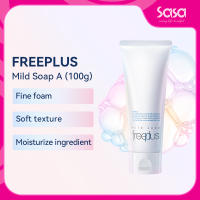
FREEPLUS Mild Soap A Cleanser Amino acid Moisturizing (100g)
₱1,005.00₱2,211.00
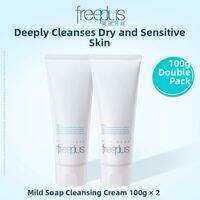
FreePlus | Moisturizing Amino Acid Pore Cleansing Face Cleanser
₱2,304.00₱3,644.00
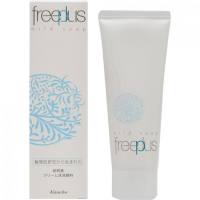
Freeplus Mild Soap Cleanser 100g
₱972.58₱2,145.96
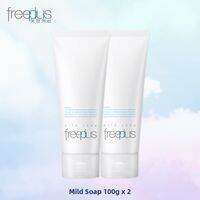
FreePlus | Amino Acid Gentle Facial Cleanser 100g
₱2,155.00₱2,184.00
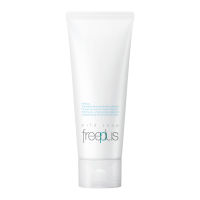
Freeplus Mild Soap Cleanser 100g
₱885.05₱1,484.00
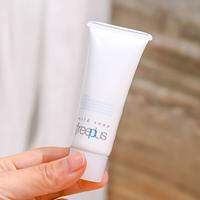
FreePlus | Gentle Non-irritating Moisturizing Face Cleansing Cream 20g
₱251.37₱868.22
About FreePlus
FreePlus (Japanese: フリープラス; Chinese: 芙丽芳丝, Fúlìfāngsī) is a Japanese skincare brand developed by Kanebo Cosmetics, a subsidiary of the Kao Group. Established in 2001 following extensive research into sensitive skin, the brand has historically positioned itself around gentle, low-irritation formulations 1.
Today, FreePlus is particularly associated with the Asian skincare market, especially China, where it has developed a significantly larger presence than in its domestic Japanese market. Kao has identified FreePlus as one of its globally nurtured cosmetics brands, utilizing it as a key component of its strategy to expand Japanese beauty offerings across East Asia and ASEAN 1.
Basic information
| Details | |
|---|---|
| Brand name | FreePlus |
| Japanese name | フリープラス |
| Chinese name | 芙丽芳丝 |
| Founded | 2001 |
| Country of origin | Japan |
| Parent company | Kao Corporation |
| Cosmetics company | Kanebo Cosmetics Co., Ltd. |
| Industry | Skincare / cosmetics |
| Core positioning | Sensitive-skin-oriented, gentle, simplified skincare |
| Major markets | Japan, China and other Asian markets |
| Notable market | China |
| Major product categories | Facial cleansing, moisturizing skincare, essences, makeup/base makeup |
History
Origins — 2001
FreePlus was launched in Japan in 2001 after Kanebo scientists spent years researching the characteristics and mechanisms of sensitive skin. The original concept focused on developing skincare that minimized irritation while maintaining effective performance 1.
The brand emerged from a philosophy distinct from conventional beauty brands of the era. Rather than presenting skincare primarily as a luxury or transformative experience, FreePlus emphasized comfort, gentleness, and respect for the skin’s condition.
Expansion into China — 2005
FreePlus entered the Chinese market in December 2005, initially offering its basic skincare range. Additional categories followed over time, including base makeup and specialized skincare lines 2.
China eventually became critically important to the brand. By 2019, Kanebo reported that overseas sales represented more than 80% of FreePlus’s total sales, identifying it as a key global strategy brand.
The Mild Soap phenomenon
One of the brand’s most recognized products is FREEPLUS MILD SOAP, a facial cleanser. Kanebo reported that it became a major seller in China in 2015 among consumers concerned about sensitive skin, subsequently describing it as the brand’s flagship product.
This success helped establish a strong association between FreePlus and gentle facial cleansing, particularly within the Chinese market.
International expansion
Kanebo has since sought to broaden the international footprint of FreePlus. In 2019, for example, the company announced the brand’s launch in Thailand, describing this move as the beginning of a wider ASEAN expansion strategy.
Consequently, the brand’s geographical strategy has remained strongly centered on Asia, rather than attempting to compete directly with Western skincare brands in North America or Europe.
Corporate ownership
FreePlus belongs to Kanebo Cosmetics Co., Ltd., which operates within Kao Corporation. This places FreePlus within a major Japanese consumer-products and beauty group. Kao’s current brand portfolio lists FreePlus alongside names such as KANEBO, Curél, KATE, LUNASOL, and SENSAI.
Kao traces its corporate history back to 1887, when Tomiro Nagase established Nagase Shoten, which later developed into Kao. The corporate structure can be summarized as:
Kao Corporation → Kanebo Cosmetics → FreePlus
Brand philosophy
The original identity of FreePlus was intrinsically linked to sensitive skin. Its current global positioning has evolved beyond this singular focus. FreePlus now promotes an approach termed “SEIKAN Skin Care”, broadly understood as a philosophy of simplified, purposeful skincare 1.
The core tenet is to use only what the skin needs, avoid unnecessary complexity, and reduce the burden created by excessive skincare routines. The brand describes this concept as “fighting excess with simplicity” 1. This approach is particularly relevant to younger consumers who may use numerous products simultaneously or select highly active skincare despite not necessarily requiring it.
The current “SEIKAN Skin Care” concept
The contemporary global identity of FreePlus is built around several principles:
- Simplicity — fewer, more purposeful skincare steps.
- Gentleness — formulas intended to be comfortable for sensitive or easily unsettled skin.
- Ingredient selection — individual ingredients selected with emphasis on their specific role and suitability.
- Biobased ingredients — highlighting the use of biobased components.
- Minimalism — avoiding unnecessary additions where possible.
- Sustainability — packaging designed with consideration for resource use.
- Skin’s natural condition — helping users maintain the skin’s own healthy-looking, energized state 1.
The global website specifically notes the use of ingredients such as amino-acid-related ingredients, PCA-Na, niacin, and lecithin 1.
Formulation philosophy
A significant aspect of the FreePlus identity is its formulation approach. The brand states that its products are formulated without parabens and artificial fragrance, while some products additionally exclude ingredients such as ethyl alcohol, artificial colorings, mineral oils, and UV absorbers. As exclusions vary by product, individual formulas require separate verification 1.
FreePlus also describes its products as having a hypoallergenic formulation and being dermatologically tested. These terms describe the brand’s testing and formulation methodology and should not be interpreted as a guarantee that every individual with sensitive skin will tolerate every product 1.
Main product categories
FreePlus has historically offered a relatively broad skincare portfolio.
Facial cleansing
Cleansing is the category most closely associated with FreePlus. The brand emphasizes amino-acid-based cleansing technology, and its Chinese site notes years of exploration in this area 2. This includes facial cleansers designed to remove impurities while maintaining a comfortable skin feel.
Moisturizing skincare
Moisturizing products constitute another major segment of the portfolio. The Chinese FreePlus lineup includes a Moist Skincare range, reflecting the brand’s emphasis on maintaining hydration and supporting skin comfort 2. Historically, this range became one of the brand’s most recognizable product families in China following a major reformulation and packaging update in 2009 2.
Essences
The current Chinese portfolio includes essence products, extending the FreePlus offering beyond basic cleanser-and-moisturizer routines 2.
Base makeup
FreePlus has also offered base makeup, although skincare remains central to its identity. The Chinese brand history records the introduction of a base-makeup range in 2006 2.
FreePlus in China
China is arguably the most important market in the modern history of FreePlus. Since entering the market in 2005, the brand developed products and marketing specifically addressing Chinese consumers’ concerns regarding sensitive, dry, oily, and unstable skin. The Chinese portfolio historically included separate lines for moisturizing, firming, brightening, oil control, and soothing/dryness concerns 2.
The importance of China is evident in Kao’s corporate reporting. In 2023, Kao stated that more than 90% of FreePlus sales were accounted for by China and that the company had undertaken a total rebranding in April 2023 in response to changes in the market environment.
This makes FreePlus a notable example of a Japanese beauty brand whose commercial center of gravity shifted significantly toward China.
2023 rebranding
The 2023 rebranding marked a significant transition. While the earlier identity was heavily associated with sensitive skin and gentle Japanese skincare, the newer positioning aims to be more contemporary and philosophical, focusing on simplicity, effective formulas, and reducing over-care 1.
The Chinese brand history describes this direction as moving beyond “excess” and “insufficiency” toward simplified skincare based on being pure, effective, and reassuring 2. Current global messaging places greater emphasis on the consumer’s lifestyle and mindset—particularly younger people navigating social pressure and uncertainty—rather than presenting FreePlus solely as a sensitive-skin product line 1.
Packaging and visual identity
FreePlus has traditionally employed a clean, soft, and minimalist visual language, with packaging that is relatively restrained compared to luxury Japanese cosmetics. This aligns with the brand’s philosophy that skincare should feel uncomplicated rather than intimidating.
The newer brand direction continues this minimalism while placing increased emphasis on sustainability. FreePlus states that its packaging incorporates sustainable materials and considers resource conservation in its design 1.
Position within Kao’s cosmetics portfolio
Kao has historically classified FreePlus as a masstige cosmetics brand, positioned between mass-market and prestige products. Strategy documents have listed FreePlus alongside SOFINA and suisai in this category, distinguishing it from higher-prestige brands such as KANEBO, SENSAI, LUNASOL, and RMK.
This positioning explains the brand’s appeal as a combination of Japanese cosmetic technology, relatively accessible skincare, and sensitive-skin positioning, rather than the luxury status associated with brands like SENSAI or KANEBO.
Brand reputation and consumer perception
FreePlus has developed a strong reputation regarding:
- Gentle facial cleansing
- Sensitive or easily irritated skin
- Japanese skincare technology
- Relatively minimalist formulations
- Hydration and skin comfort
- Amino-acid-based cleansing
- Understated packaging
- Strong popularity in China
Its reputation in China is particularly significant. Kanebo’s 2019 announcement described sales growth in Greater China as strong enough to elevate FreePlus to a major global strategy brand.
However, “sensitive skin” does not imply universal non-irritancy. Individual tolerance varies, and consumers should evaluate the ingredient list of specific products rather than assuming the entire brand suits every sensitive-skin user.
Relationship with Japanese skincare
FreePlus belongs to a broader Japanese skincare tradition emphasizing cleansing, hydration, barrier maintenance, and consistency rather than aggressive treatment. Its amino-acid-oriented cleansing philosophy is representative of this approach, with the brand’s Chinese site explicitly identifying its long-term exploration of amino-acid cleansing as part of its heritage 2.
It is worth distinguishing Japanese origin from Made in Japan. A Japanese brand does not necessarily manufacture every product in Japan; manufacturing locations and formulas may differ by product and market.
Sustainability
Sustainability has become a visible component of the contemporary FreePlus identity. The global brand highlights sustainable packaging materials, and the Japanese Kanebo site notes that the brand considers limited resources and environmental impact when developing packaging 1. This aligns with the philosophy of avoiding unnecessary complexity, extending that principle from formulation to packaging.
Name and meaning
The brand is stylized as freeplus rather than “Free Plus.” The name conveys the idea of being free from unnecessary restrictions or excess, fitting the brand’s current philosophy. In China and Chinese-speaking markets, it is known as 芙丽芳丝 (Fùlìfāngsī), commonly shortened to freeplus in English-language discussions.
Major milestones
- 2001 — FreePlus launched in Japan following research into sensitive skin 12.
- 2005 — Introduced into mainland China with its basic skincare range 2.
- 2006 — Expanded into base makeup and additional skincare categories in China 2.
- 2009 — Major ingredient and packaging renewal; moisturizing/hydrating products became especially representative of the brand 2.
- 2015 — FREEPLUS MILD SOAP became a major seller in China.
- 2017 — Kanebo strengthened Greater China marketing, including a new “Thank you, sensitivity” brand message.
- 2019 — Launched in Thailand as part of an ASEAN expansion strategy.
- 2023 — Major global rebranding introducing the simplified-skincare/“SEIKAN Skin Care” direction 1.