Shop on Lazada
Fujikura products
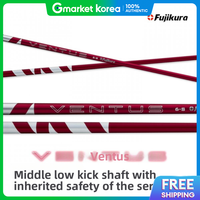
Fujikura | 24 Ventus Red Driver Shaft Japan Parallel Import Spec and Sleeve Options Available
₱19,467.26₱28,119.38
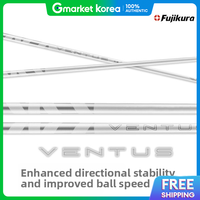
Fujikura | Fujikura 25 Ventus White Driver Shaft Japan Parallel Import Spec and Sleeve Xa3805396
₱19,068.41₱27,543.27
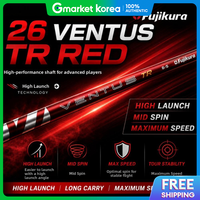
Fujikura | 26 Ventus Tr Red Driver Shaft Golfpride Grip Sleeve Fitting Pro V1
₱23,456.07₱35,873.99
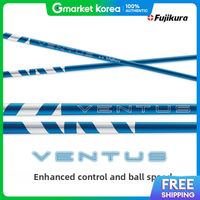
Fujikura 24 Ventus Blue Driver Shaft
₱19,068.41₱27,543.27
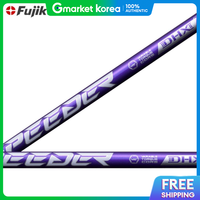
Fujikura | Speeder Nx Violet Driver Shaft
₱35,831.49₱51,756.60
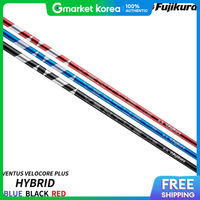
Fujikura | Fujikura Ventus Hybrid Utility Shaft Ventus Velocore Hb Ventus Xa3776461
₱14,165.90₱20,500.72
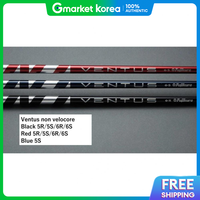
Fujikura | Ventus Shaft - Free Sleeve Work / Black / Blue / Red - 5R / 5S / 6R / 6S / 6X
₱12,180.70₱17,594.35
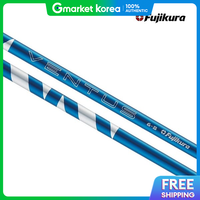
Fujikura | Genuine 24 Ventus Blue 6S Velocore+ Driver Shaft (Overall Length 45.5 Inches Custom Xa3365396)
₱23,525.72₱33,981.60
About Fujikura
Company Overview
Fujikura Ltd. (株式会社フジクラ, Fujikura Kabushiki-gaisha) is a major Japanese technology and manufacturing corporation recognised globally for its work in fibre-optic communications, optical-fibre equipment, electrical power systems, electronics and automotive wiring systems. Although the name Fujikura is frequently associated with fibre-optic cables and fusion splicers, the company’s operations extend significantly beyond these products. Its origins date to 1885, when founder Zenpachi Fujikura commenced manufacturing wire-related products in Tokyo. Today, Fujikura operates as a global technology group serving the telecommunications, data centre, energy, automotive and electronics industries.1
| Category | Information |
|---|---|
| Company | Fujikura Ltd. |
| Japanese name | 株式会社フジクラ |
| Founded | February 1885 |
| Legally established | March 18, 1910 |
| Headquarters | Kiba, Koto-ku, Tokyo, Japan |
| President & CEO | Naoki Okada |
| Employees | 50,586 consolidated, as of March 31, 2026 |
| FY2025 consolidated sales | ¥1,182.4 billion |
| Major fields | Telecommunications, energy, electronics, automotive |
| Core technological idea | “Tsunagu” Technology™ — technology for connecting things |
| Corporate identity | “Fujikura, a Technology Leader” |
As of March 31, 2026, the company reports capital of ¥530 billion.
Nature of Business
Fujikura functions primarily as a technology infrastructure provider. Rather than selling finished consumer goods, its products typically serve as critical components within larger systems. Fujikura technologies are commonly found inside telecommunications networks, fibre-optic data centres, electric-power transmission systems, electric vehicles, smartphones, industrial equipment and high-performance computing infrastructure. Consequently, while the brand may be less visible to general consumers than consumer electronics manufacturers, it maintains a substantial global technological footprint. The company categorises its primary areas of contribution as energy, telecommunications, electronics and automotive electrical systems.
Brand Identity and Philosophy
The corporate identity of Fujikura is anchored by two core concepts: an “enterprising spirit” that drives entry into emerging markets, and the positioning of “Fujikura, a Technology Leader,” which reflects its long history of specialised manufacturing and engineering. The modern corporate tagline, “Shaping the future with ‘Tsunagu’ technology™,” utilises the Japanese word tsunagu (つなぐ), meaning “to connect.” This concept is central to the company’s operations, as its technologies physically or technologically connect wires, optical fibres, electronic circuits, power systems, vehicles and communication networks.1
This philosophy of connection is evident across its product portfolio:
| Technology | What Fujikura connects |
|---|---|
| Optical fiber | Information |
| Fiber splicing | Optical networks |
| Power cables | Electrical power |
| Wire harnesses | Vehicle electrical systems |
| FPCs | Electronic circuits |
| Connectors | Electronic components |
| Sensors | Physical world → electronic systems |
| Superconducting wires | High-performance electrical systems |
History
Foundation and Early Years
The history of Fujikura began in February 1885. Founder Zenpachi Fujikura developed an interest in electricity after witnessing an arc lamp demonstration in Tokyo in 1883, during the early stages of Japan’s electrification. Leveraging his existing expertise in braiding technology, he began manufacturing silk- and cotton-wrapped wire in Kanda, Tokyo.1 This strategic pivot from traditional craft manufacturing to the emerging electrical industry laid the foundation for the company.
Between 1888 and 1893, Fujikura expanded production to include electric wire, lamp cords, coated wire and rubber-insulated wire. In 1893, the company began manufacturing rubber-insulated wire in Japan, marking a significant milestone in its electrical-wire technology development. This period established a recurring pattern in the company’s evolution: adopting new technology, developing specialised materials, building manufacturing expertise and contributing to infrastructure.
20th-Century Expansion
As Japan industrialised, Fujikura grew from a small wire manufacturer into a comprehensive electrical and communications technology company. Its capabilities expanded to include power cables, communications cables, coaxial cables, automotive wiring, electronic components, flexible printed circuits (FPCs), optical fibre and optical-fibre equipment. A pivotal transition occurred during this era as the company evolved from a pure electrical-wire manufacturer into a diversified technology group.
Optical Communications Era
A defining chapter in Fujikura’s history was its entry into optical fibre. Key milestones in this transition included:
- 1974: Commenced evaluation of optical-fibre preform manufacturing using the CVD method.
- 1979: Began manufacturing flexible printed circuits (FPCs).
- 1985: Developed the world’s first core-alignment optical-fibre fusion splicer.1
The development of the fusion splicer was particularly significant. This equipment aligns two optical fibres and permanently joins them by melting their glass ends together with extreme precision, a process essential for building and maintaining fibre-optic networks. This innovation cemented Fujikura’s international reputation in optical-fibre fusion splicing technology.
Corporate Renaming
On October 1, 1992, the company changed its name from Fujikura Electric Wire to Fujikura Ltd. This rebranding reflected its transformation from a simple electric-wire manufacturer into a diversified technology company active in electronic materials, optical systems, telecommunications and other advanced fields. This distinction remains relevant today: whereas the historical Fujikura focused on electrical wire, the modern entity specialises in advanced connectivity and infrastructure technologies.
Core Business Areas
Telecommunications
Telecommunications is arguably the field for which Fujikura holds the strongest international reputation. This business encompasses optical fibre, fibre-optic cables, connectors, fusion splicing, installation technologies, network infrastructure and data centre solutions. These technologies are utilised by telecommunications operators, contractors and network builders globally. The company retains particular expertise in fibre-optic connection and splicing.
Data Centres
Data-centre infrastructure has become an increasingly vital sector for Fujikura. Modern data centres require high-speed connections to facilitate massive data exchange between servers, switches and storage systems. Fujikura supplies technologies for high-density optical connectivity, supporting the growth of cloud computing, artificial intelligence, high-performance computing, hyperscale data centres, 5G/6G telecommunications and large-scale internet infrastructure.
Energy and Electrical Infrastructure
Building upon its origins in electrical wire, Fujikura now operates a broad energy and power-infrastructure business. This includes electrical cables and connection systems used in power infrastructure, directly linking the company’s modern operations to its 19th-century roots in establishing electric-power and communications infrastructure.1
Automotive
Fujikura is a major supplier to the automotive industry, focusing on wire harnesses and electrical distribution systems. A wire harness is an organised assembly of wires, connectors and components that distributes power and signals throughout a vehicle. Products include conventional wire harnesses, high-voltage wire harnesses for electric vehicles (EVs), automotive components and power-distribution systems. For this business segment, Fujikura maintains manufacturing, development and sales bases across Asia, North America, South America and Europe.
Electric Vehicles
The shift towards electric vehicles has created new opportunities for Fujikura. EVs require complex high-voltage electrical systems connecting batteries, inverters, motors and charging systems. In response, Fujikura develops high-voltage wire harnesses and related components specifically for EVs, while also working to reduce wiring complexity and weight to improve vehicle efficiency and range.
Electronics
The electronics business covers components such as Flexible Printed Circuits (FPCs), FPC/FFC connectors, sensors, electronic materials and high-density connection technologies. FPCs are thin, bendable circuit boards used where space is limited or flexibility is required. Fujikura has manufactured FPCs since 1979, making this a longstanding area of expertise rather than a recent diversification.
Superconducting Technology
Fujikura engages in advanced research and development involving superconducting wires and tapes, which carry electrical current with extremely low resistance. Notable achievements include setting a world record for critical current using yttrium-based oxide superconducting wire in 2007 and increasing production of rare-earth-based high-temperature superconducting tapes for small fusion-power-plant applications in 2023.
Signature Product: Fusion Splicers
In the telecommunications industry, Fujikura is widely recognised for its fusion splicers. These devices perform several critical operations: stripping the protective coating from an optical fibre, cleaving the fibre precisely, aligning the ends, fusing the glass via electric arc and evaluating splice quality. The objective is to achieve a connection with minimal optical loss and high mechanical reliability. The company’s decades-long history in this field, dating back to its 1985 core-alignment innovation, makes the Fujikura name particularly familiar among fibre-optic technicians and network engineers.1
Competitive Strengths
Several factors distinguish Fujikura in the global market:
- Long history: With roots dating to 1885, the company possesses over 140 years of accumulated manufacturing and engineering experience.1
- Materials and manufacturing expertise: Competitive advantage is derived from the ability to develop and manufacture specialised materials, cables, connectors and precision equipment in-house.
- Optical-fibre expertise: The company maintains deep historical knowledge in fibre-optic connection and fusion-splicing technologies.
- Diversification: Operations span multiple industries, reducing dependence on any single market.
- Infrastructure orientation: Many products serve as components in large infrastructure projects, fostering long-term relationships with telecommunications companies, automotive manufacturers and energy providers.
Market Positioning
Fujikura operates primarily as a business-to-business (B2B) technology brand. While consumers rarely purchase Fujikura products directly, the company’s technology is often embedded in daily infrastructure. For instance, internet usage relies on optical networks that require fibre connections and splicing, while EV operation depends on high-voltage electrical distribution systems that may utilise Fujikura components. In this regard, Fujikura is comparable to infrastructure-focused firms such as TE Connectivity, Sumitomo Electric, Prysmian, Corning or Amphenol, rather than typical consumer electronics brands.
Global Presence and Corporate Scale
Fujikura has expanded well beyond its Japanese origins, with products and operations spanning Japan, Asia, North America, South America and Europe. This global expansion accelerated in the late 20th century alongside the internationalisation of optical communications, electronics and automotive manufacturing.
As of March 31, 2026, the company reported 50,586 consolidated employees, capital of ¥530 billion and consolidated sales of ¥1.1824 trillion for FY2025. Headquarters are located at 1-5-1 Kiba, Koto-ku, Tokyo 135-8512, Japan, with Naoki Okada serving as President and CEO.
Historical Milestones
- 1885: Zenpachi Fujikura begins wire manufacturing.
- 1893: Production of rubber-insulated wire commences in Japan.
- 1910: Fujikura is formally established as a company.
- 1930s–1940s: Expansion of electrical and communications cable technology.
- 1957: Manufacturing of automotive wiring harnesses begins.
- 1974: Evaluation of optical-fibre preform manufacturing begins.
- 1979: FPC manufacturing commences.
- 1985: Development of the world’s first core-alignment optical-fibre fusion splicer.1
- 1992: Corporate name changed from Fujikura Electric Wire to Fujikura Ltd.
- 2007: World record achieved involving yttrium-based superconducting wire.
- 2009: Manufacturing of fibre lasers begins.
- 2011: Current group brand logo introduced.
- 2020: Fujikura cold plates utilised in the Fugaku supercomputer.
- 2023: Production of high-temperature superconducting tapes expanded for fusion applications.
- 2025: 140th anniversary celebrated.
- 2026: Reports over 50,000 consolidated employees and ¥1.18 trillion in FY2025 sales.