Shop on Lazada
Hope products
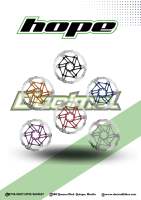
Hope Disk Rotor Floating ( SOLD AS PAIR. )
₱7,990.00₱8,999.00
![HOPE SPACE DOCTOR [ NEW RELEASE ] COLORED ALUMINUM SPACER KIT ROAD GRAVEL MTB AM ENDURO XC TRAIL DJ 4X DH BICYCLES [ BIKE TAYO ]](https://ph-live.slatic.net/p/206b62e79a0aa00462aa4540eed27d21.jpg_200x200q80.jpg)
HOPE SPACE DOCTOR [ NEW RELEASE ] COLORED ALUMINUM SPACER KIT ROAD GRAVEL MTB AM ENDURO XC TRAIL DJ 4X DH BICYCLES [ BIKE TAYO ]
₱1,275.00
Buy on Lazada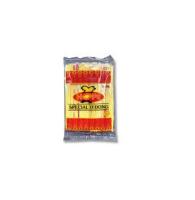
Hope Special Odong 20g 12s
₱60.00
Buy on Lazada![[CycleArt] HOPE SEAT CLAMP - BOLT ST 31.8 / 34.9](https://ph-live.slatic.net/p/2ceb314da1289b6f24cbcee748ee1f42.jpg_200x200q80.jpg)
[CycleArt] HOPE SEAT CLAMP - BOLT ST 31.8 / 34.9
₱2,552.00₱4,899.84
![HOPE HUB PRO2 PRO2EVO PRO4 FRONT CONVERSION ADAPTORS QR / 15MM / 20MM / SRAM O/S / 15MM BOOST ADAPTOR / 12MM [ 100% ORIGINAL QUALITY BICYCLE PARTS ] BIKE TAYO](https://ph-live.slatic.net/p/865ad4c30e603ebd72c48fecd81dea5b.jpg_200x200q80.jpg)
HOPE HUB PRO2 PRO2EVO PRO4 FRONT CONVERSION ADAPTORS QR / 15MM / 20MM / SRAM O/S / 15MM BOOST ADAPTOR / 12MM [ 100% ORIGINAL QUALITY BICYCLE PARTS ] BIKE TAYO
₱2,245.00
Buy on Lazada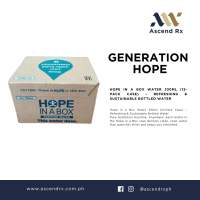
Hope in a Box Water 330ml 12-Pack Case Refreshing Sustainable Bottled Water Eco-Conscious Recyclable Environmentally-Friendly Social Impact by ascendrx
₱500.00
Buy on Lazada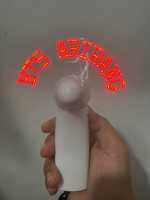
BTS Arirang World Tour Concert Led Banner Mini Fan
₱159.00₱250.00
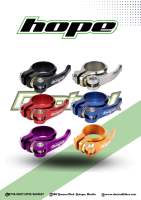
Hope Seat Clamp 34.9
₱1,990.00
Buy on LazadaAbout Hope
Hope, formally associated with GenerationHope, Inc., is a Philippine impact organization and social enterprise established in 2012. Operating under the principle of “Business for Good,” the organization utilizes commercial products and partnerships to generate measurable social and environmental impact.1 Its flagship product, HOPE in a Bottle, was developed to provide ordinary consumers with a direct means of contributing to public education through everyday purchases.1
Hope describes itself as the first certified B Corporation in the Philippines.1 Its business model is structured around directing 100% of its profits toward initiatives focused on public-school infrastructure, livelihood development, and environmental conservation.1
History
Hope was launched in 2012 with the objective of making social contribution accessible to ordinary Filipinos.4 Rather than relying solely on traditional philanthropy, the organization developed consumer products designed to generate funding for social programs through sales revenue.
Its first major product, HOPE in a Bottle, is a bottled-water brand whose profits are committed to building classrooms for public schools in the Philippines.1 The concept was intended to allow consumers to “vote with their peso” by choosing a product that connects everyday consumption with nation-building.1
In 2014, Hope expanded its scope beyond education to include livelihood development.4 It initiated agricultural programs designed to increase income opportunities for smallholder coconut farmers in Mindanao, broadening its impact model from classroom construction to community economic development.1
Environmental sustainability subsequently became a central pillar of the organization’s strategy. In 2018, Hope introduced what it described as the Philippines’ first boxed water and continued efforts to manage its plastic footprint.4 According to its own impact reporting, the organization later became the country’s first Net Zero Plastic Waste-certified brand.1
Business Model
Hope operates differently from conventional consumer brands by designing product purchases to create specific social benefits. The organization defines this philosophy as “Business for Good,” incorporating social and environmental objectives directly into its core business operations rather than treating them as separate corporate social responsibility activities.1 Products, retail partnerships, and commercial activities serve as primary mechanisms for generating impact.
The organization’s stated areas of impact include:
- Education: Building and improving public-school infrastructure.
- Livelihoods: Creating economic opportunities, particularly for smallholder coconut farmers and community-based entrepreneurs.
- Environment: Addressing plastic waste and supporting conservation-related initiatives.
- Consumer participation: Providing an accessible avenue for consumers to contribute to social causes through purchasing decisions.1
HOPE in a Bottle
HOPE in a Bottle serves as the organization’s flagship product and a central element of its identity. Launched in 2012, the bottled-water brand is directly linked to Hope’s education mission, with profits supporting the construction of public-school classrooms nationwide.2 The product transforms ordinary consumption into a vehicle for social participation, allowing buyers to contribute to educational infrastructure simultaneously with their purchase.
Intellectual property records associate the HOPE in a Bottle trademark with bottled drinking water. A 2025 publication by the Intellectual Property Office of the Philippines lists Friends of Hope, Inc. as the applicant for the HOPE IN A BOTTLE mark in the bottled-drinking-water category.3
Education Initiatives
Education constituted the original focus of Hope’s social-impact model. Through sales of HOPE in a Bottle and subsequent partnerships, the organization has supported classroom construction for public schools across the country.4 Impact reports document the progression from the completion of its first classroom to a nationwide building program.4
The organization positions education infrastructure as a practical contribution to long-term national development. Its model seeks to connect consumer spending directly with tangible infrastructure improvements rather than providing undirected monetary donations.4
Livelihood Programs
In 2014, Hope expanded its impact work by entering the agricultural sector.4 Its agricultural program partners with smallholder coconut farmers in Mindanao to increase household income and create sustainable livelihood opportunities. Reported targets have included planting millions of coconut seedlings and engaging additional farmers in the program.1
Hope has also developed initiatives involving community entrepreneurs and waste management. One such program is Aling Tindera, a waste-to-cash initiative that works with women micro-entrepreneurs operating community plastic-waste collection sites.5
Environmental Sustainability
Environmental responsibility is a defining component of the Hope brand. Recognizing that selling bottled water could contribute to the plastic-waste problem, the organization adopted strategies to account for the environmental impact of its products.4
In 2018, Hope launched a boxed-water product and pursued comprehensive plastic-waste initiatives.4 The organization subsequently reported achieving certification as the first Net Zero Plastic Waste brand in the Philippines.1 This approach reflects the principle that social impact should not be achieved at the cost of creating equivalent or greater environmental problems.
B Corporation Certification
Hope is recognized as a certified B Corporation. B Lab lists GenerationHope, Inc. as a certified entity headquartered in Metro Manila, operating in the beverage and manufacturing sector.2 The organization has held this certification since October 2017.2
B Corporation certification evaluates companies against standards regarding social and environmental performance, accountability, and transparency. This status distinguishes Hope as an impact-driven business rather than a conventional consumer-goods company.2
Brand Philosophy
The central philosophy of Hope posits that business can serve as a mechanism for social change. Brand messaging emphasizes that contributing to social good should be accessible without requiring extraordinary effort or wealth. Products and partnerships are framed as ways for ordinary Filipinos to participate in nation-building.1
This creates three interconnected dimensions:
Consumer brand → Business → Social impact
Consumers purchase a product, the business generates revenue, and the resulting profits are directed toward social and environmental objectives.
Recognition and Milestones
Key milestones in the organization’s history include:
- 2012: Hope launches and introduces HOPE in a Bottle.
- 2013: Construction of the first public-school classroom begins.
- 2014: Launch of the agricultural and livelihood program for smallholder coconut farmers.
- 2017: GenerationHope becomes a certified B Corporation.2
- 2018: Launch of boxed water; receipt of B Corp recognition for community impact.4
- 2019: Continuation of community-focused B Corp recognition; accreditation by the Philippine Council for NGO Certification.4
- 2020: Milestone of 100 classrooms built reached.4
- 2021: Expansion of waste-to-cash work and major environmental initiatives.4
- 2022: Impact reporting highlights the planting of one million trees alongside continued environmental and livelihood programs.4
Founder
Hope was founded by Nanette Medved-Po, who is credited with developing the organization as a social enterprise.2 B Lab identifies Hope as an organization founded in 2012 with a mission to enable consumer participation in social good through purchasing decisions.2
Medved-Po has received recognition for her philanthropic and social-impact work. Impact reporting notes that Forbes recognized her as a Hero of Philanthropy.4
Brand Identity and Significance
Hope’s identity is built on the proposition that everyday commerce can create positive change. Rather than presenting itself solely as a bottled-water company, the brand encompasses education, livelihood, environmental responsibility, community development, and consumer participation. Its distinctive feature is the impact model attached to its products rather than the physical goods alone.
Within the Philippine social-enterprise landscape, Hope is significant for popularizing a model where a consumer brand directly connects commercial activity with measurable social objectives. Its evolution from a classroom-focused water brand to an organization addressing education, agriculture, livelihood, and sustainability demonstrates an integrated approach to social impact.1 As a certified B Corporation, Hope represents a shift toward defining business success through social and environmental outcomes alongside financial performance.2