Shop on Lazada
Fundador products
![[Buy 3 Save P100 Bundle] Fundador Super Special 1L - Pack of 3](https://ph-live.slatic.net/p/70b879a52e3432c9de7f3aaa06fe9c7b.png_200x200q80.jpg)
[Buy 3 Save P100 Bundle] Fundador Super Special 1L - Pack of 3
₱810.00₱945.00
![[Buy 2 Save P50] Fundador Light 1L](https://ph-live.slatic.net/p/60f122bd2adc2d2d4ee93c44c4bba9ff.png_200x200q80.jpg)
[Buy 2 Save P50] Fundador Light 1L
₱730.00₱790.00

FUNDADOR SET SALE BUNDLE SET ( 2 -1 LITER AND 1 -500ML)
₱799.00
Buy on Lazada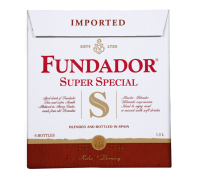
Fundador Super Special 1.5L X 6 (Case)
₱2,850.00₱3,000.00

Fundador Super Special 1l x 12 (Case)
₱3,591.00₱3,780.00
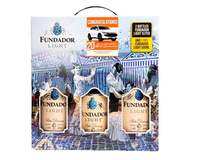
Fundador Light 1L Buy 2 Get Fundador Light 500ml Free
₱750.50₱790.00
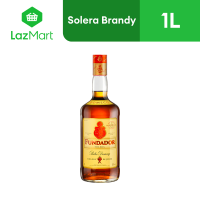
Fundador Solera 1l
₱657.40₱692.00
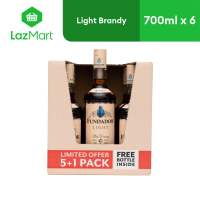
Fundador Light 700ml 5 + 1 (Case)
₱1,488.00₱1,860.00
About Fundador
Overview
Fundador is a historic Spanish brandy originating in Jerez de la Frontera, Andalusia, Spain. It is produced by Bodegas Fundador, one of the oldest wine and spirit producers in the Jerez region. While the bodega’s origins trace back to 1730, the Fundador name was established in 1874 when Pedro Domecq Loustau created what the company recognizes as the first Spanish brandy 1.
Today, Fundador is part of Emperador Inc., the Philippines-based global spirits group. Emperador acquired the Spanish brandy and sherry business containing Fundador from Beam Suntory in 2015, with the transaction completed in 2016.
| Category | Information |
|---|---|
| Brand | Fundador |
| Category | Brandy |
| Country of origin | Spain |
| Region | Jerez de la Frontera, Andalusia |
| Producer | Bodegas Fundador |
| Parent company | Emperador Inc. |
| Established | 1874 as the Fundador brand |
| Bodega origins | 1730 |
| Founder associated with brand | Pedro Domecq Loustau |
| Style | Brandy de Jerez |
| Key aging method | Solera system |
| Notable grape varieties | Airén and Palomino |
| Major international market | Philippines |
| Notable premium range | Fundador Supremo |
History
Origins: 1730
The history of Fundador begins with Bodegas Fundador, whose roots are traced to 1730 in Jerez. The winery developed within the historic wine-making culture of the region, an area renowned for sherry and later for Brandy de Jerez 1.
The Domecq family subsequently became central to the company’s development. Pedro Domecq Loustau is credited with creating Fundador in 1874. The name Fundador translates to “Founder” in Spanish 1.
Birth of Spanish brandy
According to company records, Pedro Domecq Loustau produced the first Spanish brandy at the Bodega de la Luz in Jerez in 1874. This milestone established the Fundador name and set an early benchmark for what would become known as Brandy de Jerez 1.
Production was closely linked to the existing sherry industry. Brandy produced in Jerez traditionally utilized oak casks that had previously held sherry, imparting characteristics associated with the region’s distinctive style.
The Domecq era
The influence of the Domecq family extended beyond the product itself. The winery cultivated long-standing associations with Spanish aristocracy and royalty. Historical accounts highlight connections with figures including King Ferdinand VII and King Alfonso XIII 1. This royal patronage became integral to the brand’s heritage, helping establish Fundador as a premium Spanish spirit.
Characteristics of Brandy de Jerez
Fundador belongs to the Brandy de Jerez tradition, which is distinct from other European brandy-making styles. A defining characteristic is the use of the solera system. Rather than treating each batch separately, this system uses tiers of casks from which older spirit is periodically drawn and replaced with younger spirit, creating a continuous aging and blending process.
Grapes and aging
Fundador has historically utilized specific grape varieties, primarily:
- Airén
- Palomino
Emperador Inc. describes Fundador as being made from Airén and Palomino grapes and aged in a sherry-seasoned solera. The combination of grape distillates, Jerez aging practices, and sherry-seasoned oak forms the core of the brand’s identity.
Significance of the name
The Spanish word fundador translates to “founder.” The name was chosen because the brand was presented as a pioneering Spanish brandy; according to company history, it represented the first brandy produced in Spain 1.
This name proved prescient regarding the brand’s future relationship with the Philippines. Fundador served as the inspiration for Filipino businessman Andrew Tan when he later created Emperador Brandy. Tan recalled drinking Fundador with his family after graduating from university in 1974, a personal connection that eventually became commercially significant.
Relationship with the Philippines
The Philippines holds unique importance in Fundador’s international history. The brand was sold in the country for more than a century, becoming a well-known imported premium brandy. At the time of its acquisition by Emperador, the Philippines was Fundador’s largest export market.
The relationship between the brand and the country eventually came full circle. Andrew Tan, whose company produced Emperador Brandy, had originally been inspired by Fundador. In 2015, his company acquired the Spanish brandy business that included Fundador. Consequently, Fundador inspired the creation of Emperador Brandy, which decades later acquired Fundador itself. Tan has described Fundador as the direct inspiration behind the name and creation of Emperador.
Acquisition by Emperador
In 2015, Emperador announced the acquisition of the Fundador brand and related Spanish spirits assets from Beam Suntory for approximately €275 million. The transaction included brands such as Terry Centenario, Tres Cepas, and Harveys.
Completed in February 2016, the acquisition transferred Bodegas Fundador’s production facilities, aging cellars, vineyards, and bottling infrastructure in Spain to Emperador. This move transformed Emperador from primarily a Philippine brandy producer into a major international spirits group with historic Spanish assets.
Fundador under Emperador
Fundador currently sits within the brandy portfolio of Emperador Inc., alongside brands such as Emperador, Terry, Presidente, and Don Pedro. Emperador describes Fundador as Spain’s largest and oldest brandy, with products matured through the solera system around Jerez.
The company’s 2024 annual report identifies Fundador as the flagship brand of Bodegas Fundador and the first and largest Brandy de Jerez company. Products are distributed internationally as part of Emperador’s global portfolio.
Product range
Fundador encompasses several expressions aimed at different segments of the brandy market.
Fundador Brandy
The classic Fundador expression represents the brand’s traditional Spanish style. It is characterized by Jerez production, solera maturation, sherry-influenced oak, Spanish grape distillates, and a smooth, rounded profile.
Fundador Supremo
Fundador Supremo represents the brand’s premium positioning. The range includes aged expressions such as Fundador Supremo 18. According to Emperador, Supremo 18 received the title of Best Brandy in the World at the International Wine & Spirit Competition (IWSC) in 2019. This range demonstrates the brand’s expansion beyond the traditional mass-market segment into luxury spirits.
Production process
Fundador’s identity is tied specifically to Jerez. The production process involves several key stages:
- Grape production: Airén and Palomino grapes provide the base for the spirit.
- Distillation: Fermented wine is distilled to produce grape spirit.
- Oak maturation: The spirit is aged in oak casks.
- Sherry influence: Sherry-seasoned casks contribute color, aroma, and flavor.
- Solera blending: Spirits of different ages are progressively blended.
- Bottling: The finished brandy is prepared for domestic and international markets.
Because of the solera approach, the character of Fundador reflects generations of continuous maturation rather than the age of a single cask.
Flavor profile
While individual expressions vary, Fundador and the broader Brandy de Jerez tradition are generally associated with notes of dried fruit, raisin, vanilla, caramel, oak, spice, toasted elements, and nutty or sherry-derived characteristics. The use of sherry-seasoned barrels distinguishes Jerez brandy from many French-style grape brandies.
Cultural presence in the Philippines
Fundador maintains a significant cultural footprint in the Philippines. Its history in the country predates the Emperador acquisition by decades, and it became synonymous with imported premium brandy and celebratory occasions.
This connection continues under Emperador’s ownership. In 2022, Asia’s first brandy museum opened in Iloilo City, featuring an immersive recreation of a Fundador bodega in Spain.
Timeline
- 1730: Origins of Bodegas Fundador traced to Jerez 1.
- 1874: Pedro Domecq Loustau creates and markets Fundador, recognized as the first Spanish brandy 1.
- 19th–20th centuries: Fundador develops as a major Spanish brandy and export brand.
- 1974: Andrew Tan encounters Fundador during his university graduation celebration, inspiring his future brandy ambitions.
- 1980s: Tan develops his Philippine spirits business.
- 1990: Emperador Brandy is launched in the Philippines.
- 2015: Emperador agrees to acquire Fundador and associated assets from Beam Suntory.
- 2016: Acquisition completed; Emperador assumes distribution of Fundador in the Philippines.
- 2019: Fundador Supremo 18 receives IWSC Best Brandy in the World recognition.
- 2022: Fundador-themed brandy museum opens in Iloilo City, Philippines.
- Today: Fundador remains a flagship brand within Emperador’s global portfolio.