Shop on Lazada
Schweppes products
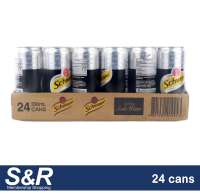
Schweppes Sparkling Soda Water 24 cans x 330 mL
₱1,108.00
Buy on Lazada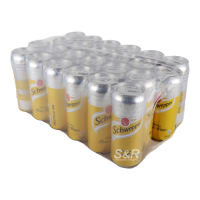
Schweppes Sparkling Tonic Water 24 cans x 330 mL
₱1,034.00
Buy on Lazada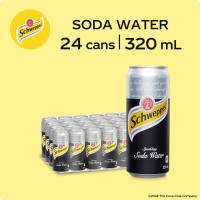
Schweppes Soda Water 320ml - Pack of 24
₱1,243.00
Buy on Lazada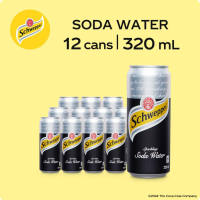
Schweppes Soda Water 320ml - Pack of 12
₱621.00
Buy on Lazada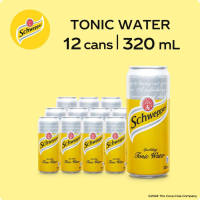
Schweppes Tonic Water 320ml - Pack of 12
₱621.00
Buy on Lazada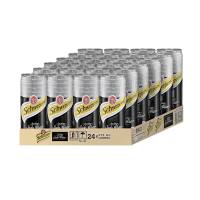
Schweppes Sparkling Soda Water in Can 24 x 325mL
₱1,299.00₱2,249.00
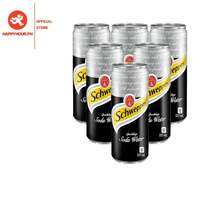
Schweppes Soda Water 320ml
₱353.00
Buy on Lazada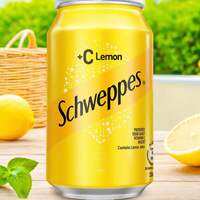
Schweppes Cream Soda 330ml From HONG KONG
₱63.00₱65.00
About Schweppes
Schweppes is one of the world’s oldest and most recognised carbonated beverage brands. Founded in 1783 by Jacob Schweppe, the brand originated in Geneva, Switzerland, and is widely associated with the early development of commercially bottled carbonated water. Over more than two centuries, Schweppes evolved from a pioneering soda-water business into an international beverage brand known particularly for tonic water, ginger ale, soda water, lemonade, and other sparkling mixers.1
Unlike many modern beverage brands, Schweppes does not have one single worldwide corporate owner today. Ownership, licensing, production, and distribution vary by country or region. For example, The Coca-Cola Company owns Schweppes in certain markets, while Suntory controls the brand in much of continental Europe, and other companies operate it in additional territories.1
Quick facts
| Category | Information |
|---|---|
| Brand | Schweppes |
| Founded | 1783 |
| Founder | Jacob Schweppe |
| Origin | Geneva, Switzerland |
| Industry | Beverages / Soft drinks |
| Best known for | Tonic water and sparkling mixers |
| Original product | Carbonated mineral/soda water |
| Major products | Tonic Water, Ginger Ale, Soda Water, Lemonade, Bitter Lemon and regional variants |
| Global status | International brand |
| Ownership | Varies by territory |
| Brand heritage | More than 240 years |
| Major historical milestone | Royal appointment in Britain in the 1830s |
| Famous association | Gin & tonic and cocktail/mocktail mixers |
History
Origins: 1783
The story of Schweppes begins with Jacob Schweppe, a German-born watchmaker, jeweller/silversmith, and amateur scientist who became fascinated with the emerging science of carbonation.
In 1783, Schweppe developed a practical method for producing and bottling carbonated water in Geneva. His innovation allowed water to be artificially carbonated and commercially produced on a scale that was unusual for the period. The company and brand that developed from this invention became one of the earliest recognizable soft-drink businesses.1
The original Schweppes product was essentially carbonated mineral/soda water, rather than the flavoured tonics and mixers for which the brand is now particularly famous.
The significance of the invention is important: Schweppes appeared at a time when carbonation was a new technological and scientific curiosity. The brand therefore positioned itself at the intersection of science, innovation, health, luxury, and refreshment.
Moving toward Britain
Schweppe’s business expanded beyond Switzerland, eventually establishing itself in Britain. The British market became extremely important to the company’s development and to Schweppes’ identity.
The brand’s British history is one reason Schweppes is often perceived today as a distinctly British heritage brand, even though its founder and original business came from Geneva.
The royal connection
Schweppes gained an important status symbol in Britain during the 19th century.
The company received a Royal Warrant/royal appointment as a supplier to the British royal household in the 1830s, helping establish Schweppes as a premium and prestigious beverage brand. Different Schweppes historical accounts give slightly different dates for the royal appointment, with official regional histories citing 1831, 1836, or 1837 depending on the particular warrant or milestone being described.2
This association with the monarchy became an important part of Schweppes’ historical reputation.
The Great Exhibition of 1851
Another major moment came with the Great Exhibition of 1851 in London.
Schweppes was associated with the event and became highly visible to visitors. The brand installed a prominent fountain, which became one of its most recognizable historical symbols.
That fountain ultimately became incorporated into the Schweppes logo, making the visual identity itself a reference to the company’s 19th-century history.1
This is an interesting example of historical branding: an event from the Victorian era remains visually connected with the brand more than a century later.
From soda water to flavoured beverages
Although soda water created the business, Schweppes gradually expanded into flavoured carbonated beverages.
One early example was Schweppes Aerated Lemonade, introduced in the 1830s. This represented a major transition from Schweppes being primarily a carbonated-water company toward becoming a broader soft-drink brand.
Over time, Schweppes developed products such as:
- Soda Water
- Lemonade
- Ginger Ale
- Tonic Water
- Bitter Lemon
- Dry Lemon
- Flavoured tonic waters
- Other regional sparkling beverages and mixers
The exact portfolio varies considerably between countries.
Tonic Water
The product that made Schweppes famous as a mixer
One of the most important developments in Schweppes’ history was the creation and commercialisation of tonic water.
Schweppes’ historical accounts associate the development of its Indian Tonic Water with the 19th century and the use of quinine, an ingredient historically associated with preventing and treating malaria. Schweppes’ Spanish history, for example, dates its tonic-water development to 1870, when quinine was added in connection with British troops in India.5
Historically, tonic water was considerably more medicinal and bitter than many modern versions. Its evolution eventually transformed it into a popular beverage and, especially, a cocktail mixer.
Today, Schweppes Tonic Water is strongly associated with drinks such as the gin and tonic, although the product is also consumed on its own or used in other cocktails and mocktails.
Ginger Ale
Another important Schweppes product is ginger ale.
Ginger ale helped establish Schweppes beyond Europe and contributed to its reputation as a versatile sparkling beverage brand. Modern Schweppes portfolios commonly include varieties such as ginger ale alongside tonic water and soda water, although formulations and availability differ by market.3
Ginger ale also occupies a slightly different position from tonic water: it is commonly consumed as a soft drink by itself, while tonic water has a particularly strong association with mixing.
What does “Schweppes” mean?
The brand name comes directly from its founder, Jacob Schweppe.
The name therefore functions much like many historical founder-based brands: the person’s surname became the identity of the company and eventually became an internationally recognized trademark.
The distinctive pronunciation of “Schweppes” has also become part of the brand’s identity.
The famous “Schweppervescence”
One of Schweppes’ most memorable pieces of branding is the word “Schweppervescence.”
The term was popularized through Schweppes advertising in the 1950s, particularly through advertising associated with Commander Edward Whitehead. It was a playful combination of “Schweppes” and “effervescence,” emphasizing the bubbles and distinctive sparkling character of the drinks.
The word became closely associated with the brand’s advertising personality.
In branding terms, it is significant because it turns an ordinary product characteristic—carbonation—into something proprietary and memorable.
The Schweppes logo
The Schweppes visual identity is strongly connected to its history.
One of its most recognizable elements is the fountain, inspired by the spectacular fountain associated with the 1851 Great Exhibition.1
The logo therefore communicates several ideas simultaneously:
- Heritage
- British sophistication
- Carbonation
- Refreshment
- Tradition
- Premium positioning
This helps explain why Schweppes packaging tends to look more like a heritage premium beverage than a youthful mass-market soda brand.
Brand positioning
Schweppes occupies an interesting position in the beverage industry.
It is technically a soft-drink brand, but consumers often perceive it differently from brands such as Coca-Cola or Pepsi.
Schweppes has traditionally emphasized:
Premium + sophistication + carbonation + mixing + heritage
rather than simply:
Sweet + youthful + mass-market refreshment
This is especially apparent with its tonic-water products.
The brand is commonly used in:
- Cocktails
- Mocktails
- Bars
- Restaurants
- Hotels
- Home entertaining
- Everyday soft-drink consumption
Schweppes itself describes the brand as an “ultimate mixer”, emphasizing its role in enhancing beverages and cocktails.6
Schweppes and cocktails
Perhaps Schweppes’ most important modern cultural association is its role as a mixer.
The classic example is:
Gin + Schweppes Tonic Water = Gin & Tonic
This association has helped move Schweppes beyond the traditional soft-drink category and into the world of hospitality and mixology.
Tonic water is now often marketed based on characteristics such as:
- Bitterness
- Effervescence
- Balance
- Citrus notes
- Quinine
- Compatibility with spirits
This gives Schweppes a somewhat unusual position: it can simultaneously be a soft drink, premium mixer, and bar ingredient.
Product portfolio
The exact portfolio differs by country, but Schweppes products commonly include:
Tonic waters
- Schweppes Tonic Water
- Indian Tonic Water
- Zero/No Sugar Tonic Water
- Flavoured tonic variants
- Pink tonic variants in selected markets
Sparkling soft drinks
- Ginger Ale
- Lemonade
- Bitter Lemon
- Dry Lemon
- Regional fruit-flavoured sparkling drinks
Mixers
- Soda Water
- Club Soda
- Tonic Water
- Other specialty mixers
For example, Coca-Cola’s current Schweppes portfolio in one regional market lists Indian Tonic Water, No Sugar Indian Tonic Water, Soda Water, Lemonade, Ginger Ale, Dry Lemon, Mojito and Tropical Sunset. This illustrates how significantly the range can differ from country to country.6
Global presence
Schweppes is now an international brand sold across numerous markets.
However, an important point about Schweppes is that the brand is not controlled by one company worldwide.
This happened because the brand’s international trademark and business assets became divided between different companies and territories over decades of corporate acquisitions, licensing arrangements and market-specific agreements.
The Coca-Cola Company
The Coca-Cola Company owns Schweppes in certain countries outside the United States and produces/distributes Schweppes through its system in various markets. Coca-Cola’s own corporate materials explicitly describe Schweppes as a brand it owns in certain countries.1
Suntory
In continental Europe, Suntory Beverage & Food owns Schweppes in a defined group of markets.
Suntory acquired the Orangina Schweppes Group in 2009, including Schweppes rights in countries such as France, Germany, Spain, Italy, Belgium, Switzerland and several other European markets.7
Other operators
Schweppes is also operated by different beverage companies in other regions, illustrating why the packaging, formulas, advertising and available flavours can differ depending on where you live.
Consequently, it is more accurate to describe Schweppes as a globally distributed brand with territory-specific ownership and licensing arrangements than as a brand belonging exclusively to Coca-Cola or Suntory.
Schweppes in the United States
The United States is particularly notable because Schweppes is associated with a different corporate structure than many international markets.
The North American Schweppes business has historically been connected with Keurig Dr Pepper, while Coca-Cola controls the brand in numerous other countries.
This is one reason statements such as “Schweppes is a Coca-Cola brand” can be misleading when applied globally.
Schweppes in Australia
In Australia and New Zealand, Schweppes is associated with Asahi Beverages.
Asahi’s history page describes Schweppes as a brand whose origins go back to Jacob Schweppes and credits the company with selling the world’s first carbonated bottled water.4
This demonstrates again that Schweppes’ corporate ownership is geographically fragmented.
Schweppes in Europe
Europe is particularly important to the modern identity of Schweppes.
In much of continental Europe, the brand is operated by Suntory Beverage & Food, following Suntory’s acquisition of Orangina Schweppes in 2009.7
The European portfolio can include tonic water, ginger ale, lemonade, bitter lemon and other regional products.
Schweppes in the Philippines
Schweppes is also available in the Philippines, where Coca-Cola’s system has marketed the brand.
Coca-Cola’s global brand information identifies Schweppes among its brands in various international markets, while the specific product range and distribution arrangements can vary by country.6
Why Schweppes is historically important
Schweppes is more than simply another soft-drink brand.
Its importance comes from its place in the history of carbonation itself.
Before modern soft drinks became a huge global industry, producing stable carbonated beverages was a technological challenge. Jacob Schweppe’s work helped make carbonated water commercially viable.
Consequently, Schweppes can be viewed as one of the foundational brands of the modern carbonated beverage industry.
Its heritage predates:
- Coca-Cola
- Pepsi
- 7UP
- Sprite
- Most modern soda brands
By comparison, Coca-Cola was first introduced in 1886, more than a century after Schweppes began.
Brand heritage
Schweppes’ heritage can be summarized through several recurring themes:
1. Innovation
The brand began with a technological innovation: capturing and maintaining carbonation.
2. Craftsmanship
Its founder came from a watchmaking/jewellery background, and the brand’s early history emphasizes precision and experimentation.
3. British prestige
The company’s development in Britain and its royal association helped establish a sophisticated image.
4. Effervescence
Bubbles are at the heart of the product and the brand’s identity.
5. Mixology
Tonic water and other mixers made Schweppes particularly relevant to bars and cocktails.
6. Longevity
Few beverage brands can claim a history stretching back to 1783.
Advertising and cultural identity
Schweppes has historically relied heavily on sophisticated, distinctive advertising rather than simply presenting itself as a generic soda.
Its mid-20th-century advertising helped establish terms such as “Schweppervescence”, while later campaigns continued to emphasize sophistication, bubbles, taste and social occasions.
The brand’s advertising has therefore contributed to an identity that is often:
elegant, witty, mature, sophisticated and slightly eccentric.
This differentiates Schweppes from the more youthful, energetic branding traditionally associated with major cola companies.
“Schweppes” as a heritage brand
From a branding perspective, Schweppes is an excellent example of a heritage brand.
A heritage brand uses its historical legitimacy as part of its modern value proposition.
Schweppes can credibly say:
We have been doing carbonation for centuries.
That gives the brand an authenticity that newer competitors cannot easily replicate.
Its 1783 founding date is therefore not merely historical information—it is a major marketing asset.
Brand strengths
Schweppes’ major strengths include:
- Exceptional brand longevity — founded in 1783.
- Strong historical credibility in carbonation.
- High recognition in international markets.
- Distinctive visual identity.
- Strong association with tonic water.
- Deep connection with cocktails and mixology.
- Premium/heritage positioning.
- Broad international distribution.
- A highly memorable brand name.
Challenges
Despite its heritage, Schweppes faces the same broad challenges confronting the modern soft-drink industry.
Health and sugar
Consumers are increasingly conscious of sugar consumption, which has encouraged the development of zero-sugar, diet and reduced-sugar variants.
Competition
Schweppes competes not only with traditional soda brands but also with:
- Premium tonic brands
- Craft mixers
- Flavoured sparkling waters
- Energy and functional beverages
- Premium adult soft drinks
- Other cocktail mixers
Changing consumer preferences
Younger consumers may be more interested in natural ingredients, lower sugar, sustainability and new flavour experiences.
This means Schweppes must balance its historical identity with contemporary expectations.
What makes Schweppes different?
The simplest way to understand Schweppes is:
Coca-Cola is primarily associated with cola.
Pepsi is primarily associated with cola.
Sprite is associated with lemon-lime soda.
Schweppes is particularly associated with carbonation, tonic water and premium mixing.
That distinction is central to the brand.
Schweppes does not need to be the world’s biggest soda brand to be valuable. Its strength lies in occupying a distinctive niche between soft drink, mixer, premium refreshment and heritage brand.
Timeline
- 1783 — Jacob Schweppe develops his carbonation process in Geneva and establishes the origins of Schweppes.
- Early 19th century — The business expands and develops its position in Britain.
- 1830s — Schweppes receives British royal recognition/appointment.1
- 1835 — Schweppes Aerated Lemonade is introduced.
- 1851 — Schweppes participates prominently in the Great Exhibition in London; its famous fountain becomes part of its visual heritage.
- 19th century — The company expands its flavoured beverages and develops tonic water.
- 1870 — Schweppes’ historical accounts associate this period with the introduction/development of its Indian Tonic Water.5
- 1950s — Advertising popularizes the term “Schweppervescence.”
- 1999 — Coca-Cola acquires Schweppes rights in a number of markets, while the brand remains subject to different ownership arrangements elsewhere.
- 2009 — Suntory acquires Orangina Schweppes Group, including Schweppes in numerous continental European markets.7
- Today — Schweppes operates as a global brand with different owners, manufacturers and distributors depending on territory.1
In one paragraph
Schweppes is a historic international carbonated-beverage brand founded in Geneva in 1783 by Jacob Schweppe, whose pioneering work helped establish the commercial production of bottled carbonated water. After expanding into Britain, the brand became associated with royal patronage, the 1851 Great Exhibition, and increasingly sophisticated sparkling beverages. It later became particularly famous for tonic water, ginger ale and other mixers, developing a strong connection with cocktails and premium refreshment. Today, Schweppes is one of the world’s oldest surviving beverage brands, with its trademarks and operations divided among different companies in different geographic markets, including The Coca-Cola Company, Suntory and other major beverage groups. Its enduring identity is built around heritage, carbonation, sophistication, tonic water and mixology.2