Shop on Lazada
Gilbert products
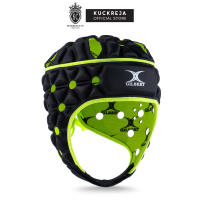
Gilbert air headguard-Black
₱3,350.00
Buy on Lazada
Gilbert Arnicrise Soothing Arnica Gel
₱420.00
Buy on Lazada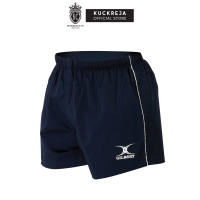
Gilbert match shorts-Navy
₱1,329.00
Buy on Lazada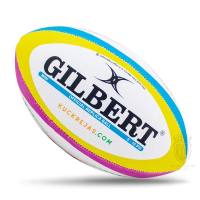
Gilbert midi rugby ball (size 2) -multicolour
₱708.00
Buy on Lazada
Corning Gilbert UltraEase F59/F6 Compression Connector (Pack of 10pcs)
₱340.00
Buy on LazadaAbout Gilbert
Gilbert Rugby, commonly referred to as Gilbert, is a British sporting-goods brand best known for its rugby union balls, equipment, apparel, and training products. Founded in 1823 in Rugby, England, by bootmaker William Gilbert, it is one of the world’s oldest sporting brands and describes itself as the longest-serving rugby brand globally. Its history is closely intertwined with the development and internationalisation of rugby itself.1
Today, Gilbert is owned by Grays of Cambridge International Ltd, part of the family-owned Grays sporting-goods group, and is headquartered in Robertsbridge, East Sussex, England. The brand operates internationally and has expanded beyond rugby balls into teamwear, clothing, boots, protective equipment, training equipment, and netball products.2
Quick facts
| Field | Information |
|---|---|
| Brand name | Gilbert / Gilbert Rugby |
| Founded | 1823 |
| Founder | William Gilbert (1799–1877) |
| Place of origin | Rugby, Warwickshire, England |
| Industry | Sporting goods |
| Primary sport | Rugby union |
| Other sport | Netball |
| Best known for | Rugby balls |
| Current owner | Grays of Cambridge International Ltd |
| Current base | Robertsbridge, England |
| Market | International |
| Major distinction | Official Rugby World Cup ball supplier since 1995 |
| Heritage | More than 200 years |
The company was originally associated with William Gilbert’s boot- and shoemaking business in Rugby. By 1823, he was already supplying balls to Rugby School.
Origins
The story of Gilbert begins in the English town of Rugby at the beginning of the 19th century.
William Gilbert (1799–1877) was a boot and shoemaker whose shop was located near Rugby School. His business became involved in producing balls for the school and, eventually, for the emerging sport that would become rugby football.3
According to the traditional story of rugby’s origins, in 1823, Rugby School pupil William Webb Ellis picked up a football and ran with it during a game, an act traditionally credited with giving birth to rugby football.
The Gilbert family later became strongly associated with this story because the ball supposedly involved was a Gilbert-made ball. It is important to distinguish the legend from established historical fact: the Webb Ellis story itself is disputed by historians, but Gilbert’s documented association with Rugby School dates back to the same period.4
This connection became fundamental to Gilbert’s identity.
The original Gilbert rugby ball
Early Gilbert rugby balls were very different from modern versions. They consisted of a hand-stitched leather casing surrounding a bladder. Early balls were relatively round or plum-shaped, while the characteristic oval shape became increasingly pronounced as bladder technology evolved.
The famous oval form was influenced by the use of pig bladders. Later, technological developments—including the invention of the rubber bladder in 1875 by Richard Lindop, another Rugby-based development—helped transform the ball into something much closer to the modern rugby ball.
Gilbert’s modern balls no longer use pig bladders. Most contemporary Gilbert rugby balls use synthetic materials and modern bladder technology, although the company has continued producing heritage-style leather balls as a tribute to its history.
Expansion during the 19th century
Gilbert’s reputation grew rapidly as rugby itself became more organised and widespread.
By 1851, Gilbert rugby balls had gained enough recognition to receive a medal at the Great Exhibition in London. The brand also received recognition at the 1862 exhibition.5
When William Gilbert died in 1877, his nephew James Gilbert took over the business. At this point, Gilbert was reportedly producing approximately 2,800 balls per year and had begun exporting balls overseas, including to Australia.6
This was an important transition: Gilbert was no longer simply a local supplier associated with Rugby School but was becoming an international sporting-goods business.
The Gilbert family’s emphasis on quality
The Gilbert name became associated with meticulous manufacturing. One particularly notable figure was James John Gilbert, the last member of the Gilbert family directly involved in the business. According to the company’s history, he personally checked and stamped match balls as part of an effort to maintain consistent quality.7
This tradition of quality control became part of the brand’s identity. Gilbert’s modern marketing continues to emphasise similar concepts: precision, consistency, performance, and innovation.
20th-century development
Gilbert remained a significant rugby-ball manufacturer during the 20th century. In 1946, the company entered into a joint venture with Glasgow-based football manufacturer Thomlinsons, which became involved in distribution and marketing. The Gilbert Match Ball continued to be widely used.8
However, the sporting-goods industry was changing. New manufacturing technologies and synthetic materials created increasing competition for traditional leather-ball manufacturers. Gilbert experienced difficulties as the industry changed, and the Gilbert family sold the business in 1978.
Acquisition by Grays
A major turning point came in 2002, when Grays of Cambridge International Ltd acquired the Gilbert brand. Grays was already an established British sporting-goods company with roots going back to the 19th century. Under Grays ownership, Gilbert continued to develop rugby-ball technology while expanding its broader product range.9
The acquisition effectively brought two historic British sporting brands together:
- Grays — particularly associated with hockey and other sports
- Gilbert — particularly associated with rugby and netball
Gilbert remains part of the Grays family today.10
Gilbert and the Rugby World Cup
One of Gilbert’s biggest claims to sporting prestige is its relationship with the Rugby World Cup. Gilbert has supplied the official match ball for every Rugby World Cup since 1995. This makes the brand particularly prominent because the Rugby World Cup is the premier international competition in rugby union.
Major Gilbert Rugby World Cup balls have included:
- 1995 — South Africa
- 1999 — Wales
- 2003 — Australia
- 2007 — France
- 2011 — New Zealand
- 2015 — England
- 2019 — Japan
- 2023 — France
The Xact ball was used at the 2003 World Cup, while Gilbert subsequently developed increasingly sophisticated match balls for later tournaments.11
For Gilbert, the Rugby World Cup is more than a sponsorship: the match ball is one of the most visible pieces of equipment in the entire tournament.
Olympic rugby
Gilbert has also played a role in the Olympic return of rugby. When rugby sevens returned to the Olympic Games at Rio 2016, Gilbert was selected as the official and exclusive ball supplier for the rugby sevens competition. The relationship continued for Tokyo 2020.12
This helped reinforce Gilbert’s position not only in traditional 15-a-side rugby but also in the rapidly growing sevens format.
World Rugby Sevens Series
In 2014, Gilbert became the official and exclusive ball supplier to the HSBC World Rugby Sevens Series. The series brings national sevens teams together in tournaments around the world, giving Gilbert significant visibility across multiple international rugby markets.
This was strategically important because rugby sevens has become one of the sport’s most internationally accessible formats.
Products
Although rugby balls remain Gilbert’s signature product, the modern company offers a much broader range.
Rugby balls
This remains the heart of the brand. Gilbert produces:
- Match balls
- Training balls
- Replica balls
- Junior balls
- Mini rugby balls
- Heritage/leather balls
- Special-edition balls
- Technology-focused performance balls
Its balls are designed around factors such as grip, shape, flight stability, durability, weight, and handling.
Rugby clothing
Gilbert also produces rugby apparel including:
- Jerseys
- Shorts
- Training tops
- Jackets
- Teamwear
- Base layers
- Casual/heritage clothing
The company has increasingly developed customised teamwear for clubs and organisations.
Rugby equipment
The wider equipment portfolio includes products such as:
- Rugby boots
- Mouthguards
- Protective equipment
- Tackle equipment
- Training equipment
- Bags
- Kicking and training aids
- Post padding
Gilbert describes its product range as extending from match balls into essentially the broader requirements of rugby players and teams.
Netball
An interesting part of Gilbert’s modern history is its involvement in netball. After becoming part of the Grays family, Gilbert expanded its sporting activities into netball and developed balls and equipment for the sport.
Technology and innovation
Gilbert’s modern identity is not based solely on heritage. The company has invested heavily in rugby-ball development, particularly in surface grip, ball shape, aerodynamics, bladder technology, valve systems, consistency, durability, and manufacturing precision.
For example, the 2023 Rugby World Cup ball incorporated new dual-valve technology intended to improve balance and consistency.
More recently, Gilbert has also promoted smart-ball technology, training equipment, and products designed around modern player development. The company’s current philosophy is essentially to combine a 200-year rugby heritage with modern sports technology.
Major teams and organisations
Gilbert products have been associated with numerous major rugby organisations. The company identifies relationships with national rugby organisations including:
- England
- Wales
- Scotland
- Australia
- South Africa
- France
- Italy
- Argentina
Its products are also used at club, school, and grassroots levels. Gilbert has also had a significant relationship with the Barbarians, supplying their rugby balls and teamwear.
Brand philosophy
Gilbert describes its brand values around Trust, Teamwork, Inclusivity, Performance, and Passion. Its stated mission is to inspire the rugby community through products, partnerships, and content.
This is significant because Gilbert positions itself differently from a generic sporting-goods manufacturer. Its identity is strongly sport-specific. Rather than attempting to compete across dozens of sports like some enormous global sporting brands, Gilbert has historically concentrated its expertise around rugby and, more recently, netball.
Gilbert’s brand identity
Gilbert’s brand can broadly be understood through five characteristics.
Heritage
Few sporting brands can claim a relationship with one sport stretching back to its formative period. Gilbert traces its rugby history to 1823.
Authenticity
Gilbert’s association with Rugby School and the early development of rugby gives the company an unusually strong connection to the sport’s historical identity.
Professional performance
The company’s involvement with the Rugby World Cup and international teams gives Gilbert credibility at elite level.
Grassroots rugby
Gilbert does not only target professional athletes. It also produces junior balls, training equipment, school products, and club teamwear.
Technical innovation
The modern brand increasingly presents itself as a technology-driven performance company rather than simply a traditional leather-ball manufacturer.
Gilbert vs. other sporting brands
Gilbert occupies a somewhat unusual position in the sporting-goods industry. Compared with Nike, Adidas, or Puma, Gilbert is much more specialised. Its competitive identity is closer to a specialist rugby authority than a general-purpose global sportswear company.
Its greatest advantage is therefore not the sheer size of its product portfolio but its depth of rugby expertise and historical credibility. In rugby balls specifically, Gilbert is one of the most recognisable names in the world.
The 200-year milestone
Gilbert celebrated its bicentenary in 2023, marking approximately two centuries of association with rugby. The company used the milestone to emphasise its connection with the entire history of the sport—from grassroots rugby to international competition.
The significance is considerable: Gilbert’s history predates the formation of the Rugby Football Union in 1871, meaning the company was making rugby balls before rugby had even developed its modern governing structure.
Gilbert today
As of 2026, Gilbert remains a British, family-owned sporting brand under the Grays group and continues to focus heavily on rugby. Its modern portfolio combines rugby balls, teamwear, apparel, boots, protective equipment, training equipment, accessories, and netball products.
The company remains particularly visible through elite rugby competitions, while also maintaining a presence in schools, clubs, and grassroots rugby. Recent Gilbert material continues to emphasise its ball-making heritage and modern manufacturing processes, describing the company as having spent two centuries refining the shape, weight, grip, and flight characteristics of rugby balls.
Why Gilbert is important to rugby
Gilbert is significant because its history is unusually intertwined with the history of the sport itself. Many sporting brands entered rugby after the sport had already become established. Gilbert, by contrast, was producing balls in Rugby in the early 19th century, when rugby football was still developing.
Over the following two centuries, the brand evolved from a small shoemaker-associated ball maker into an international specialist sporting-goods company. Its trajectory can be summarised as:
William Gilbert’s workshop
↓
Rugby School supplier
↓
19th-century rugby-ball manufacturer
↓
International exporter
↓
20th-century sporting brand
↓
Acquisition by Grays in 2002
↓
International rugby equipment company
↓
Rugby World Cup & Olympic supplier
↓
Modern performance and teamwear brand
References
- About Us
- The Gilbert Rugby Story | A brief history of Rugby’s oldest brand
- The history of sports manufacturer Gilbert – Companies House
- Gilbert Rugby About Us | Leaders in Rugby Gear & Innovation
- Heritage Series: “Meet the Makers: Crafting a Gilbert Rugby Ball in 20
- About Us – Gilbert Rugby
- GILBERT RUGBY CELEBRATE BICENTENARY
- Official match ball design unveiled for Rugby World Cup 2027 as Gilbert extends long-term partnership with World Rugby until 2033 | World Rugby
- Gilbert Rugby – The Official Site
- History of the Gilbert group
- LA NOSTRA STORIA
- About Us