Shop on Lazada
Goody products
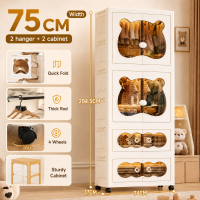
Goody Childrens Clothes Storage Wardrobe Cabinet Cartoon Wardrobe Durabox Cabinet Drawer For Kid Clothes
₱5,499.00₱8,897.00
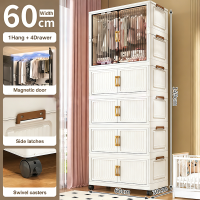
Goody Foldable Cabinet for Clothes with Big Wheels Storage Organizer Durabox Plastic Wardrobe
₱2,716.47₱4,598.00
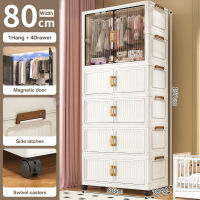
Goody 60cm Foldable Cabinet for Clothes Storage Plastic Wardrobe Closet Organizer For Baby Kids
₱4,179.05₱6,099.00
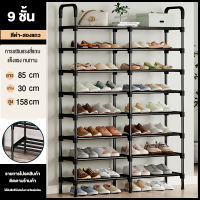
Goody Shoe Rack Stainless Steel Stackable Shoes Organizer Storage For Dormitory Bedroom Organizer Shelf
₱1,184.82₱1,599.00
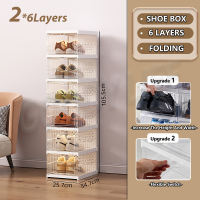
Goody Large Size Shoe Box Storage Hard Case Organizer Clear Plastic Stackable Foldable Shoe Holder Flip-open Shoe Cabinet Organizer Box Student Dormitory Assembled Dustproof and Moisture-proof Shoe Rack
₱2,231.55₱5,999.00
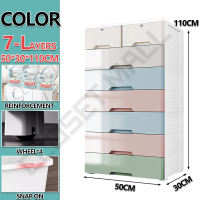
Goody 60cm Durabox Cabinet Drawer Clothes Storage Cabinet With Wheels Drawer With Lock Clothes
₱2,185.72₱5,409.00
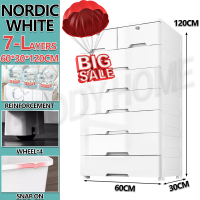
Goody Drawer Cabinet Durabox Plastic Wardrobe Clothes Storage Cabinet Organizer Imitation Wood Grain
₱3,092.25₱4,199.00
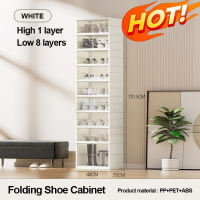
Foldable Shoe Cabinet Organizer Acrylic Plastic Shoe Rack Organizer Double Door Dustproof Shoe Box Storage Organizer Space Saving Shoe Organisers
₱2,971.23₱4,599.00
About Goody
Overview
Goody is an American hair-accessories and hairstyling brand best known for products such as hair brushes, combs, elastics, clips, barrettes, scrunchies, headbands, and other everyday styling accessories. The brand traces its origins to 1907, when immigrant entrepreneur Henry Goodman began a business in New York. Over more than a century, Goody developed from a small family business into a major mass-market hair-accessories company.1
Today, Goody markets itself as a major hair-accessory brand, with products including SlideProof™ claw clips, Ouchless® elastics, and Snap and Go™ clips.2
| Attribute | Information |
|---|---|
| Brand | Goody |
| Company | Goody Products, Inc. |
| Industry | Beauty / Personal Care |
| Category | Hair accessories and hairstyling |
| Founded | 1907 |
| Founder | Henry Goodman |
| Origin | New York, United States |
| Current headquarters | Atlanta, Georgia, United States |
| Notable products | Brushes, combs, hair elastics, clips, claw clips, barrettes, scrunchies and styling accessories |
| Major historical owner | Newell Company / Newell Brands |
| Current ownership | ACON Investments-backed ownership following the 2018 sale |
| Website | goody.com |
Early beginnings
Goody’s history begins with Henry Goodman, a Jewish immigrant from Ukraine who came to the United States with his family. After an unsuccessful attempt at running a grocery business, Goodman became a peddler, selling merchandise from a pushcart on Manhattan’s Lower East Side. The business eventually developed into a manufacturer and distributor of personal-care products.1
The company is generally dated to 1907, making Goody one of the oldest continuously recognizable names in the American hair-accessories industry. Over subsequent decades, the business remained under the control of the Goodman family and expanded its product range.1
Goody eventually became particularly associated with hair brushes, combs, barrettes, clips and ponytail holders, establishing itself as a mass-market rather than luxury-oriented brand.
Expansion during the 20th century
By the late 20th century, Goody had become a significant American hair-accessories manufacturer. Its products were distributed through large retail channels, including mass merchants and drug and grocery stores. A 1990s U.S. International Trade Commission report described Goody as the only vertically and horizontally integrated U.S. producer in its segment and reported approximately $218 million in sales in 1992.
The company also expanded beyond traditional hair accessories into related personal-care products. Historically, its portfolio included brands and products such as ACE grooming products and other beauty-related merchandise.
Acquisition by Newell
A major turning point came in the early 1990s.
Newell Company, a consumer-products manufacturer, began acquiring an interest in Goody as part of its strategy of building a portfolio of consumer brands distributed through major retailers. Newell ultimately acquired Goody Products in 1993. Newell’s filings state that it acquired substantially all of Goody’s assets in November 1993 for approximately $147.1 million, after already owning a minority stake.
Under Newell, Goody became part of a much larger consumer-products organization. The brand continued to specialize in hair accessories while benefiting from Newell’s manufacturing, distribution and retail infrastructure.
By the late 1990s and 2000s, Goody was firmly established as a mainstream American hair-accessories brand.
Newell Brands era
Newell underwent several corporate transformations over the following decades, eventually becoming Newell Brands.
During this period, Goody remained part of Newell’s portfolio and was described by the company as a leading manufacturer of hair-care accessories. Its products included the Goody, ACE and Wilhold trademarks and were sold through mass merchants, warehouse clubs, grocery and drug stores, and specialty retailers.
Goody’s business increasingly focused on two closely related areas:
- Hair accessories
- Hair-styling tools
This included products designed not merely to hold hair but also to assist with everyday styling.
Sale to ACON Investments
In August 2018, Newell Brands announced that it had reached an agreement to sell Goody Products to ACON Investments, a private-equity investment firm. Newell described Goody as a leading manufacturer of hair-styling tools and accessories.
At the time of the announcement, Goody had generated approximately $115 million in net sales during 2017.
The transaction marked the end of Goody’s long period as part of the Newell corporate family and returned the brand to independent ownership backed by private equity.
Products
Goody’s product philosophy is centered on making hair styling accessible, convenient and practical for everyday consumers.
Its product portfolio includes several major categories.
Hair elastics
Goody is particularly well known for hair ties and elastics. Its Ouchless® range is designed around holding hair while reducing pulling and snagging. The Ouchless name has become one of the brand’s most recognizable product families.2
Hair brushes
Brushes have historically been one of Goody’s core categories. The company has produced brushes for different hair types and styling purposes, ranging from everyday detangling to more specialized styling.
Combs
Combs represent another traditional part of Goody’s portfolio, extending back to the company’s early history.
Hair clips
Goody produces numerous types of clips, including everyday snap clips and styling clips.
Its Snap and Go™ products are positioned around quick, convenient styling.2
Claw clips
Claw clips have become an important part of Goody’s contemporary portfolio. The brand’s SlideProof™ Claw Clips are marketed around improved grip and stability.2
Barrettes and fashion accessories
Historically, Goody has also produced decorative barrettes, fashion clips, headbands, scrunchies and other accessories.
Major product families
Some of Goody’s recognizable sub-brands and product lines include:
- Ouchless® — hair elastics and accessories designed for comfortable everyday use.
- SlideProof™ — claw clips designed to stay in place.
- Snap and Go™ — snap-style hair clips focused on quick styling.
- Goody ColourCollection™ — fashion-oriented accessories.
- Goody Luxe™ — more fashion-focused/premium accessories.
- Styling Therapy™ — styling-oriented products.
- Mosaic™ — decorative/fashion hair accessories.
Goody’s current website prominently features Ouchless, SlideProof and Snap and Go alongside its broader accessory collection.2
Brand positioning
Goody occupies an interesting position within the beauty industry.
It is not primarily a luxury beauty brand. Instead, it operates in the mass-market and accessible beauty segment, where the emphasis is on:
- Convenience
- Affordability
- Everyday usability
- Functional design
- Variety
- Broad retail availability
This positioning has allowed Goody to appeal to a very broad consumer base rather than targeting one particular age group or hairstyle.
Its products can be used for extremely simple purposes—such as tying a ponytail—as well as more elaborate styling.
Design philosophy
A major characteristic of Goody is the combination of function and fashion.
Traditional hair accessories tend to solve practical problems: keeping hair in place, detangling hair, creating ponytails or securing hairstyles.
Goody has increasingly combined those functions with contemporary fashion trends. Claw clips, scrunchies, decorative barrettes and headbands, for example, can function simultaneously as styling tools and fashion accessories.
The company’s current branding summarizes this philosophy around personal expression, using the positioning:
“Your Style. Your Look. Your Way.”2
Retail strategy
Historically, Goody’s success has been strongly connected to mass retail distribution.
Newell’s historical filings describe Goody products being sold through mass merchants, warehouse clubs, grocery and drug stores, and department/specialty stores.
This distribution model is important to understanding Goody’s brand identity. Rather than relying primarily on standalone boutiques, Goody became a brand consumers could encounter while shopping for everyday personal-care products.
The strategy helped make Goody a familiar household name in the United States.
Goody in the modern beauty market
The modern hair-accessories market has become increasingly influenced by fashion trends, social media and hairstyle tutorials.
Products such as claw clips, scrunchies and decorative hair clips have moved beyond being purely functional objects and have become fashion accessories in their own right.
Goody competes in this environment with brands ranging from mass-market accessory manufacturers to fashion-oriented companies. Industry research continues to identify Goody Products as one of the significant companies in the hair-accessories sector.
The brand has consequently had to balance its traditional reputation for practical hair accessories with newer consumer interest in aesthetics, trends and styling.
Brand identity
Goody’s identity can broadly be described through four characteristics:
1. Everyday
The brand is designed for products people can use as part of ordinary daily routines.
2. Accessible
Goody’s traditional mass-market distribution makes its products relatively easy for consumers to find.
3. Functional
The fundamental purpose of its products remains practical hair management and styling.
4. Fashion-conscious
Contemporary Goody products increasingly incorporate colors, shapes, materials and silhouettes associated with current fashion trends.
Together, these characteristics position Goody somewhere between a functional personal-care brand and a fashion-accessories brand.
Significance of the brand
Goody is notable not simply because it sells hair accessories, but because of its longevity.
The company dates back to 1907, meaning that the Goody name has survived more than a century of changes in consumer behavior, manufacturing, retail and beauty culture.1
Its history also illustrates a broader pattern in American consumer goods:
family business → national manufacturer → acquisition by a major conglomerate → independent/private-equity ownership → modern lifestyle brand.
That history makes Goody an interesting example of how an apparently simple consumer product—something as ordinary as a hairbrush or hair tie—can develop into a large, internationally recognized brand.
Timeline
| Year | Event |
|---|---|
| 1907 | Henry Goodman establishes the business that becomes Goody.1 |
| 20th century | Goody develops into a major producer of hair accessories and related personal-care products. |
| 1980s–1990s | The company expands its product range and national retail presence. |
| 1993 | Newell acquires Goody Products. |
| 1990s–2010s | Goody operates as part of the Newell/Newell Brands consumer-products portfolio. |
| 2018 | Newell Brands announces the sale of Goody Products to ACON Investments. |
| 2020s | Goody continues developing hair accessories and styling products, including Ouchless, SlideProof and Snap and Go.2 |
| 2026 | Goody continues operating as a dedicated hair-accessories and styling brand. |
Disambiguation
There are several unrelated brands named “Goody,” including GoodyCo, the Saudi food brand founded in 1969,3 and Goody’s Powder, the American pain-relief brand founded in 1932.