Shop on Lazada
Goodyear products
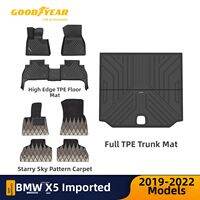
Goodyear | Suitable for BMW Models TPE Car Floor Mats
₱28,320.03₱48,593.11
Goodyear | Silicone Steering Wheel Cover
₱721.66₱1,439.63
Goodyear | Car Decoration Mats Set for Tesla Model Y
₱35,857.26₱70,947.72
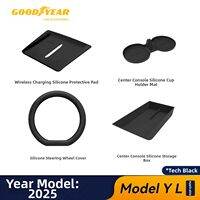
Goodyear | Tesla Suitable Steering Wheel Cover New Version
₱2,228.84₱3,689.98

GOODYEAR Fully Synthetic ACER FS 5W40 Diesel Engine Oil (1 Liter)
₱675.00₱750.00
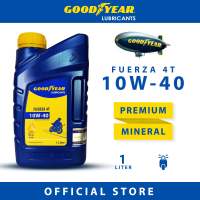
GOODYEAR MOTORCYCLE Premium Mineral 4T 10W40 1L FUERZA 4T Motorbike Engine Oil
₱340.00₱425.00

GOODYEAR MOTORCYCLE Premium Mineral 4T 10W40 800ML FUERZA 4T Motorbike Engine Oil
₱280.00₱350.00

GOODYEAR Synthetic Blend CRUIZER 10W40 Gasoline Engine Oil (1 Liter)
₱402.30₱447.00
About Goodyear
Overview
The Goodyear Tire & Rubber Company, commonly known as Goodyear, is an American multinational corporation specialising in tyres and rubber products. Headquartered in Akron, Ohio, United States, the company was established in 1898 and has since developed into one of the world’s most recognised tyre manufacturers. Its operations encompass consumer vehicles, commercial transport, aviation, motorsport, and advanced mobility technologies.1
Goodyear currently articulates its corporate vision as being “#1 in Tires and Service.”2
Corporate profile
| Item | Information |
|---|---|
| Official name | The Goodyear Tire & Rubber Company |
| Common name | Goodyear |
| Founded | August 29, 1898 |
| Founder | Frank A. Seiberling |
| Headquarters | Akron, Ohio, United States |
| Industry | Tyre manufacturing, rubber products, mobility services |
| Main products | Tyres, retread products, tyre-related technologies and services |
| Major markets | Passenger vehicles, SUVs, trucks, buses, aircraft, racing, industrial/off-road |
| Global manufacturing | 49 facilities in 19 countries |
| Employees/associates | Approximately 68,000 |
| Annual sales | More than $20 billion |
| Major brands | Goodyear, Cooper, Dunlop and various regional/sub-brands |
| Headquarters region | North America |
| Corporate identity | Wingfoot logo and Goodyear Blimp |
| Website | goodyear.com |
History
Foundation and early years
Frank A. Seiberling founded Goodyear in 1898 in Akron, Ohio. The company was named in honour of Charles Goodyear, the American inventor credited with developing vulcanised rubber.3 During its initial years, Goodyear did not manufacture tyres exclusively; its product range included diverse rubber goods such as horseshoe pads, poker chips, carriage tyres, and bicycle tyres.4 Akron subsequently emerged as a primary centre for the American rubber and tyre industry, with Goodyear becoming a defining enterprise within the city.
Automotive expansion
As the automobile gained prominence in the early 20th century, tyre production became Goodyear’s central business activity. A significant milestone occurred in 1908 when Goodyear supplied tyres for the Ford Model T, firmly associating the brand with the burgeoning automotive sector.5 The company’s expansion paralleled the rise of mass car ownership throughout the United States.
Brand identity and symbols
Wingfoot logo
Goodyear’s Wingfoot logo remains one of its most enduring visual identifiers. The design depicts a winged foot based on Mercury, the Roman deity associated with travel and commerce. Founder Frank Seiberling drew inspiration from a statue of Mercury when establishing the company’s visual identity.6 The symbol has since become synonymous with the brand globally.
Goodyear Blimp
The Goodyear Blimp serves as a prominent non-product symbol for the corporation. Although Goodyear constructed airships for military use during World War I, it began utilising blimps for promotional purposes in 1925. Since that time, hundreds of branded airships have appeared over major cities and sporting events.7 The blimp is closely linked to American football, baseball, motorsport, television broadcasting, and corporate advertising, reinforcing associations with mobility, aviation, and major public events.
Products and business segments
While primarily recognised as a tyre manufacturer, Goodyear’s business extends to the development, manufacture, distribution, and sale of tyres and related services worldwide. Products are supplied both as original equipment (OE) to vehicle manufacturers and as replacement tyres for consumer and commercial clients.8
Tyre categories
- Passenger vehicles: Cars, sedans, coupés, crossovers, and performance vehicles.
- SUVs and light trucks: SUVs, pickups, 4×4 vehicles, and off-road applications.
- Commercial transportation: Heavy trucks, buses, delivery vehicles, regional fleets, and long-haul transport.
- Specialized vehicles: Mining and earthmoving equipment, agricultural machinery, and industrial vehicles.
- Aircraft: Commercial, military, and general aviation.
- Motorsport: NASCAR, endurance racing, drag racing, truck racing, and other categories.
In selected markets, Goodyear also provides tyre retreading, tread rubber, and ancillary services.9
Consumer tyre portfolio
For private motorists, Goodyear positions its products around attributes including safety, durability, handling, wet and dry weather performance, fuel efficiency, ride comfort, high-speed capability, all-season versatility, and winter traction. In the United States, key product families include Assurance, Eagle, Wrangler, WinterCommand, and Ultra Grip.10
Commercial tyres
Goodyear supplies the commercial transport sector with tyres designed for long-haul trucking, regional delivery, urban transit, construction, mixed-service fleets, buses, and cargo transport. Because tyre performance directly influences operating costs for fleet operators, the company emphasises mileage, durability, fuel efficiency, retreadability, and fleet management solutions.11
Aviation
With a history spanning more than a century, Goodyear states it manufactured its first aircraft tyre over 100 years ago. Today, it supplies products for commercial, military, and general aviation.12 Aircraft tyres must withstand extreme loads, high landing speeds, severe temperatures, rapid acceleration, abrasion, and repeated take-off and landing cycles. Consequently, Goodyear maintains dedicated aviation tyre manufacturing operations in multiple countries.
Motorsport involvement
Motorsport has been integral to Goodyear’s brand identity, serving as a testing ground for tyre technology. Current engagements include:
- NASCAR
- FIA European Truck Racing Championship
- FIA World Endurance Championship
- European Le Mans Series
- NHRA
The company regards racing as a vital environment for developing technologies applicable to road tyres. Historically, Goodyear tyres were also instrumental in land-speed record attempts; in 1960, Mickey Thompson exceeded 400 mph at Bonneville Salt Flats on Goodyear tyres, and Craig Breedlove’s subsequent records similarly utilised the brand.13
Innovation and technology
Technological development remains central to Goodyear’s corporate strategy. Historical and ongoing innovations target improvements in grip, braking, cornering, wet-weather performance, tyre longevity, fuel efficiency, run-flat capability, noise reduction, and electric vehicle compatibility. The company is also advancing connected tyres, intelligent monitoring systems, and advanced mobility platforms, increasingly viewing the tyre as a sensor and technology interface between the vehicle and the road rather than merely a rubber component.
Electric vehicles
Electric vehicles (EVs) present distinct engineering challenges due to higher vehicle weight, instantaneous torque, unique acceleration profiles, low drivetrain noise, and stringent energy efficiency requirements. EV tyres must therefore balance rolling resistance, durability, noise suppression, handling, and load capacity. Goodyear has developed dedicated products and technologies for electric and hybrid vehicles as part of its broader advanced mobility strategy.14
Brand portfolio
Goodyear operates a multi-brand portfolio resulting from decades of acquisitions and organic development.
Goodyear
The flagship premium brand represents performance, innovation, durability, technology, and premium market positioning.15
Cooper
Goodyear acquired Cooper Tire & Rubber Company in 2021, marking one of the most significant transactions in its history and strengthening its position in the replacement tyre market, particularly for passenger vehicles, SUVs, pickups, and light trucks.
Dunlop
Dunlop remains a major marque within Goodyear’s portfolio across various markets, historically maintaining a strong reputation among performance and enthusiast drivers.16
Other brands
Depending on the region, Goodyear’s broader portfolio includes Kelly, Mastercraft, Roadmaster, Mickey Thompson, Debica, Sava, Fulda, Avon, and Remington. Geographic availability varies by market.17
Acquisition of Cooper Tire
The 2021 acquisition of Cooper Tire stands as a pivotal event in recent corporate history. Described by Goodyear as its largest acquisition, the transaction expanded the company’s product portfolio, manufacturing footprint, and presence in the light truck and SUV replacement segments.18 The combined entity now offers a wider spectrum of brands and price points than previously available under the Goodyear name alone.
Global operations
Goodyear manufactures products in 49 facilities across 19 countries. Key regional headquarters include:
- Akron, Ohio – Global and Americas headquarters
- Brussels, Belgium – Europe, Middle East, and Africa
- Shanghai, China – Asia Pacific19
Products are distributed across numerous international markets.
Operations in Thailand
Goodyear (Thailand) Public Company Limited was registered on July 25, 1968, established through a partnership between The Goodyear Tire & Rubber Company (United States) and the Sri Fuengfung family.20 The Thai operation produces and distributes passenger car, pickup truck, SUV, sport, run-flat, commercial, and aviation tyres, alongside aviation tyre retreading products. Thailand additionally serves as a strategic aviation tyre manufacturing base for the Asia-Pacific region.21
Financial overview
Goodyear reports over 125 years of operational history, a workforce of approximately 68,000 associates, and annual sales exceeding $20 billion. According to its 2025 annual report, approximately 84% of 2025 sales were attributable to tyre units, underscoring the continued centrality of tyre manufacturing. Worldwide tyre unit sales in 2025 totalled approximately 158.7 million units, comprising roughly 113.1 million replacement tyres and 45.6 million original-equipment tyres.
Competitive landscape
Goodyear operates within a highly competitive global tyre industry. Principal competitors include:
| Company | Country of origin | General position |
|---|---|---|
| Bridgestone | Japan | Premium/global |
| Michelin | France | Premium/global |
| Continental | Germany | Premium/global |
| Pirelli | Italy | Premium/performance |
| Hankook | South Korea | Global/value-to-premium |
| Yokohama | Japan | Global/performance |
| Sumitomo | Japan | Global |
| Toyo | Japan | Global/performance |
| Kumho | South Korea | Global |
Goodyear identifies Bridgestone and Michelin as its primary global competitors, while also citing Continental, Hankook, Kumho, Pirelli, Sumitomo, Toyo, and Yokohama as significant rivals. Competition centres on performance, safety, pricing, durability, brand reputation, warranty terms, OE contracts, dealer networks, and technological innovation.
Brand positioning
Goodyear is generally positioned as a premium or upper-tier global tyre brand, emphasising three core pillars:
- Performance: Leveraging motorsport heritage and high-performance products to demonstrate technical capability.
- Safety and reliability: Promoting dependable traction, braking, and durability for everyday consumers.
- Innovation: Positioning the company as a technology-driven mobility provider rather than solely a traditional manufacturer.
This positioning aligns Goodyear with peers such as Michelin, Bridgestone, and Continental, competing through a combination of engineering excellence and established brand equity.
Sustainability
Goodyear’s sustainability framework, branded Better Future, addresses responsible operations, sustainable sourcing, environmental impact, employee engagement, product innovation, and advanced mobility. The company is actively developing alternative and renewable materials to reduce the environmental footprint of its products. A key industry challenge remains delivering high performance while simultaneously minimising material consumption, rolling resistance, and ecological impact.
Space exploration
Goodyear has contributed tyre-related technology to space exploration programmes, notably developing tyres associated with lunar missions. The company highlights its operational history across environments ranging from highways and racetracks to the Moon. This involvement underscores the extreme adaptability of its tyre technology.
Corporate identity elements
Goodyear’s corporate identity comprises several iconic components:
- Wingfoot logo: Symbolising speed, movement, and commerce.
- Goodyear Blimp: Among the world’s most recognisable corporate airships.
- Racing heritage: Decades of motorsport participation.
- Akron heritage: Deep roots in Akron, Ohio, and the American rubber industry.
- Innovation: Sustained emphasis on engineering, materials science, and tyre technology.
Collectively, these elements have established Goodyear as one of the most identifiable names in the global tyre sector.
Strategic outlook
As of 2026, Goodyear maintains its primary focus on tyres whilst expanding into future mobility technologies and services. Its strategic ambition remains “#1 in Tires and Service”, with technology and innovation as central enablers. Current business activities span four principal domains:
- Consumer tyres for cars, SUVs, pickups, and performance vehicles.
- Commercial tyres for trucks, buses, and fleet operations.
- Specialty tyres for aviation, industrial, off-road, and niche applications.
- Advanced mobility encompassing connected tyres, intelligent monitoring, and emerging vehicle technologies.
Summary
Goodyear is a major American tyre manufacturer founded in Akron, Ohio, in 1898. Over more than 125 years, it has evolved from a small rubber-products company into a global mobility company producing tyres for passenger cars, trucks, buses, aircraft, racing vehicles, and specialised equipment. Its famous Wingfoot logo, Goodyear Blimp, and motorsport heritage have made it one of the world’s best-known tyre brands. Today, Goodyear operates internationally, owns a portfolio of tyre brands including Cooper and Dunlop, and is investing heavily in tyre technology, electric-vehicle applications, connected mobility, and sustainability.
Goodyear endures as one of the historic giants of the global tyre industry. Its principal assets include over 125 years of history, extensive brand recognition, engineering expertise, a global manufacturing network, motorsport heritage, aviation capabilities, and a diversified brand portfolio. Whilst transitioning towards a broader mobility and tyre-technology company, tyres remain overwhelmingly central to its business.
References
- Company | Goodyear Corporate
- Goodyear Corporate | Home
- History | Goodyear Corporate
- Goodyear Celebrates 120 Years of Innovation
- gt-20251231
- Tires | Goodyear Corporate
- 10-K
- The Goodyear Brand – More Driven | Goodyear
- Brands | Goodyear Corporate
- Locations | Goodyear Corporate
- Nature of Business | Investor Relations
- 2025ANNUAL REPORT
- sec.gov
- EDGAR Filing Documents for 0000950170-25-020763
- 10-K
- Annual Reports | Goodyear Corporate
- Goodyear Corporate | Home
- Goodyear Corporate | Home
- Reports & Filings | Goodyear Corporate
- Reports & Policies | Goodyear Corporate
- Annual Registration Statement / Annual Report (Form 56-1 One Report) | Investor Relations