Shop on Lazada
HEAD products
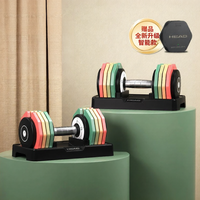
HEAD | Adjustable Dumbbell Set Training Equipment
₱38,837.41₱81,885.50
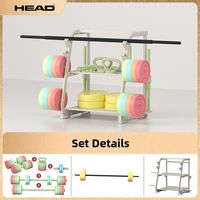
HEAD | Colorful Adjustable Dumbbell For Men And Women Home Gym Use
₱24,891.83₱37,091.98
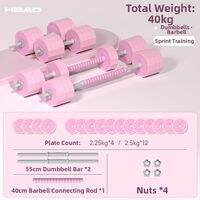
HEAD | Pink Adjustable Dumbbell Set Womens Fitness Equipment
₱12,367.95₱14,668.60
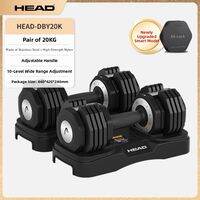
HEAD | 10-Step Adjustable Steel Dumbbell
₱18,425.71₱18,880.04
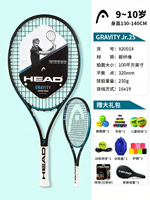
HEAD | Children Beginner Training Carbon Tennis Racket
₱8,091.85₱15,299.98
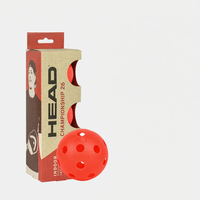
HEAD | Competition-Grade Pickleball Balls 3 Pieces
₱811.24₱1,052.67
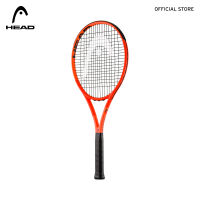
HEAD IG RADICAL XCEED - TENNIS RACKET
₱7,700.00
Buy on Lazada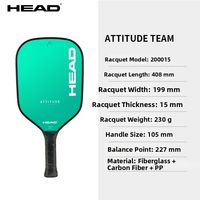
HEAD | Professional Carbon Fiber Pickleball Paddle
₱6,135.45₱6,732.58
About HEAD
HEAD is a global manufacturer of sports equipment and apparel, widely recognised for its tennis and racquet-sports gear, alpine skiing products, snowboarding equipment, and sportswear. Although the company originated in the United States as a ski manufacturer founded by American aeronautical engineer Howard Head, its corporate and operational base is now in Austria, with HEAD Sport GmbH headquartered in Kennelbach, Vorarlberg.1
The brand is distinguished by its consistent integration of engineering and materials innovation with professional-sports marketing. Its development history includes influential metal skis, the first aluminium tennis racquet, titanium-and-graphite racquets, and later technologies such as Liquidmetal. Today, HEAD operates across racquet sports, winter sports, sportswear, watersports, and licensing.2
Corporate profile
| HEAD | |
|---|---|
| Brand name | HEAD |
| Industry | Sporting goods, sportswear |
| Founded | 1950 |
| Founder | Howard Head |
| Original company | HEAD Ski Company, Inc. |
| Origin | Baltimore, Maryland, United States |
| Current headquarters | Kennelbach, Vorarlberg, Austria |
| Current operating company | HEAD Sport GmbH |
| Chairman | Johan Eliasch |
| Main markets | Tennis, padel, pickleball, squash, skiing, snowboarding, sportswear |
| Known for | Skis, tennis racquets, tennis balls, footwear, ski boots and sports equipment |
| Website | head.com |
HEAD Sport GmbH is identified in the official corporate imprint as the operator of the global website, with a registered address at Wuhrkopfweg 1, 6921 Kennelbach, Austria.3
Origins
The history of HEAD begins with Howard Head, an American engineer employed by the aircraft manufacturer Glenn L. Martin Company. Head first encountered skiing in 1946 during a trip to Stowe, Vermont. Frustrated by the heavy and cumbersome wooden skis of the era, he became convinced that engineering principles could significantly improve ski performance.4
Rather than modifying traditional wooden designs, Head applied concepts from aircraft engineering and sandwich construction. He envisioned a ski built from aluminium and plywood around a lightweight honeycomb-like core. He began developing this metal-ski concept in 1947 and left Martin in January 1948 to focus entirely on the project.5
In 1950, he formally incorporated HEAD Ski Company, Inc. in Baltimore, Maryland.6 Although the early skis were expensive and initially faced market resistance, Head personally promoted them extensively. By the mid-1950s, HEAD had become the leading ski brand sold in both the United States and Europe.7
This engineering-first origin established a defining characteristic of the brand. Unlike labels that began primarily as fashion or general sporting-goods companies, HEAD was born from an attempt to solve a sporting problem through engineering, a philosophy that remains central to its identity.
Expansion into tennis
HEAD’s second major phase began in the 1960s when the company expanded beyond skiing. Howard Head applied his engineering approach to the tennis racquet, seeking to overcome the weight and design limitations of conventional wooden frames.
In 1969, HEAD introduced what the company describes as the first aluminium tennis racquet. This development marked a significant shift in racquet construction and helped establish HEAD as a major force in tennis.8 The expansion transformed HEAD from essentially a ski manufacturer into a broader multi-sport equipment brand.
In the same year, HEAD signed Olympic ski champion Jean-Claude Killy and developed the Killy 800 metal-and-fibreglass ski, demonstrating a strategy of combining technological products with elite athletes.9
Ownership and corporate changes
In 1969, HEAD was sold to AMF (American Machine and Foundry), under which it continued to develop its tennis and winter-sports businesses.10 The company subsequently underwent several ownership transitions:
- 1969: AMF acquires HEAD.
- 1985: Minstar acquires HEAD through its takeover of AMF.
- 1989: Management buys HEAD, Tyrolia, and Mares, combining them into HTM.
- 1993: HTM is sold to Austria Tabak.
- 1995: Johan Eliasch gains control of HTM.
- 2000: HEAD N.V. is established and becomes a publicly traded company.
- 2013: HEAD becomes privately owned again.11
These transitions shaped the modern HEAD group, which reflects a much broader corporate history than the original American ski company alone.
The Johan Eliasch era
Johan Eliasch is a pivotal figure in HEAD’s modern history. After gaining control of HTM in 1995, he refocused the business around three principal areas: winter sports, tennis, and diving. A licensing division was subsequently added. According to HEAD’s corporate history, this restructuring helped the company return to profitability in 1997.12
Eliasch currently serves as Chairman of HEAD, a position he has held since 1995.13
Major acquisitions
The modern HEAD group expanded significantly through acquisitions. In the late 1990s, HTM broadened its portfolio:
- 1998: Dacor, a diving-equipment company
- 1999: Penn Tennis Balls
- 1999: Snowboard manufacturers Blax and Generics14
The acquisition of Penn was particularly significant for tennis, allowing the group to operate in both major equipment categories: racquets and balls. Penn’s own history dates to the Pennsylvania Rubber Company and its early 20th-century tennis-ball production. HEAD later combined Penn’s established ball business with its own racquet expertise.15
Product categories
HEAD now covers several major sports beyond its original focus on skiing and tennis.
Racquet sports
Racquet sports represent one of HEAD’s most recognisable modern categories. The brand produces equipment for tennis, padel, pickleball, squash, and racquetball. Products include racquets, paddles, balls, bags, grips, strings, footwear, apparel, and accessories. HEAD describes its racquet-sports business as serving everyone from beginners to professional players.16
Tennis technologies
Although HEAD began with skiing, tennis has become one of the defining pillars of the brand. Over the decades, it has developed numerous influential racquet families and technologies.
The introduction of aluminium construction in 1969 demonstrated the company’s willingness to replace traditional materials with engineered alternatives.17 In 1997, HTM introduced a titanium-and-graphite tennis racquet that became highly successful.18 HEAD subsequently introduced HEAD Intelligence, a technologically sophisticated racquet incorporating sensors intended to respond to the player’s stroke and reduce vibration.19 Later, the brand launched Liquidmetal technology, including in the Radical racquet line, marking another milestone in materials innovation.20
Notable racquet families
Several HEAD racquet families have become particularly recognisable:
- Radical: Known for an all-around combination of power, control, and manoeuvrability; historically served as a platform for technologies such as Liquidmetal.21
- Speed: Strongly associated with modern aggressive baseline tennis and high-level competition.
- Prestige: Traditionally emphasises precision, control, and feel, with a strong reputation among advanced players.
- Gravity: A modern performance-oriented family associated with a large sweet spot and contemporary racquet geometry.
- Boom: Represents a contemporary approach emphasising accessible power and a modern playing experience.
Specifications and professional-player setups can differ substantially from retail models.
Professional tennis
Professional athletes are a major component of HEAD’s brand identity. The brand’s historical record highlights numerous Grand Slam champions and world No. 1 players who have used HEAD equipment, including Novak Djokovic, Andy Murray, Maria Sharapova, Andre Agassi, Gustavo Kuerten, Thomas Muster, and Marat Safin.22
Professional tennis functions as both a testing environment and marketing platform for HEAD. However, players may use customised racquets that differ internally or dimensionally from retail models carrying the same cosmetic design, a distinction noted by HEAD itself.23
Padel
HEAD has also become a significant brand in padel, particularly as the sport expanded internationally. While HEAD-branded racquets appeared earlier under licence, the company identifies 2000 as the formal beginning of HEAD Padel as a brand operation.24 The product range now includes racquets, balls, bags, shoes, clothing, and accessories. The company celebrated 25 years of HEAD Padel in 2025.25
Winter sports
Despite its prominence in tennis, skiing remains fundamental to HEAD’s identity. The winter-sports division includes alpine skis, ski boots, bindings, snowboards, protective equipment, helmets, goggles, accessories, and ski clothing. The brand’s historical importance stems from Howard Head’s original metal-ski construction, which helped establish principles that later became standard throughout ski manufacturing.26
HEAD maintains a strong association with elite alpine ski racing, emphasising athlete success in World Cup and Olympic competition across downhill, super-G, giant slalom, slalom, and alpine combined events.27 This mirrors its tennis strategy: developing high-performance equipment with elite athletes and transferring related technology to consumer products.
Sportswear and footwear
HEAD has expanded into apparel and footwear designed for tennis, skiing, training, outdoor activities, and general sporting use. The sportswear portfolio combines performance requirements such as moisture management, warmth, and comfort with lifestyle-oriented aesthetics.28 This broadens the HEAD name beyond the skis and racquets with which it historically became famous.
Watersports
Another branch of HEAD’s history involves watersports and diving. The group’s development included Mares and Dacor, reflecting expansion into diving equipment.29 Today, the HEAD Group’s official business overview still lists watersports as one of its major areas.30 This makes the corporate history somewhat unusual: the brand’s roots are in skiing, its public image is heavily associated with tennis, and the wider group has substantial interests in aquatic sports.
Brand philosophy
HEAD’s positioning centres on several key ideas:
- Engineering: Technology is at the centre of HEAD’s identity. Founded by an engineer who approached skiing as an engineering problem, the brand’s innovations have repeatedly involved new materials, construction methods, and product designs.31
- Performance: HEAD is fundamentally a performance-sports brand. Products are designed around measurable requirements including weight, stiffness, stability, aerodynamics, power, control, durability, and vibration management.
- Professional validation: Elite athletes are integral to product development and marketing, following a pathway from technology to elite athlete to competition to consumer product.
- Accessibility: HEAD positions itself as a brand for both professionals and everyday athletes, describing itself as “trusted by champions, built for everyone.”32
Corporate identity and structure
HEAD’s historical origin and present corporate identity differ. It began in Baltimore, Maryland, as an American ski company, but the principal operating company, HEAD Sport GmbH, is now based in Kennelbach, Austria.33 This gives the company a distinctly international identity: American invention + Austrian corporate base + global sports markets.
The modern corporate structure has roots in the former HTM group, which brought together HEAD, Austrian ski-binding manufacturer Tyrolia, and diving-equipment company Mares.34 Tyrolia was originally an independent Austrian binding manufacturer that became part of HTM during the late-1980s restructuring.35 Consequently, the wider HEAD organisation possesses expertise across multiple parts of the skiing system—ski, boot, binding, protection, and accessories—rather than merely manufacturing skis.
It is useful to distinguish between HEAD as a consumer brand and the HEAD Group as a corporate organisation. The HEAD name appears on racquets, balls, skis, boots, snowboards, helmets, goggles, shoes, apparel, bags, and accessories, while the broader corporate history includes other acquired brands such as Penn.36 HEAD also operates through licensing, meaning the name may appear on products manufactured by partners rather than directly by HEAD Sport GmbH.37
Market positioning
HEAD occupies a distinctive position in the sports industry. Compared with Nike or Adidas, it is more specialised in technical sporting equipment. Compared with Wilson or Babolat, it has a stronger historical connection to skiing. Compared with Rossignol, it has a stronger presence in tennis.
| Brand | Strongest association |
|---|---|
| HEAD | Tennis + skiing |
| Wilson | Tennis + baseball |
| Babolat | Tennis + padel |
| Rossignol | Skiing |
| Salomon | Skiing + outdoor |
| Atomic | Skiing |
| Nike | Sportswear + footwear |
| Adidas | Sportswear + footwear |
HEAD’s distinctive position is therefore its combination of racquet sports and winter sports.
Key milestones
- 1946: Howard Head tries skiing for the first time and becomes interested in improving ski design.38
- 1947: Head begins developing his metal-ski concept.39
- 1950: HEAD Ski Company, Inc. is founded in Baltimore.40
- 1950s: HEAD’s metal skis achieve major commercial success.41
- 1969: HEAD introduces its aluminium tennis racquet and is acquired by AMF.42
- 1969: HEAD signs Olympic ski champion Jean-Claude Killy.43
- 1985: Minstar acquires HEAD through AMF.
- 1989: HEAD, Tyrolia, and Mares are combined into HTM.
- 1995: Johan Eliasch gains control of HTM.
- 1997: HTM returns to profitability and introduces titanium-and-graphite racquet technology.
- 1998: Dacor is acquired.
- 1999: Penn Tennis Balls and snowboard companies Blax and Generics are acquired.
- 2000: HEAD N.V. is formed and publicly listed.
- 2000: HEAD Padel formally emerges as a brand operation.
- 2013: HEAD becomes privately owned.
- 2025: HEAD celebrates 75 years of its history and 25 years of HEAD Padel.
Core contributions
HEAD’s most significant contributions to sport can be ranked as follows:
- Tennis racquets: HEAD is one of the world’s major tennis-racquet brands, with a long history of professional use and technological development.
- Alpine skis: The category where the brand originated; skiing remains fundamental to its DNA.
- Tennis balls: Through Penn and the wider group, HEAD has a major presence in tennis balls alongside racquets.
- Padel: HEAD has become an important international padel-equipment brand.
- Ski boots and winter equipment: The winter-sports business extends far beyond skis.
- Sportswear and footwear: These categories broaden HEAD from an equipment company into a complete sports-performance brand.
Contemporary status
As of 2026, HEAD is best understood as a global, privately owned sports-equipment group with Austrian headquarters and American origins. Its principal operating company, HEAD Sport GmbH, is headquartered in Kennelbach, Austria, and its chairman is Johan Eliasch.
Its current portfolio spans racquet sports, winter sports, sportswear, watersports, and licensing, while tennis and skiing remain the two sports most strongly associated with the HEAD name. Founded in 1950 by Howard Head and originally famous for pioneering metal skis, HEAD has evolved into an international performance-sports company whose strongest identities today are tennis, padel, and alpine skiing.
References
- The Story of HEAD EN – HEAD
- Imprint Social – HEAD
- About HEAD – HEAD
- 75 Years HEAD – RENEW SKI: HEAD’s Sustainable Innovation – HEAD
- The Story of HEAD CZ – HEAD
- HISTORY | HEAD®
- Biographies – HEAD
- The Story of HEAD IT – HEAD
- A Century of Bounce, A Legacy of Performance – Penn
- 25 Years of Padel Excellence: The Legacy of HEAD. – HEAD
- HISTORY | HEAD-WEAR | ヘッドウェア
- HEAD – TENNIS LINE –
- Club HEAD – Terms & Conditions – HEAD
- About HEAD – HEAD
- About HEAD – HEAD
- The Story of HEAD ES – HEAD
- The Story of HEAD FR – HEAD
- About HEAD – HEAD
- The Story of HEAD PL – HEAD
- About HEAD – HEAD
- About HEAD – HEAD
- The Story of HEAD JP – HEAD
- About HEAD – HEAD
- Imprint – HEAD
- Imprint – HEAD
- Terms of Use EN – HEAD
- Imprint – HEAD
- Imprint – HEAD
- Privacy Policy – HEAD
- Imprint – HEAD
- Imprint – HEAD
- Meet & Greet WC Rebels – Terms & Conditions – HEAD
- Terms and Conditions – Progress with us – HEAD
- The Story of HEAD DE – HEAD
- John McEnroe – HEAD
- Cool Earth – HEAD
- Sustainability Report 2024/2025 – HEAD
- 헤드코리아 HEAD 공식 수입업체 공식 | 테니스 스키 피클볼 빠델
- 關於HEAD | HEAD Fitness TW 臺灣官方網站
- About us
- About Head Tennis
- About us_HEAD
- Howard Head │ The National Inventors Hall of Fame®