Shop on Lazada
Ibanez products
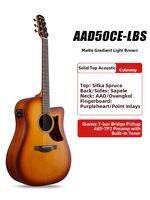
Ibanez | Beginner to Advanced Acoustic Guitar
₱22,266.62₱24,446.42
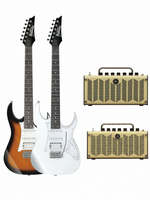
Ibanez | Entry-level Beginner Electric Guitar
₱33,874.18₱35,910.21
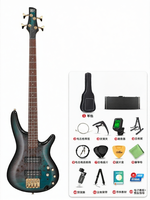
Ibanez | Entry-level Bass Guitar For Beginners
₱51,043.99₱53,037.69
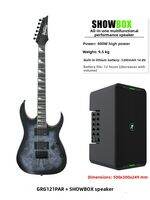
Ibanez | Suitable for All Levels Electric Guitar
₱59,140.50₱61,351.58
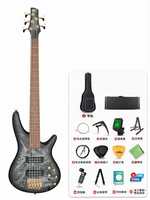
Ibanez | Beginner Friendly Electric Bass Indonesia
₱45,695.82₱47,736.59

Ibanez | Waterproof Reinforced Guitar Case
₱4,265.81₱4,840.66
Ibanez | Beginner Electric Guitar Kit
₱59,260.95₱61,454.84
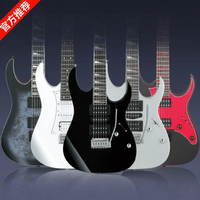
Ibanez | Beginner Electric Guitar Kit
₱54,057.64₱56,287.44
About Ibanez
Ibanez is a Japanese musical instrument brand best known for its electric guitars, electric basses, acoustic guitars, hollow-body guitars, and related accessories and electronics. Owned by Hoshino Gakki Co., Ltd., Ibanez has become one of the most influential guitar brands in modern rock, metal, jazz, fusion, progressive music, and instrumental guitar.1
The brand’s reputation is particularly associated with fast-playing necks, high-performance hardware, extended-range guitars, aggressive body designs, and artist signature instruments. Although Ibanez is now strongly associated with the modern electric guitar, its history stretches back more than a century through the Hoshino organization and its connection to Spanish guitar maker Salvador Ibáñez.
Basic information
| Category | Information |
|---|---|
| Brand | Ibanez |
| Country of origin | Japan |
| Owner | Hoshino Gakki Co., Ltd. |
| Industry | Musical instruments |
| Best known for | Electric guitars and basses |
| Major genres | Rock, metal, jazz, fusion, progressive, funk, pop |
| Notable series | RG, JEM, S, AZ, Iceman, Artist, Roadstar, Prestige, Premium, GIO, SR |
| Major products | Electric guitars, basses, hollow-body guitars, acoustic guitars, effects and accessories |
| Current catalogs | Ibanez publishes regional catalogs, including 2026 editions for Asia, Europe and North America.2 |
Origins
The story of Ibanez begins with Hoshino rather than with a guitar factory. In 1908, Hoshino began as a bookstore business in Nagoya, Japan. The company subsequently became involved in selling sheet music and musical instruments. In 1929, Hoshino began importing guitars made by the Spanish luthier Salvador Ibáñez. The name of this Spanish maker eventually became the basis for the Ibanez brand.3
By the 1930s, Hoshino was producing its own Spanish-style guitars. The brand initially appeared as “Ibanez Salvador” and was eventually shortened to “Ibanez.”4 This distinction is significant: Ibanez was not originally founded as the modern Japanese electric-guitar company that people associate with the name today. Its roots lie in Hoshino’s importing and manufacturing activities and its connection with the Salvador Ibáñez name.
Hoshino Gakki
The company behind Ibanez is Hoshino Gakki Co., Ltd. Hoshino is a Japanese musical-instrument company headquartered in Nagoya and is also known for owning the Tama drum brand. Ibanez therefore belongs to a larger musical-instrument organization rather than being an independent guitar manufacturer in the conventional sense.5
Hoshino’s role has historically included brand development, product design, distribution, artist relationships, and coordination with manufacturing partners. This becomes especially important when discussing where Ibanez guitars are made: “Ibanez” describes the brand, while individual instruments can originate from different factories and countries depending on the model and period.
The early electric-guitar era
Ibanez entered the modern electric-guitar market during the postwar expansion of the Japanese musical-instrument industry. During the 1950s and 1960s, Japanese manufacturers produced a wide variety of electric guitars. Ibanez instruments from this period included unusual shapes and designs, many of which were aimed at the growing international market.
Hoshino eventually developed a particularly strong relationship with FujiGen Gakki, a Japanese guitar manufacturer that became an important producer of Ibanez instruments.6 This relationship became extremely important to Ibanez’s later reputation for Japanese manufacturing quality.
The “lawsuit era”
One of the most famous chapters in Ibanez history is the period commonly called the “lawsuit era.” During the 1960s and early 1970s, Ibanez produced guitars that closely resembled famous American instruments. These included designs visually reminiscent of guitars from companies such as Gibson, Fender, and Rickenbacker.
At the time, Japanese manufacturers were increasingly producing affordable versions of established American-style instruments. Ibanez became particularly successful with this strategy in the United States. The strategy eventually created legal problems. In the 1970s, Gibson’s parent company, Norlin, took legal action over Ibanez’s copying of Gibson designs. The dispute ultimately contributed to Ibanez abandoning its reliance on direct copies and accelerating the development of original designs.
This turned out to be a crucial moment. Rather than destroying the brand, the lawsuit era helped push Ibanez toward becoming the company known today: a manufacturer of distinctive, original, performance-oriented guitars.
The transition to original designs
By the mid-to-late 1970s, Ibanez was increasingly developing its own designs. Among the important models and families were the Artist, Iceman, Musician, Roadster/Roadstar, Studio, Performer, and various semi-hollow and jazz instruments.
The Artist became one of Ibanez’s important traditional solid-body designs. Decades later, Ibanez still considers it one of its important legacy models.7 The Iceman, meanwhile, became famous for its highly distinctive angular body shape and association with rock musicians. This period established an important characteristic of Ibanez: instead of merely reproducing traditional American guitar designs, Ibanez increasingly tried to make guitars that looked and played like Ibanez guitars.
The 1980s: Ibanez finds its identity
The 1980s were arguably the decade that transformed Ibanez into the brand recognizable today. Hard rock, heavy metal, and instrumental guitar were exploding in popularity. Players increasingly wanted guitars with fast necks, high-output pickups, locking tremolo systems, extended upper-fret access, lightweight bodies, aggressive shapes, and high-performance electronics.
Ibanez was exceptionally well positioned for this market. The company worked closely with prominent guitarists, including Steve Vai, Joe Satriani, and Paul Gilbert, helping establish a new generation of Ibanez instruments.
Steve Vai and the JEM
One of the most important relationships in Ibanez history is with Steve Vai. The collaboration produced the famous Ibanez JEM. The JEM introduced a number of visually and technically distinctive features, most famously the “Monkey Grip” body handle and highly recognizable floral designs on certain versions.
More importantly, it represented the idea that a professional guitar could be designed specifically around the needs of a virtuoso guitarist. The JEM subsequently became one of the defining Ibanez models.
The Universe and the seven-string revolution
Ibanez and Steve Vai also played a major role in popularizing the modern seven-string electric guitar. The Ibanez Universe extended the conventional six-string format by adding a low seventh string. This gave players access to lower notes while retaining the familiar guitar layout. That concept later became enormously important in metal.
Modern Ibanez has continued pushing beyond six strings, with guitars featuring 7, 8, and multi-scale configurations. The company itself describes these developments as examples of its emphasis on innovation and high-performance guitar design.8
The RG series
If one Ibanez series can be considered the company’s signature modern guitar, it is probably the RG. Ibanez describes the RG as its “most recognizable and distinctive guitar”, with decades of development focused heavily on high-performance playing.9
The RG typically features characteristics such as a double-cutaway body, deep fret access, relatively thin neck profiles, high-performance pickups, 24 frets on many models, HSH, HSS or HH pickup configurations depending on model, fixed or locking-tremolo bridges, and aggressive finishes and styling. The RG became particularly important in metal and shred guitar. Today, the RG family spans an enormous range of instruments, from inexpensive GIO models to high-end Prestige and j.custom instruments.10
The S series
Another important Ibanez design is the S series. Where the RG emphasizes a more traditional high-performance superstrat aesthetic, the S is famous for its extremely thin, sculpted body. The result is a guitar that combines low weight, ergonomic contours, high fret access, modern styling, and versatile electronics. The S series has become one of Ibanez’s most recognizable body designs.
AZ series
The AZ represents another direction for Ibanez. While the RG is strongly associated with metal and shred, AZ guitars are designed to appeal to a much broader range of players, including those interested in contemporary versions of traditional S-style guitars.
AZ instruments generally emphasize ergonomic bodies, versatile pickup configurations, comfortable neck profiles, sophisticated switching systems, modern tremolo systems, and clean and high-gain applications. In other words, Ibanez has increasingly moved beyond the idea that it is exclusively a “metal guitar company.”
Jazz and hollow-body guitars
Ibanez has a significant history in jazz guitars as well. The company has produced hollow-body and semi-hollow instruments for decades and has worked with major jazz guitarists. Notable artist relationships include George Benson, Pat Metheny, and John Scofield. Ibanez’s own historical account specifically highlights its George Benson instruments and later Pat Metheny and John Scofield models.11
This gives Ibanez an unusual breadth: the same company famous for aggressive RG metal guitars also produces sophisticated hollow-body instruments for jazz.
Bass guitars
Ibanez is also a major bass-guitar manufacturer. The company gained attention in the 1970s and 1980s with instruments such as the Musician basses, including neck-through designs and active electronics.12
Its most important modern bass family is arguably the Soundgear (SR) series. SR basses are known for slim necks, lightweight bodies, ergonomic designs, active electronics, 4-, 5- and 6-string configurations, and modern pickup systems. Ibanez currently offers extensive SR ranges, including Prestige, Premium and other versions, as well as extended-range and multi-scale basses.13
The brand also maintains a substantial roster of bass artists, including Thundercat, Fieldy, Steve Di Giorgio, Gary Willis, and Adam Nitti.14
Artist signature models
Artist relationships are a central part of Ibanez’s identity. Some of the most historically important Ibanez-associated guitarists include Steve Vai, Joe Satriani, Paul Gilbert, George Benson, Pat Metheny, and John Scofield. These collaborations have helped Ibanez develop guitars that are not simply artist-branded versions of existing instruments but often introduce new construction concepts, electronics, body shapes, and playing techniques.
The company’s current artist program remains extensive, covering electric guitar, acoustic guitar, and bass players around the world.15
Product hierarchy
Ibanez uses several different product tiers.
GIO
GIO is Ibanez’s entry-level line. The idea is to make the basic Ibanez experience accessible to beginners and budget-conscious players.
Standard
The Standard range occupies the mainstream portion of the catalog and includes many of the company’s core designs.
Premium
Premium instruments sit above the standard ranges and generally offer upgraded construction, finishes, and hardware.
Prestige
Prestige is one of Ibanez’s high-end production categories, with a strong emphasis on Japanese craftsmanship and advanced specifications.
j.custom
j.custom represents some of Ibanez’s most exclusive production instruments, emphasizing high-end Japanese craftsmanship and elaborate specifications.
Ibanez’s RG catalog, for example, currently spans GIO, Standard, Iron Label, Axion Label, Premium, Genesis, Prestige, and j.custom variants.16
Where are Ibanez guitars made?
A common misconception is that all Ibanez guitars are made in Japan. They are not. Ibanez is a Japanese brand, but instruments have historically been manufactured by different factories in different countries.
Japan remains particularly important for higher-end instruments. Ibanez also has a long-standing manufacturing relationship with FujiGen and has used factories in other Asian countries for various production levels. Ibanez itself confirms that it has produced some instruments in the United States at various points in its history, although its FAQ states that it is not currently building production guitars in the United States.
The key point is that being a Japanese brand does not mean every Ibanez guitar is Japanese-made. The exact country of manufacture depends on the model, year, and series.
Japanese craftsmanship
Japan occupies a special position in Ibanez’s product hierarchy. High-end Japanese instruments are particularly associated with precise fretwork, detailed finishing, careful neck construction, premium woods, sophisticated hardware, and high consistency.
Ibanez also operates a Japan Custom Shop, producing highly specialized instruments. Its anniversary projects have highlighted the work of Ibanez’s Japanese and Los Angeles Custom Shops, describing these instruments as representing the upper end of Ibanez design and craftsmanship.17
Ibanez and modern guitar technology
A major part of Ibanez’s reputation comes from its willingness to experiment. The company has been involved with 7-string guitars, 8-string guitars, multi-scale guitars, locking tremolos, extended-range basses, active electronics, unusual pickup configurations, ergonomic body shapes, extremely thin necks, and modern bridge systems.
Ibanez itself describes 7-, 8- and multi-scale guitars as developments that grew from its “Innovative, Cutting-Edge and Pioneer” philosophy.18 This makes Ibanez particularly important in the evolution of modern metal and progressive guitar design.
Ibanez’s sound and playing philosophy
There isn’t one single “Ibanez sound.” Instead, the brand covers a huge spectrum.
Metal
RG, Iron Label, and extended-range instruments are strongly associated with modern metal, death metal, progressive metal, djent, and shred.
Rock
Ibanez has a long history in hard rock, glam metal, alternative rock, and instrumental rock.
Jazz
Its hollow-body instruments have a long-standing reputation among jazz players.
Fusion
Ibanez is particularly prominent in fusion because its instruments can combine traditional musicality with modern playability.
Funk and pop
The company’s versatile solid-body and bass ranges are also widely applicable to funk, R&B, pop, and studio work.
Famous Ibanez models
Some of the most historically significant Ibanez models and families include:
| Model / series | Importance |
|---|---|
| RG | Iconic modern superstrat; strongly associated with metal and shred |
| JEM | Steve Vai signature family |
| Universe | Important seven-string guitar |
| S | Ultra-thin ergonomic solid-body design |
| AZ | Modern versatile S-style platform |
| Iceman | Distinctive angular rock design |
| Artist | Traditional Ibanez solid-body family |
| Roadstar/Roadstar II | Important bridge between classic Ibanez and modern superstrat designs |
| Musician | Influential high-end guitar and bass designs from the 1970s/80s |
| SR | Major modern bass family |
| Artcore | Accessible hollow/semi-hollow guitar family |
| George Benson models | Important jazz-guitar line |
| Pat Metheny models | Major jazz artist collaboration |
Ibanez Artcore
The Artcore family is particularly important because it makes Ibanez hollow and semi-hollow guitars accessible to a much wider market. These instruments cover applications ranging from jazz, blues, rock, indie, alternative, and fusion. It demonstrates how Ibanez has deliberately expanded beyond the stereotype of being purely a “shredder” company.
Ibanez in metal
If there is one musical movement most strongly associated with Ibanez, it is probably modern heavy guitar music. The combination of 24 frets, thin necks, humbuckers, locking tremolos, and extended range made Ibanez extremely attractive to technically demanding players.
The RG in particular became almost synonymous with the late-1980s and 1990s shred movement and later became deeply embedded in metal. The company subsequently became important in newer styles such as progressive metal, djent, and extended-range guitar.
Ibanez versus traditional American guitar brands
Historically, Ibanez challenged the dominance of American brands by taking a different approach. Traditional companies such as Gibson and Fender had strong identities based on designs developed decades earlier. Ibanez instead built much of its modern identity around innovation, speed, ergonomics, technical performance, artist collaboration, and modern aesthetics.
This is why an Ibanez RG generally feels conceptually different from a traditional Gibson Les Paul or Fender Stratocaster, even though all three are electric guitars. Ibanez essentially helped establish the modern performance guitar as its own category.
Reputation
Ibanez has developed a particularly strong reputation among technically oriented guitarists. Its strengths are often considered to be:
- Playability: Thin and fast neck designs are one of the company’s trademarks.
- Variety: The catalog covers beginner instruments through extremely high-end Japanese guitars.
- Innovation: Ibanez has repeatedly embraced extended-range and modern designs.
- Artist development: The company has a long history of designing instruments around individual players.
- Value: Many Ibanez instruments offer sophisticated specifications at prices below comparable boutique instruments.
- Metal suitability: Few mainstream brands have such a deep association with modern metal guitar.
Criticism and limitations
Ibanez isn’t necessarily the perfect brand for every guitarist. Players who prefer traditional guitar construction may find some Ibanez designs too modern. For example, extremely thin necks aren’t comfortable for everyone; locking tremolos require more maintenance than fixed bridges; modern high-output pickups may not provide the vintage response some players want; aggressive body designs may not appeal to traditionalists; and the enormous catalog can make model names confusing.
At the same time, Ibanez’s large range means these criticisms don’t apply universally. The company produces everything from vintage-inspired hollow bodies to extreme 8-string metal guitars.
Ibanez today
As of 2026, Ibanez continues to operate as a major global guitar and bass brand. Its current catalogs cover electric guitars, basses, hollow-body instruments, acoustic guitars, electronics, and accessories. Ibanez’s official catalog archive lists current 2026 catalogs alongside decades of previous catalogs.19
The modern company continues to maintain several parallel identities:
- Traditional Ibanez: Artist, hollow-body, and jazz instruments.
- Modern Ibanez: RG, S, and AZ.
- Extreme Ibanez: 7-string, 8-string, multi-scale, and metal-oriented instruments.
- Accessible Ibanez: GIO and Standard instruments.
- High-end Ibanez: Prestige and j.custom.
- Bass Ibanez: SR, BTB, and other professional bass platforms.
This broad range is one of the reasons Ibanez has remained relevant across multiple generations of musicians.
The Ibanez identity
If Fender can be associated with the Stratocaster, Gibson with the Les Paul, and PRS with the modern luxury electric guitar, Ibanez can reasonably be associated with the high-performance modern guitar. Its history is essentially the story of a Japanese musical-instrument company that began with imported Spanish guitars, passed through an era of inexpensive copies, survived the famous lawsuit period, and then reinvented itself through original designs, artist collaboration, and relentless focus on playability and innovation.20
Short timeline
- 1908: Hoshino begins as a bookstore business in Nagoya.21
- 1929: Hoshino begins importing Salvador Ibáñez guitars from Spain.
- 1930s: Hoshino begins producing its own guitars under the Ibanez name.
- 1950s–60s: Ibanez enters the modern electric-guitar market.
- 1960s–70s: Ibanez becomes known internationally for affordable copies of American guitar designs.
- 1970s: Legal pressure over copied designs accelerates the transition toward original Ibanez designs.
- Late 1970s: Original designs such as Artist, Iceman, Musician, and Roadstar become increasingly important.
- 1980s: Ibanez becomes a major force in hard rock, shred, and instrumental guitar.
- 1980s: Collaborations with Steve Vai, Joe Satriani, and Paul Gilbert help define the company’s modern identity.22
- Late 1980s onward: JEM, Universe, and RG establish Ibanez as a major modern-performance guitar brand.
- 1990s–2000s: Ibanez expands further into metal, progressive music, jazz, bass, and affordable instruments.
- 2010s–2020s: AZ, expanded extended-range instruments, and increasingly sophisticated Premium/Prestige/j.custom models broaden the product range.
- 2026: Ibanez continues to offer a large global lineup of guitars and basses, with current regional catalogs and ongoing artist/signature programs.
Summary
Ibanez is a Japanese guitar brand owned by Hoshino Gakki, with roots going back to the early 20th century. Its modern identity was forged through a dramatic transformation: from importing and producing Spanish-style guitars, to manufacturing inexpensive copies of famous American designs, to becoming an independent innovator in guitar design.
Its greatest historical contribution has arguably been its role in establishing the modern high-performance electric guitar—the thin-necked, high-fret-access, locking-tremolo, extended-range instrument that became central to shred, metal, and progressive guitar. At the same time, Ibanez is much broader than its metal reputation suggests. Its catalog encompasses jazz hollow bodies, traditional solid bodies, acoustic guitars, basses, beginner instruments, professional Japanese-made guitars, and highly specialized custom instruments.
That combination of Japanese manufacturing heritage, aggressive innovation, artist collaboration, and enormous product breadth is what makes Ibanez one of the most important guitar brands of the modern era.
References
- FAQ’s | Ibanez guitars
- Hoshino Gakki
- Ibanez CATALOGS | SUPPORT | Ibanez guitars | USA
- Ibanez CATALOGS | SUPPORT | Ibanez guitars | ASIA
- Ibanez
- Ibanez Guitars | JPCS27 | “THE ARTIST”
- RG | PRODUCTS | Ibanez guitars
- FIND YOUR PRODUCTS | ELECTRIC BASSES | PRODUCTS | Ibanez guitars
- ELECTRIC BASSES | ARTISTS | Ibanez guitars
- ELECTRIC BASSES | ARTISTS | Ibanez guitars
- Ibanez Guitars | Celebrating 50 Years Building Guitars
- Learn – The History of Ibanez Guitars – Janzen Brothers Music Company
- Краткая история Ibanez: становление легендарного бренда – новости на сайте бренда ibanez.ru
- Краткая история Ibanez – новости на сайте бренда ibanez.ru
- Historia firmy Ibanez | IBANEZ FAN
- ELECTRIC BASSES | ARTISTS | Ibanez guitars
- Ibanez CATALOGS | MANUAL | SUPPORT | Ibanez guitars | Europe
- FIND ARTISTS | ELECTRIC BASSES | ARTISTS | Ibanez guitars
- Ibanez CATALOGS | MANUAL | SUPPORT | Ibanez guitars | LATAM/Oceania
- Ibanez Guitars | LA Custom Shop
- Ibanez Guitars | LA Custom Shop
- The History of Ibanez AR | The Birth of The ARTIST SERIES and the History of Hoshino Gakki