Shop on Lazada
TAMA products
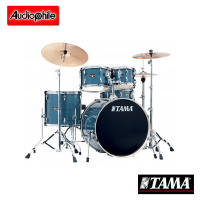
TAMA IP52H6W Imperialstar Drum Kits 5 PIECE KIT WITH HARDWARE (CYMBALS NOT INCLUDED)
₱48,990.00
Buy on Lazada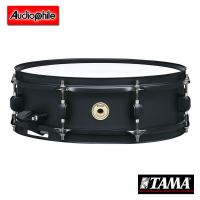
TAMA METALWORKS SNARE DRUM
₱7,990.00
Buy on Lazada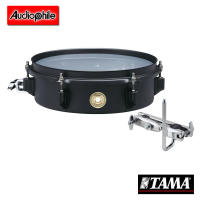
TAMA METALWORKS SNARE EFFECTS
₱8,990.00
Buy on Lazada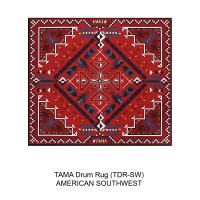
TAMA TDR-PA/OR/SW/TL DRUM RUG (72″X80″) DRUM CARPET
₱8,490.00
Buy on Lazada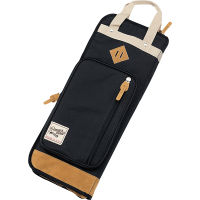
TAMA TSB24 POWERPAD DESIGNER COLLECTION STICK AND MALLET BAG
₱1,690.00
Buy on Lazada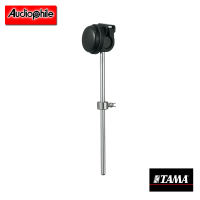
TAMA COBRA BEATER CB90R (RUBBER) DRUM PEDAL BEATER
₱1,690.00
Buy on Lazada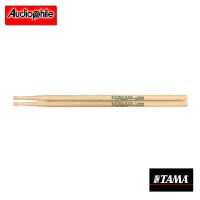
TAMA HRM-2B/5A/5B/7A RHYTHM MATE SERIES HICKORY DRUMSTICK
₱390.00
Buy on Lazada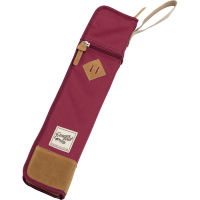
TAMA TSB12 POWERPAD DESIGN COLLECTION STICK BAG
₱990.00
Buy on LazadaAbout TAMA
TAMA is a Japanese drum and percussion brand owned by Hoshino Gakki Co., Ltd. 1. It is recognized globally as a major professional drum manufacturer, particularly for its acoustic drum kits, snare drums, hardware, pedals, and percussion instruments 2. While historically associated with rock and heavy metal, the brand’s product range and artist roster have expanded significantly to include jazz, funk, pop, marching, concert percussion, and other musical styles 5.
Overview
| Category | Information |
|---|---|
| Brand | TAMA |
| Japanese name | タマ |
| Industry | Musical instruments |
| Main products | Drum kits, snare drums, hardware, pedals, percussion, sticks, bags and accessories |
| Parent company | Hoshino Gakki Co., Ltd. |
| Brand established | 1974 |
| Predecessor drum production | Star Drums, beginning in 1966 |
| Factory associated with the name | Tama Seisakusho, established in 1962 |
| Country of origin | Japan |
| Best known for | Professional acoustic drums, hardware and pedals |
| Notable series | STAR, Starclassic, Superstar, Imperialstar, Iron Cobra, Speed Cobra, STARPHONIC, S.L.P. |
| Notable artists associated with TAMA | Stewart Copeland, Billy Cobham, Simon Phillips, Lars Ulrich, and many others |
The current official TAMA catalog encompasses drum kits, snare drums, original percussion, hardware, marching percussion, concert percussion, microphone stands, sticks, bags, and accessories 4.
Name and origin
The history of TAMA predates the establishment of the brand itself. In 1962, Hoshino Gakki established a musical instrument manufacturing facility named Tama Seisakusho (Tama Factory) 6. Drum production subsequently commenced at this facility under the Star brand in 1966 7. By 1974, Hoshino decided to discontinue the Star drum branding and introduce a new global drum brand designated as TAMA 8.
The name carries personal significance within the company’s history. Tama Hoshino, the wife of Hoshino Gakki’s first president, Yoshitaro Hoshino, played a pivotal role in the company’s early management and finances 3. The drum factory was named Tama Seisakusho in her honor, and the TAMA brand subsequently inherited this name 3. The company has also described the choice of “TAMA” as practical, noting that it was short, distinctive internationally, and suitable for trademark registration.
Foundation of the brand: 1974
TAMA officially emerged in 1974 during a transformative period in popular music 8. Throughout the 1960s and 1970s, rock music gained prominence worldwide, leading drummers to utilize larger bass drums, more toms, multiple cymbals, and increasingly aggressive playing styles. This shift created a demand for hardware capable of withstanding larger and heavier drum configurations.
TAMA responded by making hardware engineering a primary competitive advantage 9. Early innovations included nylon bushings and boom cymbal stands designed to improve durability and positioning 11. This focus on building hardware capable of surviving demanding professional playing became central to the brand’s identity and reputation 9.
The Superstar era
The Superstar series, introduced during the late 1970s, marked a significant turning point for the company 9. Utilizing Japanese birch shells and lacquer finishes, the series introduced a new approach to shell construction. Later developments, such as the Omnisphere tom holder, further established TAMA’s reputation for innovative drum hardware 11. The Superstar series was instrumental in transitioning TAMA from an emerging manufacturer to a serious international drum brand 2.
During this period, TAMA began collaborating with prominent drummers, including Stewart Copeland of The Police, Billy Cobham, Simon Phillips, and Elvin Jones 9. These relationships were crucial in establishing the brand’s international standing.
TAMA and rock music
TAMA developed a strong identity within rock and heavy music due to its combination of powerful-sounding drums, heavy-duty hardware, large drum configurations, visually distinctive finishes, and innovative pedals 2. This reputation led to the brand sometimes being perceived primarily as a hard-rock or heavy-metal manufacturer. However, TAMA notes that during the 2000s, its artist base expanded significantly beyond these genres to include musicians in jazz, funk, pop, and other styles 5.
The 1980s: experimentation
The 1980s were a period of experimentation for the drum industry, influenced by the MTV era which encouraged musicians to view drums as visual objects. Large drum setups featuring multiple bass drums and numerous toms became fashionable. TAMA participated heavily in this trend, introducing products such as:
- Techstar, TAMA’s first electronic drum
- 11-lug snare drums
- Large-scale rack systems
- Increasingly sophisticated hardware
- Octobans 12
Octobans
The Octoban is a distinctive tubular percussion instrument developed in collaboration with Japanese percussionist Tsutomu Yamashita 12. Capable of producing different pitches, its design was reportedly inspired partly by bamboo-tube instruments from Southeast Asia. The name combines “Octo” and “Bamboo.” Octobans became particularly recognizable in progressive rock and other genres where extended percussion setups are common 12.
Iron Cobra
While TAMA’s drums established its initial reputation, the Iron Cobra pedal family solidified its standing in hardware innovation. In 1998, TAMA introduced a major redesign of the Iron Cobra that emphasized precise movement, adjustability, smooth operation, professional durability, and customization for different playing styles 10. TAMA considers this second-generation Iron Cobra one of the defining developments of its history. Its influence extended beyond the brand, as many modern drum pedal designs have adopted concepts associated with these highly adjustable professional pedals.
Starclassic
Introduced in 1994, the Starclassic series is considered one of the most important drum families in TAMA’s history 10. The series focused on maximizing the natural resonance of the drum shell through redesigned lugs, hoops, mounting systems, and other hardware. The result was a drum design intended to provide strong shell resonance, projection, and tom response. Starclassic remains one of TAMA’s signature professional lines and continues to be popular with leading artists.
Artist signature drums
TAMA has maintained long-standing relationships with professional drummers, developing Signature Snare Drums based on individual artist requirements rather than simple endorsement branding. Notable artists include:
Stewart Copeland
The drummer of The Police, Copeland has had a relationship with TAMA dating back to 1975 when he encountered an Imperialstar kit while working as a drum reviewer 9. His signature snare features a brass shell designed to reproduce the distinctive clarity associated with his playing.
Lars Ulrich
Lars Ulrich of Metallica is a highly recognizable TAMA artist. The brand produces the LU1465 Lars Ulrich signature snare, featuring a 14 × 6.5-inch, 3 mm steel shell with a distinctive diamond-plated finish.
Billy Cobham
Jazz-fusion drummer Billy Cobham was instrumental in TAMA’s early international development. TAMA specifically credits the Superstar series with helping bring Cobham to the brand 9.
Simon Phillips
Simon Phillips became another important TAMA artist during the brand’s early international expansion 10. The association with musicians across rock, metal, jazz, fusion, and pop demonstrated that TAMA’s instruments were not limited to a single genre.
STAR — TAMA’s flagship
At the top of TAMA’s modern acoustic drum range is STAR. Described as the flagship Japanese-made drum series, STAR is developed around the goal of maximizing shell resonance 4. Current shell options include materials such as Bubinga, Maple, and Walnut. The series represents the high end of TAMA’s philosophy, placing considerable emphasis on tone, resonance, shell construction, and musical response rather than solely on durability.
Current major drum families
TAMA’s modern lineup covers several market levels and playing requirements:
- STAR: The flagship professional series emphasizing premium shell construction and resonance.
- Starclassic: A famous professional series introduced in 1994 that remains central to the company’s identity.
- Superstar Classic: A more accessible series using all-maple shells and incorporating concepts from higher-end designs.
- Imperialstar: A long-running drum family historically important to the company’s development.
- STARPHONIC: A snare drum family designed around different shell materials and distinctive construction approaches.
- S.L.P. (Sound Lab Project): Snares designed around specific acoustic properties and requirements of different shell materials.
Hardware
TAMA is widely recognized for its hardware, which includes cymbal stands, hi-hat stands, tom mounts, drum racks, thrones, pedals, clamps, and accessories. Key hardware concepts include:
- Iron Cobra: Professional bass drum pedals and related hardware.
- Speed Cobra: A pedal family developed with an emphasis on fast footwork and a long footboard design, introduced during the 2004–2013 product expansion period.
- Star-Cast Mounting System: A mounting concept associated with the Starclassic family, designed to provide stable tom mounting while minimizing interference with the drum shell 11.
Expansion beyond conventional drum kits
In 2011, TAMA entered the marching percussion market after years of development 5. The marching range includes drums, carriers, stands, and hardware with an emphasis on lightweight construction and ergonomics. The company subsequently expanded into concert percussion, extending its product categories beyond the classic rock drum kit into a broader percussion instrument business.
The 2010s–2020s
From approximately 2014 onward, TAMA increasingly emphasized the diversity of modern drumming. Rather than designing primarily for specific genres, the company expanded its range to accommodate different playing styles, performance environments, portability requirements, and budgets. Examples include the premium STAR Hardware, the minimalist The Classic Stand, and compact Club-JAM kits. TAMA also expanded its accessories and bags to support drummers outside of performance contexts.
Design philosophy
TAMA’s design philosophy encompasses several core principles:
- Durability: Roots connected to building hardware capable of handling large and powerful drum setups.
- Innovation: Introduction of distinctive mechanisms such as Omnisphere, Iron Cobra, Star-Cast, and Octobans.
- Shell resonance: Evolution toward sophisticated control of tone, resonance, and projection, evident in Starclassic and STAR.
- Artist collaboration: Development of instruments in cooperation with professional drummers.
- Variety: A product range covering professional acoustic drums, entry-level kits, specialty snares, marching and concert percussion, and accessories.
Comparison with other brands
TAMA is frequently discussed alongside major international manufacturers such as Yamaha, Pearl, DW, Gretsch, and Ludwig. Its particular reputation is strongest in professional acoustic drums, heavy-duty hardware, bass drum pedals, rock and metal, professional touring, innovative mounting systems, and artist signature instruments 2. However, its modern range is considerably broader than its traditional image suggests, with flagship lines competing at the highest levels of the acoustic drum market while other series provide options for students and hobbyists.
TAMA today
As of 2026, TAMA remains an active global drum and percussion brand under Hoshino Gakki. The official catalog includes drum kits, snare drums, hardware, original percussion, marching percussion, concert percussion, microphone stands, sticks, bags, and accessories. Current highlighted products include STAR, Starclassic, Starclassic Performer, Superstar Classic, Iron Cobra, STARPHONIC, S.L.P., and various marching and concert percussion items 4. The company maintains a broad and actively updated product portfolio, as indicated by the release of a 2026 General Catalog.
Historical importance
TAMA is significant in drum history for changing the perception of Japanese drum manufacturing. During the 1970s, rather than merely offering inexpensive alternatives to established American brands, TAMA competed through engineering, hardware innovation, professional artist relationships, and high-end acoustic performance 8. The success of series such as Superstar, Starclassic, and STAR, along with products like Iron Cobra, established TAMA as an influential professional brand. Its history reflects the development of modern drumming, evolving from bigger rock kits and sophisticated hardware to specialized pedals, improved shell construction, genre diversification, and professional percussion systems.
References
- Tama – Brands
- Tama – AVA Middle East
- Tama Drums – Wikipedia
- Tama Drums – Wikipedia
- Tama – Brands
- Tama Drums – Wikipedia
- Where are Tama Drums made? – DRUM! Magazine
- Tama Drums – Wikipedia
- 1974-1983 The TAMA Origin Story – TAMA 50th Special Site
- History of TAMA Drums Throughout the Years | by Farzana Sabah – Medium
- 1974-1983 The TAMA Origin Story – TAMA 50th Special Site
- Tama Drums – Wikipedia