Shop on Lazada
Icom products
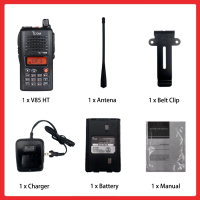
ICOM V85 Long Range Ham Radio Walkie Talkie Waterproof VHF 136-174MHz 7W High Power 107 Channels Portable Two Way Radio FM for Marine Outdoor
₱2,099.00₱3,699.00
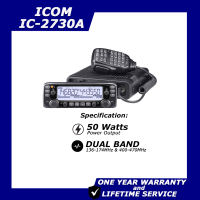
ICOM IC2730A DUAL BAND AND CROSS BAND BASE (50 WATTS)
₱20,000.00₱22,000.00
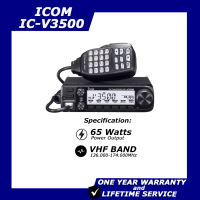
ICOM IC-V3500 144 MHz FM Mobile 65W of Power for Long Range Communications
₱11,400.00₱11,500.00
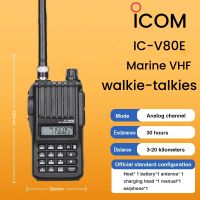
ICOM IC-V80E Walkie Talkie Two-Way Radio VHF Transceiver set (NTC Type Approved) long range Radio
₱2,988.00₱9,999.00
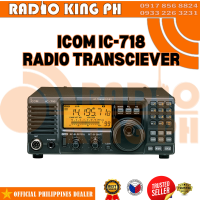
ICOM IC-718 HF 100watts ALL BAND Transceiver Japan Made
₱49,999.00₱65,000.00
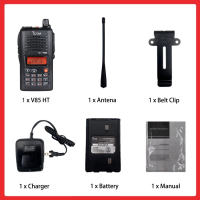
ICOM V85 7 Watts Portable Walkie Talkie Radio VHF Dustproof/shockproof/waterproof two way radio 15KM
₱2,156.00₱5,999.00
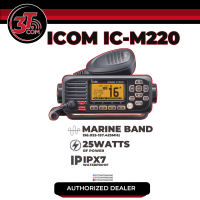
ICOM IC-M220 MARINE BASE RADIO
₱9,799.00
Buy on Lazada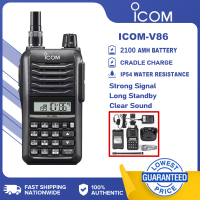
ICOM radio original IC-V86 VHF Transceivers Handheld Radio1-15km Walkie Talkie Long Range Two Way Radio
₱5,099.00₱9,999.00
About Icom
Company Overview
Icom Inc. is a Japanese manufacturer of wireless communication equipment headquartered in Osaka, Japan. The company is best known for its amateur radio transceivers, professional two-way radios, marine radios, aviation radios, receivers, and related wireless and network communication systems. Icom has established its reputation through radio-frequency (RF) engineering, compact transceiver design, product durability, and a commitment to Japanese manufacturing.1
| Item | Information |
|---|---|
| Official name | ICOM INCORPORATED |
| Japanese name | アイコム株式会社 |
| Founded | April 1954 |
| Incorporated | July 1964 |
| Founder | Tokuzo Inoue |
| Headquarters | Hirano-ku, Osaka, Japan |
| Industry | Wireless communications / electronics |
| Main products | Amateur, land-mobile, marine, aviation and other radio equipment |
| Current President & CEO | Hiroshi Nakaoka |
| Capital | ¥7.081 billion |
| Employees | 1,063 group employees, as of March 31, 2026 |
| FY2026 sales | ¥36.959 billion |
| Stock exchange | Tokyo Stock Exchange, Prime Market |
The figures above are derived from Icom’s current corporate profile.2
History
Origins: 1954
The history of Icom began with founder Tokuzo Inoue, who developed an interest in radio during his junior high school years in Nara Prefecture. After completing high school, Inoue worked for a medical equipment manufacturer where he gained experience with RF-based medical devices. He eventually established his own small operation in 1954 in the yard of his home, originally naming the business Inoue Electric Seisakusho.3
The company initially focused on producing equipment for the amateur radio market. A core philosophy during this period was leveraging emerging semiconductor technology to create smaller and more sophisticated radios. While vacuum tubes remained common throughout the 1960s, Icom developed radios utilizing extensive transistor technology.4
Early Milestones
- 1954 — Inoue Electric Seisakusho begins operations.
- 1964 — Inoue Electric Seisakusho Co., Ltd. is incorporated.
- 1964 — FDAM-1, an all-transistor 50 MHz AM portable radio, becomes the company’s first major product.
- 1967 — IC-700T/IC-700R HF equipment is introduced.
- 1976 — Icom enters the marine radio market.
- 1978 — The company changes its name to Icom Incorporated.
- 1979 — Icom America is established.
- 1982 — Icom Australia is established.5
Brand Name Origin
The company was originally named Inoue Electric Seisakusho after its founder, Tokuzo Inoue. As the business expanded internationally, it adopted the name Icom Incorporated in 1978. The ICOM name subsequently became the global brand associated with the company’s radio equipment.6
Technological Development
Icom’s corporate history is closely linked to the evolution of radio technology.
Transition from Vacuum Tubes to Transistors
A key differentiator for Icom in its early years was the adoption of transistors when many radios still relied heavily on vacuum tubes. The FDAM-1, introduced in 1964, was an all-transistor 50 MHz AM portable radio. Icom describes this unit as its first model and a pioneering product in the industry’s transition away from vacuum tube technology.7
PLL Frequency Synthesis
Icom adopted Phase-Locked Loop (PLL) technology, which allowed radios to electronically synthesize frequencies rather than depending exclusively on large numbers of individual crystals. This innovation became a fundamental component of the company’s later radio designs.
Microprocessors
In 1978, Icom introduced the IC-280, which the company describes as the world’s first amateur radio equipped with an internal microcomputer.8 This release illustrated a significant trend in Icom’s development: incorporating technologies becoming available in general electronics into increasingly sophisticated radio equipment.
The IC-2 Series
One of Icom’s most commercially significant early products was the IC-2 series of handheld VHF transceivers. Introduced around 1980, these radios were relatively compact and offered frequency agility through PLL technology. Icom states that more than 2 million IC-2N-series transceivers were sold worldwide.9
The success of this handheld family helped establish Icom as a major international radio manufacturer rather than solely a Japanese amateur radio company.
Product Categories
Icom operates across several major communication markets.
Amateur Radio
Amateur radio remains the product category for which Icom is most recognizable among enthusiasts. The company produces HF transceivers, VHF/UHF transceivers, mobile radios, handheld radios, base-station radios, receivers, digital amateur radio equipment, D-STAR equipment, and various accessories and antennas.
Product families include the IC-7000, IC-7300, IC-7610, IC-9700, IC-705, IC-905, and numerous other models. Icom has also been a primary developer of D-STAR, a digital amateur radio communication system.
Professional and Land-Mobile Radio
Icom manufactures professional two-way radios for organizations requiring reliable communications, including public safety, security, transportation, construction, utilities, hospitality, industrial operations, government organizations, and commercial businesses. Products range from conventional analog radios to digital and IP/LTE-connected systems.
This business segment is significant as it demonstrates that Icom is not solely an amateur radio manufacturer but supplies communication equipment to professional organizations internationally.10
Marine Communications
Marine radio has been a core part of Icom’s portfolio since the company entered the market in 1976.11 Products include VHF marine radios, fixed-mount radios, handheld marine radios, AIS-related equipment, marine navigation products, and marine receivers and accessories.
Icom subsequently expanded into marine navigation, offering radar and fish-finding equipment.12 These radios are widely used on boats, commercial vessels, maritime operations, and recreational watercraft.
Aviation Radios
Icom maintains a dedicated aviation radio business offering VHF air-band handheld radios, aircraft panel-mounted radios, aviation communication equipment, and related accessories. The company entered the aviation radio field during the 1980s; the IC-A2, introduced in 1985, was its first aviation radio.13
Receivers and Specialized Communications
Beyond conventional transceivers, Icom produces various communications receivers and specialized radio equipment. The underlying technology across these diverse products shares a common foundation in RF engineering, frequency synthesis, signal processing, digital electronics, antennas, and communication protocols.
Digital Radio Systems
D-STAR
Icom played a major role in developing and commercializing D-STAR (Digital Smart Technologies for Amateur Radio). This system allows amateur radio operators to transmit digitally and supports features such as digital voice and data communications, representing a shift from traditional FM/SSB/CW technology toward networked digital communications.
IDAS
In the professional radio sector, Icom developed IDAS (Icom Digital Advanced System) for digital land-mobile communications. The company describes this development as part of its effort to standardize digital land-mobile radio technology across markets.14
IP and LTE Communications
Icom has expanded beyond traditional radio networks with IP/LTE radio technology, allowing handheld devices to communicate through cellular or IP infrastructure rather than relying solely on local RF repeaters. This reflects the broader evolution of two-way radio from traditional analog systems to digital, IP-connected, and cellular/LTE communication. Consequently, Icom increasingly operates at the intersection of conventional radio engineering and modern network communications.
U.S. Department of Defense Contract
A notable milestone occurred in 1998 when Icom entered into a radio-supply contract with the U.S. Department of Defense. According to Icom, its radios underwent demanding testing, resulting in the selection of the IC-F3S for the relevant program. Icom describes this as the first time a Japanese manufacturer supplied radios under such a U.S. Department of Defense contract.15
This achievement illustrates the company’s progression from the hobbyist market into demanding professional and government applications.
Manufacturing Philosophy
Icom emphasizes Japanese manufacturing as a core characteristic. The company has retained its production base in Japan rather than moving core production entirely to lower-cost countries. Its Wakayama manufacturing operation is designed for producing relatively small quantities across many different radio models.
This approach is relevant because radio equipment often requires RF calibration, high-frequency component placement, precise filtering, sensitivity testing, transmitter-output testing, electromagnetic compatibility testing, and environmental testing. Icom states that its radios undergo rigorous internal and environmental testing, including testing based on MIL-STD-810 specifications.
Global Presence
Although Icom is a Japanese company, it maintains a significant global footprint. The company states that its products are sold in more than 180 countries and that it maintains an international sales and service network.
Its corporate group includes subsidiaries and operations in the United States, Germany, Australia, Spain, Canada, Brazil, China, and Vietnam. Its American subsidiary, Icom America, is particularly important to its North American operations.
Current Status
As of 2026, Icom remains an independent Japanese communications equipment manufacturer. Its current business encompasses amateur radio, professional two-way radio, marine communications, aviation communications, receivers, wireless LAN/network equipment, and IP/LTE communications.
Icom’s corporate profile lists its business field as manufacturing and selling radio communications, wireless LAN, and SIP telephone equipment. For the fiscal year ending March 2026, Icom reported ¥36.959 billion in annual sales and 1,063 employees across the group.
Reputation
Among radio users, Icom is generally associated with several key characteristics:
- Japanese Engineering: The company has maintained a strong Japanese engineering and manufacturing identity.
- Radio Specialization: Unlike diversified electronics companies, Icom has remained heavily focused on communications equipment.
- Reliability: Durability and reliability are central themes in Icom’s professional radio and marine products.
- RF Expertise: Icom’s core competency is radio-frequency engineering, accumulated over more than seven decades.
- Technology Adoption: The company has repeatedly incorporated new technologies—including transistors, PLL synthesis, microprocessors, DSP, digital radio, IP, and LTE—into its products.
Comparison with Other Radio Brands
Icom belongs to a small group of internationally recognized radio manufacturers.
| Brand | Country | Particularly known for |
|---|---|---|
| Icom | 🇯🇵 Japan | Amateur, marine, aviation & professional radio |
| Yaesu | 🇯🇵 Japan | Amateur radio & communications |
| Kenwood | 🇯🇵 Japan | Amateur & professional radio |
| Motorola Solutions | 🇺🇸 USA | Professional/public-safety communications |
| Hytera | 🇨🇳 China | Professional digital radio |
| Standard Horizon | 🇯🇵 Japan | Marine communications |
Icom’s distinct position lies in its breadth: it participates in amateur, commercial, marine, and aviation communications while retaining a strong common RF-engineering identity.
Important Historical Products
Products illustrating Icom’s technological development include:
- FDAM-1 (1964) — All-transistor 50 MHz AM portable
- IC-700T/IC-700R (1967) — Early HF amateur equipment
- IC-71 (1969) — High-stability 50 MHz transceiver
- IC-710 (1977) — Fully transistorized HF transceiver
- IC-280 (1978) — Microcomputer-controlled amateur radio
- IC-2 series (1980) — Highly successful VHF handheld family
- IC-3200 series (1985) — Early popular dual-band mobile radios
- IC-756PRO (1999) — Early 32-bit floating-point IF-DSP amateur radio
- IC-7800 (2003) — High-end HF/50 MHz flagship
- D-STAR products — Digital amateur radio communications
- IC-7300 — Modern SDR-oriented HF/50 MHz transceiver
- IC-705 — Compact portable SDR transceiver
- IC-905 — High-frequency microwave/SHF amateur radio system
Icom’s historical archive documents many of these developments and products.
Corporate Timeline
- 1954 — Tokuzo Inoue starts Inoue Electric Seisakusho
- 1964 — Company incorporated; FDAM-1 introduced
- 1976 — Marine radio business begins
- 1978 — Name changed to Icom Incorporated
- 1979 — Icom America established
- 1980 — IC-2 handheld family introduced
- 1982 — Icom Australia established; land-mobile radio business expands
- 1985 — Aviation radio business begins
- 1989 — Marine navigation business begins
- 1994 — Narayama R&D center established
- 1998 — U.S. Department of Defense radio contract; wireless LAN business begins
- 2001 — Listed on the first sections of the Tokyo and Osaka exchanges
- 2003 — IC-7800 introduced; continued development of high-end digital radio
- 2014 — Purecom established in Shenzhen
- 2016 — IC-A220 receives FAA TSO approval
- 2018 — Satellite PTT collaboration with Iridium
- 2020 — Icom Asia established in Hanoi
- 2021 — Hiroshi Nakaoka becomes President
- 2022 — Moves to Tokyo Stock Exchange Prime Market
- 2023 — Acquires software development company Macrotechnos
- 2026 — Reports ¥36.959 billion in annual sales and 1,063 group employees
Summary
Icom is a Japanese communications technology company founded in 1954 that evolved from a small amateur radio manufacturer into a global specialist in amateur, professional, marine, aviation, digital, IP, and other wireless communication systems. Radio communication has remained the company’s central technological identity for more than 70 years. Its history essentially mirrors the evolution of radio itself, spanning from transistors and PLLs to microprocessors, DSP, SDR, digital networks, and LTE.
References
- 会社概要 | 企業情報 | アイコム株式会社
- Company Profile | About Us | Icom Inc.
- Company Outline | About Us | Icom Inc.
- アイコムの歩み | 企業情報 | アイコム株式会社
- Icom History | About Us | Icom Inc.
- About us – Icom Europe
- 60th Anniversary | 特集 | アイコム
- Icom History | Icom History | About Us | Icom America.
- About – Icom America Inc.
- ご挨拶 | 企業情報 | アイコム株式会社
- アイコム早わかり|アイコム株式会社 新卒採用サイト
- Icom Inc. Global
- 60th Anniversary | LP | Icom Inc.
- Top Management’s Message | About Us | Icom Inc.
- ICOM History | ICOM History | About Us | Icom Australia.