Shop on Lazada
IT Luggage products
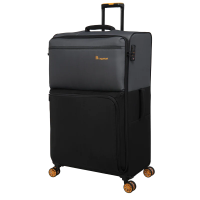
IT Luggage Duotone Black Luggage with TSA Lock Ultra Lightweight
₱9,999.00₱11,399.00
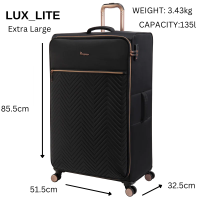
IT LUGGAGE | Lux-Lite Travel Bag
₱9,999.00₱10,999.00
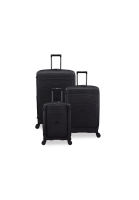
IT LUGGAGE | The Lite Decisive Travel Bag
₱19,999.00₱30,497.00
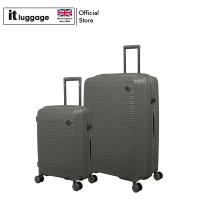
IT LUGGAGE | Spontaneous Travel Bag
₱13,499.00₱19,999.00
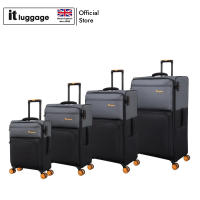
IT LUGGAGE | Duo-tone Travel Bag
₱34,999.00₱54,796.00
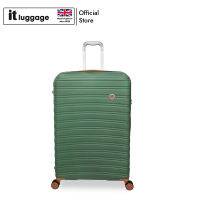
IT LUGGAGE | Fusional Travel Bag
₱9,999.00₱14,499.00
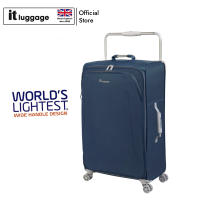
IT LUGGAGE - Worlds Lightest Active Edition Travel Bag
₱25,499.00₱37,997.00
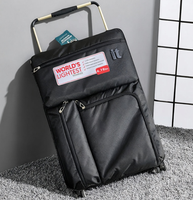
Lightweight Waterproof 20-inch Carry-On Luggage
₱6,005.00
Buy on LazadaAbout IT Luggage
IT Luggage (stylised as it luggage) is a British luggage and travel goods brand recognised for combining lightweight construction, practical design, contemporary styling and relatively accessible pricing. The company traces its origins to 1985 in London, when it was established as Landor Ltd. It later became Landor International, merged with or acquired Hawa International, and eventually adopted the it luggage name.12
Today, IT Luggage is an international business headquartered in Hertford, Hertfordshire, England, with operations spanning the United Kingdom, United States, China and Hong Kong. The company states that its products are sold in over 45 countries and that it has sold more than 100 million cases worldwide.1
Quick facts
| Category | Information |
|---|---|
| Brand | it luggage |
| Industry | Luggage / travel goods |
| Country of origin | United Kingdom |
| Founded | 1985 |
| Original company | Landor Ltd / Landor International |
| Later corporate name | Landor & Hawa International |
| Current identity | it luggage |
| Headquarters | Hertford, Hertfordshire, UK |
| Ownership | Privately held / owner-managed |
| Main products | Suitcases, cabin luggage, travel bags and related travel products |
| Core positioning | Design + innovation + quality + value |
| Global reach | 45+ countries according to the current company site |
| Cases sold | 100+ million worldwide according to the current company site |
| New ranges | 150+ ranges developed annually |
| Main technological emphasis | Lightweight luggage, expandable designs, ergonomic handles and practical travel features |
The figures above are based primarily on the company’s current website and UK corporate records.1
History
1985: The beginning
The history of IT Luggage begins in 1985, when the business was established in London as Landor Ltd. The company’s original purpose was to design luggage for both business and leisure travellers.1
According to the company’s own history, the founders entered a luggage market where many suitcases were perceived as plain, boxy and predominantly black. Rather than simply importing conventional products, the company began exploring how luggage could be made more attractive, functional and affordable.2
This philosophy became central to the brand’s eventual identity: luggage was viewed not merely as a container for belongings, but as a designed consumer product.
Importing from China
The company states it was the first UK luggage company to begin importing from China, allowing it to offer luggage at competitive prices while maintaining desired standards for styling and functionality. It also established a dedicated sourcing and quality-control operation in China.2
This international supply-chain model became a significant factor in the company’s growth.
Landor and Hawa
The corporate history involves several name changes. UK Companies House records show:
- 1985: Landor Limited was incorporated.
- 1994: The company changed its name to Landor International Limited.
- 1997: It became Landor & Hawa International Limited.
- 2012: The company adopted the IT Luggage Limited name.3
The company’s own history describes Hawa International as being acquired in 1996, followed by the eventual rebranding to it luggage.2
In simplified form, the progression is: Landor → Landor International → Landor & Hawa International → it luggage.
The “it” name
The company’s website explains that “it” was derived from “International Traveller”, a sub-brand associated with Landor & Hawa. The business subsequently rebranded as it luggage.1
Brand philosophy
The company’s stated founding principles are:
Design · Innovation · Quality · Value
These four concepts remain central to how IT Luggage presents itself today.2
Rather than positioning itself exclusively as a luxury luggage maker, IT Luggage has historically pursued a mass-market, value-oriented design strategy aimed at making luggage attractive and innovative while keeping it accessible. This positioning helps explain why its products are found through large retailers as well as specialist luggage channels.
Current retail partners include John Lewis, Next, Argos, Primark, Matalan, Dunelm, Tesco, B&M, Walmart and Carrefour.2
Product portfolio
IT Luggage primarily specialises in travel luggage, with a product portfolio that includes:
- Large checked suitcases
- Medium suitcases
- Cabin and hand luggage
- Underseat bags
- Luggage sets
- Business-oriented travel luggage
- Travel bags and accessories
- Selected products incorporating recycled materials
The brand sells both hard-shell and soft-shell luggage. Its product collections vary substantially in appearance, ranging from understated black and neutral options to colourful, fashion-oriented designs.
The company’s UK design team states it develops more than 150 new ranges every year, illustrating an emphasis on variety and rapid product development.1
The “World’s Lightest” identity
A defining element of the IT Luggage brand story is its World’s Lightest luggage. The company states its lightweight concept dates particularly to 2007, when it introduced its “World’s lightest wide handle” collection.2
The concept aims to reduce the suitcase’s own weight so that more of an airline’s baggage allowance can be used for the traveller’s belongings. This is especially relevant for airlines that impose strict checked-baggage weight limits.
Construction and weight reduction
The World’s Lightest luggage uses a combination of:
- Lightweight fibreglass framing
- High-tensile fabric
- Reduced structural components
- A “no pipe” internal-frame concept
- Lightweight wheels and hardware
- Wide-handle designs
The company states that eliminating the traditional internal “pipe” arrangement also creates additional packing space. Certain cabin models are currently listed at approximately 1.4–1.8 kg, depending on the specific design.1
Practical implications
A suitcase weighing 1.5–2 kg can make a meaningful difference when an airline imposes a 7 kg, 15 kg, 20 kg or 23 kg allowance. For example, a 23 kg airline allowance minus a 2 kg suitcase leaves 21 kg available for contents, compared to only 19 kg if the suitcase weighs 4 kg. This practical advantage underpins the brand’s lightweight strategy.
Product innovation
Innovation is a key area where IT Luggage seeks to differentiate itself from standard value luggage. The company attributes several design innovations to its development history.
Expandable hard-shell luggage
IT Luggage states it developed the world’s first expandable hard-shell suitcase. This concept allows a rigid case to increase its packing capacity when additional space is needed, addressing the common issue of requiring extra room for souvenirs or purchases during a trip.1
Wide handles
The wide-handle design is another major part of the product identity. Instead of narrow telescopic handle tubes positioned far apart, wide-handle luggage creates a broader grip and can provide a more stable feel when pulling the case. This design is particularly associated with the World’s Lightest range.1
Laptop luggage
The company has also experimented with luggage designed around electronics. It states it developed wheels that offset the centre of gravity on laptop cases, addressing the tendency for a case to become unstable when a heavy laptop is placed in a front compartment.2
Ergonomics
Recurring usability improvements focus on handle comfort, wheel positioning, packing space, accessibility, case stability and weight reduction. The company’s philosophy involves identifying small annoyances encountered during travel and engineering solutions for them.1
Materials and construction
IT Luggage uses different construction methods depending on the range.
Soft-shell
Soft luggage generally uses textile exteriors, with lightweight ranges employing high-tensile fabrics combined with lightweight structural frames. These fabrics are described as lightweight and abrasion-resistant.2 Advantages include lower weight, flexibility, exterior pockets, easier compression and greater packing flexibility.
Hard-shell
The company also produces hard-shell luggage, including expandable models. Depending on the collection, hard cases may emphasise impact resistance, rigidity, expandability, smooth wheels, modern finishes and security features.
Recycled materials
Sustainability has begun appearing in newer collections. For example, the Popstar World’s Lightest range includes fabric made from recycled plastic bottles and is described by IT Luggage as GRS Certified.2 This reflects a broader industry trend toward incorporating recycled polyester and other recycled materials into luggage.
Design language
IT Luggage occupies a position between functional luggage and fashion luggage. Its designs generally emphasise bright colours, contemporary patterns, glossy or matte finishes, minimalist aesthetics, distinctive wheel and handle arrangements, a variety of sizes and coordinated luggage sets.
The brand states it draws inspiration from trends in fashion, materials and colour.2 This approach acknowledges that luggage has increasingly become part of a traveller’s personal style rather than simply a utilitarian object.
Price positioning
A defining characteristic of IT Luggage is its value-for-money positioning. It is generally not positioned in the same category as luxury luggage brands such as Rimowa or premium business-travel brands such as Tumi. Instead, the brand aims to occupy a space closer to affordable, mid-market, design-focused luggage.
The proposition is that consumers do not have to pay luxury-brand prices to obtain interesting design and useful luggage technology. The company explicitly describes its objective as providing stylish, affordable travel collections without sacrificing style, durability or choice.2
Retail and distribution
IT Luggage has historically been strong in retail partnerships. The company works with major retailers including John Lewis, Next, Argos, Primark, Matalan, Dunelm, Tesco, B&M, Walmart and Carrefour.2
Consumers may therefore encounter IT Luggage without visiting a branded store. The business model combines brand, product design, manufacturing and sourcing, wholesale and major retailers to reach consumers, rather than relying solely on a direct-to-consumer website.
International presence
Although fundamentally a British-origin company, IT Luggage operates internationally. The company currently identifies offices in the United Kingdom, United States, China and Hong Kong, and states its products reach over 45 countries.2
This international structure aligns with the nature of the luggage industry, where product design, sourcing, manufacturing, logistics, retail and after-sales service often take place across different countries.
Scale
The company’s current website provides several indicators of its scale:
- Over 40 years of history
- More than 100 million cases sold
- Over 150 ranges developed annually
- Products in over 45 countries
- A 50+ member inspection team
- Six global offices1
The company describes itself as a globally recognised luggage producer. Its LinkedIn profile lists the business as a privately held manufacturing company headquartered in Hertford, with a company size of 201–500 employees.4
Quality control
Despite its value-oriented positioning, IT Luggage places significant emphasis on quality control. The company states that its products undergo rigorous testing and that a 50+ member inspection team monitors quality throughout production.2
The historical model of having a dedicated sourcing and quality-control operation in China is also part of this approach.2 This focus is important because luggage is exposed to harsh conditions including airport conveyor systems, baggage handling, drops, impacts, rain, dirt, overpacking and stress on wheels and handles.
British origins and manufacturing
IT Luggage is British in terms of its origins, ownership, business identity and design heritage. It was founded in London in 1985, and its headquarters are now in Hertfordshire, England. The current website describes the brand as designed in the UK.1
However, “British brand” does not mean that every component or suitcase is manufactured in Britain. The company has historically had major sourcing and quality-control operations connected with China, and its business operates through an international supply chain.2
The most accurate description is a British-founded and UK-designed luggage brand with an international manufacturing and supply-chain operation.
Ownership
IT Luggage describes itself as owner-managed.2 It is a private limited company rather than a publicly traded corporation. UK Companies House currently lists IT Luggage Limited as an active private limited company.3
This distinguishes it from publicly listed corporations where financial performance and ownership structures are typically more transparent.
Warranty and after-sales
Warranty terms vary by market and product, so specific product warranties should always be checked before purchase. The company’s European site currently states that it offers a 10-year warranty on all products, managed through its internal customer-service team.5
This is notable for a brand positioned around affordability, as luggage warranties are an important indicator of how a manufacturer intends consumers to perceive its durability.
Key differentiators
The IT Luggage brand strategy is built around five core ideas:
- Lightweight: Low-weight luggage is a primary strength, particularly through the World’s Lightest collections.
- Practical innovation: Focus is placed on solving everyday travel problems regarding packing capacity, balance, handles, wheels and weight.
- Fashion-conscious design: The company produces a wide variety of colours, patterns and finishes.
- Affordable pricing: The aim is to deliver design and features without luxury-luggage pricing.
- Mass-market reach: Partnerships with major retailers provide broader distribution than a boutique label.
Market positioning
IT Luggage can be placed on the broader luggage spectrum as follows:
| Brand type | Typical positioning | IT Luggage’s relationship |
|---|---|---|
| Luxury | Premium materials, prestige, high prices | Below this segment |
| Premium travel | Durability, business travel, sophisticated design | Generally below this segment |
| Mid-market | Balance of price, design and durability | Core territory |
| Budget | Lowest possible price | Usually positioned above basic budget luggage |
| Fashion luggage | Appearance and trend-driven design | Strong overlap |
| Lightweight specialist | Weight reduction and travel efficiency | One of IT Luggage’s strongest areas |
IT Luggage is characterised as a design-led, value-oriented British luggage manufacturer rather than a luxury luggage house.
Reputation and market identity
The brand’s strongest reputation centres on lightweight luggage and value. The World’s Lightest concept provides a recognisable point of differentiation; rather than competing solely on colour, price or generic design, it has built a significant part of its identity around reducing the weight of the luggage itself.1
Simultaneously, the large number of product ranges means the company is not solely a specialist lightweight manufacturer. It produces a broad spectrum of luggage intended for different types of travellers.
Strengths
From a consumer perspective, IT Luggage’s major strengths include:
- Very lightweight options, especially the World’s Lightest range
- Large selection of designs, colours and sizes
- Generally accessible pricing
- Strong emphasis on practical features
- Long history dating back to 1985
- Large international distribution network
- UK design heritage
- Extensive experience in luggage sourcing and development
- Innovation around handles, frames, wheels and expandability
- Growing use of recycled materials in selected products12
Potential limitations
Prospective buyers should consider several factors.
Not a luxury brand
IT Luggage does not compete in the space of premium prestige, ultra-premium materials or luxury-brand experiences.
Lightweight trade-offs
Making a suitcase extremely light requires specific engineering and material choices. While a lightweight case is practical, buyers who prioritise maximum ruggedness above all else may prefer a heavier premium case.
Variation by range
Because IT Luggage produces over 150 ranges per year, it is more useful to evaluate a specific model than to assume identical construction across all products. This is particularly important when comparing wheel systems, shell materials, zippers, handles, locks and warranty coverage.
Brand evolution
The history of IT Luggage can be summarised as a progression:
- 1985: Landor founded in London.
- Late 1980s–1990s: Development of an international luggage sourcing and manufacturing model.
- 1990s: Landor International and Hawa International relationship develops.
- 1990s–2000s: Increasing emphasis on product design and innovation.
- 2007: World’s Lightest wide-handle concept introduced.
- 2010s: Rebranding toward it luggage.
- 2020s: Expansion of direct-to-consumer and international operations, broader design ranges, lightweight products and sustainability-oriented materials.
- Today: A global, UK-origin luggage company selling more than 100 million cases cumulatively and developing over 150 ranges annually.1
Summary
IT Luggage is a British-founded, privately owned luggage brand established in 1985 that built its reputation by combining lightweight engineering, practical travel innovations and fashion-conscious design with relatively affordable pricing and large-scale international distribution. Its most distinctive contribution to the luggage market is its long-running focus on ultra-lightweight suitcases, particularly the World’s Lightest collection.
While brands such as Rimowa represent luxury engineering and Tumi represents premium business travel, IT Luggage occupies a distinct position defined by British design, lightweight engineering, broad choice, practical innovation and value pricing. This combination explains the company’s longevity of over four decades and its presence across major high-street and international retailers.1
Note: Some historical dates are presented differently across IT Luggage’s own pages. Corporate records show legal-name changes, while consumer-facing history summarises the Hawa acquisition and rebranding timeline differently. Where discrepancies exist, official Companies House records are distinguished from the company’s account.31