Shop on Lazada
J&J products

Bill Counter Money Counter with UV & MG--2108
₱2,399.00₱5,800.00

Adjustable Bathroom Corner Shelf Shower Organizer
₱340.00₱1,500.00
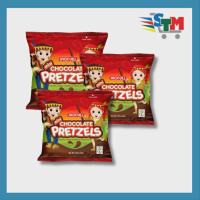
J&J Pretzels Mini Chocolate 28gx3pcs
₱32.00
Buy on Lazada
Double Pole Telescopic Garment Rack with 12 Hook Hanging Pole Rack Clothes Hanger Coat stand Storage
₱199.00₱299.00
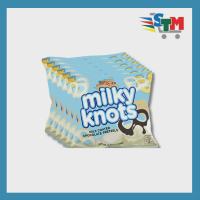
J&J Milky Knots 30gx6pcs
₱66.00
Buy on Lazada
J&J Choco Knots -30gx6pcs
₱67.00
Buy on Lazada
J&J Berry Knots 30gx3pcs
₱32.00
Buy on Lazada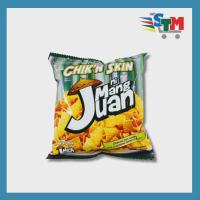
J&J Chickn Skin ni Mang Juan 17g
₱11.00
Buy on LazadaAbout J&J
Johnson & Johnson, commonly abbreviated as J&J, is an American multinational healthcare corporation headquartered in New Brunswick, New Jersey. Established in 1886, it stands as one of the oldest and largest healthcare enterprises globally. Currently, J&J concentrates its operations on two primary business segments: Innovative Medicine and MedTech. 1
Note: While J&J has historically been associated with consumer brands such as Johnson’s Baby, Band-Aid, Tylenol, Neutrogena, and Listerine, these consumer-health assets are no longer owned by Johnson & Johnson. They were transferred to Kenvue, which became an independent publicly traded company in 2023. Consequently, J&J now focuses exclusively on Innovative Medicine and MedTech. 1
Basic information
| Category | Information |
|---|---|
| Full name | Johnson & Johnson |
| Common abbreviation | J&J |
| Founded | 1886 |
| Founders | Robert Wood Johnson, James Wood Johnson, Edward Mead Johnson |
| Headquarters | New Brunswick, New Jersey, United States |
| Industry | Healthcare, pharmaceuticals, medical technology |
| Stock ticker | NYSE: JNJ |
| Current CEO & Chairman | Joaquin Duato |
| Main businesses | Innovative Medicine; MedTech |
| Employees | Approximately 138,000–140,000 worldwide |
| 2025 revenue | US$94.2 billion |
| Corporate website | jnj.com |
According to the 2025 annual report, J&J employed approximately 138,200 people and achieved worldwide sales of $94.193 billion. 2
Joaquin Duato has served as Chief Executive Officer since January 2022 and assumed the role of Chairman in January 2023. 1
History
Founding (1886)
Johnson & Johnson was established in 1886 in New Brunswick, New Jersey, by three brothers:
- Robert Wood Johnson
- James Wood Johnson
- Edward Mead Johnson
Inspired by advancements in antiseptic surgery, the founders aimed to manufacture standardized, sterile medical supplies. The original factory commenced operations with just 14 employees. Within a decade, the workforce had grown to hundreds, and the company occupied multiple facilities. 1
A significant early innovation was the production of sterile, absorbent cotton, which enhanced the safety and standardization of surgical wound treatment. In 1888, J&J published Modern Methods of Antiseptic Wound Treatment, contributing to the dissemination of antiseptic surgical knowledge. 1
Early medical products
Initially, J&J focused on supplying doctors, hospitals, and surgeons. Its early product portfolio comprised:
- Sterile surgical dressings
- Sutures
- Surgical supplies
- First-aid products
- Medical manuals
- Other healthcare products
In 1888, the company introduced one of the first commercial first-aid kits, originally intended for railroad workers. 1 This initiative established a defining characteristic of J&J: leveraging science, manufacturing, and branding to improve the accessibility and standardization of healthcare products.
The Johnson & Johnson Credo
A cornerstone of J&J’s corporate identity is “Our Credo.” Authored by General Robert Wood Johnson in 1943, this document outlines the company’s responsibilities to:
- Patients and consumers
- Doctors and healthcare professionals
- Employees
- Communities
- Shareholders
The underlying philosophy prioritizes the needs and well-being of those served by the company in all decision-making processes. J&J regards the Credo as its enduring moral and business compass. 1 Historically, the brand’s identity has been constructed around the progression of health → trust → science → responsibility → innovation → care.
Expansion into a global healthcare company
Throughout the 20th century, Johnson & Johnson expanded significantly beyond surgical dressings. The company entered and acquired businesses across various sectors, including:
- Pharmaceuticals
- Medical devices
- Surgery
- Orthopaedics
- Vision care
- Consumer healthcare
- Women’s health
- Biotechnology
- Specialty medicines
A pivotal development was the growth of the pharmaceutical division through acquisitions such as McNeil Pharmaceutical, Cilag, and Janssen Pharmaceutica. The acquisition of Janssen in 1961 laid a critical foundation for J&J’s pharmaceutical operations. 1 Over time, the organization evolved from a traditional consumer-goods manufacturer into a diversified healthcare conglomerate.
Current business structure
Following the separation of its consumer-health business, the modern Johnson & Johnson operates through two major divisions: 1
- Innovative Medicine
- MedTech
These two segments constitute the core of the company’s current strategic focus.
Johnson & Johnson Innovative Medicine
Johnson & Johnson Innovative Medicine encompasses the company’s pharmaceutical activities, developing prescription medicines and therapies for serious and complex diseases. Key therapeutic areas include:
- Oncology
- Immunology
- Neuroscience
- Cardiovascular disease
- Pulmonary/cardiopulmonary conditions
- Other areas with significant unmet medical needs
The pharmaceutical portfolio features prescription medicines such as:
- DARZALEX
- CARVYKTI
- ERLEADA
- RYBREVANT
- LAZCLUZE
- TREMFYA
- SIMPONI
- SPRAVATO
- TECVAYLI
- TALVEY
Unlike traditional consumer products, these are predominantly prescription-based therapies. 1
Financial scale
In 2025, Innovative Medicine generated approximately $60.4 billion in worldwide sales, making it the larger of J&J’s two primary businesses. The segment achieved 5.3% operational sales growth in 2025, marking the first time sales exceeded $60 billion. 1
Johnson & Johnson MedTech
The second major business segment, Johnson & Johnson MedTech, develops technologies, equipment, and medical devices for healthcare professionals. Key areas include:
Cardiovascular
Products and technologies addressing heart and vascular system conditions, including electrophysiology and cardiovascular interventions.
Orthopaedics
Technologies utilized in hip replacement, knee replacement, trauma, spine, and sports medicine.
Surgery
J&J develops technologies for surgical procedures, encompassing:
- Surgical instruments
- Wound closure
- Energy devices
- Advanced surgery technologies
- Minimally invasive procedures
Vision
This division includes ACUVUE, a prominent brand producing contact lenses and vision-related products. 1
In 2025, J&J MedTech recorded approximately $33.8 billion in worldwide sales. 1
Brand portfolio distinction
Historically, J&J was widely recognized as the parent company of brands such as Johnson’s Baby, Band-Aid, Tylenol, Neutrogena, Listerine, Aveeno, Motrin, Nicorette, Zyrtec, Rogaine, and Visine. However, these are now Kenvue brands rather than J&J brands.
J&J separated its consumer-health business into Kenvue, which became an independent public company in August 2023. 1 Therefore, in a contemporary corporate context, J&J is accurately associated with brands such as DARZALEX, CARVYKTI, TREMFYA, ERLEADA, RYBREVANT, SPRAVATO, ACUVUE, and its extensive medical-device portfolio. 1
The Kenvue separation
The divestiture of Kenvue represents a significant milestone in J&J’s recent history. For over a century, the company operated across both professional and consumer healthcare. However, management determined that the consumer-health business would be more effective as an independent entity.
In 2022, J&J announced Kenvue as the name for the planned consumer-health company, which included iconic brands like Tylenol, Neutrogena, Listerine, Band-Aid, and Johnson’s. 1 Kenvue subsequently began public trading in 2023. J&J’s strategic objective was to create an organization intensely focused on pharmaceutical innovation and medical technology. 1
Structural comparison
Before separation (Johnson & Johnson):
Pharmaceuticals, Medical devices, Consumer health, Baby care, OTC medicines, Skincare, Oral care.
After separation:
* Johnson & Johnson: Innovative Medicine, MedTech
* Kenvue: Consumer health, Skin health, Baby care, OTC medicines, Self-care
This distinction is fundamental to understanding the current J&J brand.
Brand identity
J&J’s brand identity differs fundamentally from typical consumer brands; it does not primarily market a lifestyle but rather builds its reputation on healthcare expertise and trust. Core brand associations include:
- Science: Emphasis on scientific research and medical innovation.
- Care: Positioning healthcare as a responsibility rather than merely a commercial product.
- Trust: Reliability and safety are central, given the use of products in hospitals and by professionals.
- Innovation: A recurring theme dating back to the company’s earliest surgical products.
- Humanity: A corporate philosophy emphasizing patients, families, healthcare professionals, and communities.
Current branding encapsulates this philosophy with the concept that “health is everything.” 1
Logo and visual identity
The J&J logo is among the most recognizable corporate signatures in the healthcare sector. Historically, the company was strongly identified by its distinctive handwritten-style “Johnson & Johnson” wordmark. While the visual identity has evolved, the name remains a vital component of brand equity.
In recent years, J&J refreshed its corporate identity to highlight the integration of Innovative Medicine and MedTech under a unified brand. 1 The modern identity positions J&J less as a baby-care or household-products company and more as a science and technology-driven healthcare company.
Research and development
Research and development (R&D) is central to J&J’s competitive strategy. In 2025, the company invested approximately $14.7 billion in R&D. Products launched in the preceding five years accounted for roughly 25% of 2025 sales. 2
This underscores a key aspect of the J&J business model: growth relies heavily on discovering, developing, and commercializing new medicines and medical technologies, distinguishing it from conventional consumer brands dependent on advertising and retail distribution.
Global presence
J&J maintains a global footprint with operations, manufacturing facilities, and research activities across numerous countries. The company reports approximately 140,000 employees worldwide and 64 manufacturing facilities. 1
Its products and technologies serve a broad spectrum of stakeholders, including patients, hospitals, surgeons, physicians, nurses, pharmacies, healthcare systems, and medical researchers, ensuring a comprehensive presence within the healthcare ecosystem.
Financial profile
J&J ranks among the largest companies in the global healthcare industry.
2025 Worldwide Sales
Total sales amounted to US$94.193 billion. 1
| Business | 2025 Sales |
|---|---|
| Innovative Medicine | $60.4 billion |
| MedTech | $33.8 billion |
| Total | $94.2 billion |
The company reported 6.0% sales growth in 2025 compared to 2024. 2 In the second quarter of 2026, worldwide sales reached $25.31 billion, representing a 6.6% increase from the same period in 2025. 1
Leadership
Joaquin Duato serves as Chairman and Chief Executive Officer. He became CEO in January 2022 and Chairman in January 2023. A long-time executive at J&J, Duato possesses experience across diverse geographic regions, functions, and business segments. 1
Under his leadership, the company has concentrated its strategy on six major growth areas:
- Oncology
- Immunology
- Neuroscience
- Cardiovascular
- Surgery
- Vision 1
Strategic significance
J&J’s importance lies in its position at the intersection of medicine, medical technology, and healthcare delivery. Unlike companies focused solely on pharmaceuticals, J&J operates across both drug discovery and medical technology development. This dual capability provides a broad position within the healthcare system, described by the company as a distinctive business model spanning Innovative Medicine and MedTech. 1
Timeline of evolution
- 1886: Founded in New Brunswick, New Jersey.
- 1888: Published Modern Methods of Antiseptic Wound Treatment and pioneered commercial first-aid kits.
- Early 1900s: Expanded medical and surgical product lines.
- 1943: “Our Credo” established.
- 1944: Johnson & Johnson became publicly traded on the New York Stock Exchange. 1
- 1950s–1970s: Significant expansion into pharmaceuticals, medical products, and international markets.
- 1961: Acquired Janssen Pharmaceutica, strengthening pharmaceutical capabilities. 1
- Late 20th century–2000s: Evolved into a major global healthcare conglomerate spanning pharmaceuticals, medical devices, and consumer health.
- 2022: Announced Kenvue as the name for the planned consumer-health business. 1
- 2023: Kenvue became an independent publicly traded company; J&J refocused on pharmaceuticals and MedTech. 1
- 2025: Generated approximately $94.2 billion in worldwide sales. 1
- 2026: Continued operation primarily through Innovative Medicine and MedTech, with major investments in oncology, immunology, neuroscience, cardiovascular care, surgery, and vision. 1