Shop on Lazada
J-B Weld products
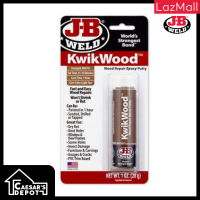
JB Weld KwikWood Wood Repair Epoxy Putty 1 oz. / 28g (8257)
₱499.00
Buy on Lazada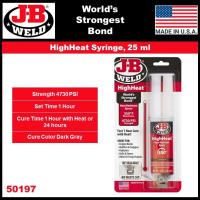
JB WELD/ J-B Weld HighHeat Syringe High Heat 25 ml - 50197
₱1,195.00
Buy on Lazada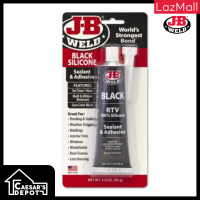
JB Weld Black Silicone Sealant & Adhesive 3.0 oz. / 85g (31319) NOT CARDED
₱399.00
Buy on Lazada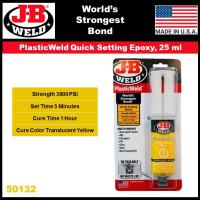
JB WELD/ J-B Weld PlasticWeld Quick Setting Epoxy Syringe 25 ml - 50132
₱1,095.00
Buy on Lazada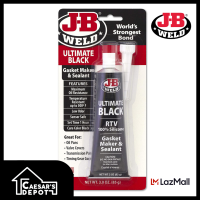
JB Weld Ultimate Black Gasket Maker & Sealant (32329)
₱499.00
Buy on Lazada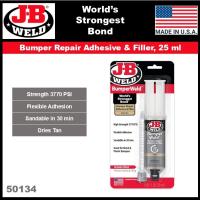
JB WELD / J-B Weld BumperWeld Bumper Repair Adhesive & Filler 25 ml - 50134
₱1,345.00
Buy on Lazada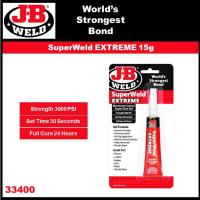
JB WELD / J-B Weld SuperWeld Extreme 15 g - 33400
₱845.00
Buy on Lazada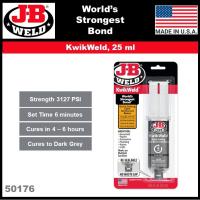
JB WELD / J-B Weld 50176 KwikWeld 0.85 oz. (25 ml)
₱1,095.00
Buy on LazadaAbout J-B Weld
J-B Weld is an American brand of adhesives and repair products best known for its high-strength, two-part epoxy systems. While originally associated with metal repair and bonding, the modern product portfolio encompasses plastics, wood, ceramics, concrete, fibreglass, automotive components, plumbing, marine applications, and various other materials. The company operates as an employee-owned business headquartered in Marietta, Georgia, while maintaining a continued presence in Sulphur Springs, Texas, where it was founded.1
The brand’s flagship product, also named J-B Weld, is a two-component epoxy traditionally packaged in separate tubes containing resin and hardener. Its reputation stems from the concept of a “cold weld”—an adhesive-based alternative for repairs where conventional heat welding is impractical or inconvenient.1
Quick facts
| Field | Information |
|---|---|
| Brand | J-B Weld |
| Company | J-B Weld Company |
| Industry | Adhesives, epoxies, sealants and repair products |
| Founded | 1969 |
| Founders | Sam and Mary Bonham |
| Origin | Sulphur Springs, Texas, USA |
| Current headquarters | Marietta, Georgia, USA |
| Ownership | Employee-owned |
| Best known for | Two-part epoxy adhesives |
| Major markets | DIY, automotive, home repair, crafting, plumbing, carpentry and professional repair |
| Brand slogan/positioning | “World’s Strongest Bond” |
| International presence | United States and international markets |
| Official website | jbweld.com |
The company states that its products are distributed through more than 50,000 retail locations in the United States, as well as through retailers in Canada, Mexico, and over 30 other countries.4
History
Founding
J-B Weld was established in 1969 in Sulphur Springs, Texas. Founder Sam Bonham, who operated a truck service and machine shop, identified a need for a strong joining material that could be used when conventional torch welding was unsuitable.
According to company records, Bonham collaborated with a Texas A&M chemist to develop a two-part epoxy designed to provide a durable, heat-free method for repairing and joining materials. This formulation became the original J-B Weld product.1
Sam and Mary Bonham initially ran the business on a small scale, reportedly selling the product directly from their car to automotive parts distributors across Texas. Distribution subsequently expanded to retail stores throughout the United States and eventually to international markets.12
Expansion
The brand initially built its reputation within the automotive repair market. Its capacity to bond and repair metal made it particularly valuable to mechanics, machinists, and DIY enthusiasts.
Over time, the company expanded beyond its original flagship epoxy. The product family grew to include formulations engineered for faster curing times, underwater repairs, plastics, wood, marine applications, and other specialised tasks.12
Sam Bonham passed away in 1989. Under Mary Bonham’s continued involvement, the company expanded internationally; historical accounts indicate that a European hub was established in London shortly thereafter.2
Ownership and modern era
In 2008, J-B Weld was acquired by a group of private investors, leading to a significant broadening of the product portfolio.12
Today, J-B Weld describes itself as an employee-owned company. Although its corporate headquarters are now located in Marietta, Georgia, it retains an operational presence in Sulphur Springs, Texas.1
The original J-B Weld product
The product that gave the company its name is a two-part epoxy adhesive. Unlike single-component glues, the original J-B Weld utilises two distinct components:
- Resin
- Hardener
These components are dispensed in equal portions and mixed together. The resulting chemical reaction causes the mixture to cure into a strong adhesive and filler material. J-B Weld continues to offer this traditional twin-tube format alongside syringes, putty sticks, and other dispensing systems.4
This distinction is significant because J-B Weld functions as more than a simple adhesive. Epoxy systems can serve simultaneously as adhesives, fillers, and repair compounds, enabling users to rebuild or fill damaged areas rather than merely attaching two surfaces.
Why is it called a “weld”?
The name references the product’s intended role as a cold-welding alternative. Traditional welding joins materials through heat, melting, or fusion. In contrast, J-B Weld uses a chemical adhesive system to create a bond without requiring a welding torch.
Consequently, it does not weld metal in the metallurgical sense. Rather, “cold weld” describes the repair concept and marketing position of providing a weld-like bond through chemical adhesion.
Product portfolio
J-B Weld has evolved considerably beyond the original two-tube epoxy. The current catalogue includes multiple categories and specialised formulations.4
Original J-B Weld
The flagship epoxy remains the product most closely associated with the brand. It is intended for demanding repairs and bonding applications and is particularly renowned for metal repair.
KwikWeld
KwikWeld is designed as a faster-setting alternative to the original J-B Weld. It targets users who require the characteristics of an epoxy repair but need a shorter setting time.
ClearWeld
ClearWeld is a transparent epoxy formulated for applications where the aesthetic appearance of the finished repair is important.
SteelStik
SteelStik is an epoxy putty designed for filling and repairing metal and other surfaces. Unlike liquid epoxy, this putty can be moulded and pressed into cracks, holes, and irregular areas.
WaterWeld
WaterWeld is formulated for repairs involving wet environments and underwater applications. This makes it suitable for plumbing and other situations where moisture might prevent conventional adhesives from bonding effectively.4
PlasticWeld
PlasticWeld products are specifically engineered for bonding and repairing various plastics and composite materials.
MarineWeld
MarineWeld targets marine and water-related repair applications.
KwikWood and WoodWeld
These products extend J-B Weld’s epoxy technology into wood repair, including filling, rebuilding, and bonding wooden components.
SuperWeld
J-B Weld has also expanded into cyanoacrylate and super-glue-type products under the SuperWeld family. These are intended for faster bonding applications where a traditional two-part epoxy may not be the optimal solution.4
The current catalogue also includes silicone sealants, repair wraps and casts, exhaust-repair products, threadlockers, and specialty adhesives.3
Major applications
A defining characteristic of J-B Weld is the breadth of applications it addresses. The current product system covers areas including:
- Automotive repair
- Home DIY
- Metal repair
- Plumbing
- Carpentry
- Crafting
- Marine repair
- Plastic repair
- Concrete and masonry
- Ceramic repair
- Fibreglass repair
- Glass bonding
- Industrial and workshop applications
The J-B Weld product finder organises items according to surfaces such as metal, aluminium, plastic, wood, concrete, glass, rubber, fibreglass, ceramic, brick, and others.4
Automotive reputation
Automotive repair is arguably the market most responsible for establishing J-B Weld’s identity. The original product was developed within a truck-service environment, and the brand became particularly associated with repairing engine components, metal parts, and other automotive issues.
This history explains why J-B Weld is frequently found alongside traditional workshop products in the toolboxes of mechanics and DIY enthusiasts. However, it is important to note that an epoxy repair is not automatically a substitute for structural welding or component replacement. Suitability depends on the specific product, material, temperature, load, and safety requirements of the repair.
How J-B Weld epoxy works
A typical two-part J-B Weld epoxy contains a resin and a hardener stored separately. When mixed, the following process occurs:
Resin + Hardener → Chemical curing reaction → Hardened epoxy
The uncured mixture can be spread, shaped, or used to fill a damaged area. As it cures, it becomes a solid polymer material that adheres to prepared surfaces. Surface preparation is therefore critical; manufacturers generally recommend cleaning and mechanically preparing surfaces to improve adhesion.
J-B Weld’s FAQ clarifies that its twin-tube, syringe, and putty-stick products are generally two-component epoxies consisting of resin and hardener, with the primary difference being the dispensing method.4
Brand positioning
J-B Weld’s branding is centred on strength, reliability, repairability, and self-reliance. Its current brand message is “World’s Strongest Bond”, while its broader mission emphasises helping DIY users build confidence and self-sufficiency.4
This positions J-B Weld differently from brands that primarily sell consumer glue. Its image aligns with the philosophy: “If something is broken, repair it yourself.” Consequently, the brand appeals to mechanics, makers, hobbyists, tradespeople, and DIY consumers who prefer to extend the useful life of an object rather than replace it immediately.
Brand identity
J-B Weld’s visual identity is strongly associated with its distinctive black, red, and metallic/grey packaging. The classic twin-tube package traditionally separates the two components into different tubes, making the resin/hardener system visually obvious.
The name J-B Weld has become so closely associated with high-strength epoxy repair that consumers sometimes use the term generically when referring to epoxy repair products.
Distribution and retail presence
J-B Weld has grown from a small Texas automotive supplier into a large international consumer brand. The company states that its products are currently distributed through over 50,000 U.S. retail locations, including major hardware, automotive, home-improvement, and general retailers. Stated retail partners include ACE Hardware, Advance Auto Parts, Amazon, AutoZone, Home Depot, Lowe’s, Michaels, NAPA Auto Parts, O’Reilly Auto Parts, Target, True Value, and Walmart.4
Internationally, J-B Weld products are sold in Canada, Mexico, and more than 30 other countries according to current company information.4
J-B Weld vs. conventional glue
J-B Weld’s primary differentiator is that its epoxy products can serve several functions simultaneously, unlike standard adhesives.
| Characteristic | Ordinary household glue | J-B Weld-style epoxy |
|---|---|---|
| Bonding | ✓ | ✓ |
| Filling gaps | Limited | ✓ |
| Rebuilding damaged areas | Limited | ✓ |
| Two-part curing | Usually no | ✓ |
| Metal repair | Product-dependent | Major use case |
| High-temperature formulations | Limited | ✓ |
| Specialized formulations | Limited | Extensive |
| Putty formulations | Rare | ✓ |
| Underwater repair products | Rare | ✓ |
Performance varies considerably by specific J-B Weld product, so the brand should not be treated as a single formulation.
Notable product families
Reputation
J-B Weld’s reputation derives largely from its combination of strong bonding performance, broad material compatibility, and long association with automotive repair. Having existed for more than five decades, its products have developed a strong following among DIY users and repair professionals. The company describes its products as serving projects ranging from small household repairs to heavy-duty workshop applications.4
Its greatest strength as a brand is arguably recognition: among DIY and automotive audiences, “J-B Weld” immediately communicates the idea of a serious epoxy-based repair rather than ordinary household glue.
Important limitations
Despite the “World’s Strongest Bond” positioning, J-B Weld products are not universally appropriate for every repair. Performance depends on:
- The specific J-B Weld formulation
- The materials being joined
- Surface preparation
- Temperature
- Moisture
- Chemical exposure
- Mechanical loading
- Cure time
- Whether the repair is structural or cosmetic
For safety-critical components—such as certain automotive suspension, steering, pressure-containing, or load-bearing parts—an adhesive should not automatically be considered a replacement for a properly engineered repair or component replacement. Technical data and instructions for the particular product should always take precedence over general brand claims.
Corporate evolution at a glance
- 1969: Sam and Mary Bonham establish J-B Weld in Sulphur Springs, Texas.1
- Early years: The company builds its reputation selling epoxy to automotive shops and parts distributors in Texas.
- 1980s: J-B Weld becomes increasingly recognised as an automotive and general-purpose repair product.
- 1989: Founder Sam Bonham dies.
- 1990s onward: The company expands distribution internationally.
- 2008: J-B Weld is acquired by a group of private investors and subsequently broadens its product portfolio.12
- Modern era: The company develops products covering metal, plastic, wood, marine, plumbing, automotive, and general DIY applications.
- Today: J-B Weld is an employee-owned company headquartered in Marietta, Georgia, with roots and an ongoing presence in Sulphur Springs, Texas, and an international retail footprint.12
Summary
J-B Weld is essentially a specialist repair-and-adhesive brand that turned a “cold welding” concept into a major consumer product category. Its original breakthrough was a strong two-part epoxy intended to allow users to repair and join materials without conventional welding equipment. From that foundation, the company developed an extensive family of epoxies, putties, instant adhesives, sealants, and specialty repair products.
Today, the name J-B Weld is particularly synonymous with heavy-duty DIY repairs, automotive fixes, and metal epoxy, while the broader company has evolved into a larger adhesive and repair-products manufacturer. Crucially, J-B Weld is not just one glue but an entire brand ecosystem of specialized adhesives and repair compounds, with different formulations designed for specific materials and environments.4