Shop on Lazada
Jetbeam products
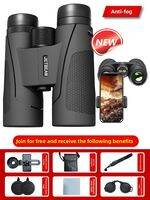
JETBeam | High-Power HD Professional Day & Night Portable Binoculars
₱2,663.01₱2,902.58
Jetbeam | Multifunctional Elderly Walking Stick
₱2,385.38₱2,447.58
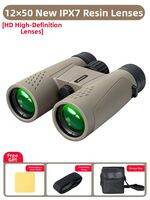
JETBeam | High Power Day and Night Vision Concert-Ready Compact Binoculars
₱2,626.58₱3,416.01
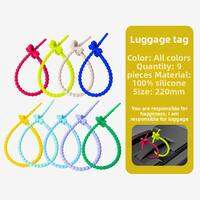
Jetbeam | Travel Luggage Tag Eco-friendly Silicone
₱702.14
Buy on Lazada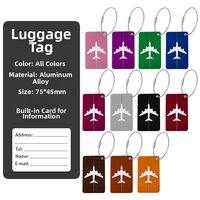
Jetbeam | Anti-Loss Travel Luggage Tag
₱507.89₱1,008.90
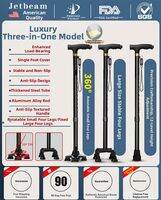
Jetbeam | Non-slip Elderly Walking Aid 4-legged Cane
₱1,550.53
Buy on Lazada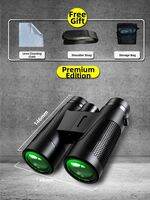
JETBeam | High-Power HD Professional Binoculars Night Vision Day & Night Portable Long-Distance Bird Watching
₱2,350.54₱2,371.37
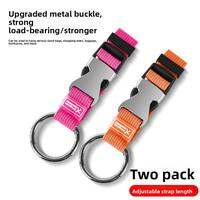
Jetbeam | Anti-lost Travel Binding Strap
₱248.63₱565.06
About Jetbeam
Brand Overview
Jetbeam (also stylised as JETBeam, JetBeam, or JETBEAM) is a Chinese lighting brand best known for high-performance LED flashlights, particularly those designed for tactical, outdoor, and everyday carry (EDC) applications. The brand is operated by Shenzhen JETBeam Electronic Technology Co., Ltd., which states it was established in 2004.1
Historically, Jetbeam has occupied the mid-to-high-end enthusiast segment of the flashlight market, developing products characterised by high output, regulated electronics, compact mechanical designs, and specialised user interfaces. Its product range has expanded beyond conventional handheld torches to include tactical lights, headlamps, weapon-mounted lights, bicycle lighting, UV lights, and other portable illumination tools.1
| Item | Details |
|---|---|
| Brand | Jetbeam |
| Chinese name | 捷特明 |
| Company | Shenzhen JETBeam Electronic Technology Co., Ltd. |
| Founded | 2004 |
| Headquarters | Shenzhen, Guangdong, China |
| Industry | Portable LED lighting |
| Best known for | High-performance LED flashlights |
| Main markets | Outdoor, tactical, EDC, industrial |
| Related brand | NITEYE |
| Business activities | R&D, manufacturing, sales/marketing, OEM/ODM |
| Current product categories | Tactical, EDC, weapon lights, headlamps, bicycle lights, UV and laser products |
The company’s own history places its founding in 2004 and describes its original focus as portable LED lighting for outdoor, tactical, and industrial users. Industry organisation PLATO USA similarly lists JETBeam Electronic Technology as a manufacturer that conducts its own research and development, manufacturing, sales, and marketing, while also undertaking OEM and ODM work.1
History
2004: Foundation
Jetbeam traces its origins to 2004, when Shenzhen JETBeam Electronic Technology Co., Ltd. was established with a focus on LED lighting products. The company subsequently concentrated heavily on high-performance flashlights.1 This period was significant for the industry as high-output LEDs were rapidly replacing traditional incandescent technologies in premium portable lights. Early Jetbeam products helped establish the brand’s reputation among enthusiasts through sophisticated electronics and designs aimed at users seeking performance beyond standard consumer torches.
Late 2000s: Expansion Among Enthusiasts
During the late 2000s, Jetbeam became increasingly visible in enthusiast communities. Early models such as the JET-I, JET-II, and JET-III series became recognisable staples in the market. A notable aspect of these early products was the company’s experimentation with electronic control systems; the brand became associated with its Intelligent Battery System (IBS) and programmable multi-level output systems. Contemporary references document numerous models from this era, including the JET-I MK IIx, JET-I Pro, JET-III Pro, and various BA-series and BC-series lights.2
2011: NITEYE
In 2011, Jetbeam’s parent company established NITEYE as a separate high-end outdoor lighting brand intended to cover products such as bicycle lights, headlamps, searchlights, and high-performance flashlights.1 Historical documentation indicates that the company owned the patents and copyrights associated with its flashlight products and authorised NITEYE products under the same corporate ownership.3 Consequently, Jetbeam and NITEYE are accurately viewed as sister brands within the same corporate ecosystem rather than unrelated entities.
Market Positioning
Jetbeam is best understood as an enthusiast-oriented Chinese flashlight manufacturer rather than a generic OEM. Its traditional positioning sits between inexpensive mass-market torches, high-performance enthusiast brands, and professional tactical lighting manufacturers. The brand has historically emphasised engineering and performance over low price, with products used in outdoor activities, law enforcement, industrial applications, and marine environments.
This positioning is reflected in product design, with many Jetbeam lights featuring advanced electronic interfaces, multiple output levels, high-output LEDs, rechargeable systems, specialised optics, and tactical-oriented construction. While generally regarded as a premium Chinese brand, it operates alongside other major manufacturers such as Nitecore, Fenix, Acebeam, Olight, Wurkkos, and Sofirn, each occupying overlapping portions of the market with different strengths.
Product Philosophy
High Output
A primary characteristic of Jetbeam products is high luminous output. Modern models include lights advertised at hundreds or thousands of lumens; the current catalogue features models rated at 1,200, 2,000, and 3,600 lumens.1 However, as with most high-performance manufacturers, advertised maximum output is typically a short-duration turbo level rather than a sustained output rating.
Electronic Sophistication
Jetbeam has a significant heritage in flashlight electronics. Older models incorporated programmable modes and the IBS concept, while contemporary products utilise advanced interfaces such as Andúril.2 For example, a review of the Jet-ST measured approximately 712 lumens at 30 seconds against an advertised 800-lumen maximum, with a calculated throw of roughly 208 metres, illustrating the performance-oriented design philosophy for which the brand is known.4
Mechanical Construction
Products generally feature metal housings, commonly aluminium, machined for durability, heat dissipation, and grip. Current marketing emphasises ruggedness, water resistance, and impact resistance for outdoor and emergency applications.1
Specialised Applications
Beyond standard pocket torches, the current catalogue covers tactical flashlights, EDC lights, weapon lights, headlamps, bicycle lights, UV flashlights, laser-equipped lights, and high-output search products.1
Notable Product Families
JET Series
The JET family represents the brand’s classic EDC and enthusiast heritage. Historical models included the JET-I, JET-II, and JET-III families. Contemporary versions continue this naming convention, with the current catalogue listing products such as the JET-I MK, JET-II MK, and JET-U.2
BA / BC Series
The BA and BC series were important early products that illustrated the transition toward powerful regulated systems. Notable models included:
- BA10: Single-AA flashlight
- BA20: Dual-AA flashlight
- BC10: Single-CR123 flashlight
- BC20: Dual-CR123 flashlight
- BC25: High-output tactical/utility light
- BC40: Larger multi-cell flashlight2
EDC Series
Jetbeam currently maintains a significant EDC-oriented range. Examples include the C8PRO, E10R, E26 KUNAI, and EC26. The E26 KUNAI is notable for combining flashlight functionality with either laser or UV capability.1
Tactical Series
Tactical products are designed around high output, durability, and rapid access to specific modes. Current examples include the 3M Ultra Tactical, BC20TAC, and BC25TAC.1
Headlamps
The brand produces headlamps such as the HR10, HR25, and HR30.1
Design Language
Jetbeam products traditionally possess a distinctively technical appearance. Common characteristics include aggressively machined aluminium bodies, deep cooling fins, crenellated or tactical bezels, knurling, compact cylindrical forms, elaborate head designs, side or tail switches, pocket clips, and black anodised finishes. Some premium or limited editions adopt more elaborate materials. The Jet-ST Personal, for instance, featured an 18650 cell, built-in charging, and an XP-L HI LED with an advertised 800-lumen output.4
Reliability and Warranty
Jetbeam advertises a five-year limited warranty for its products, with shorter coverage for consumable components. The policy excludes cosmetic damage, misuse, unauthorised modifications, and damage exceeding specified waterproof ratings.1 Genuine products can be identified via a laser-engraved serial number, a measure intended to distinguish official units from counterfeits.1
Manufacturing and Business Model
The company operates across the full value chain, encompassing R&D, manufacturing, sales, marketing, and brand operations, in addition to OEM/ODM manufacturing.1 This distinguishes Jetbeam from brands that merely rebrand generic products.
Global Presence
Reputation Among Enthusiasts
Jetbeam maintains a strong historical following. In the early enthusiast era, it was among the Chinese companies demonstrating that domestic designs could compete technically with established Western and Japanese products. Older models remain discussed and collected, with specialist databases covering releases dating back to the 2000s.2 The brand’s modern reputation is partly based on this legacy; enthusiasts active in the late 2000s or early 2010s frequently encountered Jetbeam.
Strengths and Considerations
Strengths
- Long history: Established in 2004.
- LED heritage: Focused on high-performance lighting for over two decades.
- Engineering orientation: Emphasis on electronics, output control, and mechanical design.
- Broad range: Covers EDC, tactical, headlamps, bicycle lights, weapon lights, and specialised products.
- Enthusiast credibility: Substantial history within enthusiast communities.
- In-house capabilities: Handles R&D, manufacturing, and brand operations.
- International presence: Sold globally for many years.1
Considerations
- Catalogue evolution: Products from different eras may differ significantly in technology and design.
- Output ratings: Sustained output, thermal regulation, runtime, and beam profile are often more critical than peak lumen figures.
- Availability: Historically significant models may be discontinued.
- Authenticity: Buyers should verify serial numbers and purchase from authorised channels to avoid unauthorised listings.1
Current Status
As of 2026, Jetbeam continues to operate as a Shenzhen-based LED lighting company with an active product catalogue. The company cites over 21 years of LED experience and positions the brand around outdoor, tactical, and industrial lighting.1 The current portfolio has moved beyond early AA/CR123 formats to include rechargeable high-output lights, tactical products, headlamps, EDC lights, weapon lights, and specialised UV/laser products.1
Note on Historical Dates
While some older third-party materials reference 2001, the company’s official website and independent industry sources consistently cite 2004 as the establishment date. This article uses 2004 as the better-supported date.1