Shop on Lazada
Jovan products
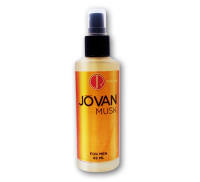
JOVAN M FOR MEN 30ML/85ML OILBASED PERFUME LONG LASTING
₱127.00
Buy on Lazada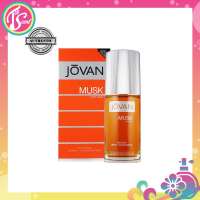
Jovan Musk for Men 88ml
₱780.00
Buy on Lazada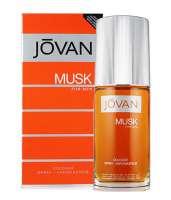
Jovan Musk for Men Cologne Spray 88ml
₱990.00
Buy on Lazada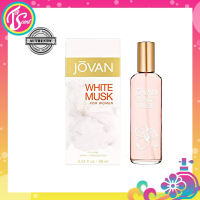
Jovan White Musk for Women 96ml
₱810.00
Buy on Lazada
Jovan Musk Pour Homme Mens 88ml
₱888.00₱1,350.00
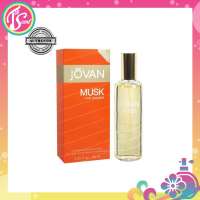
Jovan Musk for Women 96ml
₱850.00
Buy on Lazada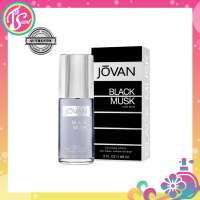
Jovan Black Musk for Men 88ml
₱650.00
Buy on Lazada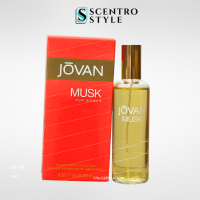
Jovan Musk Womens 96ml
₱899.00₱1,250.00
About Jovan
Overview
Jovan is an American fragrance brand best known for its musk-based perfumes and colognes, particularly Jovan Musk. Founded in 1968, it became one of the most recognizable mass-market fragrance names of the 1970s and helped popularize musk as a standalone fragrance category. Today, Jovan is part of Coty, one of the world’s major beauty companies.1
| Category | Information |
|---|---|
| Brand name | Jovan |
| Founded | 1968 |
| Country of origin | United States |
| Industry | Fragrance and personal care |
| Best known for | Musk fragrances |
| Signature fragrance | Jovan Musk |
| Parent company | Coty |
| Notable period | 1970s–1980s |
| Brand positioning | Sensual, accessible, mass-market fragrance |
| Notable cultural association | Rolling Stones’ 1981 Tattoo You tour |
Coty currently describes Jovan as a fragrance brand with a long history and states that its Musk fragrance remains a best-selling musk brand in broad distribution.14
History
Foundation: 1968
Jovan was established in 1968 by entrepreneurs Bernard Mitchell and Barry Shipp. The company initially experimented with bath and fragrance products rather than immediately becoming the musk-focused fragrance house for which it would later be known. One of its earliest products was Mink & Pearls, a perfumed bath oil.2
The name Jovan was reportedly selected partly because it sounded French and partly because it resembled the names of established beauty companies such as Revlon and Avon.3
The breakthrough: Musk
The turning point came in the early 1970s with Jovan Musk Oil. Barry Shipp had reportedly encountered young people purchasing concentrated musk oil in New York’s Greenwich Village, an experience that inspired the company to explore musk as a commercial fragrance. Jovan subsequently developed a mass-market musk fragrance using synthetic musk materials rather than relying on natural musk from animals.4
This development was significant because musk had traditionally been used primarily as an ingredient or fixative within perfumes. Jovan helped turn it into the central identity of a fragrance. Contemporary TIME coverage in August 1972 described musk oil as an extremely popular new fragrance and reported that Jovan was among the major manufacturers entering the rapidly growing market.4
Coty dates Jovan’s fragrance leadership specifically from 1972, reflecting the importance of the Musk launch to the brand’s identity.15
The Jovan Musk phenomenon
Jovan Musk became the company’s defining product. Rather than presenting fragrance primarily as an expression of refinement, luxury, or traditional femininity, Jovan marketed musk as something warm, physical, intimate, and sexually attractive. This approach formed a major part of the brand’s identity.
During the 1970s, Jovan’s advertising made unusually direct connections between fragrance and sexual attraction. Advertising campaigns used provocative language and imagery suggesting that wearing Jovan could increase one’s attractiveness to others. The approach became known within advertising history as an unusually aggressive example of sexual positioning.5
The strategy proved commercially successful. According to the ANA Educational Foundation’s history of fragrance advertising, Jovan’s sales rose from approximately $1.5 million in 1971 to $77 million in 1978. By 1976, the brand ranked third in U.S. men’s fragrance market share and tenth in women’s fragrances.5
Jovan is therefore significant not only as a heritage perfume brand but also as an example of how mass-market fragrance advertising evolved during the 1970s.
Branding and advertising
Jovan’s original advertising was deliberately provocative. The company effectively sold an idea of “sex appeal in a bottle,” with campaigns suggesting that fragrance was not merely about smelling pleasant but could influence attraction, confidence, and interpersonal relationships.6
This was particularly notable because fragrance advertising before this period tended to rely more heavily on conventional ideas of elegance, romance, sophistication, and beauty. Jovan instead emphasized sexuality, physical attraction, sensuality, confidence, youth culture, gender relations, and provocative humor. This approach helped establish Jovan as a recognizable personality rather than simply another inexpensive cologne.
Coty now describes the brand’s early marketing campaigns as industry benchmarks.7
Expansion of the fragrance line
Although Musk became its signature, Jovan eventually developed a much broader fragrance portfolio. Important historical products included:
- Jovan Musk
- Jovan Musk for Men
- Jovan Sex Appeal
- Jovan Ginseng
- Jovan Man
- Jovan Woman
- Jovan White Musk
- Jovan White Musk for Men
- Various musk, oil, and other fragrance variations
The brand experimented with fragrance oils, colognes, perfumes, and products targeted toward both men and women.8 Its catalog subsequently expanded considerably, with fragrance databases listing dozens of Jovan fragrances across its history.17
Jovan Sex Appeal
One of the most famous extensions of the brand’s original concept was Jovan Sex Appeal, launched in the mid-1970s. The name itself demonstrates how closely Jovan connected fragrance with sexuality. Rather than hiding the attraction-oriented positioning behind sophisticated language, Jovan made it part of the product’s name and advertising.
The fragrance became one of the brand’s notable products of the 1970s and exemplified the company’s willingness to use deliberately provocative marketing.16
Ownership changes
1968–1970s: Independent Jovan
The company operated independently under its founders and built its reputation around mass-market fragrance.
1979: Beecham acquisition
After its rapid growth, Jovan was acquired by the British conglomerate Beecham in 1979 for approximately $85 million.13 The acquisition was significant because it demonstrated how valuable Jovan had become despite its relatively inexpensive, mass-market positioning.
1980s: Quintessence
Jovan subsequently went through another ownership phase involving its original management and Quintessence. Historical sources differ somewhat on the precise sequence of the transactions, but by the late 1980s, the Jovan business was operating under the Quintessence structure.9
1990s: Benckiser and Coty
The business subsequently became associated with Benckiser, and Jovan eventually entered the Coty portfolio. Canadian trademark records document the transition from Beecham-related ownership to Quintessence and subsequently to Coty entities.7
Today, Jovan is officially listed by Coty as one of its consumer fragrance brands.15
The Rolling Stones connection
One of the most unusual episodes in Jovan’s history occurred in 1981 when it became the first fragrance brand to sponsor a rock band, supporting the Rolling Stones’ Tattoo You tour. Coty specifically highlights this as a landmark in the brand’s history.13
The partnership was a natural extension of Jovan’s image, as the brand had positioned itself around sexuality, youth, rebellion, and popular culture rather than traditional luxury-perfume conventions. The Rolling Stones association helped reinforce Jovan’s identity as a culturally provocative, mass-market American fragrance brand.
Scent profile
The Jovan identity is strongly associated with musk. Classic Jovan fragrances generally emphasize warm, soft, sensual, and slightly animalic aspects of musk, often combined with elements such as spices, woods, amber, florals, citrus, herbs, and vanilla or sweet notes in certain later compositions.
The exact composition varies substantially between different Jovan products. Jovan Musk, for example, is generally characterized by a warm musk-centered profile with citrus, floral/spicy, and woody elements. Contemporary fragrance databases identify notes including carnation, lemon, lime, pepper, lavender, ambergris, mint, spices, woods, and musk for the classic men’s formulation.18
Importantly, the famous musk fragrances were not made with natural deer musk. Synthetic musk materials were used to reproduce the desired odor profile in a commercially practical way.10
Historical significance
Jovan occupies a distinct position in fragrance history because it sits between traditional perfumery and modern mass-market fragrance marketing. Its importance stems from several factors:
Popularized musk as a standalone fragrance
Musk had long been used as a perfume ingredient, but Jovan helped make musk itself the selling point.
Democratized fragrance
Jovan fragrances were positioned at accessible prices rather than exclusively as luxury products. This helped make fragrance part of everyday consumer culture.
Changed fragrance advertising
Its explicitly sexual advertising was unusually direct for the period and became an important case study in advertising history.5
Targeted men as well as women
At a time when fragrance was still strongly associated with women’s cosmetics, Jovan aggressively marketed men’s fragrances and helped capitalize on the growing men’s personal-care market.11
Connected fragrance with popular culture
The Rolling Stones sponsorship demonstrated an early connection between a fragrance brand and major music culture.13
Jovan today
As of 2026, Jovan remains part of Coty’s consumer-brand portfolio. Coty continues to describe Jovan as a longstanding fragrance brand, with Musk remaining its best-known and broadly distributed product.14
The current Jovan identity continues to revolve around classic musk fragrances, including Jovan Musk, White Musk, Sex Appeal, and Musk Oil, while the brand’s online presence emphasizes the nostalgic and enduring character of its classic scents.12
Jovan is no longer primarily perceived as a cutting-edge fragrance house. Its strongest identity today is that of a heritage mass-market fragrance brand, particularly associated with the classic musk style of the 1970s and 1980s.19
Brand identity
Jovan’s defining characteristics include sensuality, musk, accessibility, sexuality, nostalgia, 1970s counterculture, and mass-market appeal. The brand’s distinctive achievement was taking something that could have remained a relatively obscure perfume ingredient—musk—and turning it into an entire commercial identity.
Its history represents a period when fragrance advertising became much more direct about sex, attraction, and personal identity, while affordable cologne became increasingly mainstream.
Jovan is an American heritage fragrance brand founded in 1968, famous for making musk a mass-market fragrance phenomenon through provocative 1970s advertising, and now owned by Coty.14
Timeline
- 1968 — Jovan founded in the United States.2
- 1972 — Jovan Musk becomes the brand’s defining breakthrough.4
- 1970s — Aggressive sensual/sexual advertising makes Jovan a major mass-market fragrance brand.5
- 1979 — Beecham acquires Jovan for about $85 million.13
- 1981 — Jovan sponsors the Rolling Stones’ Tattoo You tour, described by Coty as the first fragrance sponsorship of a rock band.13
- 1980s–1990s — Ownership passes through Quintessence and Benckiser-related structures.9
- 1990s onward — Jovan becomes part of Coty’s fragrance portfolio.7
- 2026 — Jovan remains a Coty consumer fragrance brand, with Musk continuing as its signature product.14
References
- Jovan – Consumer Brand – Coty
- The Sweet Nostalgia of Jovan Musk ~ 1001 Past Tales
- What Was Sexy? Jovan Musk for Men! ~ Vintages
- Jovan Musk – Was it Really That Sexy? | Basenotes
- Jovan Perfumes And Colognes
- What Was Sexy? Jovan Musk for Men! ~ Vintages
- Canadian Trademarks Details: JOVAN — 0381950 — Canadian Trademarks Database – Intellectual property and copyright – Canadian Intellectual Property Office – Innovation, Science and Economic Development Canada
- Scents of Jovan | Classic Musk Fragrances & Cologne Collection
- The Sweet Nostalgia of Jovan Musk ~ 1001 Past Tales
- Mink & Pearls Jovan: An Aphrodite Born of Soapsuds ~ Vintages
- sec.gov
- sec.gov
- Coty’s Michael Fishoff | CFO.com
- Jovan – Marque grand public – Coty
- Jovan(ジョーバン) – コンシューマーブランド – コティ
- Jovan Perfumes And Colognes
- Jōvan
- Reviews of Jovan Musk for Men by Jōvan– Basenotes
- Jovan Perfume | FragranceNet.com®