Shop on Lazada
Jumei products
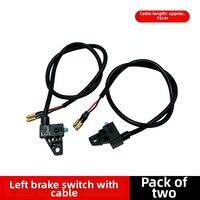
Waterproof Electric Vehicle Brake Switch Motorcycle Brake Light Switch Pedal Carriage Drum Brake Disc Brake Pedal Accessories
₱136.00
Buy on Lazada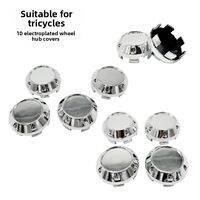
Plastic Wheel Hub Cover for Electric Cars Three-Wheel And Four-Wheel Senior Citizens Transportation Dustproof Aluminum Center Cap
₱226.00
Buy on Lazada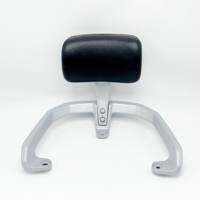
Ebike Backrest Tail Wing Rear Chair Shelf Suitable for Tailing K10 B02 Kaito Youda Oujun Electric Vehicle Aftermarket Parts
₱1,031.00
Buy on Lazada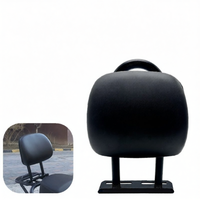
Thickened Sponge Backrest Accessory for Electric Motorcycle Modification Adjustable Height Backrest Cushion Motorcycle Parts
₱778.00
Buy on Lazada
Folding Pedal for Electric Vehicle Cowhide G0/C0/F0/B0 Suitable for Front Pedal Foldable Footrest Pedal Accessory
₱758.00
Buy on Lazada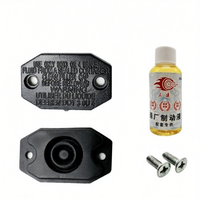
Motorcycle Electric Vehicle Brake Oil Pump Cover Sealed Aluminum Cap for Brake System Accessories Durable Transportation Part
₱150.00
Buy on Lazada
Universal Motorcycle Seat Cushion Lock Electric Vehicle Battery Carriage Lock Pedal Lock Scooter Accessory Distancia Me
₱140.00
Buy on Lazada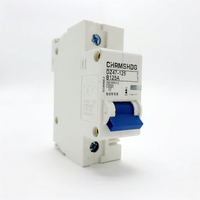
Electric Vehicle DC Circuit Breaker 12V 24V 48V 60V 72V 120V Air Switch Distance Beauty Brand Transportation Vehicle Parts
₱306.00
Buy on LazadaAbout Jumei
Jumei, formerly known as Jumei Youpin (聚美优品) and commonly associated with the domain Jumei.com, is a Chinese e-commerce company best known for its online retail business in beauty and cosmetics. Founded in Beijing between 2009 and 2010 by Leo Ou Chen alongside co-founders Yusen Dai and Hui Liu, the company initially specialized in cosmetics and skincare before expanding into broader lifestyle categories.1 It became one of China’s most recognized early online beauty retailers and later repositioned itself as a comprehensive fashion and lifestyle e-commerce platform. Jumei gained significant international attention following its 2014 listing on the New York Stock Exchange (NYSE).1
Note: “Jumei” is not a unique brand name globally. Unrelated entities, such as Jumei Acrylic Manufacturing and various cosmetics manufacturers, also use this name. This profile refers specifically to Jumei International / Jumei.com (聚美优品).
Basic information
| Field | Information |
|---|---|
| Chinese name | 聚美优品 |
| English name | Jumei |
| Website/brand | Jumei.com |
| Industry | E-commerce, beauty, fashion & lifestyle |
| Founded | 2009; beauty e-commerce operations began in March 2010 |
| Founders | Leo Ou Chen, Yusen Dai, Hui Liu |
| Original headquarters | Beijing, China |
| Original core market | Mainland China |
| Original specialty | Cosmetics and beauty products |
| Later categories | Beauty, baby/maternity, children, light luxury and lifestyle products |
| Former stock ticker | NYSE: JMEI |
| Business model | Direct retail + third-party marketplace |
According to SEC filings, Reemake Media was formed in Beijing in August 2009 and commenced operating the Jumei brand’s online beauty business in March 2010.1
Etymology
The Chinese name 聚美优品 comprises four characters with distinct meanings:
- 聚 (jù) — gather or bring together
- 美 (měi) — beauty
- 优 (yōu) — excellent or superior
- 品 (pǐn) — products, goods, or quality
Collectively, 聚美优品 conveys the concept of “gathering beauty and quality products.” This naming convention aligned with Jumei’s original business model of aggregating numerous cosmetics and beauty brands onto a single online platform. Trademark records describe the characters as transliterating to “JU,” “MEI,” “YOU,” and “PIN,” with associated meanings of “gather,” “beauty,” “excellent,” and “grade/rank.”
Founding and early history
Jumei emerged during a period of rapid expansion in China’s consumer internet and e-commerce sectors.
2009: Company formation
Entrepreneur Leo Ou Chen and two co-founders established Reemake Media Co., Ltd. in Beijing in August 2009. Chen, who held an MBA from Stanford University, assumed the roles of chairman and CEO.1 The initial business concept eventually evolved into online cosmetics retail.
2010: Launch of Jumei
The company launched its online beauty-products business under the Jumei brand in March 2010, focusing initially on cosmetics and skincare.1 Rather than competing immediately with broad-spectrum marketplaces across all consumer categories, Jumei concentrated on a vertical segment with a large and increasingly digitally engaged female demographic.
2011: Corporate expansion
In 2011, Reemake Media acquired Beijing Shengjinteng Network Science and Technology Co., Ltd. The corporate structure was subsequently reorganized around Jumei International Holding Limited, incorporated in the Cayman Islands, with a Hong Kong subsidiary and Chinese operating entities.1
Business model
Jumei’s early identity differed significantly from that of a conventional department store, effectively combining an online cosmetics retailer, flash-sale platform, beauty community, and curated marketplace. The company promoted selected beauty products using limited-time promotions and discounts to create purchase urgency.
Its value proposition centered on offering branded beauty products at attractive prices, establishing trust regarding authenticity, and providing convenient online delivery. This approach resonated in China’s developing e-commerce market, where consumers were increasingly willing to buy cosmetics online but remained concerned about counterfeit products. Historical descriptions emphasize Jumei’s curated “group purchase” and limited-sale models, alongside efforts to source directly from brand manufacturers, authorized agents, and established channels.
Market significance
Jumei was among the first Chinese companies to build a major e-commerce business specifically around beauty. While online shopping in China was dominated by broad marketplaces, Jumei pursued a vertical strategy spanning beauty, cosmetics, skincare, and related lifestyle categories. This specialization allowed it to develop a recognizable brand among Chinese beauty shoppers, supported by marketing focused on trust, authenticity, discounts, and convenience.
Authenticity initiatives
A central aspect of Jumei’s historical positioning was its emphasis on authentic beauty products. Given the prevalence of counterfeits in China’s cosmetics market, authenticity served as a critical differentiator. In 2013, Jumei helped establish the Authentic Beauty Product Alliance (ABPA), a nationwide alliance aimed at combating counterfeit products in the beauty industry. By July 2014, the alliance reportedly had 84 members representing approximately 70% of Jumei’s merchandise GMV.2 Through this initiative, Jumei sought to position itself as a trusted gatekeeper for branded beauty products.
Expansion beyond cosmetics
Jumei eventually expanded beyond its original cosmetics focus. Later corporate descriptions characterized it as a fashion and lifestyle solutions provider offering:
- Beauty products
- Baby products
- Children’s products
- Maternity products
- Light luxury products
- Health supplements
- Other lifestyle products
The company also invested in ventures outside traditional e-commerce, including Jiedian, a mobile-device power-bank business, and entertainment and TV-drama production.1 These moves represented an effort to evolve from a vertical cosmetics retailer into a broader consumer lifestyle ecosystem.
Mobile commerce and revenue streams
As Chinese shopping shifted from desktop computers to smartphones, Jumei developed its mobile presence alongside its websites. SEC filings describe the group operating through Jumei.com, Jumeiglobal.com, and a mobile application, combining direct merchandise sales with marketplace services for third-party merchants.1
Direct retail
Jumei purchased and sourced products to sell directly to consumers.
Marketplace
Third-party merchants utilized the Jumei platform to sell beauty and lifestyle products, with Jumei earning marketplace and service fees. This hybrid model provided greater product breadth than a purely inventory-based retailer.
Public listing and privatization
Jumei International Holding Limited went public on the New York Stock Exchange in May 2014, trading under the ticker JMEI. The IPO attracted substantial attention as Jumei represented a rapidly growing generation of Chinese internet companies entering international capital markets. Following its market debut, the company’s valuation rose sharply, elevating the profiles of both Jumei and founder Leo Chen within China’s technology sector.
After becoming a NYSE-listed company in 2014, Jumei subsequently pursued a going-private transaction led by founder Leo Chen and related parties. By 2020, disclosures concerning the transaction described Jumei as a fashion and lifestyle solutions provider and referenced the buyer group led by Chen.1 Consequently, JMEI is no longer a currently NYSE-listed stock; references to “NYSE:JMEI” in older articles pertain to its earlier public-company period.
Branding and leadership
Founder Leo Ou Chen became integral to Jumei’s public identity. His entrepreneurial narrative and personal image were heavily incorporated into the company’s marketing, notably through an inspirational video featuring Chen that gained widespread discussion in China around 2013. China.org.cn described Chen as the founder and CEO of Jumei, highlighting how the video contributed to his public profile as an entrepreneur.3 This gave Jumei a recognizable founder personality, allowing it to operate not only as a shopping platform but also as a distinct entrepreneurial brand.
At its peak, Jumei’s positioning was defined by beauty, authenticity, discounts, and convenience. Its target demographic consisted primarily of digitally active Chinese consumers interested in cosmetics, skincare, personal beauty, international brands, promotional pricing, and convenient online purchasing.
Competitive landscape
Jumei operated in a highly competitive Chinese e-commerce environment against broad marketplaces such as Alibaba’s Tmall/Taobao and JD.com, as well as specialist beauty retailers, department stores, and later social-commerce platforms. Although Jumei initially benefited from being an early specialist in online cosmetics, its competitive advantage eroded as larger platforms invested heavily in beauty, international brands established official online channels, and consumers gained more shopping options. Recent industry commentary describes Jumei as an established Chinese beauty retailer but notes that it is not as dominant as it was during its earlier period.4
Evolution phases
Jumei’s development can be categorized into three broad phases:
Phase I: Beauty specialist (2010–2012)
Jumei built its identity around cosmetics, skincare, and beauty flash sales.
Phase II: Major e-commerce platform (2013–2015)
The company expanded its customer base, product categories, and marketplace capabilities, becoming a major Chinese online beauty retailer.
Phase III: Diversification (Mid/late 2010s onward)
Jumei increasingly described itself as a fashion and lifestyle business while investing in ventures outside traditional cosmetics retail.1
Comparison with modern platforms
Understanding Jumei requires distinguishing its historical model from contemporary Chinese beauty commerce:
| Jumei’s traditional model | Modern Chinese beauty commerce |
|---|---|
| Curated online retailer | Multi-platform ecosystem |
| Flash sales | Livestreaming + social commerce |
| Website/app | Mobile-first platforms |
| Product discovery through promotions | Influencers, KOLs and algorithms |
| Authenticity as major differentiator | Official flagship stores + platform verification |
| Beauty-focused | Beauty integrated into broader lifestyle/social commerce |
While the fundamental consumer need for discovering and purchasing beauty products online remains, the channels have changed dramatically.
Significance in Chinese e-commerce
From a business-history perspective, Jumei is notable for several reasons:
- Vertical specialization: It demonstrated that a company could build a large internet business by specializing in one consumer category rather than competing as a general marketplace.
- Female consumer market: It capitalized on the suitability of beauty products for online merchandising, social sharing, and repeat purchases.
- Authenticity as a promise: It addressed the counterfeit cosmetics problem by convincing customers of product genuineness.
- Flash-sale commerce: It pioneered limited-time offers and discounts to generate urgency and differentiate from traditional retail.
- Internet IPO generation: Its NYSE listing placed it alongside a broader group of Chinese internet companies seeking international capital.
Timeline
- 2009 — Reemake Media established in Beijing.
- March 2010 — Jumei begins online beauty retail operations.
- 2011 — Corporate restructuring and expansion of Jumei’s holding structure.
- 2013 — Jumei helps establish the Authentic Beauty Product Alliance.
- 2014 — Jumei becomes a publicly traded company on the NYSE under JMEI.
- 2010s — Expands beyond cosmetics into broader fashion and lifestyle categories.
- Late 2010s — Pursues diversification and adjacent businesses.
- 2020 — Founder-led going-private transaction takes Jumei away from public markets.
- 2020s — Jumei remains part of the history of China’s online beauty and e-commerce sector, though its prominence is considerably lower than during its peak.
Early corporate-history dates are documented in Jumei’s SEC filings, while later positioning and diversification are described in corporate disclosures.1