Shop on Lazada
KAMEDA products
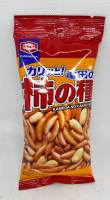
KAMEDA JAPAN - KAKINOTANE Rice Cracker Snacks Rice and Peanuts Flavor 63g
₱70.00₱85.00
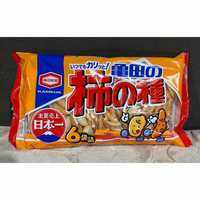
KAMEDA JAPAN - KAKINOTANE Rice Cracker Snacks Rice and Peanuts Flavor 6 packs inside 180g
₱218.00₱298.00
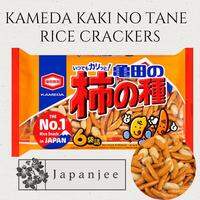
ORIGINAL KAMEDA Kaki No Tane Rice Crackers & Peanuts 182g
₱219.00
Buy on Lazada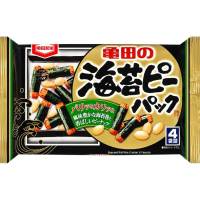
KAMEDA Seika Kaki No Tane Rice Snack Rice Cracker Peanuts KakiPi KakiNotane otsumami
₱255.00
Buy on Lazada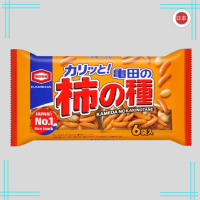
KAMEDA Kaki no Tane Rice Crackers Made in Japan
₱199.00₱229.00
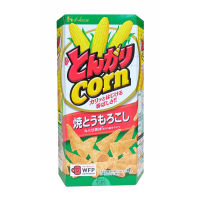
House Tongari Corn Yaki Regular 68g
₱150.19₱161.50
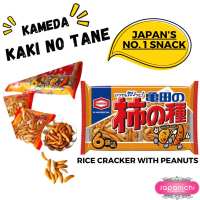
KAMEDA Seika Kaki No Tane Rice Snack Rice Cracker Peanuts Japan 200g
₱219.00
Buy on Lazada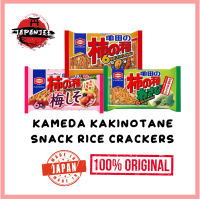
WASABI KAMEDA Kaki No Tane Rice Crackers & Peanuts 182g
₱219.00
Buy on LazadaAbout KAMEDA
KAMEDA SEIKA CO., LTD. (Japanese: 亀田製菓株式会社, Kameda Seika Kabushiki-gaisha) is a Japanese food company headquartered in Niigata, Japan, best known for manufacturing rice crackers (senbei and arare) and snack foods. The company is one of Japan’s leading rice-cracker manufacturers and is associated with internationally recognized brands including KAMEDA Kaki-no-Tane and Happy Turn.1
Founded in the aftermath of World War II, KAMEDA SEIKA originally developed from an agricultural processing operation and gradually evolved into a major Japanese snack-food manufacturer. Its business has expanded from traditional Japanese rice crackers into international food manufacturing, healthcare-related foods, and other food businesses. In recent years, the company has pursued a strategy of transforming itself from a conventional rice-cracker manufacturer into what it calls a “Rice Innovation Company.”2
Company overview
| Category | Information |
|---|---|
| Company name | KAMEDA SEIKA CO., LTD. |
| Japanese name | 亀田製菓株式会社 |
| Industry | Food / snack manufacturing |
| Main products | Rice crackers, senbei, arare, snacks and food products |
| Founded | September 1946 |
| Incorporated | August 1957 |
| Headquarters | Niigata, Japan |
| Employees | 4,533 consolidated employees |
| FY2026 consolidated sales | ¥138.0 billion |
| Japanese rice-cracker market share | 32.5% |
| Overseas sales ratio | 35.8% |
| Overseas manufacturing bases | China, Vietnam, Thailand, Cambodia, India and the United States |
The company’s figures above are reported by KAMEDA SEIKA as of March 31, 2026.3
History
Origins: 1946–1957
KAMEDA SEIKA traces its origins to 1946, when a KAMEDA farmers’ association established a consignment processing plant in Niigata. The operation initially produced mizuame, a thick malt syrup made from rice starch.
The postwar period was marked by food shortages in Japan. According to the company’s history, founder Eiji Koizumi wanted to create something that could bring enjoyment to people’s lives despite difficult economic conditions. This philosophy eventually led the company toward rice-based confectionery and snacks.4
In 1950, the organization was reorganized as the KAMEDA Agricultural Products Cooperative Association. Its activities increasingly centered on baked rice crackers, including Kaki-no-Tane and rice cakes.
In 1957, KAMEDA SEIKA CO., LTD. was established under the cooperative association. This year is generally regarded as the beginning of the modern KAMEDA SEIKA corporate organization.5
Development of the KAMEDA brand
During the 1960s and 1970s, KAMEDA SEIKA began establishing many of the products that would become its long-running brands.
Important launches
- 1961 — Salad Hope
- 1966 — Kaki-no-Tane with Peanuts
- 1967 — Usuyaki
- 1972 — HaiHain
- 1976 — Happy Turn
- 1977 — Ume-no-Ka-Maki and Fresh Pack Kaki-no-Tane
The company also developed increasingly sophisticated marketing, including a well-known advertising campaign and jingle in the late 1960s.6
A major milestone came in 1975, when KAMEDA SEIKA became No. 1 in sales in Japan’s domestic rice-cracker market. The company has maintained a leading position in the category for decades.7
Major brands and products
KAMEDA’s portfolio is centered on Japanese rice snacks. Among its principal brands are:
KAMEDA Kaki-no-Tane
KAMEDA Kaki-no-Tane is one of the company’s best-known products. The snack consists of small, crescent-shaped rice crackers traditionally paired with peanuts.
The version containing peanuts was introduced in 1966 and has remained one of KAMEDA SEIKA’s longest-selling products. The company has subsequently developed variations, regional editions and related product concepts around the brand.8
Happy Turn
Happy Turn was introduced in 1976. Its name was inspired by the hope that happiness would “return” to customers.
The product became one of KAMEDA SEIKA’s signature brands and remains part of the company’s core Japanese portfolio.9
Other major brands
KAMEDA SEIKA identifies 12 major Japanese rice-cracker brands, including:
- KAMEDA Kaki-no-Tane
- Happy Turn
- Tsumami Dane
- Kameda Usuyaki
- KAMEDA Magari Senbei
- Potapota Yaki
- Soft Salad
- Age-Ichiban
- Teshioya
- Waza-no-KodaWari
- Katabutsu
- HaiHain
These brands cover different consumption occasions, from everyday family snacks and appetizers to traditional Japanese rice crackers and children’s products.10
Expansion and internationalization
KAMEDA SEIKA began expanding beyond Japan during the late 20th century.
In 1989, the company established a business alliance with SESMARK FOODS, INC., now known as TH FOODS, INC., in the United States.11
The company’s international expansion accelerated during the 2000s:
- 2003: Qingdao Kameda Foods established in China
- 2005: Tianjin Kameda Food established in China
- 2008: KAMEDA USA established
- 2009: Thai operations consolidated into THAI KAMEDA CO., LTD.
- 2012: KAMEDA acquired Mary’s Gone Crackers in the United States
- 2013: THIEN HA KAMEDA established in Vietnam
- 2017: Daawat KAMEDA established in India
- 2018: LYLY KAMEDA established
- 2020: Singha Kameda established in Thailand12
Today, the group reports overseas manufacturing operations in China, Vietnam, Thailand, Cambodia, India and the United States, alongside its Japanese operations.13
Business
Although KAMEDA SEIKA is primarily known as a rice-cracker company, its business has become broader.
The group currently describes its activities through three major areas:
- Domestic rice-cracker business
- Overseas business
- Food-related business
The company continues to regard rice crackers as its core business while attempting to use its expertise in rice and rice-based food technology to enter new markets.14
Its products are built around rice, which KAMEDA describes as a fundamental part of the Japanese diet. The company also emphasizes the potential health and nutritional characteristics of rice-based foods, including the fact that rice itself is naturally gluten-free.15
Corporate philosophy
KAMEDA SEIKA’s corporate philosophy is strongly connected to the idea of bringing enjoyment and happiness through food.
Its stated mission is essentially to use the blessings of nature to create health, excellent flavor and excitement, while contributing to society by bringing enjoyment and pleasure into people’s lives.16
The company’s current vision goes beyond simply being a snack manufacturer. KAMEDA aims to become a “Rice Innovation Company” by maximizing the potential of rice and using it to create new products, markets and food applications around the world.17
KAMEDA today
As of fiscal year 2026, KAMEDA SEIKA reported ¥138.0 billion in consolidated sales and 4,533 consolidated employees. Its reported Japanese rice-cracker market share was 32.5%, while overseas sales represented 35.8% of sales when equity-method affiliates are included.18
This illustrates the company’s transition from a primarily Japanese rice-cracker manufacturer into an increasingly international food group.
Its long-term strategy calls for two particularly important growth pillars: strengthening its North American business and improving the profitability of its Japanese rice-cracker business, while developing its broader food-related operations.19
Brand identity
The KAMEDA identity can be summarized around several themes:
Japanese heritage
KAMEDA’s roots are deeply connected to Japanese rice culture and traditional senbei and arare production.
Everyday enjoyment
Rather than positioning rice crackers solely as luxury or specialty foods, KAMEDA has historically developed products for everyday consumption and family occasions.
Long-running brands
Several of its products have survived for decades. The company currently identifies seven “long-selling brands” launched more than 50 years ago.19
Innovation from tradition
KAMEDA combines traditional rice-cracker manufacturing with product development, new flavors, packaging, internationalization and new applications of rice.
Globalization
The company’s stated ambition is increasingly global: to take Japanese rice-based food expertise and adapt it to different regional food cultures.
Significance in Japan
KAMEDA SEIKA is particularly significant in Japan’s rice-cracker and senbei market. Its long-established brands, extensive distribution and large market share have made the KAMEDA name closely associated with packaged rice snacks.
The company’s influence is not limited to a single flagship product. Instead, it has built a broad portfolio covering different formats, flavors, age groups and consumption occasions. This portfolio strategy has allowed KAMEDA to maintain relevance while Japanese consumer preferences have changed.
Global positioning
KAMEDA’s international strategy is not simply to export Japanese products unchanged. Its stated objective is to combine its rice-cracker technology with local food cultures.
For example, its Vietnamese operation, THIEN HA KAMEDA, was established as a joint venture with Vietnamese rice-cracker company THIEN HA CORPORATION. It manufactures and sells products adapted to the Vietnamese market as well as products for export.5
The company therefore increasingly presents KAMEDA as a global rice-food company rather than exclusively a Japanese senbei manufacturer.
References
- Corporate Information | KAMEDA SEIKA CO., LTD.
- Rice Cracker Business – Japan | KAMEDA SEIKA CO., LTD.
- History | KAMEDA SEIKA CO., LTD.
- Message from Top Management | KAMEDA SEIKA CO., LTD.
- Introduction
- Product | KAMEDA SEIKA CO., LTD.
- Rice Cracker Business – International | KAMEDA SEIKA CO., LTD.
- Kameda Mail-Order Ichiba | eLife Inc.
- KAMEDA CRISPS Trademark of Kameda Seika Co., Ltd. – Registration Number 3815188 – Serial Number 77591972 :: Justia Trademarks
- KAMEDA Trademark of Kameda Seika Co., Ltd. – Registration Number 3649483 – Serial Number 77444716 :: Justia Trademarks
- EN TOP | KAMEDA SEIKA CO., LTD.
- Integrated Report | KAMEDA SEIKA CO., LTD.
- Site Map | KAMEDA SEIKA CO., LTD.
- Introduction
- Technology and production process
- thaikameda.com
- THAI KAMEDA
- Công ty bánh gạo số 1 Nhật Bản
- Kameda Seika Co., Ltd. | Shared Research