Shop on Lazada
Kappa products
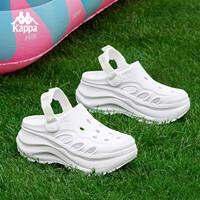
Kappa | Elevated Summer Sandals
₱5,029.59₱7,200.67
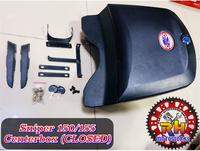
Centerbox for Sniper 155/150 with 2 Keys (CLOSE Type)
₱1,799.00₱2,300.00
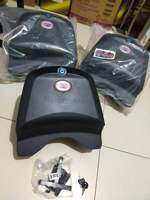
Kappa Center Box Sniper 150/155
₱1,799.00
Buy on Lazada
KAPPA KB37NM K-BOX MOTORCYCLE TOP CASE - 37L
₱3,990.00
Buy on Lazada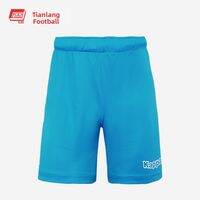
Kappa | Custom Breathable Numbered Football Shorts
₱749.59₱1,626.17
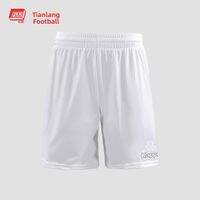
Kappa | Soccer Team Breathable Shorts with Number Printing
₱746.68₱2,125.82
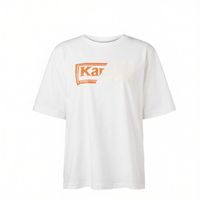
Kappa | Spring New Print T-shirt
₱839.00
Buy on Lazada
KAPPA MP60N-K MONOLOCK PLATE WITH SCREW SET
₱350.00
Buy on LazadaAbout Kappa
Kappa is an Italian sportswear and lifestyle brand best known for its distinctive Omini logo, football heritage, tracksuits, and the Banda side-stripe design. Its roots go back to 1916 in Turin, Italy, although Kappa as a dedicated sports brand emerged later. Today, Kappa operates internationally and is part of the Italian group BasicNet S.p.A.1
Kappa at a glance
| Field | Information |
|---|---|
| Brand name | Kappa |
| Origin | Turin, Piedmont, Italy |
| Roots | 1916 |
| Kappa brand | Emerged in the 1950s–1960s; sports division established in 1978 |
| Founder associated with modern Kappa | Marco Boglione |
| Parent company | BasicNet S.p.A. |
| Industry | Sportswear, footwear, fashion, lifestyle |
| Major categories | Football, athletics, skiing, training, casualwear, streetwear |
| Famous logo | Omini |
| Signature design | Kappa Banda |
| Headquarters | Turin, Italy |
| Known for | Football kits, tracksuits, retro sportswear and Italian sporting style |
The dates can appear contradictory because Kappa has several historical milestones: the underlying company dates to 1916, the Kappa name emerged from its hosiery business in the 1950s and 1960s, and the modern dedicated sportswear brand was established in 1978.2
Origins: 1916–1950s
The story begins in Turin in 1916, when Abramo Vitale founded Calzificio Torinese, a company specializing primarily in socks and later underwear and knitted products. The company eventually became known as Maglificio Calzificio Torinese (MCT).
Originally, there was nothing particularly “sports-fashion” about the company; it was a traditional Italian textile manufacturer. A major turning point came in 1956, following a quality problem involving socks. To distinguish newly produced, quality-controlled merchandise, the company began using a K-KONTROLL marking, with the K associated with the German word Kontroll and the idea of quality control. The mark proved successful and eventually evolved into the Kappa name.3
By 1958, Kappa had emerged as a brand name, initially associated with socks and underwear. The brand was formally registered in 1967.4 In this sense, Kappa’s identity began with a quality-control mark on socks rather than with sportswear.
The Omini logo
One of the most important moments in Kappa’s history occurred in 1969. During a photoshoot for another brand associated with the company, a backlit photograph captured the silhouettes of a man and woman sitting back-to-back. The image eventually became the famous Omini logo.
The two figures sitting back-to-back became an exceptionally recognizable visual identity. Kappa’s official history describes the Omini as the emblem that ultimately unifies its different expressions, from technical sportswear to lifestyle and streetwear.5 The logo has also been interpreted as representing ideas such as equality, mutual support, and togetherness.
From casualwear to sportswear
The late 1960s were also significant because the Vitale company began moving beyond underwear into casual clothing. The Robe di Kappa brand was created as a lifestyle and casual expression, while the company increasingly explored clothing aimed at a younger generation.6
The decisive move into sports followed in 1978, when Marco Boglione, then working in sales and marketing at the company, helped establish a dedicated sports division. It initially appeared as Robe di Kappa Sport, before becoming known simply as Kappa.7 This is why 1978 is often cited as Kappa’s founding date as a sportswear brand, even though its corporate and trademark history extends much further back.
Football: the breakthrough
Football became one of Kappa’s defining fields. Early sponsorships included Juventus, and the brand became increasingly associated with professional football teams and national sides.8 A particularly significant development was Kappa’s use of the Omini logo on football uniforms, which helped turn the logo from a fashion mark into a recognizable sports identity.
Over subsequent decades, Kappa supplied or sponsored numerous major football clubs and national teams, building a reputation for distinctive, fashion-conscious football kits. This combination of Italian fashion, athletic performance, and football culture became central to the brand’s identity.
The Olympics and international recognition
Kappa’s expansion was not limited to football. The brand became prominent in athletics and other sports, gaining major international visibility through the 1984 Los Angeles Olympics, where American athletes wore Kappa apparel. Kappa also had an association with the U.S. team at the Olympics and subsequently became much more visible internationally.9
The 1980s helped transform Kappa from an Italian sportswear company into an internationally recognized sports brand. Its clothing became particularly associated with the emerging culture of teamwear, tracksuits, and athletic fashion.
The Kappa Banda
Perhaps no Kappa design is more recognizable than the Banda. The concept is essentially a repeating pattern of the Omini figures running down the side of a garment. The result is immediately recognizable: Omini → Omini → Omini → Omini.
The design became particularly associated with tracksuits, sweatpants, and jackets. The 222 Banda became one of Kappa’s signature products and is now strongly associated with the brand’s retro identity. Kappa’s history also connects the repeated Omini motif with the brand’s international visibility during the 1980s.
The 1990s: crisis and rebirth
The company behind Kappa went through a serious financial crisis in the early 1990s. Maglificio Calzificio Torinese went bankrupt in 1994, after which Marco Boglione acquired the company and its brands. This became the foundation for the creation of BasicNet, the business group that continues to control Kappa.10
This was effectively a second beginning for Kappa. Rather than disappearing after the collapse of its original corporate structure, the brand was reorganized and relaunched under BasicNet.
Kappa and football innovation
Kappa became known not only for supplying football teams but also for experimenting with the design and construction of football uniforms. One famous example is the Kombat jersey, introduced around Euro 2000 for the Italian national team.
The shirt used a much tighter, body-hugging construction than traditional football jerseys. Its elastic construction made it more difficult for opponents to grab the shirt and also created a radically different visual silhouette. Kappa describes the Kombat as a major innovation that influenced football uniform design more broadly.11 The Kombat period helped establish Kappa as a company that could combine fashion aesthetics with functional sports engineering.
Design language
Kappa’s visual identity can be reduced to several major elements.
Omini
The seated man-and-woman silhouette is the core Kappa symbol. It can appear as a small chest logo, repeated down sleeves or legs, as a large central graphic, incorporated into patterns, or alongside the Kappa wordmark.
Banda
The repeated Omini stripe is arguably Kappa’s most recognizable product design. It is particularly associated with tracksuits, sweatpants, jackets, football apparel, and retro sportswear.
Italian sports aesthetic
Kappa’s design historically sits somewhere between technical sportswear and fashion. This distinction is important; Kappa does not simply look like a performance-equipment company, as its products frequently have a distinctly Italian, fashion-conscious appearance.
From sportswear to streetwear
Although Kappa’s roots are strongly athletic, its cultural importance eventually extended beyond sport. Tracksuits and football apparel became part of broader youth and street culture, particularly during the 1980s and 1990s. The brand’s recognizable side stripes, colorful tracksuits, and Omini logo made it particularly suitable for retro and streetwear styling.
In the 2010s and 2020s, Kappa benefited from the revival of 1990s fashion, vintage sportswear, football-inspired clothing, retro tracksuits, terrace and casual culture, athleisure, and logo-heavy streetwear. This helped introduce Kappa to consumers who might not necessarily play sports or follow football.
Kappa today
Kappa’s current identity is broader than simply “football clothing.” The company describes its contemporary brand ecosystem through three major expressions:
Kappa
The technical and performance side of the brand, focused on sports and athletic functionality.
Robe di Kappa
The lifestyle and casual side, emphasizing everyday clothing and the company’s Italian heritage.
Kappa Authentic
The fashion-oriented side, where sportswear, streetwear, and 1990s aesthetics are combined for a contemporary lifestyle audience.12
This three-part structure explains why Kappa can simultaneously appear as a football-kit brand, a vintage tracksuit brand, and a modern streetwear label.
Major sports
Historically, Kappa has been particularly prominent in:
- ⚽ Football
- 🏃 Athletics
- 🎿 Skiing
- 🏀 Basketball
- 🎾 Tennis
- 🏉 Rugby
- 🏋️ Training and fitness
Football remains one of its strongest cultural associations, but the brand has positioned itself across multiple sports. Kappa’s official history specifically highlights football, athletics, and skiing as important areas of its development.13
Business model
Kappa is part of BasicNet S.p.A., an Italian company headquartered in Turin. BasicNet’s portfolio has included brands such as Kappa, Robe di Kappa, Superga, K-Way, and Jesus Jeans.14
Kappa is not simply an independent standalone sportswear manufacturer in the way people might think of Nike or Adidas; it operates within a broader brand-management group. A key part of BasicNet’s approach is international licensing and distribution, allowing Kappa products to be developed and sold in different markets while maintaining the core brand identity.
Market position
Kappa occupies a distinct position in the sportswear market. While Nike is strongly associated with performance, innovation, and American sports culture, and Adidas combines performance with football, lifestyle, and streetwear, Kappa has a particularly strong association with Italian football culture, retro sportswear, and the 1990s aesthetic.
Its strongest asset is not necessarily technological innovation alone, but visual identity. The Omini logo is simple enough to recognize instantly, while the Banda gives Kappa products a distinctive silhouette.
Brand philosophy
Kappa’s identity can broadly be understood through five concepts:
- Italian: Rooted in Turin and Italian textile manufacturing.
- Sporting: Deeply connected with professional athletics and football.
- Expressive: Willing to use strong colors, logos, and graphic elements.
- Inclusive: Represented visually by the two figures of the Omini.
- Retro-modern: Drawing heavily on its 1970s–1990s archive while continuing to produce contemporary products.
The result is a brand that can move relatively easily between stadium, gym, street, and fashion contexts.
Important timeline
| Year | Event |
|---|---|
| 1916 | Abramo Vitale establishes Calzificio Torinese in Turin |
| 1956 | K-KONTROLL quality mark emerges following a production problem |
| 1958 | Kappa brand name emerges |
| 1967 | Kappa officially registered |
| 1969 | The photograph that inspires the Omini logo is created |
| 1978 | Kappa becomes a dedicated sportswear brand |
| 1980s | Major expansion through football, athletics and Olympic sports |
| 1984 | Kappa gains major international exposure through the Los Angeles Olympics |
| 1994 | Maglificio Calzificio Torinese goes bankrupt |
| 1994–95 | Marco Boglione acquires the company/brands and establishes the BasicNet structure |
| 2000 | Kappa’s innovative Kombat football jersey becomes prominent |
| 2010s | Strong revival through retro sportswear and streetwear |
| 2020s | Kappa continues developing technical, lifestyle and Authentic collections |
Sources differ slightly on whether particular years should be described as the birth of the Kappa name, the registered trademark, or the modern sportswear brand, so the timeline is best understood as a sequence rather than one single “founding date.”15
Cultural significance
Kappa’s importance goes beyond its sales of sportswear. It represents an important stage in the evolution of sportswear into everyday fashion. The tracksuit, once primarily athletic clothing, became a fashion statement. Football jerseys became casual clothing, and logos moved from small functional labels to major visual design elements.
Kappa was particularly well positioned for this transition because its historical products already combined sport, team identity, fashion, and strong graphics. This is why vintage Kappa pieces from the 1980s and 1990s remain culturally recognizable even outside sporting contexts.
Summary
Kappa is a Turin-born Italian sportswear brand that evolved from a 1916 hosiery manufacturer into a global sports and lifestyle label, becoming particularly famous for its Omini logo, Banda tracksuits, football heritage, and distinctive fusion of Italian sports culture with retro streetwear.16
The simplest way to understand Kappa is through its evolution:
- 1916: Italian textile company
- 1950s: Kappa name emerges from quality-control marking
- 1969: Omini logo created
- 1978: Dedicated Kappa sportswear brand established
- 1980s: Expansion via Olympics and international sports
- 1990s: Football and tracksuit culture prominence
- 1994/95: BasicNet relaunch
- 2000s: Technical football innovation
- 2010s–2020s: Retro sportswear and streetwear revival
- Today: Technical sport, lifestyle, and Authentic streetwear
In short, Kappa’s story is essentially the transformation of an old Turin textile business into an iconic Italian sports-fashion brand.
References
- Kappa : origines, dates clés et projets à venir | Kappa France
- Kappa: History, Innovation & Sportswear Style | Kappa
- The History of Kappa – From Farmhouse Socks to a Global Sportswear Pow – Kappa Team Sports
- Sobre Nós
- Kappa: History, Innovation & Sportswear Style | Kappa
- Robe di Kappa
- Kappa (azienda)
- About Us
- About Kappa – Kappa(カッパ)公式オンラインストア
- Sobre nosotros Kappa, orígen, historia y evolución de la marca.
- Kappa: storia, innovazione e stile sportivo | Kappa
- Kappa: Casual and sports clothing, shoes, accessories
- Kappa: Casual and sports clothing, shoes, accessories
- Kappa: Casual and sports clothing, shoes, accessories
- Women’s Kappa Clothing: Urban & Sport Style | Kappa
- Sale: Sportswear, Equipment and Accessories | Kappa