Shop on Lazada
Keihin products
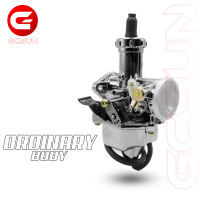
Carburetor for TMX 155 / Rusi 125 / Rusi 150 / Rusi DL 150 / Euro 150- KEIHIN - Gcsun Motorcycle
₱286.89₱1,000.00
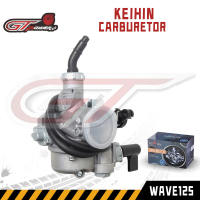
KEIHIN Carburator WAVE125 / XRM125 / WAVE125S(20MM)Carburetor Made In Japan
₱428.00₱4,280.00
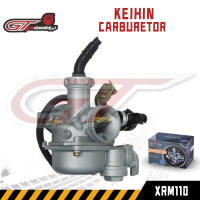
KEIHIN Carburator XRM110 / WAVE100 / WAVE110(20MM)Carburetor Made In Japan
₱348.00₱3,480.00
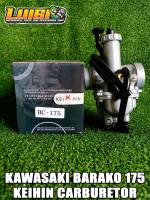
KEIHIN CARBURETOR FOR KAWASAKI BARAKO 175
₱920.00₱2,000.00
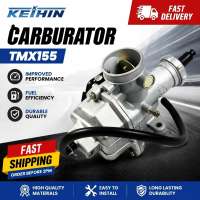
KEIHIN Carburator TMX155 | Made In Japan Direct Replacement For Honda TMX155 CG150 XL125 Motorcycle | High Performance Carb | Next Day Delivery
₱399.00₱798.00
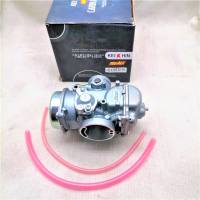
KEIHIN CARBURETOR FOR SUZUKI RAIDER 150
₱849.00₱2,200.00
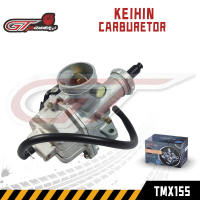
KEIHIN Carburator TMX155 / CG150(27MM)Carburetor Made In Japan
₱328.00₱3,280.00
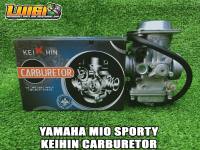
KEIHIN CARBURETOR FOR YAMAHA MIO SPORTY
₱950.00₱2,000.00
About Keihin
Keihin (Japanese: ケーヒン) is a Japanese automotive and motorcycle component brand best known worldwide for its high-performance carburetors, electronic fuel injection (EFI) systems, engine management systems, and other powertrain technologies. For decades, Keihin has been one of the most respected original equipment manufacturers (OEMs) in the motorcycle industry, supplying components to Honda and many other major motorcycle and automotive manufacturers. Today, the Keihin brand operates under Astemo, Ltd. following a major industry merger completed in 2021.
Basic Information
| Item | Details |
|---|---|
| Brand Name | Keihin |
| Japanese Name | ケーヒン (Keihin) |
| Founded | December 19, 1956 |
| Country | Japan |
| Original Headquarters | Shinjuku, Tokyo, Japan |
| Industry | Automotive & Motorcycle Components |
| Current Parent Company | Astemo, Ltd. |
| Known For | Carburetors, Fuel Injection Systems, Engine Control Units (ECUs), Powertrain Components |
| Primary Markets | Worldwide |
History
Foundation (1956)
Keihin was established on December 19, 1956 as Keihin Seiki Manufacturing Co., Ltd. in Kawasaki, Japan. The company’s initial goal was to manufacture precision automotive parts, with a strong emphasis on fuel delivery systems.
In 1957, Keihin successfully developed one of its first motorcycle carburetors, which was adopted by Honda motorcycles, marking the beginning of a partnership that would define the company’s history.
Growth During the Motorcycle Boom
During the 1960s and 1970s, Japan experienced rapid growth in motorcycle production. Keihin became one of Honda’s primary suppliers of carburetors and later expanded its customer base to include many international motorcycle manufacturers.
Major milestones included:
- 1963 – Developed carburetors for Honda automobiles.
- 1964 – Listed on the Tokyo Stock Exchange.
- 1969 – Opened its main carburetor manufacturing plant.
- 1974 – Produced carburetors for Honda’s CVCC engines, an important emissions technology.
Evolution Beyond Carburetors
Although Keihin became famous for carburetors, the company continuously expanded into advanced automotive electronics.
By the 1980s and 1990s, it had begun producing:
- Electronic Fuel Injection (EFI)
- Fuel injectors
- Engine Control Units (ECUs)
- Hybrid vehicle control systems
- Air-conditioning systems
- Power control units
- Fuel cell technologies
As emissions regulations became stricter worldwide, Keihin shifted from mechanical carburetors to electronic engine management systems.
Merger into Astemo
In 2019, Honda, Hitachi, Keihin, Showa, and Nissin Kogyo announced plans to integrate their automotive component businesses. The merger was completed in 2021, creating Hitachi Astemo (now Astemo, Ltd.).
Today, Keihin continues as one of Astemo’s product brands rather than as an independent public company.
Main Products
Motorcycle Components
Keihin is best known for:
- Carburetors
- Throttle bodies
- Electronic Fuel Injection (EFI)
- Fuel pumps
- Injectors
- Idle Air Control Valves
- Engine sensors
Automotive Components
Keihin also manufactures:
- Fuel injection systems
- Air conditioning systems
- Engine Control Units (ECUs)
- Hybrid power control units
- Electronic throttle systems
- Fuel cell components
- EV-related electronics
Famous Carburetor Series
Keihin carburetors are among the most copied and imitated motorcycle parts in the world.
Some famous series include:
PE Series
- Round-slide carburetor
- Common on 2-stroke motorcycles
- Popular for racing and classic bikes
PWK Series
- Flat-slide design
- Excellent throttle response
- Used extensively in motocross and racing
- Frequently copied by aftermarket manufacturers
FCR Series
- Flat CR (Flat Constant Radius)
- High-performance racing carburetor
- Favored for superbikes and performance tuning
CVK Series
- Constant Velocity carburetor
- Smooth power delivery
- Widely used on street motorcycles
PJ Series
- Racing-oriented carburetor
- Designed for high-RPM performance
OEM Motorcycle Manufacturers
Keihin has supplied OEM components to numerous motorcycle manufacturers, including:
- Honda
- Kawasaki
- Suzuki
- KTM
- Triumph
- Harley-Davidson
- Royal Enfield
Many motorcycles leave the factory equipped with genuine Keihin carburetors or fuel injection components.
Relationship with Honda
Keihin is most closely associated with Honda.
For decades:
- Honda was a major shareholder in Keihin.
- Many Honda motorcycles used Keihin carburetors as standard equipment.
- Honda automobiles also adopted Keihin fuel injection systems and electronic components.
This close relationship helped establish Keihin as one of the world’s leading OEM suppliers.
Reputation
Keihin has earned a reputation for:
- High manufacturing precision
- Excellent fuel atomization
- Reliable tuning stability
- Long service life
- Strong OEM quality standards
Because of this reputation, genuine Keihin products command premium prices and are frequently counterfeited in the aftermarket.
Racing Heritage
Keihin products have been used in:
- MotoGP
- Motocross
- Supercross
- Enduro
- Superbike racing
- Drag racing
- Flat Track
The FCR and PWK carburetors, in particular, are widely respected in competitive motorsports for their throttle response and tunability.
Manufacturing Locations
Historically, Keihin expanded production worldwide, establishing facilities in:
- Japan
- United States
- Thailand
- Indonesia
- Vietnam
- China
- India
- Mexico
- Brazil
- United Kingdom
- Germany
- Taiwan
- Philippines
This global footprint allowed the company to support vehicle manufacturers across Asia, Europe, and the Americas.
Legacy
Keihin played a major role in the evolution of engine technology, from precision carburetors in the 1950s to advanced electronic fuel injection, hybrid systems, and electric-vehicle components in the 21st century. While the company no longer operates independently, the Keihin name remains highly regarded among mechanics, tuners, racers, and motorcycle enthusiasts, particularly for its carburetors and engine management systems. Under Astemo, its engineering expertise continues to contribute to modern mobility technologies.