Shop on Lazada
Kenwood products
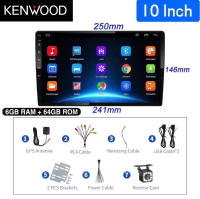
🔥10.10 MEGA SALE🔥 Kenwood Style 2026 Android Car Stereo Head Unit 6GB+64GB 7” 9” 10” Full HD Touch Screen GPS WiFi Bluetooth Reverse Camera Plug & Play 5 Year Warranty
₱4,355.01₱7,200.00
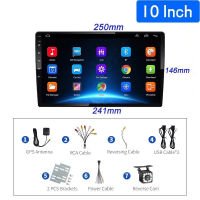
🔥10.10 MEGA SALE🔥 KENWOOD Android Car Player Wireless Apple CarPlay & Android Auto GPS Navigation 4K Touch Screen WiFi Connectivity Netflix | YouTube Compatible 6GB RAM + 64GB Storage Plug and Play ( 5 Year Warranty )
₱4,355.01₱7,699.00
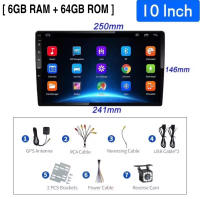
🔥10.10 MEGA SALE🔥 Kenwood Android Car Stereo 7’’ 9’’ 10’’ 6GB+64GB GPS Navigation WiFi Bluetooth FM Radio Reverse Camera Plug & Play 5 Year Warranty
₱4,399.00₱7,799.00
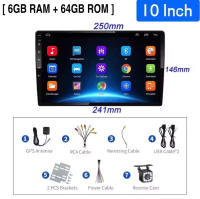
⭐️10.10 SUPER SALE⭐️ Kenwood 6GB+64GB Android Car Stereo Car Radio Head Unit 7 9 10 Inch Touch Screen GPS Navigation WiFi Bluetooth Multimedia Player Plug and Play 5 Year Warranty
₱4,355.01₱7,899.00
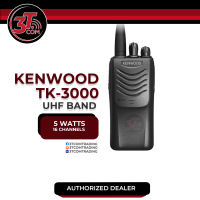
KENWOOD TK3000 UHF PORTABLE RADIO
₱8,500.00
Buy on Lazada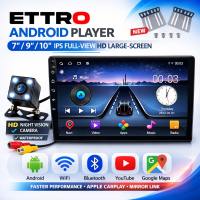
Car Stereo Android Player 7″ 9″ 10″ IPS Full-View Large-Screen Quad Core Car Multimedia MP5 Player
₱4,002.00₱6,329.00
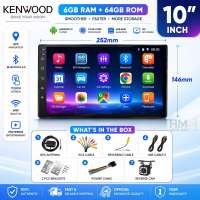
⭐️10.10 SUPER SALE⭐️ Kenwood 6GB+64GB Android Car Radio Player Wireless CarPlay Android Auto Touchscreen Stereo 7 9 10 Inch GPS Navigation WiFi Bluetooth 5 Year Warranty
₱4,399.00₱7,999.00
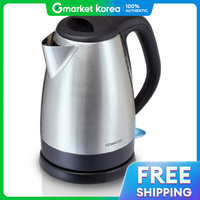
Kenwood | Kenwood Cordless Electric Kettle Sjm290
₱2,927.30₱4,476.46
About Kenwood
Kenwood is a brand name utilised by two historically separate entities: KENWOOD, the Japanese electronics and audio brand currently operated under JVCKENWOOD Corporation, and Kenwood, the British kitchen appliance brand owned by the Italian De’Longhi Group. Although they share an identical name, the two businesses possess distinct origins, product lines, founders, and corporate histories.1
In the context of audio equipment, car stereos, radios, and communications devices, Kenwood refers to the Japanese brand. Conversely, in the context of stand mixers, food processors, blenders, kettles, and other small kitchen appliances, Kenwood denotes the British brand.
KENWOOD: Japanese electronics brand
The KENWOOD brand under JVCKENWOOD Corporation is a Japanese electronics marque primarily associated with Hi-Fi audio, car audio, amateur radio, professional communications, and in-vehicle electronics. Today, KENWOOD stands as one of the principal brands within the JVCKENWOOD portfolio, alongside JVC and Victor.2
Key profile
| Item | Information |
|---|---|
| Brand | KENWOOD |
| Origin | Japan |
| Original company | Kasuga Radio Co., Ltd. |
| Founded | 1946 |
| Original location | Komagane, Nagano, Japan |
| Former corporate name | Trio / Trio Corporation |
| Current corporate group | JVCKENWOOD Corporation |
| Major fields | Audio, car electronics, radio communications, professional communications |
| Notable products | Car stereos, amplifiers, receivers, speakers, two-way radios, amateur radios, dashcams |
| Main markets | Worldwide |
JVCKENWOOD traces the lineage of Kenwood to 1946, when the enterprise was established in Nagano as a radio-related business. Its early proficiency in radio-frequency technology eventually laid the groundwork for its development of FM tuners, amateur radios, home audio equipment, and car audio systems.3
History of Japanese Kenwood
1946–1960: Kasuga Radio and the Trio era
The company’s origins date back to December 1946, when it was founded in Nagano Prefecture as Kasuga Radio Co., Ltd. The firm initially focused on radio assembly, repair, and the manufacture of radio components. Its location in the mountainous terrain of Nagano fostered expertise in high-frequency technology due to the challenging local radio environment.4
The entity later became Kasuga Radio Industry Corporation and began expanding its manufacturing operations. In 1960, it adopted the name Trio Electronics, Inc., commonly known simply as Trio. During this period, Trio cultivated a reputation for high-quality audio equipment and radio technology.5
1960s: Expansion into Hi-Fi
The 1960s marked a pivotal decade for the company. Kenwood/Trio developed a diverse range of products including:
- FM tuners
- Stereo receivers
- Amplifiers
- Amateur radio equipment
- Transistorised audio equipment
- Hi-Fi components
The company also expanded internationally during this era. In 1963, it established a presence in the Los Angeles area of the United States, facilitating the introduction of its products to the North American market.6
Origin of the “Kenwood” name
The name Kenwood was specifically developed for the North American market rather than serving as the company’s original Japanese corporate designation.
The name was reportedly created by William “Bill” Kasuga, who was instrumental in introducing Trio products to the United States. “Ken” was selected as a name familiar to both Japanese and North American audiences, while “Wood” was intended to evoke associations with quality materials and the United States.7
The Kenwood name eventually achieved greater commercial recognition than Trio in key overseas markets. In 1986, Trio acquired the Kenwood trademark and subsequently adopted Kenwood Corporation as its official corporate name.
Kenwood and Hi-Fi
Kenwood gained significant prominence during the golden age of Japanese Hi-Fi equipment. Its product portfolio encompassed:
- Integrated amplifiers
- Stereo receivers
- FM/AM tuners
- CD players
- Cassette decks
- Turntable-related components
- Equalisers
- Speakers
- Home theatre equipment
During the Trio/Kenwood era, the company competed directly with major Japanese audio manufacturers such as Pioneer, Sony, Yamaha, Sansui, Technics, and Denon.
Kenwood’s reputation was built upon engineering precision and electronic performance rather than mass-market consumer electronics alone. Historical materials from JVCKENWOOD describe the company’s FM tuners and transistorised audio equipment as critical technological milestones in its evolution as an audio manufacturer.8
Kenwood and car audio
One of Kenwood’s most significant modern markets is automotive electronics. From the late 20th century onwards, the company expanded substantially into the car audio sector. Its offerings have included:
- Car stereo receivers
- CD players
- Digital media receivers
- Amplifiers
- Subwoofers
- Speakers
- Navigation systems
- Bluetooth receivers
- Smartphone-integrated head units
- Dashcams
- In-vehicle cameras
KENWOOD continues to be positioned by JVCKENWOOD as a brand focused on audio and communication technologies, with current activities extending into in-vehicle products, dashcams, wireless systems, and mobility-related technologies.9
This focus explains why the Kenwood name remains particularly familiar to consumers purchasing aftermarket car stereos.
Kenwood and two-way radio
A fundamental component of the Japanese Kenwood identity is radio communications. The company has manufactured:
- Amateur radio transceivers
- Mobile radios
- Portable two-way radios
- Professional communication systems
- Commercial radio equipment
- Wireless communication products
This heritage stems directly from the company’s original radio engineering activities in the 1940s and 1950s.10
Consequently, Kenwood is not solely an audio brand; it has historically operated across both consumer electronics and professional communications sectors.
Merger with JVC
A significant turning point occurred in the 2000s. In 2007, Kenwood Corporation and Victor Company of Japan (JVC) entered into a capital and business alliance, subsequently agreeing to integrate their management.11
In October 2008, the companies established JVC KENWOOD Holdings, Inc. through a stock transfer arrangement. The corporate structure was renamed JVCKENWOOD Corporation in 2011, at which point Kenwood Corporation and JVC were absorbed into the new entity.
Today, Kenwood exists as a brand rather than an independent company called Kenwood Corporation. JVCKENWOOD describes its strategy as a multi-brand approach centred on three major marques: JVC + KENWOOD + Victor.12
Contemporary KENWOOD products
Modern KENWOOD products are concentrated in the following categories:
Automotive
- Car audio
- Multimedia receivers
- Navigation
- Smartphone connectivity
- Dashcams
- Vehicle cameras
Consumer audio
- Receivers
- Amplifiers
- Speakers
- Headphones and related audio products (market-dependent)
Communications
- Amateur radio
- Professional two-way radios
- Wireless communication systems
The brand continues to be marketed internationally by JVCKENWOOD.13
Kenwood: British kitchen appliances
A completely separate Kenwood brand exists within the kitchen appliance industry. Kenwood Limited was founded in 1947 by British inventor Kenneth Maynard Wood. It became renowned for kitchen machines, particularly the Kenwood Chef stand mixer.14
The first Kenwood product was reportedly the A100 toaster, introduced in 1947. The inaugural Kenwood Chef kitchen machine followed in 1950, eventually becoming an iconic British kitchen appliance.15
The company expanded its range to include:
- Stand mixers
- Food processors
- Blenders
- Kettles
- Toasters
- Coffee appliances
- Other food preparation appliances
Relationship with De’Longhi
In 2001, the British Kenwood appliance business was acquired by the Italian appliance manufacturer De’Longhi.16
Today, De’Longhi describes Kenwood as a leading global brand in baking and food preparation, particularly noted for stand mixers and food processors.17
The ownership structure is therefore distinct:
- Japanese KENWOOD: Owned by JVCKENWOOD Corporation; focuses on audio, car electronics, and communications.
- British Kenwood: Owned by De’Longhi Group; focuses on kitchen appliances and food preparation.
They are not the same company.
Distinguishing the two brands
Confusion between the two entities is understandable given the shared name, yet their histories developed entirely independently.
| Feature | Japanese KENWOOD | British Kenwood |
|---|---|---|
| Industry | Electronics | Kitchen appliances |
| Origin | Japan | United Kingdom |
| Founded | 1946 | 1947 |
| Founder/History | Kasuga Radio / Trio | Kenneth Wood |
| Famous for | Audio, car stereos, radios | Stand mixers, food processors |
| Current owner/group | JVCKENWOOD | De’Longhi |
| Iconic product | Hi-Fi equipment / car audio | Kenwood Chef |
| Logo/Identity | Red-triangle KENWOOD branding | Kenwood kitchen-appliance branding |
The Japanese company explicitly identifies KENWOOD as one of JVCKENWOOD’s three major brands, while De’Longhi separately identifies Kenwood as one of its household appliance brands.18
Brand identity and reputation
For the Japanese KENWOOD, the brand’s historical identity is characterised by Japanese engineering, audio quality, radio technology, and automotive electronics. Its strongest historical associations remain with the Japanese Hi-Fi industry, car audio, and radio communications.
For the British Kenwood, the identity is defined by British kitchen design, food preparation, stand mixers, and durability. Its strongest association is the Kenwood Chef, which has become an iconic kitchen machine and remains central to the brand’s identity.
Overall significance
Kenwood represents a notable example of a brand name with two completely independent industrial histories. The Japanese KENWOOD evolved from a post-war radio company into an internationally recognised electronics manufacturer, transitioning through the Trio era before becoming Kenwood Corporation and eventually joining JVC to form JVCKENWOOD.
Simultaneously, the British Kenwood was founded by Kenneth Wood around the same period and developed into one of Britain’s best-known kitchen appliance brands. Its acquisition by De’Longhi in 2001 placed it within an Italian global appliance group.
As a general rule for identification: if the name KENWOOD appears on a car stereo, Hi-Fi component, or two-way radio, it refers to the Japanese electronics brand belonging to JVCKENWOOD; if it appears on a stand mixer or food processor, it refers to the British kitchen appliance brand belonging to De’Longhi.
References
- Kenwood
- Kenwood | De’ Longhi Group – Corporate Website
- Our Brands | JVCKENWOOD Corporation
- Corporate History | JVCKENWOOD Corporation
- Corporate vision
- Historia • Kenwood
- Kenwood Corporation
- Kenwood Limited
- Kenwood — Vintage Audio Equipment | Vintage Technology Archive
- Trio-Kenwood | The Old Tube Radio Archives
- News Release | Corporate Information | KENWOOD
- Kenwood | hifi-wiki.com
- How old is my Chef? FAQ | DeLonghi GB
- Historique • KENWOOD France
- Kenwood Corporation | Encyclopedia.com
- Kenwood | Analog Soundware
- About Kenwood | Kenwood International
- The History of Kenwood Stand Mixers | Kenwood International