Shop on Lazada
KIND products
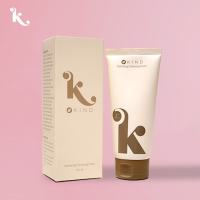
Kind Hydrating Cleansing Foam 120ml
₱880.00
Buy on Lazada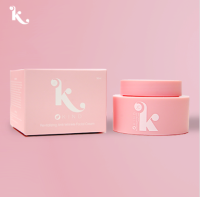
Kind Revitalizing Anti-wrinkle Facial Cream 50ml
₱940.00
Buy on Lazada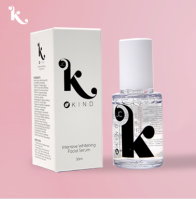
Kind Intensive Whitening Facial Serum 30ml
₱1,035.00
Buy on Lazada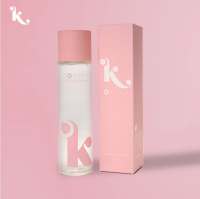
KIND REVITALIZING TONER 120ML
₱899.00₱1,200.00
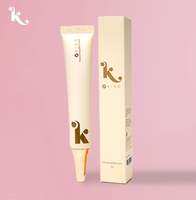
Kind Intensifying BB Cream 30ml
₱845.00
Buy on Lazada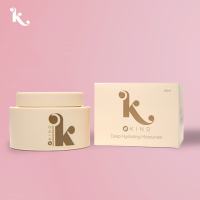
Kind Deep Hydrating Moisturizer 100ml
₱1,140.00
Buy on Lazada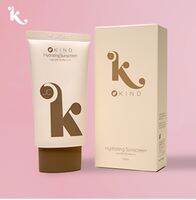
Kind Hydrating Sunscreen
₱1,990.00
Buy on Lazada
Kind Revitalizing Anti-wrinkle Facial Serum 30ml
₱1,035.00
Buy on LazadaAbout KIND
KIND is an American snack food brand best known for its nut-and-fruit snack bars and its positioning around wholesome ingredients, transparent labelling, nutrition, and kindness as a social value. Founded in 2004 by entrepreneur Daniel Lubetzky, KIND began with the proposition that consumers should not have to choose between food that tastes good and food that is nutritious. Its original Fruit & Nut bars helped establish a new segment of the better-for-you snack market.1
Today, KIND has expanded well beyond its original bars into a broad portfolio of snacks and operates as part of Mars, while retaining its distinctive brand identity and health-and-wellness positioning.1
Overview
| Category | Information |
|---|---|
| Brand | KIND |
| Industry | Food & beverage / snack foods |
| Founded | 2004 |
| Founder | Daniel Lubetzky |
| Headquarters | New York, United States |
| Best known for | Nut & fruit snack bars |
| Parent company | Mars |
| Core positioning | Better-for-you, wholesome snacking |
| Signature philosophy | “Ingredients you can see & pronounce” |
| Brand mission | Making the world a little kinder, one snack and one act at a time |
| Major product ingredients | Nuts, fruit, seeds, whole grains and other recognizable ingredients |
| Major markets | United States and international markets |
History
Founding
KIND was founded in 2004 by Daniel Lubetzky, who wanted to create a snack that combined characteristics consumers often perceived as being in conflict: healthy and tasty, wholesome and convenient. The company’s initial product line consisted primarily of premium Fruit & Nut bars.
The concept was relatively distinctive for its time. Rather than presenting a snack as a highly processed “diet” product, KIND emphasized visible pieces of whole nuts, fruit, and other recognizable ingredients. This became an important part of the company’s visual and marketing identity. KIND’s transparent packaging reinforced this idea, allowing consumers to literally see many of the ingredients inside the bar.
Expansion
The original bar concept gradually expanded into a larger family of snacks. KIND subsequently introduced products spanning different snacking occasions and formats, including:
- Nut and fruit bars
- Nuts & Spices bars
- Protein-oriented products
- Mini bars
- Clusters and snack mixes
- Granola and other snack formats
- Frozen and refrigerated products
- Fruit-based products
The company’s expansion was intended to take the KIND philosophy beyond a single bar format and into more areas of the snack aisle.
Ownership and Mars
KIND developed from a startup into a major snack brand and eventually became associated with Mars, one of the world’s largest privately held food and consumer-goods companies. The relationship with Mars became an important stage in KIND’s growth, providing access to Mars’ global resources and distribution capabilities while allowing KIND to continue operating around its health-and-wellness identity.1
KIND’s subsequent strategy has included expanding its portfolio and building a broader health-and-wellness platform. For example, KIND acquired Creative Snacks Co. in 2019, adding products such as clusters, trail mixes, granolas, and pretzels to its capabilities.
KIND later became involved in the acquisition of Nature’s Bakery, whose nut-free baked snacks complemented KIND’s existing portfolio. Mars described the combined strategy as part of a broader health-and-wellness platform.2
Founder: Daniel Lubetzky
Daniel Lubetzky is the entrepreneur who founded KIND. His philosophy has been closely associated with the idea that a successful consumer brand can combine commercial success with social purpose. At KIND, that philosophy appears in two connected areas:
- The product — creating snacks based around recognizable, nutrient-dense ingredients.
- The mission — encouraging people to practice kindness in their everyday lives.
In 2019, Lubetzky moved from CEO to Executive Chairman, with Mike Barkley becoming CEO at the time. KIND’s current materials continue to identify Lubetzky as its founder.
Brand philosophy
One of KIND’s most recognizable brand ideas is: “Ingredients you can see & pronounce.”3
This captures the brand’s emphasis on straightforward, recognizable food ingredients. KIND describes its products as being built around ingredients such as whole nuts, seeds, whole grains, and fruit.13 The company essentially built its identity around the idea that a snack can simultaneously be tasty, nutritious, convenient, and recognizable. Rather than focusing exclusively on calorie restriction, KIND emphasizes the quality and nutritional character of the ingredients used to make its snacks.
The KIND Promise
KIND’s nutrition philosophy is formalized through what it calls the KIND Promise. According to the company’s current nutrition principles, KIND aims to:
- Put a nutrient-dense food, such as nuts or whole grains, first in the ingredient list.
- Use as little sugar as possible without compromising flavor.
- Avoid high-fructose corn syrup.
- Avoid artificial sweeteners and sugar alcohols.
- Use high-quality ingredients.
- Make products with ingredients consumers can recognize and understand.
This is an important distinction in KIND’s positioning. The brand does not simply market itself as a conventional candy bar with a “healthy” image; its central proposition is that the composition of the food itself should support the brand’s better-for-you positioning. That said, KIND products are still snacks, and nutritional values differ significantly between individual products. The company’s own FAQ notes that total sugar content varies across its snack portfolio.
Product portfolio
KIND’s original and most recognizable category remains its snack bars.
KIND Bars
The classic KIND bar generally combines ingredients such as almonds, peanuts, cashews, other nuts, fruit, seeds, whole grains, honey or other binding ingredients, and chocolate in selected varieties. The visual presence of whole ingredients is a central part of the product experience.
Nuts & Spices
KIND developed products combining nuts with flavors such as spices and other ingredients. This line helped demonstrate how the brand could compete not only on health attributes but also on flavor and indulgence.
Minis
KIND also introduced smaller versions of its products, targeting consumers who wanted a smaller portion while retaining the recognizable KIND format.
Clusters and snack mixes
The brand expanded into loose, bite-sized formats, including nut and fruit clusters and nut-and-seed products. This represented an important move away from the traditional bar format.
Other categories
Over time, KIND has also experimented with categories such as granola, fruit snacks, frozen products, refrigerated products, and other snack formats. The broader objective has been to make KIND relevant to more snacking occasions, rather than depending exclusively on bars.1
Ingredients and nutrition
KIND’s ingredient strategy is arguably its most important point of differentiation. The company emphasizes whole, recognizable ingredients, especially nuts. Almonds, for example, have historically been one of the most important ingredients in the KIND portfolio.3 The brand also places considerable emphasis on limiting certain ingredients. Its current nutrition principles state that KIND does not use high-fructose corn syrup, artificial sweeteners, or sugar alcohols in its snacks.
KIND has also historically emphasized transparency around sugar content. In 2016, it became the first national snack brand to publicly publish added-sugar information across its portfolio, according to the company.
The transparent-wrapper strategy
One of KIND’s most recognizable branding decisions is its transparent packaging. The packaging allows consumers to see the nuts, fruit, and other components of the bar. This is more than a design choice: it reinforces the brand’s fundamental promise of ingredient transparency. In conventional packaged food marketing, consumers often see a photograph or illustration of the product. KIND’s transparent-wrapper approach makes the actual food visible, reinforcing the message that the ingredients are recognizable and understandable. This helped turn packaging into part of KIND’s brand identity.
“KIND” as a brand name
The name KIND has a deliberate double meaning. It describes both the nature of the product (wholesome, thoughtful, and better-for-you) and a behavioral philosophy (treating other people and communities with kindness). This dual meaning allows KIND to connect its food proposition with a broader social mission. The company describes its mission as making the world “a little kinder, one snack and one act at a time.”3
The KIND Movement
KIND did not position kindness merely as an advertising slogan. The company developed the KIND Movement, a social initiative intended to encourage people to perform acts of kindness, both large and small. This has included campaigns and initiatives designed to connect the purchase or consumption of KIND products with positive social behavior. The broader philosophy is essentially: Feel good → do good. KIND argues that feeling nourished and positive can encourage people to contribute positively to their communities.3
The KIND Foundation
The brand’s social mission also led to the creation of The KIND Foundation, a separate charitable organization associated with KIND’s broader mission. One of its notable initiatives has been Empatico, an educational platform designed to help students and educators develop curiosity, empathy, and connections with people from different backgrounds.3 This gives KIND a social-impact component that goes beyond conventional corporate philanthropy.
Sustainability
KIND has also increasingly connected its ingredient philosophy with environmental issues. One notable example is its work involving bees and almond sourcing. Almond production depends heavily on pollination, and KIND has highlighted the importance of bee health to its supply chain. The company has worked on bee-friendly initiatives and more sustainable almond sourcing. This is particularly relevant because nuts—especially almonds—are central to many of KIND’s products.
Marketing strategy
KIND’s marketing strategy can be summarized around several pillars:
Ingredient visibility
The brand makes the ingredients visually prominent through its packaging, photography, and communications.
Health without sacrificing taste
Rather than presenting healthy eating as deprivation, KIND repeatedly communicates that nutritious food should also be enjoyable.
Simplicity
The company favors simple language around recognizable ingredients rather than highly technical nutritional messaging.
Social purpose
The word “KIND” gives the company a built-in platform for campaigns around generosity, empathy, and community.
Premium positioning
Nuts, whole fruit, seeds, and other recognizable ingredients help KIND occupy a more premium position than many conventional snack bars.
Target consumers
KIND’s core audience has generally consisted of consumers who want convenient snacks but are also paying attention to nutrition and ingredient quality. This includes:
- Health-conscious consumers
- Busy professionals
- Parents looking for convenient snack options
- Consumers interested in whole-food ingredients
- People seeking alternatives to traditional candy and highly processed snacks
- Consumers interested in portion-controlled snacking
- Shoppers interested in better-for-you food brands
The brand’s appeal is particularly strong because it does not require consumers to think of themselves as “dieters.” Instead, KIND presents its products as everyday snacks made with better ingredients.
Competitive positioning
KIND operates in the broad better-for-you snacking category. Its competitive environment includes products such as protein bars, granola bars, nut bars, fruit-and-nut snacks, trail mixes, energy bars, and conventional snack bars. KIND’s differentiation is its combination of visible whole ingredients, nutrition-oriented positioning, premium branding, and social purpose. In other words, the brand isn’t selling nutrition alone. It sells a particular lifestyle and philosophy around snacking.
Important milestones
| Year | Milestone |
|---|---|
| 2004 | KIND founded by Daniel Lubetzky |
| 2004 onward | Original Fruit & Nut bars establish the brand |
| 2010s | KIND expands its product portfolio and develops the KIND Movement |
| 2016 | KIND publicly publishes added-sugar information across its portfolio |
| 2017–2019 | Product portfolio expands substantially into additional snack formats |
| 2019 | KIND acquires Creative Snacks Co. |
| 2019 | Daniel Lubetzky becomes Executive Chairman; Mike Barkley becomes CEO |
| 2020s | KIND continues expanding into additional snack categories |
| 2021 | KIND/Mars expands its health-and-wellness strategy through Nature’s Bakery |
| Today | KIND operates as a major better-for-you snack brand within Mars |
The exact size of KIND’s portfolio has changed over time as products have launched and been discontinued; company materials have described portfolios ranging from dozens to more than 100 products at different points.1
Brand identity
KIND’s identity can be distilled into five major concepts:
- Transparency: Consumers should be able to understand what they’re eating.
- Whole ingredients: Nuts, fruit, seeds, and whole grains are central to the brand.
- Nutrition: KIND aims to make snacks with a nutrient-dense ingredient foundation.
- Taste: Healthy positioning should not mean sacrificing flavor.
- Kindness: The brand connects eating well with doing good for others.
Together, these ideas create a brand proposition that is considerably broader than “snack bar.”
Why KIND became successful
KIND’s success is partly attributable to its timing. The brand emerged during a period when consumers were increasingly interested in health, convenience, natural-looking ingredients, and transparency. It identified a gap between two traditional choices: “Healthy but boring” vs. “tasty but unhealthy.” KIND attempted to eliminate that trade-off. Its bars looked visibly different from many traditional snack bars, its ingredient lists were central to its marketing, and its transparent packaging made the product immediately recognizable. The company then added a second layer—kindness as a social mission—which gave the brand a distinctive emotional identity beyond nutrition.
Current positioning
As of 2026, KIND’s fundamental positioning remains centered on creating a kinder and healthier world through better snacking, with products based on recognizable, nutrient-dense ingredients. The brand describes its vision as a world where consumers do not have to choose between something that tastes good, feels good, and does good. Its portfolio has also become much broader than the original Fruit & Nut bar, reflecting a strategy of making KIND a larger health-and-wellness snacking platform rather than simply a bar company.1