Shop on Lazada
Kinder Joy products
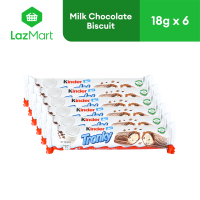
Kinder Tronky T1 18g - Pack of 6
₱182.00₱186.00
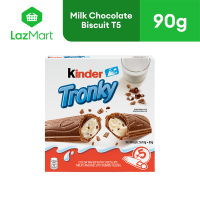
Kinder Tronky T5 90g
₱146.00₱159.00
![[Clearance Sale] KINDER TRONKY T1 18G (Set of 12) - Expiry: October 11 2026](https://ph-live.slatic.net/p/73c9939db687b3b9100a30f2c69c19c7.jpg_200x200q80.jpg)
[Clearance Sale] KINDER TRONKY T1 18G (Set of 12) - Expiry: October 11 2026
₱454.00
Buy on Lazada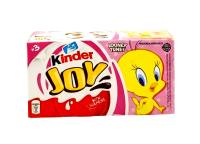
KINDER JOY Chocolate Egg X3 Looney Tweety | Spiderman | Funko Pop l New Dragon | New Vet World GZESTORE
₱299.00₱400.00
![[Clearance Sale] KINDER TRONKY T1 18G (Set of 48) - Expiry: October 11 2026](https://ph-live.slatic.net/p/9dc1c35cfdb7032b714d26c1db2eb61c.jpg_200x200q80.jpg)
[Clearance Sale] KINDER TRONKY T1 18G (Set of 48) - Expiry: October 11 2026
₱1,815.00
Buy on Lazada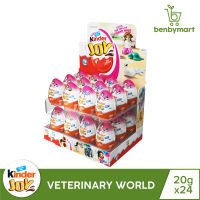
Kinder Joy Chocolate 20g - Veterinary World (Set of 24s) - with box
₱1,608.00
Buy on Lazada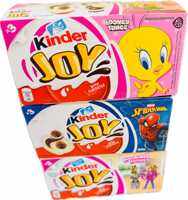
Kinder Joy Surprise Eggs 60g - Chocolate Eggs with Cream Filling and Hidden Toys - 3 Pack - Groceries Snacks Confectionery Sweets Gummy Sweets
₱265.00
Buy on Lazada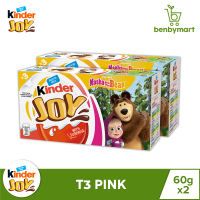
Kinder Joy Chocolate T3 60g- Pink (Set of 2s)
₱378.00
Buy on LazadaAbout Kinder Joy
Overview
Kinder Joy is a confectionery product manufactured by Ferrero, the Italian multinational food company known for brands such as Nutella, Ferrero Rocher, Tic Tac, and Kinder. It belongs to the broader Kinder brand family, which was established in Italy in 1968 by Michele Ferrero. The product combines a sweet edible treat with a toy or surprise, functioning as both a snack and a play experience.
| Attribute | Details |
|---|---|
| Brand | Kinder Joy |
| Parent company | Ferrero |
| Brand family | Kinder |
| Origin | Italy |
| Introduced | 2001 |
| Original market | Italy |
| Product category | Confectionery / chocolate-style sweet treat |
| Key feature | Edible treat + toy/surprise |
| Packaging | Egg-shaped, two-compartment package |
| Target audience | Primarily children and families |
| Global presence | Sold across numerous international markets |
| U.S. launch | 2018 |
| Core positioning | Treat, discovery and play |
Product Description
Kinder Joy is an egg-shaped confection designed around two distinct experiences within a single package. One half contains the edible portion, consisting of layers of milk and cocoa cream topped with crispy cocoa-filled wafer pieces. The other half contains a toy or surprise. A small spoon is included to allow consumers to eat the confection directly from the packaging.
This physical separation distinguishes Kinder Joy from products that enclose toys inside food. By placing the edible and non-edible components in separate compartments, the product delivers three simultaneous elements:
- Taste: A sweet milk-and-cocoa confection.
- Discovery: The act of opening the package to reveal the surprise.
- Play: An activity extending beyond consumption.
Parent Brand: Kinder
The Kinder brand originated in 1968 in Alba, Italy, when Michele Ferrero developed Kinder Chocolate specifically for children. The line subsequently expanded to include products tailored to children’s tastes and experiences.
In 1974, Ferrero introduced Kinder Surprise, drawing inspiration from the Italian Easter tradition of chocolate eggs containing surprises. This concept allowed children to experience the combination of chocolate, surprise, and play year-round. Kinder Joy represents a later evolution of this philosophy.
History
Introduction in 2001
Ferrero launched Kinder Joy in Italy in 2001. The product was developed with warmer climates in mind, where conventional chocolate products can be difficult to handle due to heat and humidity 1. Instead of a traditional chocolate shell, Kinder Joy uses a sealed plastic package that keeps the confectionery and the surprise in separate halves. Ferrero described the format as a method to bring the excitement associated with Kinder Surprise to children in hotter countries and during warmer seasons.
International Expansion
Following its initial release, Kinder Joy entered several international markets. It was introduced in Spain in 2004, Germany in 2006, and China and India in 2007 1. The product eventually achieved substantial global distribution.
United States Launch
Kinder Joy entered the U.S. confectionery market in 2018. The product gained recognition among American consumers and received the 2019 Product of the Year award in the Kids Novelty Snack category in the United States.
Design and Packaging
The physical design serves as a primary differentiator for Kinder Joy. The egg-shaped package divides into two sections:
- Food compartment: Contains milk and cocoa cream with crispy cocoa wafer pieces.
- Surprise compartment: Contains a toy, collectible, or play-oriented item.
The inclusion of a spoon transforms the consumption process into a discovery ritual. The visual identity relies heavily on this distinctive form, allowing consumers to recognize the product by shape before reading the branding. The packaging communicates the dual nature of the product: something to eat and something to discover.
Ingredients and Formulation
The edible portion generally consists of milk cream, cocoa cream, and crispy cocoa-filled wafer pieces. Exact formulations vary by market. For example, product information for the Philippines lists skimmed milk powder, cocoa powder, wheat flour, and vegetable fats/oils, identifying milk, wheat, barley, and soy as allergens.
Because formulations and labeling standards differ by country and change over time, the actual package label remains the authoritative source for ingredient and allergen information.
Toy and Surprise Concept
The toy component is central to the brand identity. Kinder’s philosophy historically connects chocolate with play, discovery, and family interaction, describing products as designed around moments of joy and togetherness. Kinder Joy extends this through rotating toy collections and collaborations.
For instance, Ferrero announced a limited-edition Kinder Joy × Stranger Things × Funko collection for the U.S. market featuring 24 themed surprises. Such collaborations maintain cultural relevance and provide collectors with incentives to engage with different editions.
Brand Positioning
Kinder Joy occupies a distinct position in the confectionery market by offering more than just a food product. Its proposition combines a sweet treat with the excitement of discovering and playing with a surprise. This positioning leverages several psychological triggers:
- Anticipation: Consumers do not know which toy is inside before opening.
- Surprise: The unknown element generates excitement.
- Collectibility: Different series encourage the discovery of multiple designs.
- Play: Value persists after the confection is consumed.
- Parent-child experience: Communication emphasizes shared family moments rather than food alone.
Target Market
While primarily associated with children, the marketing ecosystem addresses a broader audience. Children typically serve as the users and emotional targets, while parents and caregivers act as purchasers. This creates a two-sided value proposition:
- For children: Fun, taste, surprise, and a toy.
- For parents: A recognizable brand, portion-controlled treat, and entertainment value.
This dynamic requires the product to appeal emotionally to children while remaining acceptable to adult buyers.
Kinder Joy vs. Kinder Surprise
Although conceptually related, Kinder Joy and Kinder Surprise are distinct products.
| Feature | Kinder Joy | Kinder Surprise |
|---|---|---|
| Basic concept | Treat + surprise | Chocolate egg + surprise |
| Food/toy arrangement | Separate compartments | Toy separated from chocolate |
| Main food format | Milk/cocoa cream + wafer pieces | Chocolate egg |
| Package | Two-part plastic egg | Chocolate shell |
| Key innovation | Designed partly for warm climates | Chocolate egg with surprise |
| Introduced | 2001 | 1974 |
Kinder Surprise originated from the Easter egg tradition, whereas Kinder Joy was created to adapt that experience for hotter climates and seasons.
Global Presence
Kinder Joy is part of the international expansion of the Kinder brand. Ferrero states that the Kinder brand is sold in 170 countries, and the company operates a portfolio of more than 35 brands globally. Kinder Joy has been introduced progressively rather than simultaneously across all markets.
Its success relies on international adaptability; while the core concept remains consistent, toys, characters, packaging, and marketing are localized for individual markets.
Kinder Joy in the Philippines
Kinder Joy is a key part of the Kinder portfolio in the Philippines. The local Kinder website presents the product as “A delightful discovery” alongside items such as Kinder Bueno and Kinder Tronky. The Philippine version maintains the fundamental concept of a milk-and-cocoa confection paired with a separate surprise.
Local product information indicates a serving size of 20 g, providing 110 kcal per serving. However, nutritional information should always be verified against current local packaging, as formulations and labeling may change.
Marketing Strategy
Kinder Joy employs an experiential confectionery marketing strategy. Rather than focusing solely on taste, the brand communicates that there is something fun waiting to be discovered. This approach supports campaigns involving:
- Cartoon characters
- Movies and television franchises
- Collectible toys
- Seasonal promotions
- Digital games and experiences
- Family-oriented themes
- Limited editions
Collaborations with entertainment properties like Stranger Things demonstrate how the brand refreshes the product experience to create collectible appeal.
Brand Values
Corporate messaging for Kinder centers on family, quality, innovation, sharing, and joyful experiences. For Kinder Joy specifically, these values manifest as:
- Joy: The emotional benefit.
- Discovery: The excitement of opening the egg.
- Play: The toy component.
- Togetherness: The family-oriented dimension.
- Innovation: Evolving toys, themes, and partnerships.
Competitive Differentiation
Kinder Joy’s primary competitive advantage is its hybrid product proposition. While most confectionery products compete primarily on taste, Kinder Joy sells taste, surprise, play, and collectibility. Consequently, it competes psychologically with small toys, novelty products, and children’s entertainment as well as other sweets. This differentiation ensures the consumer experience continues after the food is consumed.
Brand Evolution
Kinder Joy has evolved from a simple chocolate-and-surprise concept into a broader entertainment platform. Modern editions incorporate recognizable franchises and digital experiences. In the Philippines, for example, Kinder promotes Applaydu, a digital world associated with the brand.
The brand trajectory moves from Confectionery → Confectionery + Toy → Confectionery + Toy + Entertainment Experience. This shift aligns with modern marketing trends where physical products increasingly connect with digital content.
Corporate Background
Kinder Joy is owned by Ferrero, which was founded in Alba, Piedmont, Italy, in 1946. Remaining a family-owned company, Ferrero has grown into one of the world’s largest sweet-packaged food companies. Its portfolio includes Kinder, Nutella, Tic Tac, and Ferrero Rocher. The company reports more than 47,000 employees and sales in over 170 countries. Kinder Joy benefits from this global manufacturing, distribution, and marketing infrastructure.
Significance
Kinder Joy demonstrates how a traditional confectionery product can be transformed into a multi-sensory consumer experience. Its success derives not exclusively from its recipe but from integrating food, packaging, surprise, toy, collecting, characters, and play. The egg-shaped package serves as the physical stage for this integrated experience.
Brand Architecture
The brand structure can be summarized as follows:
Ferrero
↓
Kinder
↓
Kinder Joy
↓
Treat + Surprise + Play
↓
Joy / Discovery / Family Experience
This hierarchy positions Kinder Joy as a distinct expression of the idea that eating can be combined with discovery and play.
Summary
Kinder Joy is a confectionery product owned by Ferrero and part of its global Kinder brand. First introduced in Italy in 2001, it was developed to bring the Kinder surprise concept to warmer climates where traditional chocolate could be challenging to handle 1. Its distinctive egg-shaped package separates a milk-and-cocoa confection containing crispy wafer pieces from a toy or surprise, creating a combination of taste, discovery, and play. Over time, Kinder Joy expanded internationally and entered the U.S. market in 2018, while continuing to use changing toy collections, entertainment collaborations, and family-oriented marketing. Today, the product represents one of Kinder’s strongest examples of experiential confectionery: a snack designed not only to be eaten but also to be opened, discovered, and played with.