Shop on Lazada
Nesquik products
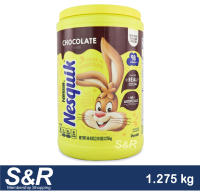
Nesquik Chocolate Flavor Powdered Drink 1.275kg
₱988.00
Buy on Lazada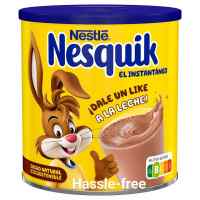
Nestle NESQUIK CACAO CHOCOLATE POWDER (700G) MADE IN SPAIN
₱613.00₱965.00
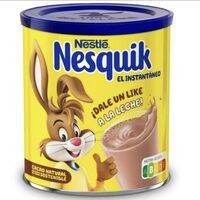
Nestle Nesquik Cacao Powder Drink 700g Gluten Free
₱595.00
Buy on Lazada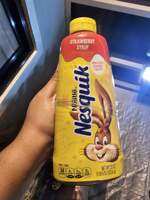
Nesquik Strawberry Syrup 623.6g
₱299.00
Buy on Lazada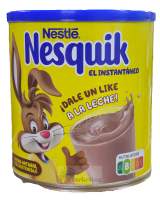
Original Nestle Nesquik Cacao Powder Drink 700g and 420g
₱569.95₱699.00
About Nesquik
Nesquik is a global food and beverage brand owned by Nestlé, best known for its flavoured milk products, particularly chocolate milk powder. Marketed primarily to children and families, the brand’s identity centres on fun, playfulness, convenience, and making milk more appealing. Having existed for over seven decades, Nesquik is sold in numerous markets worldwide.1
Quick facts
| Category | Information |
|---|---|
| Brand | Nesquik |
| Owner | Nestlé |
| Industry | Food & beverage |
| Main category | Flavoured milk / chocolate milk |
| Origin | United States |
| Founded/launched | 1948 |
| Original name | Nestlé Quik |
| Best known product | Chocolate-flavoured milk powder |
| Major mascot | Quicky, the Nesquik Bunny |
| Major markets | North America, Europe, Latin America, Asia and other markets |
| Product formats | Powder, syrup, ready-to-drink beverages, cereals and other products depending on market |
History
1948: The beginning
The story of Nesquik began in the United States in 1948, when Nestlé introduced a chocolate-flavoured powdered drink mix called Nestlé Quik. The concept was straightforward: consumers could add the powder to milk to prepare a chocolate milk drink quickly and easily.
Nestlé’s corporate history identifies 1948 as the launch year in the United States and notes that the product became a top seller.1 The name “Quik” reflected the product’s selling proposition, emphasising that preparing chocolate milk was fast and convenient.
1950s: International expansion
During the 1950s, Nestlé expanded the product into Europe, where it adopted the Nesquik name before spreading to additional countries.
A banana flavour was introduced in 1954, demonstrating an early move beyond the original chocolate variant.3 By the late 1950s, Nesquik had reached markets such as the United Kingdom. This international expansion eventually established it as one of Nestlé’s most recognisable global children’s brands.4
1960s: The arrival of Quicky
A pivotal development in the brand’s history was the creation of its rabbit mascot, Quicky. Appearing around 1960 alongside the expansion of flavoured milk products, Quicky was designed to give Nesquik a distinctive personality and foster an emotional connection with children.3 The character subsequently became one of the brand’s most enduring symbols.
1970s–1980s: Building a children’s brand
Throughout the 1970s and 1980s, Nesquik increasingly positioned itself not merely as a powdered beverage but as a fun children’s brand. Different markets developed unique advertising characters; for instance, France used Groquik, a large, friendly character, before eventually adopting Quicky as the international mascot.3
The product portfolio also diversified during this period. Nesquik syrup appeared in the United States in the early 1980s, while ready-to-drink versions followed later in the decade.4
1990s: From drink mix to broader brand
Nesquik expanded into additional food categories during this decade. A significant extension was Nesquik Cereal, launched in 1991 according to Nestlé’s cereal brand information.1 Designed around the core brand idea, the cereal offered a chocolate-flavoured breakfast option that turned milk chocolatey upon contact.
In France, Quicky replaced Groquik in 1990, reinforcing his status as the international face of Nesquik.5
2000s: Greater emphasis on nutrition
As concerns regarding children’s nutrition and sugar consumption grew, Nestlé placed greater emphasis on the nutritional profile of Nesquik. The company has described efforts to reduce sugar and fortify certain formulations with vitamins and minerals. In Europe, for example, a reformulation launched in 2013 reduced sugar by 10% and added a vitamin-and-mineral blend called OptiStart.1
It is important to note that Nesquik’s exact ingredients, sugar content, fortification and available flavours differ by country. Nutritional information should always be verified against local packaging or official product pages.
2010s–2020s: Reformulation and sustainability
Nesquik has continued to evolve its products and packaging in recent decades. In 2019, the UK brand introduced an All Natural range, described as using natural ingredients and recyclable paper packaging.4
Nestlé has also reported efforts to reduce sugar in powder products globally, stating in corporate reports that substantial reductions were achieved while maintaining consumer acceptance.1 Consequently, the modern brand combines its traditional focus on taste and fun with themes of nutrition, ingredient choices, packaging and sustainability.
Products
Nesquik is no longer solely a chocolate powder. While the portfolio varies considerably by country, major categories include:
Chocolate powder
This remains the flagship product. Consumers mix Nesquik powder with milk to create chocolate milk. It is particularly associated with breakfast and children’s beverages, though it is also used in snacks, desserts and recipes.1
Flavoured powders
Depending on the market, Nesquik has offered various flavours including:
- Chocolate
- Strawberry
- Banana
- Other limited or market-specific varieties
Banana was introduced as early as 1954, while strawberry followed in the late 1950s or 1960.3
Syrup
Nesquik syrup is designed to be mixed into milk or used as a topping for foods such as ice cream.1
Ready-to-drink milk
In certain markets, Nesquik is sold as ready-to-drink chocolate milk and other flavoured milk beverages. This format eliminates the need for consumers to mix powder with milk themselves.1
Nesquik Cereal
Nesquik Cereal is a chocolate-flavoured breakfast cereal. Nestlé states it was launched in 1991 and is made with whole grain along with vitamins and minerals, with specific formulations varying by market.1
Other products
Local markets have produced items such as desserts, snacks and hot-chocolate formats. For example, the UK range has included chocolate and strawberry milkshake powder, hot chocolate, cereal, dessert products and other Nesquik-branded foods.4
Brand identity
Nesquik’s branding is strongly associated with childhood and playfulness. Its visual identity traditionally uses bright, energetic colours—particularly yellow and brown for chocolate products—alongside highly recognisable packaging and cartoon imagery.
The brand’s central proposition can be summarised as:
Make milk more enjoyable, quickly and easily.
Rather than positioning itself primarily as a premium chocolate product, Nesquik has historically emphasised accessibility, convenience and fun. Nestlé describes the brand as providing quick and easy ways to complement milk and create flavoured drinks.1
Quicky the Nesquik Bunny
Quicky is arguably the most recognisable symbol of Nesquik. An animated rabbit serving as the brand’s mascot, he appears on packaging, advertising and promotional material.
The character’s role extends beyond decoration; Quicky gives the brand a distinct personality and helps Nesquik communicate with children in a way a conventional food logo cannot. According to official brand history, Quicky was introduced around 1960 and has undergone multiple visual redesigns over the decades.3 While his appearance has evolved with popular culture and advertising styles, his fundamental identity—a fun, energetic rabbit associated with chocolate milk—has remained consistent.
Marketing
Nesquik’s marketing has historically focused heavily on children and parents. Communication generally combines two distinct messages:
For children:
Fun, flavour, cartoons, adventure and play.
For parents:
Milk, convenience, nutrition and an easy breakfast or snack.
This dual audience is central to understanding the brand. The child is often attracted to the product, while the parent is typically the purchaser. Quicky serves as the bridge between these two groups.
Global presence
Nesquik is an international brand rather than a product confined to a single country. Its history began in the United States, expanded into Europe during the 1950s, and subsequently reached markets around the world. Nestlé’s brand materials describe Nesquik as being available in more than 100 countries, although the exact portfolio differs between markets.3
This international presence has resulted in notable variations:
- Product names can differ.
- Packaging designs vary.
- Available flavours are market-specific.
- Mascot usage and advertising strategies differ.
- Nutritional formulations vary according to local regulations and consumer preferences.
- Some countries sell products unavailable elsewhere.
Consequently, “Nesquik” is best understood as a global brand system rather than one identical product sold everywhere.
Ownership
Nesquik is a Nestlé brand. Nestlé developed the original Nestlé Quik product and continues to own and market the Nesquik brand globally. The company categorises Nesquik within its beverage brands and describes its principal formats as powder, syrup and ready-to-drink products.1
Nestlé’s history records Nesquik as one of the products introduced during the company’s post-war expansion into convenience foods and beverages.1
Nutrition
Nutrition is a significant aspect of Nesquik’s modern identity. Products are generally designed to be consumed with or as milk, meaning the nutritional value of the final drink depends on both the Nesquik product and the type and quantity of milk used.
Nestlé has undertaken reformulation efforts involving:
- Reducing sugar
- Increasing or maintaining vitamin and mineral fortification
- Using cocoa as part of some sugar-reduction strategies
- Developing products positioned around different nutritional needs
For example, Nestlé reported that its global Nesquik powder range underwent significant sugar reduction beginning in 2014, while seeking to preserve the product’s taste.1
However, Nesquik should not be treated as nutritionally identical worldwide. A U.S. chocolate powder and a European chocolate powder, for instance, may have different ingredients and nutritional values.
Sustainability
Like other major Nestlé brands, Nesquik has increasingly incorporated environmental considerations into its product strategy. Areas of focus have included:
- Recyclable or more recyclable packaging
- Changes to packaging materials
- Cocoa sourcing
- Reducing environmental impacts associated with production and distribution
- Reformulating products
The UK brand, for example, describes its 2019 All Natural range as using recyclable paper packaging, while recent brand communications mention efforts involving packaging and support for cocoa-growing communities.4 These initiatives form part of the wider sustainability strategy of Nestlé rather than being entirely independent Nesquik programmes.
Cultural significance
Nesquik has become particularly recognisable due to its longevity. A child who encountered Nesquik in the 1960s or 1970s could later encounter essentially the same brand identity through their own children, albeit with redesigned packaging and advertising.
Three elements have helped preserve this continuity:
- Chocolate milk — a simple, familiar product concept.
- Quicky — a mascot capable of evolving with different generations.
- Childhood nostalgia — the brand is strongly associated with breakfast, school-age children and family routines.
This gives Nesquik an unusual position: it is simultaneously a food product, children’s brand and nostalgic cultural property.
Name
The original American name was Nestlé Quik. When the product expanded into Europe during the 1950s, it was marketed as Nesquik. The name combines the Nestlé identity with the idea of something being quick or easy to prepare.3
In some markets, the original Quik name continued for many years before being aligned with the international Nesquik branding.4
Timeline
| Year | Event |
|---|---|
| 1948 | Nestlé Quik launches in the United States. |
| 1950s | The product expands into Europe under the Nesquik name. |
| 1954 | Banana flavour introduced. |
| 1957 | Nesquik reaches the United Kingdom. |
| 1960 | Quicky the Nesquik Bunny is introduced; strawberry flavour also appears around this period. |
| 1970s | Nesquik strengthens its children’s-oriented identity and mascot marketing. |
| 1980s | Syrup and ready-to-drink formats expand the brand. |
| 1990 | Quicky becomes the international mascot in France, replacing Groquik. |
| 1991 | Nesquik Cereal launches. |
| 2000s | Greater emphasis on nutrition and reformulation. |
| 2013 | European Nesquik reformulation includes a reported 10% sugar reduction and added micronutrients. |
| 2019 | All Natural range introduced in the UK. |
| 2020s | Brand continues expanding formats while focusing on nutrition, packaging and sustainability. |
Summary
Nesquik is one of Nestlé’s longest-running children’s food and beverage brands. Starting as Nestlé Quik in the United States in 1948, it evolved from a simple chocolate milk powder into a global brand encompassing powders, syrups, ready-to-drink milk and cereals.
Its enduring success stems from a relatively simple formula: milk + chocolate flavour + convenience + a memorable mascot. Over time, Nestlé has adapted the brand to changing consumer expectations by introducing new flavours and formats, reformulating products and emphasising nutrition and sustainability.
Today, Nesquik remains particularly recognisable for its yellow branding, chocolate milk products and Quicky the Bunny, making it both a major commercial food brand and a piece of childhood nostalgia for several generations.12