Shop on Lazada
Klein Tools products
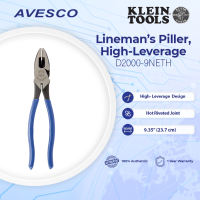
Klein Tools D2000-9NETH Linemans Pliers 9-Inch KLEIN 9″ NE-TYP HIGH LEVERAGE SYD CUTTER PLIERS
₱5,000.00
Buy on Lazada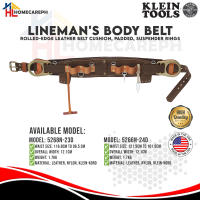
Klein Tools Linemans Body Belt 38 / 48 inches
₱25,500.00
Buy on Lazada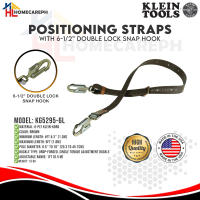
Klein Tools Positioning Straps KG5295-6L
₱20,000.00
Buy on Lazada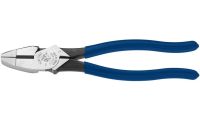
Klein Tools D213-9NE Pliers 9-Inch Side Cutters High Leverage Linesman Pliers Cut Copper Aluminum and other Soft Metals
₱2,661.00₱3,044.00
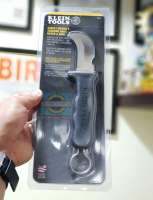
Cable Skinning Original Knife Klein Tools 3-inch
₱2,750.00
Buy on Lazada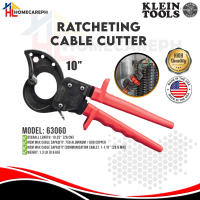
Klein Tools Ratcheting Cable Cutter 10 inches 63060
₱21,500.00₱23,000.00
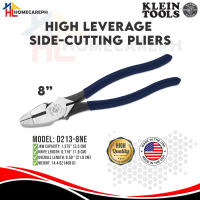
Klein Tools High Leverage Side-Cutting Pliers 8″ D213-8NE
₱3,300.00
Buy on Lazada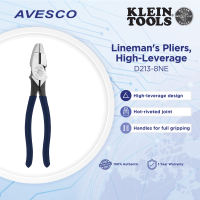
Klein Tools Linemans Pliers | D213 | 8-inch | 9-inch | High-Leverage | Avesco
₱3,445.00
Buy on LazadaAbout Klein Tools
Klein Tools is an American, family-owned manufacturer specializing in professional hand tools, electrical and utility equipment, test-and-measurement instruments, jobsite products, and occupational protective equipment. Established in Chicago in 1857 by Mathias Klein, the company is widely recognized for its lineman’s pliers and electrician’s tools, having grown into one of the most prominent professional tool brands in the electrical and construction trades.
Unlike many contemporary tool manufacturers that operate as subsidiaries of large conglomerates, Klein Tools remains owned and managed by the Klein family. Descendants of founder Mathias Klein continue to be actively involved in the business operations.
Company overview
| Field | Information |
|---|---|
| Company name | Klein Tools, Inc. |
| Brand | Klein Tools |
| Founded | 1857 |
| Founder | Mathias Klein |
| Place of origin | Chicago, Illinois, United States |
| Industry | Hand tools, professional tools, electrical equipment, safety equipment |
| Ownership | Family-owned |
| Headquarters | Lincolnshire, Illinois, USA |
| Primary market | Professional trades |
| Best known for | Lineman’s pliers, electrician’s hand tools |
| Major customer groups | Electricians, linemen, construction workers, HVAC technicians, plumbers, telecom technicians, industrial workers |
| Manufacturing identity | Strong emphasis on U.S. manufacturing |
| Founded-era slogan/positioning | Professional tools since 1857 |
Klein Tools describes itself as a company focused on professional trades, with products distributed worldwide. Its current portfolio extends significantly beyond its original pliers manufacturing business.
Origins and history
The history of Klein Tools dates to 1857, when German immigrant Mathias Klein established a forge shop in downtown Chicago. The company’s origin is directly linked to the creation of its signature tool. A telegraph lineman brought Klein a broken pair of side-cutting pliers for repair. Rather than simply fixing the existing tool, Klein forged a replacement half and riveted it to the remaining original half. When the lineman returned later because the other original half had also broken, Klein forged a second replacement half, resulting in a completely functional pair of pliers. This specific pair became the foundation of the Klein business.
This origin story established a central theme for the company: tools should be designed around the specific needs of professional tradespeople. Early growth was closely tied to the development of the telegraph, telephone, and electrical industries. As electrical infrastructure expanded across the United States, demand increased for durable tools capable of withstanding professional field work.
Industrial expansion
During the late 19th and early 20th centuries, Klein Tools expanded alongside America’s developing infrastructure. The company’s progression followed the trajectory from telegraph to telephone, electrical power, industrialization, construction, and broader professional trades. While initially known for lineman’s pliers, the product range grew considerably. By the early 20th century, the company offered more than 100 different types and sizes of pliers. Unlike general-purpose consumer tool companies, Klein’s heritage is rooted specifically in professional infrastructure work.
Relationship with the electrical trade
The profession most strongly associated with Klein Tools is the electrician. The company developed numerous products specifically for electrical work, including lineman’s pliers, diagonal cutters, long-nose pliers, wire strippers, cable cutters, crimping tools, screwdrivers, nut drivers, insulated tools, voltage testers, multimeters, clamp meters, fish tapes, and electrical installation tools. Klein identifies electrical and utility work as central markets, describing its products as developed around professional jobsite requirements. This specialization contributed to Klein lineman’s pliers becoming nearly synonymous with the American electrician’s toolbox.
Brand characteristics
Klein Tools has cultivated a reputation based on several key characteristics:
- Durability: Tools are designed to survive demanding professional environments rather than occasional household use.
- Professional orientation: The company positions itself primarily around tradespeople rather than casual DIY consumers.
- American manufacturing: Klein places significant emphasis on U.S. manufacturing and continues to invest in American production facilities.
- Electrical heritage: Electrical and utility applications remain central to the company’s identity.
- Familiarity: Generations of electricians and tradespeople have used Klein products, providing considerable brand recognition within the trades.
Product portfolio
Klein Tools currently produces a broad range of equipment extending beyond traditional hand tools into jobsite equipment and electrical technology. The catalog includes:
- Pliers, cutters, wire strippers, and crimpers
- Screwdrivers, nut drivers, wrenches, hammers, and pry bars
- Knives, measuring tools, levels, and hex keys
- Cable cutters, bolt cutters, holemaking tools, and drilling accessories
- Electrical testers, multimeters, clamp meters, and voltage detectors
- Fish tapes and pulling equipment
- Tool bags, belts, backpacks, buckets, and jobsite storage
- Headlamps, flashlights, and insulated tools
- Safety equipment
- HVAC, plumbing, and telecom tools
Industries served
Klein organizes its products around numerous professional industries:
- Electrical: The core territory, including pliers, cutters, wire strippers, screwdrivers, insulated tools, testers, and installation equipment.
- Electrical utility / line work: Products for high-voltage line maintenance, grid services, and power-line installation, serving utility linemen and power-line technicians.
- Construction: Tools for general construction and jobsite applications.
- HVAC / refrigeration: Tubing cutters, thermometers, gas detectors, sheet-metal tools, and specialty wrenches.
- Plumbing: Tools for pipe work, cutting, gripping, and measuring.
- Telecommunications / low voltage: An industry with historical ties to the company’s telegraph infrastructure origins.
- Steel and concrete / ironworking: Specialized pliers and tools for ironworkers and construction professionals.
- Automotive and industrial: Applications extending beyond electrical and construction trades.
Lineman’s pliers
The lineman’s plier is arguably the most recognizable Klein product category. A typical model combines gripping jaws, cutting blades, a pivot, and a handle designed for substantial hand force, making it useful for electricians and linemen who need to grip, twist, bend, and cut wire. Manufacturing processes emphasize forged steel, precision machining, heat treatment, and controlled finishing. While the design has evolved, the fundamental concept remains connected to the tool Mathias Klein created in 1857.
Manufacturing and forging
A primary point of differentiation for Klein Tools is its emphasis on American manufacturing. The company states it has manufactured tools in America since 1857 and continues to invest in U.S. production, operating manufacturing and distribution facilities that include forging operations. A major drop-forging facility was established in Moran, Kansas, in 1975.
However, “Klein Tools is an American company” does not imply that every Klein-branded product is made in the United States. The portfolio is global, and manufacturing varies by product. While certain products are promoted as Made in USA, the international supply chain allows for a broader overall product range.
Forging remains critical to traditional plier manufacturing. Instead of machining from a block of metal, forging uses substantial force to shape heated metal. Pliers are made from U.S. steel alloy and undergo forging, precision machining, hardening, tempering, and finishing to achieve the strength, dimensional consistency, and durability required for professional applications.
Expansion and innovation
Klein Tools has expanded beyond pliers through acquisition and organic growth. In 1968, the company acquired R. H. Burhke Company, entering the occupational protective equipment and leather/canvas markets. Subsequent decades saw expansion into tool storage, safety equipment, electrical testing, HVAC equipment, holemaking, cutting tools, jobsite accessories, battery-powered tools, work lighting, and digital measuring equipment. The professional test-and-measurement line now includes clamp meters, multimeters, receptacle testers, and non-contact voltage testers.
Insulated tools and safety
Electrical safety is a significant component of the modern portfolio. Klein produces insulated hand tools and kits rated for applications involving up to 1,000 volts, with insulation designed according to relevant standards. These products represent an expansion from mechanical tools into designs where electrical safety engineering is integral. Users must still follow applicable safety standards and manufacturer instructions, as insulated tools do not substitute for proper safety procedures.
Modern technology and MODbox
The product portfolio increasingly incorporates modern technology, including digital multimeters, infrared measurement, rechargeable lighting, and modular storage systems. This marks a transition from a forged-hand-tool manufacturer to a broader professional jobsite equipment brand. The MODbox system exemplifies this direction, offering interconnected storage products that allow professionals to organize and transport equipment efficiently, placing Klein in direct competition with modern tool-storage ecosystems.
Historical milestones
- 1857: Mathias Klein establishes his forge in Chicago and makes the first complete Klein pliers.
- 1860s: Demand for dependable telegraph infrastructure tools drives business growth.
- Late 19th / early 20th century: Company grows alongside telephone, electric power, and industrial development.
- 1910s: Portfolio expands to more than 100 types and sizes of pliers.
- 1968: Acquisition of R. H. Burhke Company expands safety equipment offerings.
- 1972: Establishment of Mexican subsidiary.
- 1975: Major drop-forging plant established in Moran, Kansas.
- 1978: William Warne Co. joins the Klein family of companies, adding leather products.
- 1980: International distribution center opens in Cedar Rapids, Iowa.
- 2010s: Diversification into HVAC, testing, holemaking, and digital instruments.
- 2019: Acquisition of Wattmaster and Alco Brands in Melbourne expands Australian presence.
- 2020: Opening of a 270,000-square-foot distribution center in Mansfield, Texas.
- 2024: Klein Tools Europe GmbH opens an office in Munich, Germany, with a warehouse in Greven.
- Present: Continues as a family-owned company serving professional trades worldwide.
International presence and ownership
Although strongly associated with the United States, Klein Tools is an international brand with products distributed through a network of agents and distributors. Subsidiaries and operations exist outside the U.S., with significant markets in Europe, Australia, and Mexico. The brand combines American manufacturing heritage with global distribution.
Klein Tools remains family-owned and family-managed, distinguishing it from brands owned by large industrial groups. Descendants of Mathias Klein continue to be actively involved, and this continuity of ownership is a core component of the brand identity in an industry characterized by acquisitions and consolidation.
Market position and philosophy
The central philosophy of Klein Tools is “professional tools made for professional tradespeople.” The company emphasizes durability, reliability, precision, professional usability, American manufacturing, long-term craftsmanship, and trade-specific design. Historically, products are intended to solve real problems encountered in the field.
Klein occupies a distinctive position as a professional trade brand rather than a consumer DIY brand. Its strongest competitive advantage lies in a deep understanding of professional trades, particularly electrical work. While categories overlap, Klein’s historical territory is electrical and utility hand tools, whereas competitors like Milwaukee focus on cordless power tools, Snap-on on automotive tools, and Fluke on test and measurement.
Reputation and strengths
Klein enjoys strong brand recognition among electricians and linemen, with products used across multiple generations. For many professionals, Klein lineman’s pliers are considered traditional trade equipment. Key strengths include:
- Heritage: Over 165 years of continuous history.
- Specialization: Deep knowledge of electrical and utility work.
- Positioning: Built primarily around professional users.
- Manufacturing expertise: Long history of forging and machining.
- Family ownership: Retained across multiple generations.
- Product range: Expanded from pliers to a comprehensive ecosystem.
Limitations
Professional-grade Klein tools can cost substantially more than generic alternatives. Additionally, the “Klein” name does not guarantee U.S. manufacturing for every item; origin varies by product. Specialists such as Knipex, Channellock, Fluke, Milwaukee, and DeWalt compete strongly in specific categories. Given the company’s long history, product characteristics and manufacturing approaches vary across eras, making evaluation of specific models necessary.
Significance and current status
The historical importance of Klein Tools extends beyond hand tools; its history mirrors the transformation of the United States into a highly electrified economy. From serving telegraph linemen to supporting modern utility infrastructure, telecommunications, and HVAC, the company’s evolution parallels American industrial development.
As of 2026, Klein Tools remains a family-owned American professional-tool manufacturer with a global footprint. The modern catalog encompasses traditional hand tools alongside electrical testing, insulated tools, battery-powered products, lighting, storage, and safety equipment. The company continues to emphasize American manufacturing while expanding its international presence and technological capabilities. Ultimately, Klein Tools functions as the “traditional professional electrician” of the tool industry, retaining the family name, ownership, and professional-trade orientation established at its founding.