Shop on Lazada
Deltaplus products
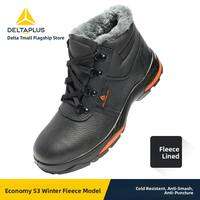
Deltaplus | Thermal Insulation Steel Toe Work Shoes
₱3,071.44₱4,328.68
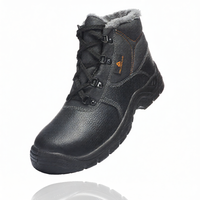
Deltaplus | Antistatic Penetration-Resistant Leather Safety Shoes For Cold Weather
₱2,600.62₱3,504.23
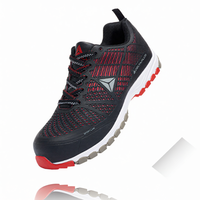
Deltaplus | Breathable Lightweight Comfortable Anti-Smash Fashion Safety Shoes
₱4,383.31₱6,617.96
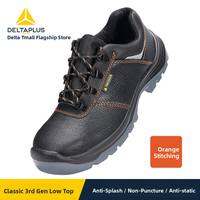
Deltaplus | Antistatic Insulating Anti-crushing Safety Shoes
₱3,539.25₱4,487.13
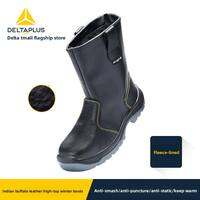
Deltaplus | Puncture Resistant Thermal Insulation Safety Shoes
₱4,466.28₱6,177.48
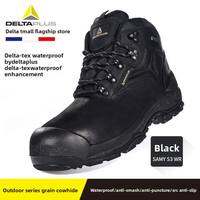
Deltaplus | Waterproof Steel Toe Puncture Resistant Safety Shoe
₱5,967.64₱10,265.33
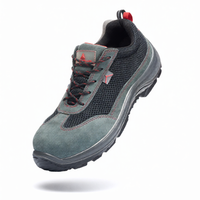
Deltaplus | Breathable Anti-smash Puncture-resistant Insulated Safety Shoes
₱3,146.57₱4,158.76
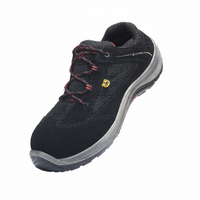
Deltaplus | Anti-static Safety Shoes for Men and Women
₱3,411.60₱5,721.70
About Deltaplus
Delta Plus Group is a French, family-owned and independent company specialising in personal protective equipment (PPE) and collective protection systems for professional workplaces. Founded in 1977 in Apt, Provence, France, by Jacques Benoit, the company began as a distributor of rainwear, protective boots and work gloves before developing into a vertically integrated international designer and manufacturer of occupational safety products.1
Today, Delta Plus operates internationally, supplying protection equipment to industries ranging from construction and manufacturing to agriculture, energy, mining, food processing, transportation, and oil and gas. The group reports having 49 subsidiaries in 31 countries, distributing its products in more than 110 countries, employing approximately 3,700 people, and manufacturing about 85% of its products through 20 production facilities worldwide.1
Company overview
| Attribute | Details |
|---|---|
| Company | Delta Plus Group |
| Brand | Delta Plus |
| Founded | 1977 |
| Founder | Jacques Benoit |
| Founded in | Apt, Provence, France |
| Industry | Occupational safety / Personal protective equipment |
| Ownership | Family-owned and independent |
| Headquarters | Apt, Vaucluse, France |
| Main markets | Professional and industrial safety |
| Global presence | 49 subsidiaries in 31 countries |
| Distribution | 110+ countries |
| Employees | ~3,700 |
| Production | 20 facilities |
| Product references | 7,200+ |
| Models | 1,100+ |
| Core philosophy | Protection, Comfort and Value |
The figures above reflect Delta Plus corporate information available in 2026; some older pages and third-party references contain lower historical figures because the group has expanded through acquisitions and international growth.1
History
1977 — Foundation
Delta Plus was established by Jacques Benoit in Apt, Provence, in southeastern France. The company initially focused on distributing relatively basic occupational protection products. Its early range included rainwear, protective boots and work gloves. This was a period when the modern PPE industry was still developing, and Delta Plus gradually built its business around supplying practical protection for workers.
1980s — The 304 rainwear
During the 1980s, Jacques Benoit developed the 304 rainwear ensemble, which became an important commercial success for the company. The product helped establish Delta Plus beyond simple distribution and demonstrated the potential of developing its own protection products.
2000s — Transformation into a manufacturer
A major turning point came in the 2000s, when Delta Plus moved from primarily being a distributor towards becoming a manufacturer. This transformation allowed the company to gain greater control over product design, manufacturing, quality, innovation, supply chains and international product development. The company subsequently evolved into what it describes as a global, multi-specialist PPE designer and manufacturer.
2011 — Second generation
In 2011, leadership passed to Jérôme Benoit, Jacques Benoit’s eldest son. At the time, Jérôme Benoit was 28 years old and a graduate of HEC Paris. His leadership continued the family’s long-term strategy of internationalisation and diversification.
2020–2025 — Acquisition and international expansion
More recently, Delta Plus has complemented organic growth with acquisitions. According to the company’s current corporate profile, 11 acquisitions were finalised between 2020 and 2025. This strategy has helped Delta Plus expand its technological capabilities and broaden its product portfolio.
Product portfolio
Delta Plus is not simply a workwear company. Its portfolio covers a broad range of PPE and collective protection equipment, essentially attempting to provide protection for a worker from head to toe. The company divides its principal PPE offering into five major families.1
Head protection
Products include equipment such as safety helmets, bump caps, hearing protection, protective eyewear and face protection. The purpose is to protect workers against risks such as falling objects, impact, noise, dust and other workplace hazards.
Hand protection
Delta Plus has a particularly extensive range of protective gloves, including solutions for mechanical hazards, cuts, heat, chemicals, precision work, heavy-duty applications and general-purpose work. Gloves were also one of the company’s original product categories.
Body protection
The company offers various forms of occupational clothing, including workwear, technical clothing, outdoor workwear, disposable protective clothing, chemical-protection clothing, thermal protection and high-visibility clothing.
Foot protection
Delta Plus produces occupational footwear designed for different workplace environments, including safety shoes, safety boots, protective footwear and specialised industrial footwear.
Fall protection
Another important part of the portfolio is working-at-height protection, including harnesses, anchorage systems, connecting systems, fall arresters, work-positioning equipment, rescue equipment and suspension systems.1
Collective protection
Delta Plus has also moved beyond individual PPE into collective protection systems. The distinction is significant: while PPE protects an individual worker, collective protection attempts to protect workers through engineered systems installed in the workplace.
Delta Plus permanent-system offerings include horizontal fall-protection systems, vertical fall-protection systems, inclined systems, lifelines, anchorage points, posts and anchors, access systems, roof accessories, guardrails and custom-designed solutions. This gives Delta Plus a broader role in workplace safety than a company selling gloves, helmets or safety shoes alone.1
Industries served
Delta Plus positions its products for a wide variety of professional environments. Its current industry categories include:
- Construction
- Agriculture, forestry and fishing
- Manufacturing and industry
- Energy and utilities
- Food industry
- Oil & gas
- Petrochemicals
- Mining
- Automotive
- Chemical industry
- Pharmaceuticals and laboratories
- Transportation and logistics
- Facilities services
- Maintenance
- Public works
This broad sector coverage is one reason Delta Plus describes itself as a multi-specialist rather than a company focused on a single PPE category.
Business model
Delta Plus has progressively moved towards an integrated business model. Rather than simply buying PPE from third-party manufacturers and reselling it, the group combines design, standardisation, manufacturing, distribution and technical support. The company states that it manufactures approximately 85% of its products itself, using production facilities around the world.
This manufacturing model potentially gives Delta Plus greater control over product specifications, quality, production capacity, product development, regulatory compliance and supply-chain management. It also differentiates the company from PPE distributors that primarily resell products made by other manufacturers.
Product philosophy
Delta Plus describes its product strategy around three principal concepts:
Protection
The first priority is protection against occupational hazards. Products are developed around the requirements of particular work environments and applicable safety standards.
Comfort
Delta Plus emphasises that PPE needs to be comfortable enough for workers to actually wear it correctly and consistently. This is particularly important for equipment such as gloves, safety footwear, helmets, protective clothing and harnesses.
Design and value
The company also emphasises product design and value, arguing that protective equipment does not necessarily need to look or feel like an uncomfortable industrial constraint. Its corporate messaging increasingly uses the idea of “Enjoy Safety”, positioning PPE as something that can combine safety with usability, aesthetics and comfort.1
Innovation and R&D
Research and development is an important component of Delta Plus strategy. The company says its products are evaluated around protection, comfort and design. Its R&D teams work on developing products intended to provide differentiated protection while remaining practical for professional users.
Delta Plus also provides technical resources such as product documentation, selection guides, training, tutorials, standards and regulatory information, chemical-protection tools, glove-selection tools and product technical information. This technical-support component is particularly important because PPE selection often depends on the exact hazard rather than simply choosing a product by appearance.
Standards and certification
Because Delta Plus operates internationally, its products must comply with the relevant safety requirements and standards in the markets where they are sold. The company states that its product and service teams aim to provide products that are reliable, sustainable and compliant with the regulations and/or standards applicable in the territories where they are used.
This is a critical aspect of PPE. For example, a safety glove is not simply classified as “good” or “bad”; its suitability depends on the specific hazards involved and the applicable performance requirements. Consequently, Delta Plus provides technical documentation and standards information to assist professional users and distributors in selecting appropriate equipment.
Manufacturing and global presence
One of the most notable characteristics of Delta Plus is its international manufacturing footprint. According to the company’s current profile, it maintains 49 subsidiaries across 31 countries, serves 110+ countries, operates 20 production facilities, employs approximately 3,700 people, and manufactures roughly 85% of its products in-house. The company therefore combines a French origin and family ownership with a highly international operating structure.1
Sustainability
Delta Plus has increasingly incorporated environmental considerations into its product-development strategy. The company says that eco-design is systematically integrated into its specifications. It has also developed an eco-score intended to provide a way of assessing the environmental impact of products across different product families.
Other initiatives mentioned by Delta Plus include reducing packaging, increasing the use of recyclable materials, integrating environmental considerations into product design and considering long-term sustainability in corporate strategy. The company’s sustainability approach is therefore primarily integrated into product design and manufacturing, rather than being presented solely as a corporate social-responsibility programme.
Corporate identity
A distinctive characteristic of Delta Plus is that it remains a family-owned and independent group. The company explicitly describes itself as “1 family and independent group”. The Benoit family has therefore remained closely associated with the company’s identity since its foundation in 1977. This independence is presented by Delta Plus as an advantage for maintaining a long-term strategic orientation rather than focusing exclusively on short-term financial objectives.
Market positioning
It is useful to understand where Delta Plus sits within the PPE market. A conventional workwear company might primarily sell work clothing, boots and gloves. Delta Plus operates on a considerably broader model encompassing head protection, eye/face protection, hearing protection, respiratory protection, gloves, protective clothing, safety footwear, fall protection and collective protection systems. This breadth allows Delta Plus to act as a multi-specialist safety supplier rather than merely a workwear label.1
Delta Plus positioning can essentially be summarised as professional protection without sacrificing comfort and usability. Historically, PPE was often perceived as purely functional equipment. Delta Plus has tried to differentiate itself by combining safety, comfort, ergonomics, design, innovation, affordability/value and durability. The company’s current branding explicitly says that PPE is too often perceived as a constraint and promotes solutions that are innovative, quality-focused, easy to use, affordable, designed and durable.
Significance in the industry
Delta Plus is significant in the PPE industry because of its transformation from a small French distributor founded in 1977 into a global, vertically integrated occupational-safety group. Its development can be simplified into four stages:
- 1977: French PPE distributor
- 1980s: Successful proprietary products
- 2000s: Transition towards manufacturing
- 2010s–2020s: International expansion, diversification and acquisitions
- Today: Global multi-specialist PPE and collective-protection group
This trajectory explains why the Delta Plus name appears across many different categories of occupational safety equipment.
Overall assessment
Delta Plus is best understood as a global occupational-safety company rather than simply a workwear brand. Its roots are distinctly French: it was founded in Apt, Provence, in 1977 by Jacques Benoit and remains family-controlled. However, its present-day business is highly international, with subsidiaries, manufacturing operations and distribution networks across numerous countries.
Its principal strengths are its very broad PPE portfolio, in-house manufacturing, international distribution, product-development capabilities and expansion into collective fall protection. The company’s core proposition can be summarised as protecting the worker from head to toe while combining protection, comfort, design and value. With more than 1,100 models and 7,200 references, Delta Plus has developed into a substantial multi-category PPE supplier rather than a niche manufacturer.1