Shop on Lazada
Klorane products
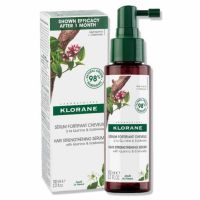
Klorane Quinine Edelweiss Scalp Serum Hair Essence 100ml 1ea
₱1,515.00
Buy on Lazada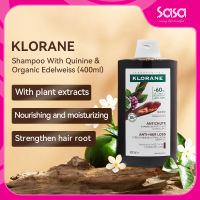
KLORANE Shampoo With Quinine & Organic Edelweiss (400ml)
₱1,280.00₱2,816.00
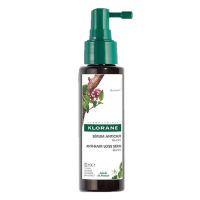
【Klorane】Hair Strengthening Reduce Hair Loss Serum | Scalp Care Spray 100ml
₱573.64₱1,113.87
Klorane Hair Strengthening Serum Spray | 100ml
₱557.30₱1,103.46
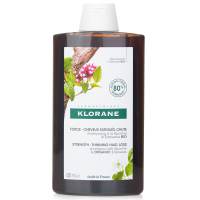
Klorane Shampoo With Quinine & Organic Edelweiss 400ml
₱1,588.94₱2,178.36
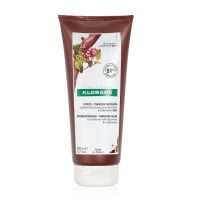
Klorane Strengthening Conditioner for Thinning Hair Supports Thicker Stronger Healthier Hair For Men and Women Paraben Silicone and Sulfate Free 200ml
₱1,659.00₱1,898.00
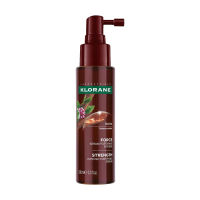
Klorane Strengthening Serum and Edelweiss for Thinning Hair Supports Thicker Stronger Healthier Hair For Men and Women 100ml New and Improved Formula
₱1,561.00₱1,786.00
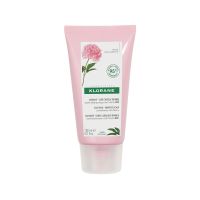
Klorane Gel Conditioner with Peony Soothing Relief for Dry Itchy Flaky Sensitive Scalp pH Balanced Provides Scalp Comfort 150ml
₱1,561.00₱1,786.00
About Klorane
Brand Overview
Klorane is a French botanical beauty and dermocosmetics brand best known for its plant-based hair-care and skin-care products. Founded in 1965 by pharmacist Pierre Fabre, the brand was established on the principle of combining botanical knowledge with pharmaceutical research to create effective, targeted personal-care solutions. Today, Klorane operates as part of Pierre Fabre Laboratories, a French healthcare and beauty group that also owns brands such as Eau Thermale Avène, Ducray, and René Furterer.
The brand’s identity is defined by its long-standing philosophy of using plants to address specific beauty and scalp concerns, traditionally expressed as “1 plant = 1 indication.” Its modern positioning is closely associated with the concept of “The Soul of Botany,” which emphasizes the relationship between botanical science, beauty, and biodiversity 1.
| Category | Information |
|---|---|
| Brand | Klorane |
| Founded | 1965 |
| Founder | Pierre Fabre |
| Country of origin | France |
| Parent company | Pierre Fabre Laboratories |
| Industry | Beauty, cosmetics, dermocosmetics |
| Main categories | Hair care, scalp care, face care |
| Core philosophy | Botanical ingredients + scientific expertise |
| Signature positioning | Botanical beauty / “The Soul of Botany” |
| Best known for | Shampoos, botanical hair treatments, and dry shampoos |
| Key expertise | Plant-derived active ingredients |
| Botanical foundation | Klorane Botanical Foundation |
| Major market presence | International, particularly through pharmacies and beauty/health channels |
History
Origins: 1965
Klorane began in 1965 when French pharmacist Pierre Fabre acquired the Parisian Klorane laboratory. His interest in botany and the potential relationship between plants, health, and beauty became the foundation for the brand. Rather than treating plants merely as fragrances or decorative ingredients, Fabre investigated their functional properties and incorporated them into scientifically developed cosmetic products. This approach established what Klorane refers to as “Pure Botanical Care” 2.
1966 — Chamomile Shampoo
One of Klorane’s first major products was a chamomile shampoo designed for blonde hair, launched in 1966. This product established a pattern central to the brand: identifying a botanical ingredient, understanding its properties, and developing a product around a particular hair or skin concern 2.
1967 — Calendula and Cornflower
In 1967, Klorane expanded beyond hair care by introducing a Calendula-based baby range and a Cornflower cleansing and make-up-removing product. These launches strengthened its position as a botanical personal-care brand rather than solely a shampoo manufacturer.
1969 — “1 Plant = 1 Indication”
By 1969, Pierre Fabre had established the principle of “1 plant = 1 indication.” The concept involved associating specific botanical ingredients with particular cosmetic concerns. This remains a core part of Klorane’s brand philosophy and differentiates it from brands that use botanical ingredients primarily as a marketing narrative 2.
1970s — Dry Shampoo
Klorane is historically notable for its contribution to the dry-shampoo category. Pierre Fabre Laboratories dates the innovation to 1970, while Klorane’s U.S. history describes the original dry shampoo as launching in 1971 2. The product was initially conceived as a practical solution for women who could not easily wash their hair with water, including new mothers in hospitals. Dry shampoo subsequently became one of Klorane’s signature categories and a key element of its international identity.
1980 — Oat Milk
Klorane introduced its Oat Milk shampoo in 1980. This launch helped establish another important element of the brand’s botanical vocabulary: using plant-derived ingredients not only for specific treatments but also for everyday gentle hair care 2.
1990s — From Cosmetics to Botanical Conservation
During the 1990s, Klorane’s environmental and botanical activities became more formalized. Following growing international attention to environmental issues, Klorane and Pierre Fabre created the Klorane Institute, which later became the Klorane Botanical Foundation. Established in 1994, the foundation focuses on three broad areas: protecting botanical biodiversity, exploring plant species and botanical knowledge, and educating people about plants and biodiversity 2.
2016 Onward
In 2016, the Klorane Institute was renamed the Klorane Botanical Foundation. In 2018, Klorane introduced the brand identity “The Soul of Botany,” reinforcing the relationship between beauty, plants, and environmental responsibility 1.
Founder: Pierre Fabre
Pierre Fabre was a French pharmacist and entrepreneur whose professional philosophy connected health and beauty. He founded Laboratoires Pierre Fabre in 1962 and subsequently developed the company into an international healthcare and beauty group. His personal interest in botany strongly influenced the development of Klorane and other Pierre Fabre brands.
His approach was unusual for its time because it treated botanical ingredients as subjects for scientific investigation rather than simply traditional cosmetic ingredients. This led to an integrated botanical expertise covering the entire chain from plant cultivation and harvesting to extraction, active ingredient formulation, and finished product manufacturing. The company emphasizes traceability of plant-derived ingredients and scientific evaluation of their properties 1.
Parent Company: Pierre Fabre Laboratories
Klorane is part of Pierre Fabre Laboratories, a French pharmaceutical, dermatological, and dermocosmetic company founded in 1962. Pierre Fabre operates across several areas, including pharmaceutical products, dermatology, oncology, dermo-cosmetics, hair care, and botanical research. Klorane sits primarily within the group’s dermocosmetic and hair-care activities. Pierre Fabre describes Klorane as one of its brands built around the group’s botanical expertise 1.
Brand Philosophy
Klorane’s brand philosophy represents the intersection of botany, science, beauty, and sustainability. The company positions its products around the idea that plants can provide useful, effective active ingredients when they are properly selected, researched, and formulated.
This gives Klorane a distinct identity compared to conventional mass-market hair-care brands. Its proposition is not simply that natural ingredients are inherently superior; instead, the brand’s historical approach is to identify the right plant, understand its properties, and develop a targeted cosmetic solution around it. This thinking underpins the “1 plant = 1 indication” philosophy.
Botanical Expertise
Botanical ingredients are central to Klorane’s portfolio. Plants associated with its products include:
- Chamomile — traditionally associated with blonde-hair care
- Oat — used for gentle, soothing hair-care formulations
- Nettle — associated with oily-scalp and sebum-control products
- Peony — associated with sensitive scalp care
- Mango — used in nourishing hair-care products
- Quinine — used in strengthening and anti-hair-loss-oriented products
- Cornflower — associated with sensitive eye and face care
- Aquatic Mint — used in scalp-care products
- Cupuaçu — used for nourishing and repairing hair care
These ingredients are supported by dedicated botanical expertise developed by Klorane and Pierre Fabre regarding cultivation, sourcing, extraction, and formulation 1.
Product Categories
Hair Care
Hair care is Klorane’s strongest and most recognizable category. Its portfolio includes shampoos, conditioners, hair masks, leave-in treatments, scalp treatments, strengthening treatments, anti-hair-loss products, products for oily scalps, products for sensitive scalps, and dry shampoos. Klorane’s dry shampoos are particularly iconic, with ranges including products based on ingredients such as oat milk and nettle, alongside variants designed for different hair colors and needs.
Face Care
Klorane has a history in facial and eye-area care, particularly through botanical ingredients such as Cornflower. The brand’s early Cornflower products helped establish its botanical approach to sensitive facial and eye-area care.
Baby Care
Baby care has been part of Klorane’s heritage since the launch of its Calendula baby range in 1967.
Signature Product: Dry Shampoo
Dry shampoo is the product category most synonymous with Klorane. Dating back to the early 1970s, the original concept was practical: refreshing hair without requiring a conventional water-and-shampoo wash. Over time, the category evolved into a mainstream beauty product used for refreshing hair between washes, absorbing excess oil, adding volume, extending hairstyles, and providing convenience while traveling or in situations where washing hair is inconvenient. Klorane describes dry shampoo as one of its historic innovations, and Pierre Fabre highlights it as a significant milestone in the group’s history 1.
Scientific Approach
A major part of Klorane’s differentiation is its connection to the pharmaceutical heritage of Pierre Fabre. The company describes its botanical approach as combining knowledge of plants with scientific research and pharmaceutical expertise. Its botanical supply chain is intended to provide traceability from the sourcing or cultivation of plants through their transformation into botanical active ingredients and their incorporation into finished products 1.
This places Klorane’s positioning between traditional botanical beauty and pharmacy-oriented dermocosmetics. This distinction is relevant because Klorane has historically been distributed through pharmacies and health/beauty channels rather than being positioned solely as a conventional supermarket beauty brand.
Sustainability and Environmental Philosophy
Sustainability is a significant component of Klorane’s current identity. The brand’s environmental philosophy covers several areas:
Botanical Biodiversity
Through the Klorane Botanical Foundation, the brand supports projects intended to protect and promote botanical heritage. The foundation’s work includes biodiversity conservation, botanical education, and projects involving endangered plant species.
Responsible Sourcing
Pierre Fabre reports that its botanical sourcing system considers sustainability, supplier relationships, and responsible agricultural practices. The group states that 97% of plants used by its brands suffer no impact on their sustainability, according to its current commitments reporting.
Packaging
Klorane states that its plastic tubes and bottles contain at least 25% recycled plastic, while its shampoo bottles contain 50–100% recycled plastic, excluding caps.
Manufacturing
Klorane’s U.S. materials state that its hair-care products are manufactured in France and that the brand applies environmental considerations to manufacturing and packaging 2.
Klorane Botanical Foundation
The Klorane Botanical Foundation distinguishes Klorane from many other cosmetic brands. It is a corporate foundation of Pierre Fabre Laboratories established in 1994 with a mission to promote and protect botanical heritage. Its three central areas are protecting plant biodiversity, exploring botanical knowledge, and educating people, particularly younger generations, about plants. Projects have included initiatives connected to the Great Green Wall, as well as various botanical education and conservation programs. Klorane states that a portion of sales from its products supports the activities of the foundation 12.
Brand Positioning
Klorane occupies a specific position in the beauty market, broadly described as French botanical dermocosmetics rather than simply “natural cosmetics.” Its positioning combines several attributes:
| Dimension | Klorane Positioning |
|---|---|
| Origin | French |
| Heritage | Pharmacy + botany |
| Core ingredient story | Plants |
| Scientific story | Pharmaceutical/botanical research |
| Main category | Hair care |
| Distribution heritage | Pharmacy / dermocosmetic channels |
| Brand personality | Botanical, scientific, gentle, credible |
| Environmental positioning | Biodiversity and responsible sourcing |
| Hero category | Dry shampoo |
| Visual/brand world | Nature, plants, botanical expertise |
Target Consumers
Klorane’s customer base consists broadly of individuals seeking effective personal-care products with a botanical ingredient story and a pharmacy/dermocosmetic heritage. Typical consumer groups include those interested in botanical beauty, consumers looking for targeted scalp or hair solutions, people with specific hair concerns such as oily scalp or damaged hair, regular users of dry shampoo, and consumers who prefer pharmacy-based beauty brands. The brand also appeals to those interested in French dermocosmetics and environmentally conscious consumers focused on biodiversity and responsible sourcing. Consequently, Klorane sits between premium beauty, pharmacy beauty, and botanical cosmetics.
Brand Differentiation
Klorane’s competitive advantage lies in the combination of long botanical heritage, pharmaceutical expertise, targeted formulations, French identity, and biodiversity initiatives. The company has worked with botanical ingredients since the 1960s, giving its botanical positioning considerably more historical depth than brands that have recently adopted “clean” or “natural” positioning 1.
Distinction from Natural Beauty
It is useful to distinguish Klorane from the broader natural/organic beauty category. Klorane’s philosophy is not necessarily based on the idea that everything natural is automatically better. Instead, it emphasizes botanical expertise and the functional properties of individual plants. The brand presents itself as a combination of nature and scientific validation rather than nature alone.
Global Identity
Although Klorane originated in France, it has developed into an international brand with products sold across multiple markets, including Europe, North America, and other international regions. Pierre Fabre describes Klorane as an internationally established hair-care brand, while the Klorane Botanical Foundation operates projects across numerous countries 12. The brand’s French heritage remains important, as French pharmacy and dermocosmetic culture contributes significantly to Klorane’s credibility.
Key Milestones
- 1962 — Pierre Fabre Laboratories founded.
- 1965 — Klorane launched under Pierre Fabre.
- 1966 — Chamomile shampoo introduced.
- 1967 — Calendula baby products and Cornflower cleansing product introduced.
- 1969 — “1 plant = 1 indication” philosophy established.
- 1970/1971 — Klorane dry shampoo introduced.
- 1980 — Oat Milk shampoo launched.
- 1994 — Klorane Institute established, later becoming the Klorane Botanical Foundation.
- 2010 — Klorane recognized in connection with Ecocert Environment ISO 26000.
- 2012 — Klorane became involved in the Great Green Wall project.
- 2016 — Klorane Institute renamed the Klorane Botanical Foundation.
- 2018 — “The Soul of Botany” identity introduced 12.
Brand Essence
Klorane’s identity can be condensed into several core concepts:
- French — rooted in French pharmacy and beauty culture.
- Botanical — plants are at the center of product development and brand identity.
- Scientific — botanical ingredients are investigated and formulated through the expertise of Pierre Fabre.
- Targeted — products are developed around particular hair, scalp, or skin concerns.
- Responsible — biodiversity and environmental responsibility form part of the brand’s identity.
- Heritage-driven — its botanical philosophy extends back more than 60 years.