Shop on Lazada
Knirps products
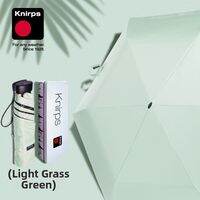
Knirps | Sun Protection UV Blocking Umbrella UPF50+
₱2,760.02₱5,399.80
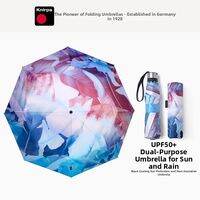
Knirps | UV Protection Rain and Sun Umbrella
₱4,772.49₱5,934.42
Knirps | Compact UV Protection Umbrella with UPF50+ Black Colloid 3-Fold Baggy Umbrella
₱3,470.51₱5,924.84
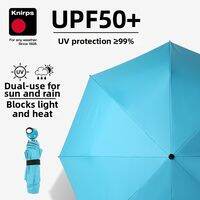
Knirps | UV Protection Folding Umbrella
₱3,153.95₱3,967.31
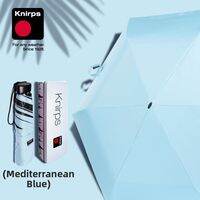
Knirps | Sun Protection Umbrella UPF50+ Purse
₱2,757.63₱5,397.41
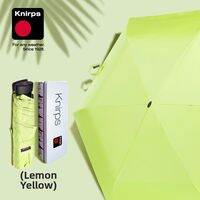
Knirps | Sunscreen UPF50+ Sun Umbrella
₱2,747.66₱5,375.31
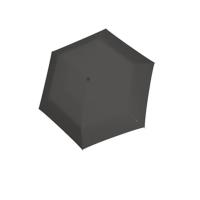
Knirps Umbrella : US.050 Ultralight Slim Manual w/ HeatShield ( UV ) Coating
₱1,999.00
Buy on Lazada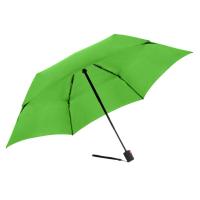
Knirps U.200 Ultra Light Series Duomatic
₱2,099.00
Buy on LazadaAbout Knirps
Knirps is a German-origin umbrella brand best known for pioneering the foldable pocket umbrella. Founded around the invention of Hans Haupt in the late 1920s, Knirps became one of the most recognizable names in the umbrella industry and helped establish the compact, telescoping umbrella as an everyday consumer product. The brand’s name, Knirps, is a German word meaning roughly “little guy,” “little fellow,” or “small person,” referring to the invention’s unusually small size.1 Today, Knirps is positioned as a premium, design-oriented umbrella brand emphasizing German engineering, compactness, durability, functionality, and contemporary design. Its range includes folding and full-length umbrellas, large “partner” umbrellas, sun umbrellas, rainwear, and related accessories.2
Quick facts
| Category | Information |
|---|---|
| Brand | Knirps |
| Origin | Germany |
| Established | 1928 |
| Founder / inventor | Hans Haupt |
| Original product | Foldable/telescoping pocket umbrella |
| Meaning of name | German for a “little guy” / small fellow |
| Industry | Umbrellas, rainwear and weather-protection products |
| Known for | Compact folding umbrellas and umbrella innovation |
| Signature symbol | The red dot |
| Current brand owner | Knirps GmbH |
| Current registered address | Braunau-Ranshofen, Austria |
| Current operating partner | doppler H. Würflingsdobler GmbH |
| Official website | knirps.com |
The current Knirps imprint identifies Knirps GmbH as the owner of the brand, with its registered address in Braunau-Ranshofen, Austria, while the online store is operated by doppler H. Würflingsdobler GmbH in Germany.3
History
Origins: Hans Haupt and the pocket umbrella
The story of Knirps begins with Hans Haupt, who developed a solution to a practical problem. According to Knirps and the German Patent and Trade Mark Office (DPMA), Haupt had suffered a war injury that made it difficult to simultaneously carry a walking stick and a conventional long umbrella. He therefore sought a way to make an umbrella considerably smaller and easier to carry.4 His solution was a collapsible, telescoping umbrella frame that could be shortened enough to fit into a pocket or small carrying case.
Haupt called his compact umbrella “Knirps,” a German term referring to a small person or “little fellow.” The name eventually became the brand associated with the product itself.5 There is an important historical nuance regarding the founding date: Knirps’s own brand history commonly identifies 1928 as the founding year, while DPMA records show that Haupt had been working on related umbrella designs and patents earlier, with the significant “shortenable umbrella” patent application filed in 1930 and granted in 1934.6
Bremshey & Co. and commercial production
The invention initially faced difficulty finding a manufacturer willing to produce it. Eventually, Fritz Bremshey and the company Bremshey & Co. recognized the commercial potential of the small umbrella. According to the DPMA, Bremshey brought the first Knirps to market in 1932, initially targeting female customers. Innovative demonstrations in shop windows helped consumers understand the new product and contributed to its popularity.7 Knirps’s own history similarly states that Bremshey & Co. helped produce the first variants of the pocket umbrella in the early years of the brand.8 The result was more than a successful umbrella: Knirps helped create a new product category—the compact folding pocket umbrella.
Major milestones
- 1928 — Birth of Knirps: Hans Haupt’s compact umbrella concept becomes associated with the Knirps name. The brand traces its origins to this year.9
- 1930 — Shortenable umbrella patent: Haupt’s company filed a patent application for a “shortenable umbrella,” covering important aspects of the collapsible construction. The patent was eventually granted in 1934.10
- 1932 — Commercial launch: Bremshey introduced the first Knirps umbrella commercially, initially marketed toward women.4
- 1932 — Lady-Knirps: Knirps’s historical timeline records the introduction of its first women’s umbrella, the Lady-Knirps.11
- 1938 — Gentleman-Knirps: The brand expanded its range with the Gentleman-Knirps, targeting male customers.6
- 1965 — Automatic umbrella: One of Knirps’s major innovations came in 1965, when it introduced an automatic-opening umbrella. The technology became an important part of the company’s identity and remains represented in modern Knirps products.2
- 1969 — The red dot: Knirps introduced the red dot as part of its brand identity in 1969. The red dot subsequently became one of the company’s most recognizable visual symbols.1
- 1977 — Jumbo-Knirps: The company introduced the Jumbo-Knirps, reflecting the continuing expansion of the umbrella range beyond very small pocket models.12
- 2004 — Knirps X1: The Knirps X1 became one of the brand’s most famous modern designs. Knirps describes it as its smallest umbrella and a particularly important design ambassador for the brand.13
- 2012 — Travel Wear: Knirps expanded beyond umbrellas with Travel Wear, a range of weather-protective clothing designed to fold into a compact format.14
- 2013 — Oasis sun umbrellas: Knirps introduced the Oasis garden/sun umbrella collection, which received a Red Dot Design Award in 2013, according to the company.15
Meaning of the name
Knirps is not originally an acronym. It is a German noun referring to a small person, little fellow, or youngster. The name was chosen because Haupt’s invention was remarkably small compared with conventional long umbrellas.16 Over time, the brand name became so closely associated with compact umbrellas that “Knirps” entered everyday German vocabulary in connection with small folding umbrellas. The brand therefore has an unusual relationship between its trademark and the product category it helped popularize.17
Brand identity
Knirps’s identity is built around several interconnected ideas:
Innovation
Innovation is arguably the central theme of the brand’s history. Its founding product challenged the conventional idea that an umbrella had to be a long, rigid object. The company subsequently emphasized innovations such as automatic opening, compact folding mechanisms, lightweight materials, and wind-resistant constructions.18
German engineering
Knirps frequently emphasizes German engineering as a key component of its product philosophy. The company describes its products as combining engineering, technical functionality, and design.19 This positioning allows Knirps to sit somewhere between a basic weather accessory and a technical consumer-product brand.
Compactness
Compactness remains fundamental to the brand. The original concept was revolutionary precisely because the umbrella could be collapsed into something that could be carried in a pocket or bag. Modern Knirps products continue this idea through mini, ultra-light, and telescoping models.20
Design
Knirps does not position itself solely around technical performance. Design, colors, and visual aesthetics are also central to its current identity. The company describes its philosophy as bringing innovation, design, and function together.21
The red dot
The red dot is arguably the brand’s most recognizable visual asset. It functions simultaneously as a logo element, a trademark identifier, a symbol of quality, and a visual reference to Knirps’s heritage. Knirps describes itself as “the umbrella with the red dot.”22
Product range
Although umbrellas remain the heart of the company, modern Knirps has developed a considerably broader product portfolio.
Folding umbrellas
These are the category most closely associated with Knirps. They include ultra-compact pocket umbrellas, mini umbrellas, lightweight umbrellas, manual-opening umbrellas, automatic/”Duomatic” umbrellas, wind-resistant models, and large folding umbrellas.23
Stick umbrellas
Knirps also produces traditional long/stick umbrellas, which retain a non-telescoping frame while incorporating the company’s materials and design philosophy.24
Partner umbrellas
The company’s larger Partner umbrellas are designed to provide enough canopy space for two people. Some models exceed one meter in diameter.25
Sun umbrellas and parasols
Knirps has expanded into outdoor sun protection, including garden and balcony parasols. Its Oasis collection is an example of this diversification.26
Rainwear
The company also introduced foldable rainwear, including its Travel Wear concept, extending the brand’s weather-protection philosophy beyond umbrellas.27
Technology
Knirps products incorporate a number of technical features.
Duomatic
Duomatic refers to Knirps’s automatic opening-and-closing mechanism. A button allows the umbrella to open and close, depending on the model.
Telescoping construction
The telescoping shaft is fundamental to Knirps’s original concept. Multiple sections collapse into one another, dramatically reducing the umbrella’s packed length.
Lightweight construction
Modern Knirps products use lightweight materials and compact engineering to reduce carrying weight while maintaining structural performance. The current range includes products specifically marketed as Ultra Light.
Wind resistance
Many modern models are designed around improved resistance to wind, using flexible frames and engineered components.
Water-repellent fabrics
Knirps says its umbrella fabrics use a water-repellent outer treatment and an impermeable inner layer, helping water run off the canopy and allowing the umbrella to dry relatively quickly.
Manufacturing and quality
An interesting aspect of Knirps is that the brand emphasizes engineering, quality control, and product development, while umbrella manufacturing itself is part of a broader international supply chain. Knirps’s own umbrella lexicon notes that most umbrellas worldwide are manufactured in China, while the brand emphasizes German engineering and product development.9
At the same time, the wider Knirps/doppler organization maintains traditional umbrella craftsmanship capabilities. Its current company information describes a manufactory with experienced craftspeople, numerous handle designs, fabric production, and hundreds of umbrella designs.10 It is therefore useful to distinguish “German engineering/design” from the claim that every Knirps umbrella is manufactured in Germany; they are not necessarily the same.
Design significance
Design has played an unusually important role in Knirps’s history. The company has repeatedly attempted to make the umbrella not merely functional but also visually desirable. The Knirps X1 is an especially important example. Introduced in 2004, its extremely compact form made it both a practical umbrella and a recognizable design object. Knirps identifies it as one of its key design ambassadors.13
The company has also received design recognition for products such as the Oasis sunshade collection, which received the Red Dot Design Award in 2013.15
The Knirps red dot
The red dot deserves special attention because it is more than simply a logo. The company uses it as a visual shorthand for the Knirps brand and its promise of quality and technical innovation. The red dot was incorporated into the brand identity in 1969, after decades of market success.1 Consequently, the brand can often be recognized even without the word Knirps appearing prominently. This is particularly valuable in a category such as umbrellas, where many products can otherwise look visually similar.
Market positioning
Knirps occupies a position toward the premium, design-oriented end of the umbrella market. Its positioning can be summarized as German heritage combined with engineering, compact functionality, and design. Rather than competing primarily on low price, Knirps emphasizes durability, technical construction, compactness, product innovation, design, brand heritage, and quality assurance.
Current products illustrate this positioning: the official store lists folding umbrellas ranging from relatively accessible models to premium large and technically sophisticated models, with examples such as the U.010 Ultra Carbon Light, U.200 Ultra Light Duomatic, and large S-series umbrellas.24
Global significance
Knirps is historically significant because it helped transform the umbrella from a large, inconvenient accessory into a portable everyday object. Before the compact umbrella, carrying an umbrella generally meant carrying a relatively long object. The telescoping design changed that equation: the umbrella could be stored in a handbag, coat pocket, briefcase, or travel bag. This basic product architecture subsequently became ubiquitous around the world.
The German Patent and Trade Mark Office describes Haupt’s pocket umbrella as a milestone of technology, emphasizing how the invention solved a simple but important everyday problem.2
Corporate structure today
Knirps’s corporate situation is somewhat different from the image of a purely German company that its heritage might suggest. The current official imprint lists Knirps GmbH, Schlossstrasse 24, 5282 Braunau-Ranshofen, Austria, as the owner of the Knirps brand.5 The online shop is operated by doppler H. Würflingsdobler GmbH, based in Simbach am Inn, Germany.3 Thus, a concise description of the modern brand would be: Knirps is a German-origin umbrella brand with historical roots in Germany and current corporate ownership based in Austria, operating within the broader doppler organization.
Brand philosophy
Knirps’s philosophy can essentially be understood as the continual refinement of the umbrella. Its historical progression demonstrates this clearly: traditional umbrella → folding umbrella → automatic umbrella → ultra-compact umbrella → lightweight umbrella → wind-resistant technical umbrella → design-oriented weather products.
The company describes its approach in terms of inventing, developing, and improving products while maintaining high quality, functionality, and contemporary design.21 That makes Knirps interesting as a brand because its identity is not primarily based on fashion, celebrity, or lifestyle. Its identity originates from a specific engineering invention and has been built around progressively improving that invention.
Legacy
Knirps’s greatest legacy is arguably that the name became almost synonymous with the folding umbrella itself. The original idea was extremely simple: make an umbrella small enough to carry everywhere. Nearly a century later, that principle remains at the center of Knirps’s products. The brand therefore occupies an unusual place in design history: it is simultaneously a consumer brand, an engineering story, a piece of German industrial heritage, and a recognizable everyday product category.
References
- Knirps – the world’s most famous umbrella manufacturer
- DPMA | Pocket folding umbrella
- Buy your Knirps umbrella or parasol online
- Knirps umbrellas
- Imprint
- DPMA | Taschenfaltschirm
- ABOUT Knirpsブランド紹介 – Knirps公式サイト
- Knirps (Unternehmen)
- Knirps umbrella lexicon
- Knirps – der weltweit bekannteste Regenschirmhersteller
- Knirps umbrellas
- About us
- DPMA | Taschenfaltschirm
- DPMA | Pocket folding umbrella
- Knirps – the world’s most famous umbrella manufacturer
- Knirps umbrellas
- Knirps umbrellas
- Knirps umbrellas
- Knirps umbrellas
- Knirps umbrellas
- Knirps Lexikon
- Impressum
- About us
- Hochwertige Knirps Regenschirme
- ABOUT KNIRPS – Knirps USA
- Knirps USA, the original since 1928
- Knirps – der weltweit bekannteste Regenschirmhersteller