Shop on Lazada
Komine products
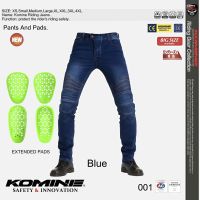
KOMINE Riding Jeans,Motorcycle Jeans,Casual Jeans Pants,Stretch Jeans,Fashion Pants
₱2,599.00₱5,198.00
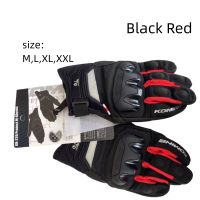
Japan Komine GK-183 GK-220 Breathable Thin Spring/Summer Motorcycle Gloves Rider Riding Gloves Anti-fall Gloves with Touch Screen
₱699.00₱1,398.00
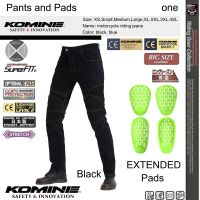
【ORIGINAL KOMINE】Motorcycle riding pants motorcycle pants anti-fall pants knee pads and hip pads stretch jeans cycling pants
₱2,600.00₱5,200.00
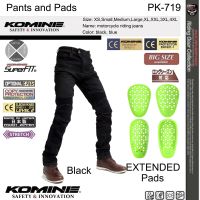
【ORIGINAL KOMINE】Komine PK-719Motorcycle riding pants motorcycle pants anti-fall pants knee pads and hip pads stretch jeans cycling pants
₱2,700.00₱5,400.00
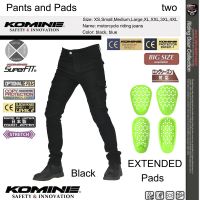
【ORIGINAL KOMINE】Multi bag workwear motorcycle pants motorcycle jeans motorcycle racing cycling pants
₱2,700.00₱5,400.00
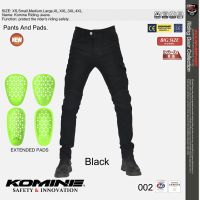
Hot Sale Two,KOMINE Riding Jeans,Motorcycle Jeans,Casual Jeans Pants,Stretch Jeans,Fashion Pants
₱2,699.00₱5,398.00
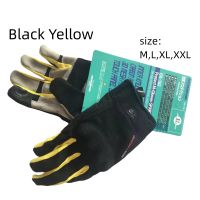
GK-183 Touch Screen Motorcycle Gloves Rider Riding Windproof Gloves Motorcycle Racing Drop Gloves
₱499.00₱998.00
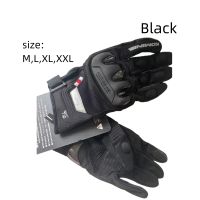
Komine Motorcycle Riding Gloves GK-183 GK-220 Drop Gloves Touch Screen Breathable
₱700.00₱1,400.00
About Komine
KOMINE is a Japanese manufacturer of motorcycle equipment and riding gear established in 1947. Headquartered in Tokyo, the company has transitioned from an early supplier of bicycle parts and motorcycle components into a specialist in protective riding apparel, helmets, gloves, footwear, and accessories. Its current corporate identity is defined by the concept of “Safety & Innovation,” emphasizing a balance between protection, functionality, and cost-effectiveness.1
Quick facts
| Category | Information |
|---|---|
| Brand | KOMINE |
| Company | KOMINE CO., LTD. |
| Country | Japan |
| Founded | 1947 |
| Founder | Shinsuke Komine |
| Headquarters | Machiya, Arakawa-ku, Tokyo, Japan |
| Current president | Naoya Achiwa |
| Industry | Motorcycle equipment and riding gear |
| Main products | Jackets, pants, gloves, helmets, protectors, footwear, racing/leather gear, rain gear, bags, accessories, electric gear, security products |
| Brand concept | SAFETY & INNOVATION |
| Core principles | Better Safety, High Function, High Cost Effectiveness |
| Current market | Japan and international markets, particularly Asia |
The company describes its core business as the planning, manufacturing, and sale of motorcycle equipment.1
Brand identity and product scope
KOMINE operates primarily as a motorcycle safety and equipment manufacturer rather than solely as a fashion-oriented clothing brand. Its product lineup addresses comprehensive rider needs across multiple categories:
- Motorcycle jackets and pants
- Gloves and footwear
- Helmets
- Body, chest, back, and spine protectors
- Racing suits and leather equipment
- Rainwear and heated/electric gear
- Motorcycle bags and security products
- Riding-school equipment and accessories
While many riders associate the brand with jackets or gloves, protective equipment remains central to its engineering philosophy. The official product structure encompasses PROTECTOR, JACKET, PANTS, GLOVES, HELMET, FOOTWEAR, RACING, RAIN GEAR, ELECTRIC GEAR, SECURITY, and BAG categories.1
History
Origins and early manufacturing (1947–1956)
KOMINE was founded in 1947 in Tokyo’s Taito Ward by Shinsuke Komine. Originally established as Komine Shokai, the business initially supplied bicycle parts and inner tubes to government organizations during Japan’s postwar reconstruction period.1
In 1952, Komine Shokai became the general sales agent for Honda’s F-type auxiliary bicycle engine kit, establishing a direct link to Japan’s emerging motorization industry. Following the conclusion of this agency relationship in 1953, the company reorganized as Komine Bike Kogyo. It began manufacturing and selling motorcycles powered by proprietary engines, including a model known as the Giant Go, and supplied engines to various other Japanese motorcycle manufacturers during this era.1
Transition to motorcycle equipment (1957–1960s)
As the Japanese motorcycle industry underwent consolidation in 1957, KOMINE shifted its strategic focus from vehicle manufacturing to motorcycle equipment. The company reorganized as Komine Jidosha Kogyo and later became Komine Auto Center in 1961, expanding into both manufacturing and retail operations. This pivot established the foundation for the modern equipment specialist recognized today.1
A significant milestone occurred in 1967 when KOMINE opened a dedicated helmet factory in Saitama. According to the company, a KOMINE helmet became the first from a Japanese manufacturer to pass the U.S. Snell ’68 standard. These helmets were subsequently exported to markets including the United States, United Kingdom, and Australia, reinforcing an engineering-led approach to rider protection.1
In 1969, the company expanded into apparel by establishing a leather-specialist factory in Tokyo. This facility produced racing suits, gloves, and jackets using materials specifically selected for abrasion resistance and crash protection, distinguishing the brand from purely fashion-focused manufacturers.1
Technical development and expansion (1980s–1990s)
During the Japanese motorcycle boom of the 1980s, KOMINE significantly expanded its retail footprint. By 1980, its network of directly operated, chain, partner, and affiliated stores had reached 27 locations nationwide. In 1983, the company began publishing KOMINE-Q, a catalog magazine featuring its products and retail network.1
Technical innovation continued in 1985 with the release of the KF-RX full-face helmet. KOMINE states this was the world’s first helmet to utilize a Kevlar-and-carbon composite material, and it successfully passed the U.S. Snell ’85 standard. This development underscored the brand’s commitment to protective technology over conventional apparel design.1
In 1997, KOMINE introduced the Summer Mesh Blouson, an early example of the modern mesh motorcycle jacket. Designed to balance airflow and summer comfort with shoulder, elbow, and spine protection, this product addressed the engineering challenge of maintaining safety standards in hot-weather gear.1
Modern safety standards and global growth (2000s–present)
KOMINE progressively integrated European safety standards into its product lines. In 2005, it introduced jackets equipped with CE-certified protectors. By 2018, the company stated it had become the first Japanese manufacturer to offer CE-certified motorcycle gloves complying with EN 13594:2015 in its lineup, marking a shift toward internationally standardized protective equipment.1
In 2019, the company established KOMINE LAB, an internal research facility dedicated to evaluating products through proprietary testing methods. Early experiments included assessing the thermal insulation of winter jackets under simulated 40 km/h wind speeds, allowing for quantitative comparisons and data-informed engineering decisions.1
The company was formally renamed KOMINE CO., LTD. in 2011. As of 2026, it is approaching its 80th anniversary in 2027. Since beginning extensive overseas sales of CE-equipped jackets in 2005, KOMINE reports cumulative sales of approximately 1.41 million jackets and 2.38 million pairs of gloves by 2026.1
Corporate philosophy
KOMINE’s corporate philosophy is summarized by three core principles:1
Better Safety
Safety serves as the foundational element of the brand. KOMINE emphasizes both passive safety, which reduces injury during accidents through impact protectors, and active safety, which aims to prevent accidents through features such as high-visibility HR reflective fabric.1
High Function
The company designs equipment to provide functions that the motorcycle itself cannot, including weather protection, thermal insulation, ventilation, impact absorption, abrasion resistance, visibility, ergonomics, and comfort. Development processes combine accumulated experience with repeated sample testing and scientific evaluation.1
High Cost Effectiveness
KOMINE maintains that protective equipment has limited value if it is inaccessible to ordinary riders. The company seeks to balance safety, functionality, and affordability by managing planning, development, production control, quality control, and importing across a global production system. This approach supports competitive pricing without compromising safety standards.1
Protectors and safety certification
Protective equipment is a defining category for modern KOMINE. The company offers CE Level 1 and Level 2 protectors for shoulders, elbows, knees, back/spine, and chest areas, with Level 2 providing higher impact-absorption performance under relevant standards.1
KOMINE has historically emphasized chest protection. In 2015, it was appointed by the Tokyo Metropolitan Police Department to support a chest-protector promotion initiative. In 2021, one of its segmented chest protectors reportedly became the first to receive CE certification under EN 1621-3 Full Chest Type as an integrated full-chest unit.1
Current product ecosystem
As of 2026, the KOMINE catalog extends well beyond basic apparel:1
Clothing
- Riding jackets and pants
- Mesh jackets
- Casual riding wear
- Leather clothing and racing equipment
- Adventure gear
Protection
- Chest, back, shoulder, elbow, and knee protectors
- Other body armor
Rider equipment
- Gloves, helmets, and boots/footwear
- Rainwear and heated/electric gear
- Bags and accessories
Other
- Security products
- Riding-school equipment
- Kids’ products and specialized lines
The catalog also includes the ENIGMA series, introduced in 2025. This line is designed to combine safety with aesthetics suitable for everyday use, addressing the demand for gear that transitions seamlessly between riding, destinations, and daily life.1
Style categories
KOMINE organizes much of its clothing lineup into four distinct style labels to help riders select equipment based on purpose and personal preference:1
- CLASSIC: Traditional motorcycle aesthetics and designs.
- SPORTS: Performance-oriented equipment inspired by sporty riding and racing.
- CASUAL: Gear integrating motorcycle protection with everyday clothing styles.
- ADVENTURE: Equipment designed for touring, adventure riding, and long-distance use.
International presence
Although distinctly Japanese in origin, KOMINE has expanded its market reach globally. The company reports having distributors in 14 countries worldwide, with particularly strong development in Asia. By 2019, it had partnered with local distributors in Japan and 13 other nations. The combination of Japanese motorcycle heritage, CE-certified protection, broad product selection, and competitive pricing has contributed to its recognition outside Japan.1
Market positioning
KOMINE occupies a specific niche in the motorcycle equipment market. It is not positioned as a luxury fashion brand nor as a generic budget manufacturer. Instead, its core proposition focuses on providing genuinely protective, functional equipment at reasonable prices. This philosophy aligns with its stated principles of Better Safety, High Function, and High Cost Effectiveness.1
Consequently, the brand appeals strongly to daily commuters, new riders, touring enthusiasts, those prioritizing protection, budget-conscious consumers, and riders seeking practical gear with extensive CE-rated options.1
Major timeline
| Year | Milestone |
|---|---|
| 1947 | Shinsuke Komine establishes Komine Shokai in Tokyo |
| 1952 | Becomes sales agent for Honda F-type auxiliary engine kit |
| 1953 | Begins motorcycle-related manufacturing and sales |
| 1957 | Shifts from motorcycle manufacturing toward motorcycle equipment |
| 1961 | Becomes Komine Auto Center |
| 1967 | KOMINE helmet becomes first Japanese-manufacturer helmet to pass Snell ’68 |
| 1969 | Opens leather factory for racing suits, gloves, and jackets |
| 1980 | Retail network reaches 27 locations |
| 1985 | KF-RX helmet using Kevlar/carbon composite passes Snell ’85 |
| 1997 | Introduces early summer mesh riding jacket |
| 2005 | Introduces jackets with CE-certified protectors |
| 2011 | Company becomes KOMINE CO., LTD. |
| 2015 | Appointed to Tokyo Metropolitan Police chest-protector promotion initiative |
| 2018 | CE-certified gloves introduced; 3D Mesh Lining System receives Japanese patent |
| 2019 | KOMINE LAB established; headquarters moves to Machiya |
| 2021 | Chest protector receives EN 1621-3 Full Chest Type certification |
| 2022 | Introduces four style-oriented KOMINE Labels |
| 2023 | First appearances at several major Japanese motorcycle shows and MotoGP Japan |
| 2024 | Dedicated helmet catalog introduced |
| 2025 | ENIGMA series launched |
| 2026 | Company approaches 80th anniversary; reports 1.41M jackets and 2.38M pairs of gloves sold since 2005 |