Shop on Lazada
Kraft products
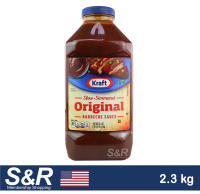
Kraft Original Slow-Simmered Barbecue Sauce 2.4kg
₱693.00
Buy on Lazada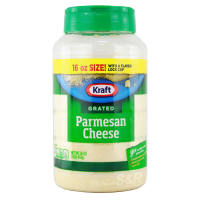
Kraft Grated Parmesan Cheese 453g
₱743.00
Buy on Lazada
453g Kraft Grated Parmesan Cheese 16oz
₱738.00₱739.00
8oz or 16oz Kraft Grated Parmesan Cheese
₱738.00₱739.00
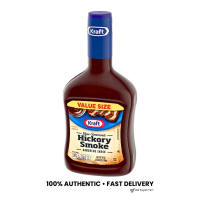
Kraft Slow Simmered Hickory Barbeque Sauce 1.10kg – Rich & Smoky Flavor
₱369.00₱417.00
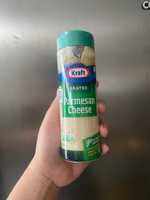
KRAFT PARMESAN CHEESE 435g & 226g (NEW PRODUCTS) MARCA PINA & CHIANTI PARMESAN CHEESS 227g
₱170.00
Buy on Lazada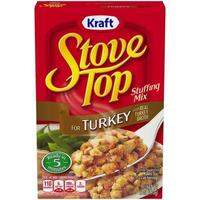
Stove Top Turkey Stuffing Mix 120g
₱549.00₱799.00
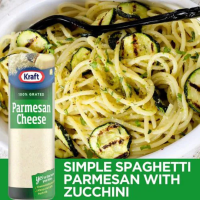
Kraft 100% Grated Parmesan Cheese
₱255.00
Buy on LazadaAbout Kraft
Kraft is an American food brand with deep roots in the early 20th-century cheese industry. Its origins trace back to James Lewis Kraft, who established a wholesale cheese distribution business in Chicago in 1903. Over more than a century, the Kraft name has become synonymous with processed cheese, cheese slices, macaroni and cheese, salad dressings, and various other packaged foods.
It is essential to distinguish between Kraft as a consumer brand and the former corporate entity Kraft Foods Inc. The original conglomerate was divided in the 2010s; today, Kraft-branded cheese and grocery products in the United States and Canada fall under The Kraft Heinz Company, while many other former Kraft Foods brands are now owned by Mondelēz International. 1
Infobox
| Information | Details |
|---|---|
| Brand name | Kraft |
| Origin | United States |
| Founded | 1903 |
| Founder | James L. Kraft |
| Original industry | Cheese distribution and production |
| Original base | Chicago, Illinois |
| Major category | Packaged food and dairy |
| Best known for | Cheese, processed cheese, Kraft Singles, macaroni & cheese |
| Current corporate home | The Kraft Heinz Company (for major U.S./Canadian products) |
| Historical predecessor | J.L. Kraft & Bros. Company |
| Notable historical products | Kraft Singles, Kraft Macaroni & Cheese, Velveeta, Philadelphia, Miracle Whip |
Corporate ownership varies by country and individual product line.
History
1903: The beginning
The history of Kraft begins with James L. Kraft, a Canadian-born entrepreneur who relocated to the United States and commenced cheese sales in Chicago in 1903. He initially operated a wholesale distribution business, utilizing a horse-drawn wagon to deliver cheese to local retailers. 2
Kraft identified a fundamental challenge in the trade: perishability. Cheese was difficult to transport and store, requiring retailers to restock frequently. His business model aimed to make distribution more reliable and convenient. Historical accounts indicate that the first year was financially devastating, with Kraft losing approximately $3,000 and his horse. Despite these early setbacks, the enterprise eventually achieved success. 3
1909: J.L. Kraft & Bros.
In 1909, four of Kraft’s brothers—Charles, Fred, Norman, and John—joined the enterprise, leading to the formation of J.L. Kraft & Bros. Company. 4 This period marked the transition of Kraft from a small-scale distributor into a manufacturer and developing food company.
1914–1916: Processed cheese
A pivotal innovation for the company was the development of a method for producing pasteurized processed cheese. In 1914, the company acquired its first cheese factory in Stockton, Illinois, enabling in-house manufacturing. By 1915, Kraft began producing processed cheese in tins, and James Kraft secured a U.S. patent for the process in 1916. 5
This technology was significant because processed cheese offered a longer shelf life and greater consistency compared to traditional varieties, facilitating easier packaging, transport, and storage. The product also proved strategically valuable during World War I, when Kraft supplied substantial quantities of processed cheese for military rations. 6
Expansion
During the 1920s, Kraft expanded well beyond its original Chicago operations. By 1914, the company was already marketing 31 varieties of cheese across the United States and had begun international expansion, establishing operations and sales activities in Europe and Australia. 7
Kraft also gained recognition for aggressive and innovative advertising strategies. The company utilized national advertising, billboards, and emerging mass marketing channels to build strong consumer recognition for the Kraft name. 8
1924
In 1924, J.L. Kraft & Bros. Company was renamed Kraft Cheese Company and became a publicly traded entity. 9
1928: Philadelphia and Kraft-Phenix
A major milestone occurred in 1928 when Kraft Cheese Company merged with Phenix Cheese Corporation, the maker of Philadelphia cream cheese. The combined entity was named Kraft-Phenix Cheese Corporation. 10 This merger allowed Kraft to diversify beyond standard cheese into a broader portfolio of dairy and packaged food products.
1930: Acquisition by National Dairy
In 1930, National Dairy Products Corporation acquired Kraft-Phenix, integrating it into a significantly larger food organization. Despite this, Kraft continued to operate as a distinct business and brand within the corporate structure.
By the early 1930s, Kraft-Phenix had become a dominant force in the American cheese market. According to the Encyclopedia of Chicago, the company supplied approximately 40% of the cheese consumed in the United States during this period. 11
Diversification
While cheese remained central to its identity, Kraft increasingly diversified into other food categories. By 1945, the business was renamed Kraft Foods Company to reflect its broadening product portfolio. 12
Over subsequent decades, products and brands associated with the Kraft organization included:
- Processed cheese
- Cheese spreads
- Cheese slices
- Macaroni and cheese
- Salad dressings
- Mayonnaise
- Margarine
- Cream cheese
- Other packaged foods
Prominent names linked to the historical Kraft organization include Velveeta, Philadelphia, and Miracle Whip. 13
Kraft Singles
One of the most recognizable products bearing the brand name is Kraft Singles, individually wrapped processed cheese slices. The concept originated from experiments by Norman Kraft, James Kraft’s younger brother, who developed a method for producing cheese slices in 1935. Subsequent advancements enabled continuous production. 14
Kraft introduced commercially packaged sliced cheese in the 1950s, and Kraft Singles in their modern individually wrapped format debuted in stores in 1965. 15 The product subsequently became closely associated with American-style grilled cheese sandwiches, burgers, and convenience meals.
Kraft Macaroni & Cheese
Another flagship product is Kraft Macaroni & Cheese. Introduced in the 1930s, this packaged concept combined dried pasta with processed cheese, catering to consumers seeking inexpensive, convenient, and shelf-stable meals. 16 It remains one of the most recognizable packaged food products in North America. In Canada, the product is widely known as Kraft Dinner (KD).
Corporate evolution
The corporate history of Kraft is complex, as the Kraft brand and the Kraft Foods corporation have not always been synonymous.
1969
National Dairy Products changed its corporate name to Kraftco Corporation. 17
1976
Kraftco was renamed Kraft, Inc. 18
1980
Kraft merged with Dart Industries to form Dart & Kraft. The two companies separated again in 1986.
1988–1989
In 1988, Kraft was acquired by Philip Morris, which already owned General Foods. The following year, Kraft and General Foods were combined to create Kraft General Foods. 19 This created a massive packaged-food company with a portfolio extending far beyond Kraft’s original cheese business.
Kraft Foods
Throughout the 1990s and early 2000s, the Kraft name became associated with a vast multinational food portfolio. In 2000, Philip Morris acquired Nabisco, integrating many of its brands into the Kraft Foods organization.
In 2001, Philip Morris began reducing its ownership stake in Kraft Foods through a public offering, although it initially retained control. 20 Kraft Foods grew to become one of the world’s largest packaged-food companies. Its historical portfolio included major brands such as:
- Kraft
- Oreo
- Cadbury
- Nabisco
- Philadelphia
- Oscar Mayer
- Maxwell House
- Ritz
- Chips Ahoy!
- Trident
- Milka
- Toblerone
It is important to note that many of these brands are no longer part of the Kraft company today.
2012: The major split
A defining moment occurred in 2012 when Kraft Foods Inc. was split into two independent companies. The North American grocery business became Kraft Foods Group, while the global snacks business became Mondelēz International. Consequently, brands such as Oreo, Cadbury, Milka, Toblerone, and Trident became associated with Mondelēz rather than the Kraft grocery entity. Describing every former Kraft Foods brand as a “Kraft brand” today is therefore inaccurate.
2015: Kraft Heinz
In 2015, Kraft Foods Group merged with H.J. Heinz Company to form The Kraft Heinz Company. 21 This union brought the Kraft and Heinz names together under a single corporate organization. The resulting company owns or operates numerous major food brands, with Kraft remaining particularly significant in cheese and grocery categories. Kraft Heinz cites over 150 years of combined food-industry heritage, reflecting the distinct histories of both predecessor companies.
Kraft today
Today, Kraft functions primarily as a consumer food brand rather than as the multinational conglomerate that existed during the peak Kraft Foods era. Major Kraft-branded products currently include:
Cheese
- Kraft Singles
- Kraft natural cheese
- Kraft shredded cheese
- Kraft cheese products
Meals
- Kraft Macaroni & Cheese
- Other packaged pasta and meal products
Dairy and related foods
- Cheese spreads
- Processed cheese products
- Other refrigerated grocery products
The specific product lineup varies substantially by market. For instance, Kraft-branded products in the United States and Canada are primarily connected with Kraft Heinz, whereas many brands historically associated with Kraft Foods now belong to other corporations.
Brand identity
Kraft’s identity has historically been anchored in several core concepts:
- Convenience: Kraft helped transform cheese and other perishables into products that could be easily packaged, transported, and stored.
- Consistency: Processed-food technology allowed for standardized taste, texture, and appearance.
- Affordability: Products were positioned as accessible everyday staples rather than luxury items.
- Family meals: Advertising frequently linked products to home cooking, children, and simple recipes.
- American food culture: The brand became associated with quintessential American dishes such as grilled cheese sandwiches, macaroni and cheese, and cheeseburgers.
Innovation
Innovation has been central to Kraft’s history. Early processed-cheese technology solved practical preservation issues, while later developments introduced sliced cheese and convenient packaged meals. The company’s advertising was also notably innovative for its time, leveraging mass media to establish a recognizable consumer brand. 22
The company’s trajectory reflects a broader transformation in the food industry: the shift from locally produced, perishable goods toward standardized, packaged, and nationally distributed foods.
Relationship between Kraft, Kraft Foods and Kraft Heinz
The corporate lineage can be summarized as follows:
James L. Kraft’s cheese business (1903)
↓
J.L. Kraft & Bros. Company (1909)
↓
Kraft Cheese Company
↓
Kraft-Phenix
↓
National Dairy Products
↓
Kraftco / Kraft Inc.
↓
Kraft General Foods
↓
Kraft Foods
↓
Kraft Foods Group + Mondelēz (2012)
↓
Kraft Foods Group + Heinz → Kraft Heinz (2015)
The critical distinction is that while the Kraft brand survived these reorganizations, the controlling company and the collection of associated brands changed repeatedly.
Cultural significance
Kraft holds a significant place in food history beyond mere manufacturing. It helped popularize the concept that traditionally perishable foods could be processed, standardized, packaged, and marketed nationally. James L. Kraft’s preservation technology was particularly influential; Harvard Business School credits him with helping develop the large-scale processed-food industry and notes that his methods played a vital role in expanding cheese consumption in the United States.
The brand subsequently became deeply embedded in everyday food culture, particularly through staple products like Kraft Singles and Kraft Macaroni & Cheese.
Summary
Kraft is a historic American food brand founded from James L. Kraft’s 1903 Chicago cheese business, famous for pioneering processed cheese and later becoming synonymous with convenient packaged foods, while its former corporate parent evolved through numerous mergers and ultimately contributed to the creation of The Kraft Heinz Company.
References
- James L. Kraft – Leadership – Harvard Business School
- Kraft Inc.
- Kraft Foods Inc. | Encyclopedia.com
- Kraft Foods Inc.
- Sliced Cheese History & About Us | KRAFT SINGLES | Canada | Kraft Heinz
- Kraft Dinner
- Made By Us | United States | Kraft Heinz
- The Kraft Heinz Company – HEINZ Relishes 150 Years
- khc-20251227
- khc-20241228
- sec.gov
- Kraft Foods from Oxford Encyclopedia of Food and Drink in America by Andrew F. Smith
- Kraft General Foods, Inc. | Encyclopedia.com
- Kraft General Foods Inc. | Encyclopedia.com
- Heinz – Our Story | Kraft Heinz | Heinz
- James L. Kraft – Who’s Who in Food
- Kraft Foods Inc. — Company History
- Kraft Foods
- The Kraft Heinz Company
- The Kraft Heinz Company
- Our Story | HP Sauce | United Kingdom | Kraft Heinz
- Golden Circle – About Us | Australia | Kraft Heinz