Shop on Lazada
Kubota products
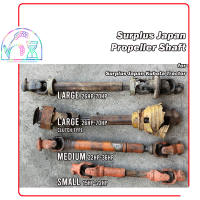
Propeller Shaft Surplus Japan for Kubota Yanmar Japan Tractors 1501 1802 2002 2202 2402 4202 15HP 22HP 36HP 70HP
₱15,999.00
Buy on Lazada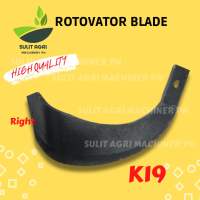
Rotovator Blade Tractor Blade K19 Kubota l500 L1802 L1801 L2202 L2402 L3202 L2000 L2602 Tiller Blade
₱158.00₱298.00
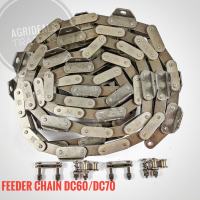
CONVEYOR FEEDER CHAIN ASSEMBLY PAIR(2pcs chain) KUBOTA DC60/DC70 HARVESTER
₱4,924.50
Buy on Lazada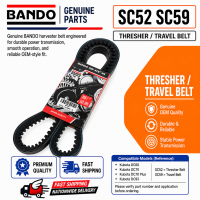
BANDO Kubota Harvester Belt DC70 DC70 PLUS SC52 SC59 Travel Thresher Belt Brand New
₱574.00₱1,999.00

GEAR DT 34-35 KUBOTA L3608 L4018 TC402-15123
₱3,568.95
Buy on Lazada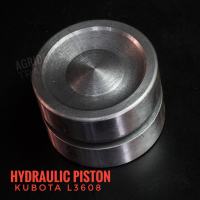
HYDRAULIC PISTON w/ BACKUP O-RING KUBOTA L3608 31321-37310
₱2,833.95
Buy on Lazada
KUBOTA FUEL FILTER 5T057-25610
₱900.00
Buy on Lazada
CYLINDER HEAD GASKET RK70 WITHOUT COPPER FOR KUBOTA
₱143.00
Buy on LazadaAbout Kubota
Kubota Corporation (株式会社クボタ, Kabushiki-gaisha Kubota), commonly known as Kubota, is a Japanese multinational manufacturer headquartered in Osaka, Japan. Established in 1890, the company originated as a small metal-casting workshop and has since evolved into a major global producer of agricultural machinery, construction equipment, industrial engines, and water and environmental infrastructure.
Kubota is widely recognised for its tractors, rice-farming machinery, combine harvesters, mini excavators, and compact diesel engines. However, its business scope extends significantly beyond agricultural equipment; water pipes and related infrastructure form part of the company’s original industrial heritage. As of 31 December 2025, Kubota Corporation reported consolidated revenue of ¥3.019 trillion and employed 52,503 people on a consolidated basis, with operations spanning more than 120 countries.1
Quick facts
| Category | Information |
|---|---|
| Official name | Kubota Corporation |
| Japanese | 株式会社クボタ |
| Romanization | Kabushiki-gaisha Kubota |
| Founded | February 1890 |
| Founder | Gonshiro Kubota |
| Headquarters | Osaka, Japan |
| Industry | Agricultural machinery, construction machinery, engines, water infrastructure, environmental solutions |
| Major products | Tractors, combine harvesters, rice transplanters, mini excavators, engines, pipes, valves |
| Employees | 52,503 consolidated (as of 31 Dec 2025) |
| 2025 consolidated revenue | ¥3,018.9 billion |
| President & CEO | Shingo Hanada |
| Chairman | Yuichi Kitao |
| Brand statement | “For Earth, For Life” |
| Core themes | Food, Water, Environment |
The company’s official profile lists capital of ¥84.1 billion as of 31 December 2025.2
Business overview
Kubota is an industrial technology company whose products are intrinsically linked to agriculture and infrastructure. While often identified primarily as a tractor manufacturer, the company’s operations encompass three core pillars:
Food
Kubota develops machinery and technologies designed to support food production, including:
- Tractors
- Rice transplanters
- Combine harvesters
- Agricultural implements
- Vegetable and crop machinery
- Precision-agriculture systems
- Autonomous and automated agricultural machinery
- Agricultural engines
Water
With a history in water infrastructure dating back to the 1890s, Kubota manufactures:
- Ductile iron pipes
- Pipe fittings
- Valves
- Water-treatment equipment
- Wastewater-treatment systems
- Water-management technologies
Environment and living
The company also develops technologies for:
- Waste treatment
- Environmental engineering
- Urban infrastructure
- Construction
- Industrial equipment
- Recycling and resource circulation
Kubota identifies these three areas—food, water, and the environment—as essential components of human life and the primary fields in which it addresses social challenges.3
History
Foundation and early casting works
Kubota was established in Osaka in 1890 when Gonshiro Kubota, then aged 19, founded a small metal-casting business. Originally named Ohde Casting, the workshop produced cast-metal products such as fittings and weights for weighing scales.4 Contrary to common assumptions, the company did not begin with tractors or farm machinery but with metal casting.
Transition to water infrastructure
During the late 19th century, Japan underwent rapid modernisation while facing severe public health crises, including cholera outbreaks. As modern water infrastructure became critical, the country remained reliant on imported iron pipes due to repeated failures in domestic manufacturing. Beginning in 1893, Gonshiro Kubota worked to develop domestic production of cast-iron water pipes. After years of experimentation, he successfully improved casting methods to produce pipes suitable for waterworks.5
In 1897, the company was renamed Kubota Iron Works and expanded its iron-pipe and waterworks businesses.6 This early success established a technological foundation that persists today; Kubota eventually became a major manufacturer of ductile iron pipes and water infrastructure systems, with pipe technology spanning over a century and current products ranging from approximately DN80 to DN2600.7
Diversification and agricultural machinery
In the early 20th century, Kubota diversified beyond casting and pipes into weighing equipment, industrial components, engines, and agricultural machinery. This expertise in metalworking and casting proved vital as Japanese agriculture began to mechanise. The company developed machinery specifically suited to Japanese rice farming, which required compact and manoeuvrable equipment for smaller farms. Key products included rice transplanters, combine harvesters, small and medium tractors, and diesel engines.
Over time, Kubota expanded from Japan into other Asian markets, and subsequently into North America and Europe. As of 31 December 2025, the company reported cumulative global tractor production exceeding 6.1 million units.8
Core product lines
Rice farming specialisation
Kubota distinguishes itself through comprehensive support for rice agriculture, covering land preparation, planting, crop management, and harvesting. Its portfolio includes tractors, rice transplanters, combine harvesters, implements, agricultural engines, and precision-farming technologies. The company is one of few agricultural machinery manufacturers with significant involvement in both rice farming and dry-field farming.9
Tractors
Kubota tractors range from compact models to larger agricultural machines used for crop production, landscaping, municipal work, construction support, hay and livestock operations, and general farming. The brand is characterised by compact design for confined spaces, extensive diesel-engine expertise, mechanical reliability, and specialisation in Asian cropping systems.
Construction equipment
Kubota is a major manufacturer of compact construction machinery, particularly mini excavators. Other products include compact excavators, compact track loaders, skid steer loaders, and attachments. According to Off-Highway Research data for 2025, Kubota has been the world’s leading seller of mini excavators for 24 consecutive years.10 This positions the brand at the intersection of agriculture, construction, and industrial engines.
Industrial engines
Kubota produces approximately 3,800 types of industrial engines as of late 2025.11 These power agricultural and construction machinery, generators, pumps, lawn equipment, and OEM machinery. Strategically, this allows Kubota to supply power sources for equipment manufactured by other companies, extending its reach beyond its own branded machines.
Water and environmental systems
The water business encompasses ductile iron pipes, fittings, valves, and water-supply systems. Environmental activities include wastewater treatment, water purification, waste treatment, recycling technologies, and environmental engineering. This connects Kubota’s operations from food production on farms to urban water infrastructure.
Global operations
Although founded in Japan, Kubota’s transformation into a global enterprise accelerated from the late 20th century onwards. The company has developed a structure centred on Japan, North America, Europe, and Asia, with manufacturing, sales, and service operations in numerous countries.12 Today, Kubota operates in more than 120 countries,13 with significant international presence in the United States, Canada, Europe, China, Thailand, India, Vietnam, and other Asian markets.
Presence in Southeast Asia
Thailand serves as a key base for Kubota’s Asian agricultural business. As mechanised agriculture expanded in the region, Kubota established a strong market position. In 2009, it became the first Japanese company to commence local tractor production in Thailand,14 reflecting a strategy of developing and manufacturing products close to end markets rather than relying solely on exports from Japan.
Corporate philosophy and brand identity
Kubota’s global brand statement, “For Earth, For Life”, reflects the view that its products address fundamental human needs. The corporate philosophy focuses on food, water, the environment, sustainable development, and improving quality of life. The company describes itself as an “Essentials Innovator for Supporting Life,”15 framing its diverse businesses—from tractors and water pipes to wastewater systems and industrial engines—as interconnected parts of a system supporting daily life.
This philosophy traces back to founder Gonshiro Kubota, who emphasised that technology should serve society, difficult problems should be tackled directly, products must have practical value, and innovation should contribute to people’s lives. The corporate spirit centres on using technical capabilities to address unknown challenges and create societal prosperity.16
Technology and innovation
Kubota’s technology portfolio extends beyond its public image as a tractor manufacturer. Key areas include mechanical engineering, casting (dating to 1890), diesel engines, hydraulics, automation, ICT-based precision agriculture, and environmental engineering.
Autonomous and digital agriculture
To address labour shortages, ageing farming populations, and productivity demands, Kubota is investing in autonomous tractors, automated machinery, precision agriculture, data-driven farming, and connected services. Automated and unmanned machinery are central to achieving labour-saving agricultural operations.17
Electrification and low-carbon technology
Responding to the transition away from fossil fuels, Kubota’s engine business is developing technologies for improved fuel efficiency, electrification, hybrid systems, low-carbon fuels, and hydrogen. These efforts aim to meet stricter emissions regulations and global carbon neutrality goals, addressing technological shifts affecting its traditional strength in compact diesel engines.
Product categories overview
| Business | Examples |
|---|---|
| Agriculture | Tractors, combines, rice transplanters |
| Implements | Mowers, tillers, loaders and attachments |
| Construction | Mini excavators, compact track loaders, skid steers |
| Engines | Compact diesel and industrial engines |
| Water | Ductile iron pipes, valves, water systems |
| Environment | Wastewater, waste treatment, environmental engineering |
| Digital agriculture | Precision farming, ICT, automation |
Competitive landscape
Kubota competes with different manufacturers depending on the segment. In agricultural machinery, major competitors include John Deere, CNH Industrial, AGCO, Yanmar, and ISEKI. In construction equipment, it competes with Caterpillar, Komatsu, Hitachi Construction Machinery, and Takeuchi, though the competitive landscape varies by country and machine size.
Kubota’s competitive advantages stem from over 130 years of manufacturing experience beginning with casting, specialised expertise in compact machinery and small industrial engines, deep knowledge of both rice and dry-field farming,18 dual revenue streams from proprietary and OEM engines, extensive global dealer networks, and diversification across food, water, and environmental sectors.
Current status
As of its latest corporate profile, Kubota Corporation reports 52,503 consolidated employees, consolidated revenue of ¥3.019 trillion for FY2025, capital of ¥84.1 billion, and operations in more than 120 countries.19 Headquartered in Osaka, the company maintains an extensive international network of subsidiaries, factories, dealers, and offices.
While often perceived as a tractor manufacturer, Kubota is strategically an industrial technology company focused on food, water, and the environment. Its businesses connect agriculture to food production, water infrastructure to clean water supply, construction to infrastructure development, engines to industrial power, and environmental systems to resource management. This breadth underpins its positioning as an Essentials Innovator for Supporting Life.20
Timeline
| Year | Event |
|---|---|
| 1890 | Gonshiro Kubota establishes a casting business in Osaka |
| 1893 | Begins developing cast-iron water pipes |
| 1897 | Develops improved pipe-casting technology; company becomes Kubota Iron Works |
| 1900s | Expands iron-pipe production and waterworks equipment |
| 1910s | Expands manufacturing and exports |
| 1920s | Expands machinery and weighing-equipment businesses |
| 20th century | Diversifies into agricultural machinery and engines |
| Late 20th century | Accelerates international expansion |
| 2000s | Builds major business bases in Japan, North America, Europe and Asia |
| 2009 | Begins local tractor production in Thailand |
| 2020 | Celebrates 130 years |
| 2021 | Launches long-term GMB2030 vision |
| 2025 | Records ¥3.019 trillion consolidated revenue and 52,503 employees |
Historical timeline based on Kubota corporate archives and current corporate information.21
References
- Corporate Profile | For Investors | Kubota Global Site
- Kubota’s Business Divisions and Advantages | For Investors | Kubota Global Site
- Our Business | Corporate information | Kubota Global Site
- Our History | KUBOTA DIGITAL ARCHIVES | Kubota Global Site
- [[Chapter 2] Realizing his wishes by starting a casting works in the corner of an old house. | Founder Stories | KUBOTA DIGITAL ARCHIVES | Kubota Global Site](https://www.kubota.com/corporatehistory/stories/c2/)
- [[Chapter 3] Success at the domestic production of cast iron pipes for waterworks, something that had been though an almost impossible task | Founder Stories | KUBOTA DIGITAL ARCHIVES | Kubota Global Site](https://www.kubota.com/corporatehistory/stories/c3/)
- Corporate History | Corporate Information | Kubota Global Site
- Ductile Iron Pipes | Products & Solutions | Kubota Global Site
- Business Expansion over the past 30 Years | KUBOTA DIGITAL ARCHIVES | Kubota Global Site
- Kubota Global Identity | Corporate Information | Kubota Global Site
- Release of the Kubota Report 2026 | News | Kubota Global Site
- Business Report for Shareholders | For Investors | Kubota Global Site
- Release of the Kubota Group Integrated Report and ESG Report 2025 | News 2024 | Kubota Global Site
- KUBOTA DIGITAL ARCHIVES | Kubota Global Site
- Pipe System | EVOLUTION OF KUBOTA TECHNOLOGY | Kubota Global Site
- Ductile Iron Pipes | Products & Solutions | Kubota Global Site
- Electronic Equipped Machinery | EVOLUTION OF KUBOTA TECHNOLOGY | Kubota Global Site
- Corporate Information | Kubota Global Site
- Corporate Information | Kubota Global Site
- Pipe System | EVOLUTION OF KUBOTA TECHNOLOGY | Kubota Global Site
- About Kubota | Corporate Information | Kubota Global Site