Shop on Lazada
LEUCHTTURM1917 products
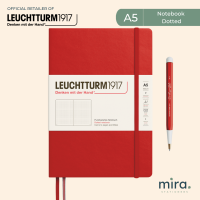
Leuchtturm1917 - A5 Dotted Notebook Hardcover Leuchtturm
₱2,000.00
Buy on Lazada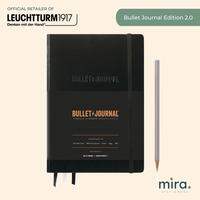
Leuchtturm1917 - Bullet Journal Edition 2.0 (Black)
₱2,420.00
Buy on Lazada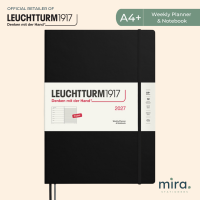
Leuchtturm1917 - 2027 Weekly Planner & Notebook Hardcover Leuchtturm
₱3,000.00
Buy on Lazada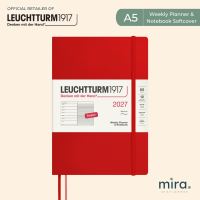
Leuchtturm1917 - 2027 Weekly Planner & Notebook Softcover Leuchtturm
₱2,350.00
Buy on Lazada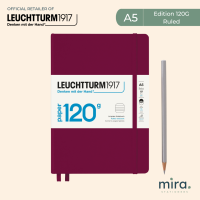
Leuchtturm1917 - Edition 120G Notebook A5 Ruled Hardcover Leuchtturm
₱2,300.00
Buy on Lazada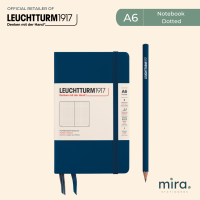
Leuchtturm1917 - A6 Dotted Notebook Hardcover Leuchtturm
₱1,500.00
Buy on Lazada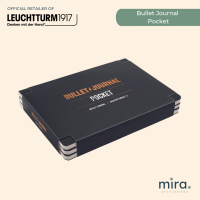
Leuchtturm1917 - Bullet Journal Pocket in Black Flexcover (Pack of 3) Leuchtturm
₱1,750.00
Buy on Lazada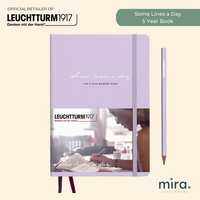
Leuchtturm1917 - Some Lines A Day 5-Year Memory Diary Hardcover Leuchtturm
₱2,550.00
Buy on LazadaAbout LEUCHTTURM1917
Overview
LEUCHTTURM1917 is a German premium stationery brand recognized for its notebooks, journals, planners, writing instruments, and organizational accessories. The brand operates as part of the family-owned LEUCHTTURM Gruppe, a company with corporate roots tracing back to 1917. LEUCHTTURM1917 merges traditional bookmaking expertise with minimalist design, functional details, and a distinct color palette 1.
The name LEUCHTTURM translates to “lighthouse” in German, while 1917 marks the year the company’s history began. Although the modern LEUCHTTURM1917 stationery brand was launched in 2005, its heritage spans more than a century 1.
| Field | Information |
|---|---|
| Brand name | LEUCHTTURM1917 |
| Industry | Stationery, writing instruments, paper goods |
| Origin | Germany |
| Heritage founded | 1917 |
| Modern stationery brand | 2005 |
| Parent company | LEUCHTTURM Gruppe GmbH & Co. KG |
| Headquarters | Geesthacht, Schleswig-Holstein, Germany |
| Company type | Family-owned |
| Current generation | Fourth generation |
| Key owners/managers | Axel Stürken and Max Stürken |
| Core products | Notebooks, journals, planners, pens and accessories |
| Brand philosophy | “Thinking with the hand” |
| International presence | Available in more than 80 countries |
The group employs approximately 500 people across five sites, with over 300 based at the German headquarters. LEUCHTTURM1917 products are distributed in more than 80 countries.
1917: The beginning
The company’s story started in 1917 in Aschersleben, in what is now Saxony-Anhalt, Germany. Paul Koch, a lithographer and experienced philatelist, co-founded a publishing business that became known as KABE, an abbreviation derived from Koch und Bein. The company’s primary products included stamp albums.
This origin distinguishes LEUCHTTURM1917 from companies that began specifically as notebook manufacturers; its roots lie in the specialized manufacture and publishing of collector albums.
1930s: The first major change
During the 1930s, Paul Koch was forced to sell his original company due to financial reasons. The KABE business continued under different ownership thereafter.
1948: LEUCHTTURM is established
Following World War II, Paul Koch founded a new company in Hamburg in 1948, named the Leuchtturm Albenverlag. Similar to his earlier venture, this business focused on albums, particularly those for stamp collectors.
Two key dates define the company’s historical timeline:
- 1917 — The start of Paul Koch’s publishing enterprise and the group’s historical roots.
- 1948 — The founding of the Leuchtturm publishing company in Hamburg.
1950s–1970s: Expansion
In 1956, the company relocated its headquarters to Geesthacht near Hamburg. In 1959, Hamburg businessman Wolfgang Schön became managing partner, initiating a period of organizational restructuring.
Kurt Stürken joined the business in 1962, working with Schön to expand export activities. By 1972, Stürken had become a shareholder and partner. The Stürken family subsequently played a central role in the company’s development.
1997: KABE and LEUCHTTURM reunited
A significant milestone occurred in 1997 when LEUCHTTURM acquired KABE, reuniting the two publishing businesses originally connected to Paul Koch. That same year, Axel Stürken assumed the role of managing partner.
2003: Max Stürken joins management
Max Stürken, son of Kurt Stürken, became managing partner in 2003, joining Axel in leading the family business.
2005: Birth of LEUCHTTURM1917
The most critical date for the modern brand is 2005. According to the LEUCHTTURM Gruppe’s history, Philip Döbler joined the company in 2005 and developed the LEUCHTTURM1917 stationery brand. This marked the company’s evolution from a collector-album publisher to a major player in premium stationery.
Name Meaning
The brand name is deliberately historical. Leuchtturm means “lighthouse” in German, reflecting the company’s northern German/Hanseatic heritage, while 1917 represents the year the company’s history began 1. Conceptually, the name signifies a modern brand carrying the heritage of a company founded in 1917. It emphasizes historical roots rather than using an invented contemporary name, giving the brand a distinctly German identity.
Key Products and Features
LEUCHTTURM1917 is particularly famous for hardcover notebooks and journals that combine:
- Minimalist appearance
- High-quality paper
- Numbered pages
- Table of contents
- Page markers
- Elastic closure
- Expandable back pocket
- Perforated pages
- Label stickers
- Multiple sizes
- Large color selection
Current paper stock is generally 80–100 g/m² FSC-certified, featuring a slightly chamois-colored tone 3.
The Classic Notebook
The Classic Notebook is arguably the product most strongly associated with LEUCHTTURM1917. Its design philosophy differs from simple school notebooks; it is engineered as a long-term system for capturing and organizing information.
Typical features include:
- Numbered pages
- Blank contents/index pages
- Two ribbon page markers
- Elastic closure
- Expandable pocket
- Perforated detachable pages
- Sticker set for labeling and archiving
- Thread binding
- Paper designed to allow the notebook to open flat 3
These small organizational features reflect the company’s philosophy that a notebook is not merely paper bound between covers, but an information-management tool.
The Drehgriffel
One of the brand’s best-known writing instruments is the Drehgriffel. Its design draws inspiration from historical mechanical writing instruments while maintaining a modern appearance. The name is German: Dreh means turn/twist, and Griffel means stylus/writing instrument. Versions include the Drehgriffel Nr. 1 and Nr. 2, as well as special editions 3.
Bullet Journal Edition
LEUCHTTURM1917 has a significant relationship with the Bullet Journal method. The company produces an official Bullet Journal Edition, designed around the principles of Ryder Carroll’s productivity system. This product combines LEUCHTTURM1917’s physical characteristics—such as numbered pages and indexing—with features tailored for Bullet Journal users 3. This helped position the brand within the broader productivity, journaling, and personal-organization market.
Design Philosophy
LEUCHTTURM1917’s design is characterized as minimalist, functional, and systematic. The company emphasizes three major characteristics:
Function
Features such as numbered pages, indexes, page markers, and pockets are intended to make the notebook useful as an organizational system.
Design
The visual language is clean and restrained rather than highly decorative.
Color
Color is one of the brand’s most recognizable traits. LEUCHTTURM1917 offers notebooks in a broad range of colors, allowing users to incorporate color into their organizational systems or personal identity.
Bauhaus Connection
The brand’s aesthetic aligns with Bauhaus principles: simplicity, functionality, geometric forms, and restrained visual design. LEUCHTTURM1917 explicitly celebrated this connection through its Bauhaus Edition, describing clean forms and functional details as shared principles. The minimalism is connected to the idea that form should serve function.
Brand Philosophy: “Thinking with the hand”
A defining idea behind LEUCHTTURM1917 is its philosophy of “Thinking with the hand.” The company argues that handwriting is more than recording information; it allows thoughts to develop into words, images, ideas, projects, and memories 1.
Consequently, products are marketed not simply as “things for writing,” but as tools for thinking, recording, organizing, creating, and remembering.
Market Position and Personalization
LEUCHTTURM1917 occupies a position in the premium stationery market. It is more premium than ordinary mass-market notebooks but remains relatively accessible compared to highly specialized luxury paper goods. The brand’s appeal lies in the combination of quality, design, functionality, collectability, and personalization.
Personalization is a key element of its premium positioning. LEUCHTTURM1917 offers name embossing on certain products, allowing a notebook to become a personal possession or gift. This service is listed in the company’s FAQ 2. This fits the philosophy of notebooks as long-term companions rather than disposable items.
Relationship with LEUCHTTURM Gruppe
It is important to distinguish LEUCHTTURM1917 from the larger LEUCHTTURM Gruppe. The group has a broader portfolio rooted in:
- Philatelic products
- Numismatic products
- Collecting accessories
- Stationery
- Writing instruments
- Lifestyle products
- Mail-order retail
The group describes LEUCHTTURM1917 as its brand focused on notebooks and calendars, while other brands within the wider group operate in different areas.
Family Ownership
The company remains a family-owned business associated with the Stürken family. Axel and Max Stürken represent the fourth generation of family leadership and have been involved in managing the business since the 1990s 1. The company describes its heritage in terms of long-term thinking, continuity, and responsibility, linking these values to its northern German/Hanseatic background.
Headquarters
The LEUCHTTURM Gruppe’s headquarters are located in Geesthacht, in Schleswig-Holstein, near Hamburg, Germany. The company moved there in 1956 and has maintained its headquarters there ever since.
International Presence
Although German in origin, LEUCHTTURM1917 is an international brand available in more than 80 countries. It operates through an international distribution network with company sites in Germany, the United States, Canada, Sweden, and China.
Sustainability
Sustainability is integrated into product development. For current notebooks, LEUCHTTURM1917 highlights FSC-certified paper and responsible materials. The company emphasizes product longevity: a notebook intended to be kept, organized, and archived for years creates a different consumption model from disposable stationery. This philosophy connects the company’s long history as a family business with long-term responsibility toward employees, partners, and production processes.
Why the Brand Became Popular
LEUCHTTURM1917’s popularity results from several factors:
- Strong Product Identity: The Classic Notebook is immediately recognizable due to its consistent visual identity, including format, elastic band, colored cover, ribbons, and organizational features.
- Functional Details: Numbered pages and indexes make notebooks useful for research, planning, journaling, and project management.
- Color Variety: A large selection of colors allows users to express personal style and organize different notebooks.
- Stationery Culture: The growth of journaling, Bullet Journaling, fountain-pen writing, and analog productivity has created a community interested in premium paper products.
- Heritage: The company’s history dating back to 1917 provides a narrative that newer companies cannot replicate.
- Lifestyle Positioning: The brand sells the idea of handwriting as part of creativity, reflection, and personal organization 1.
Timeline
1917 — Paul Koch establishes the KABE publishing house in Aschersleben.
1930s — Paul Koch sells his original company.
1948 — Koch establishes the Leuchtturm Albenverlag in Hamburg.
1956 — The company relocates to Geesthacht near Hamburg.
1959 — Wolfgang Schön becomes managing partner.
1962 — Kurt Stürken joins the business and helps build its export operation.
1972 — Kurt Stürken becomes a shareholder and partner.
1997 — LEUCHTTURM acquires KABE, reunifying the two publishing companies associated with Paul Koch; Axel Stürken becomes managing partner.
2003 — Max Stürken becomes managing partner.
2005 — Philip Döbler develops the LEUCHTTURM1917 stationery brand.
2010s–2020s — The brand expands its notebook, planner, writing-instrument, Bullet Journal, and special-edition portfolio.
Today — LEUCHTTURM1917 operates as an internationally distributed premium stationery brand within the family-owned LEUCHTTURM Gruppe.
Summary
LEUCHTTURM1917 is a German premium stationery brand belonging to the family-owned LEUCHTTURM Gruppe. Its history traces back to 1917, when lithographer and philatelist Paul Koch founded the KABE publishing house in Aschersleben, while the Leuchtturm publishing business itself was established by Koch in Hamburg in 1948. After decades of specializing in collector albums, the company evolved under the Stürken family and, in 2005, developed LEUCHTTURM1917 as a dedicated stationery brand. Today, the brand is best known for its notebooks, journals, planners, and writing instruments, distinguished by minimalist design, extensive color choices, and functional details such as numbered pages, contents pages, ribbons, pockets, and perforated sheets. Its central philosophy—“Thinking with the hand”—positions handwriting as a tool for thinking, creativity, organization, and memory. With distribution in more than 80 countries, LEUCHTTURM1917 has developed from a traditional German publishing heritage into a prominent contemporary premium stationery brand 1.