Shop on Lazada
Lexon products
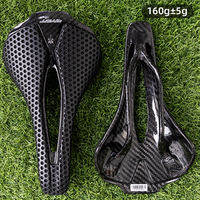
RYET 3D Printed Bicycle Saddle Ultralight 120g Carbon Saddle 250x140mm Bike Seating for MTB Gravel Road Bike Seat Cycling parts
₱3,512.59₱4,566.37
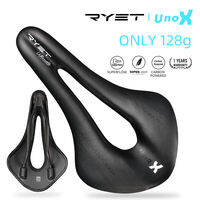
RYET Carbon Leather Saddle Ultralight Road Bike MTB Racing Pu Soft Seat Cushion Bicycle OVAL RAIL7*9 Seating Cycling Accessories
₱1,625.45₱2,113.09
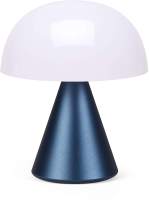
LEXON Mina M Portable LED Light w Dimmer | Water Resistant 9 Color Changing Lights Rechargeable
₱3,490.00
Buy on Lazada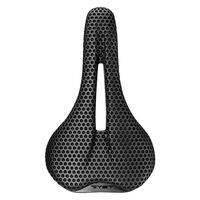
RYET Carbon 3D Printed Saddle Ultralight Bicycle Seating Cushion Men Women Bike Saddles Road MTB Mountain Gravel Cycling Parts
₱3,903.06₱5,073.98

Elevos MTB Dropper Seatpost 31.6mm 125mm/150mm Down Pull Internal Cable Remote Control Adjustable Suspensin Seatpost
₱4,270.32₱5,551.42
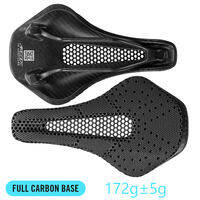
RYET 3D Printed Bicycle Saddle Ultralight Carbon Fiber Hollow Comfortable Breathable MTB Gravel Road bike Cycling Seat Parts
₱4,173.33₱5,425.33
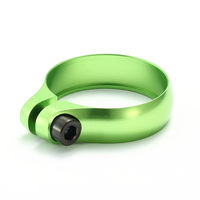
Ultralight Titanium Bicycle Seat Post Clamp CNC Alloy Saddle Seat Post Clamp for 31.8/ 34.9 mm Mountain Bike Seatpost Parts
₱418.73₱628.09
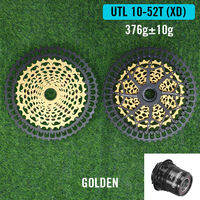
SPEDAO 10-50T 11-50T 10-52T Speed Bicycle Cassette 12V MTB Bike Freeewheel 12S Mountain Sprocket XD HG Cassette for SX NX GX
₱8,153.37₱10,599.38
About Lexon
Overview
Lexon is a French design house established in 1991 by entrepreneur René Adda. The brand is recognised for reimagining common everyday items—including alarm clocks, radios, lamps, speakers, office accessories, and travel goods—as compact, visually distinctive design objects. Its core philosophy centres on making products useful, beautiful, innovative, and accessible, rather than treating design as an exclusive domain of museums or luxury interiors.1
As of 2026, the company reports over 35 years of heritage, more than 250 design awards, and distribution in 90 countries.1
| Field | Information |
|---|---|
| Brand | Lexon |
| Founded | 1991 |
| Founder | René Adda |
| Origin | France |
| Headquarters / base | France, near Paris |
| Industry | Industrial design, consumer electronics, lifestyle products |
| Core philosophy | Useful + beautiful + innovative + accessible |
| Main categories | Clocks, audio, lamps, chargers, office, wellness, travel & accessories |
| Design approach | Minimalist, functional, colourful, playful, and contemporary |
| Global presence | 90+ countries |
| Retail network | About 9,000 points of sale1 |
| Design recognition | 250+ awards1 |
| Notable designers | Marc Berthier, Philippe Starck, Mathieu Lehanneur, Eugeni Quitllet, Guillaume Delvigne, Neil Poulton |
| Famous products | Tykho, Flip, Mino, Mina |
History
Origins: René Adda
The origins of Lexon lie with founder René Adda, who came from a family business trading Japanese lighters. Rather than pursuing a traditional academic path, Adda developed an interest in manufacturing, international sourcing, and product development. In his early twenties, he travelled extensively through Japan, Taiwan, and Korea, gaining familiarity with Asian manufacturing capabilities and beginning to modify and redesign products himself.2
This experience proved foundational to the eventual Lexon model. Instead of manufacturing generic consumer goods, Adda sought to combine industrial production with professional design. In the late 1980s, he left the family business to establish an earlier design brand before founding Lexon in 1991. He selected a name intended to sound international, with the letter “X” adding a contemporary character. His central concept was to collaborate with professional designers to give everyday products a stronger identity.2
Core proposition
Lexon was established around a straightforward proposition: taking ordinary objects and redesigning them to become desirable. Rather than focusing purely on technical specifications, the brand places significant emphasis on shape, proportions, colour, tactile qualities, and visual simplicity. Consequently, a Lexon product often resembles a piece of contemporary design more than conventional consumer electronics. The company describes its original mission as reinventing common products to make them more aesthetic, easy to use, and accessible to a broad audience.
Design philosophy
Lexon’s identity sits at the intersection of industrial design, consumer technology, lifestyle, and French aesthetics. The brand generally avoids making technology visually dominant; instead, it integrates technology into simple physical forms. A clock may be designed around a strong geometric shape rather than appearing as a traditional electronic device, while a speaker might be reduced to a small sculptural object. Similarly, a lamp can function simultaneously as lighting equipment and a decorative item.
The stated philosophy is built around creating objects that are useful, beautiful, innovative, affordable, easy to use, and visually distinctive. This approach has remained consistent since the company’s founding.1
Design language
While there is no single “Lexon style” due to collaboration with numerous designers, several recurring characteristics define the brand’s output.
Minimalism
Many products reduce objects to their essential visual elements. Buttons, screens, controls, and mechanisms are frequently integrated into the overall form rather than being visually separated.
Strong geometry
Circles, rectangles, cylinders, rounded corners, and symmetrical forms appear frequently. This results in products that are often immediately recognisable even without visible branding.
Colour
Colour is integral to the brand’s identity. Rather than restricting products to black, white, or metallic finishes, Lexon frequently uses bright or unusual colours. Its collaboration with Pantone, for example, explicitly focuses on combining products with Pantone’s recognisable colour system.
Playfulness
The brand does not equate serious design with conservative aesthetics. Some products are deliberately playful, compact, and almost toy-like, while still functioning as sophisticated consumer goods.
Integrated technology
A recurring characteristic is the attempt to make technology feel natural rather than technical. Speakers are designed as attractive objects, alarm clocks as interior design pieces, and lamps as items that remain aesthetically pleasing when switched off.
Designers
A key differentiator for Lexon is its designer network. Rather than adhering to a single aesthetic, the company collaborates with designers from different countries and generations, describing this as an eclectic international network. Notable designers associated with Lexon include Marc Berthier, Philippe Starck, Mathieu Lehanneur, Eugeni Quitllet, Guillaume Delvigne, and Neil Poulton. This approach allows the brand to navigate different visual languages while retaining its broader philosophy, functioning less as a single designer’s style and more as a platform for design.
Iconic products
Tykho
The Tykho radio is arguably the most historically significant Lexon product. Designed by Marc Berthier, it transformed a simple radio into a brightly coloured, highly sculptural object. Its cultural significance was reinforced when Tykho appeared on the cover of Time Magazine on March 20, 2000, in an issue highlighting the renaissance of design. Maison&Objet describes this as a major breakthrough for the company.2 It exemplifies the Lexon approach of making mundane objects iconic through design. The product family continues today with the Tykho 3 speaker/radio.
Flip
The Flip alarm clock is another major success, distinguished by its reversible interface. One side indicates the alarm function while the other presents the opposite state, making interaction intuitive. It embodies the principle that good design should explain how an object works through the object itself. The Flip Classic remains in the current range.
Mino
Mino is a miniature Bluetooth speaker designed around portability and compactness. Rather than resembling conventional audio equipment, it is deliberately styled as a small lifestyle object. The Mino+ is currently among the brand’s signature products.
Mina
Mina represents the brand’s direction in portable lighting. The family turns a small LED lamp into a decorative object suitable for carrying around the home or using in various environments. Multiple Mina sizes remain part of the current portfolio.
Product categories
Lexon has expanded considerably beyond its early radios and clocks. The current portfolio includes alarm clocks, audio products, portable and tabletop lamps, chargers, office accessories, wellness products, travel accessories, bags, and small everyday objects. The product strategy extends beyond consumer electronics, positioning Lexon as a design-led lifestyle brand.
Awards and recognition
Design awards are a significant part of Lexon’s history. As of 2026, the brand states it has received more than 250 design awards, including recognition from major international programmes such as the Red Dot Design Awards, iF Design Awards, and Good Design Awards.1 This achievement is notable because recognition has been granted for relatively ordinary consumer products rather than expensive furniture or architectural projects.
Collaborations
Lexon has expanded collaborations from industrial designers to include artists, cultural institutions, and major creative brands.
Pantone
The Lexon × Pantone collection applies Pantone’s distinctive colour vocabulary to several products, including Mino+, Flip Classic, Mina, Tykho 3, and Orbe.
Keith Haring
Collaboration with the Keith Haring Foundation has brought Haring’s recognisable visual language into everyday design products.
Jean-Michel Basquiat
The brand has worked with the Estate of Jean-Michel Basquiat, combining the artist’s identity with Lexon’s everyday objects.
Jeff Koons
A high-profile collaboration with Jeff Koons includes the Balloon Dog lamp and speaker. This project turns Koons’s famous motif into functional design objects, described by Lexon as a meeting between contemporary art and everyday design.1
Business model
Lexon occupies a space between mass-market consumer goods and collectible design. It does not position itself as a traditional luxury maison; instead, its proposition is closer to designer objects that ordinary consumers can actually use. Products are sold through design stores, department stores, concept stores, museum retail, online retail, corporate gifting, and promotional channels. The company also maintains a significant business-gifting operation where design-oriented products can be customised for companies.
Global presence
Although fundamentally French in identity, Lexon’s business is highly international. Products are sold in 90 countries, with millions of units sold and a network of thousands of retail locations. The French brand page cites approximately 9,000 points of sale.1 Lexon also operates or has operated shop-in-shop presences in major French department stores, including Galeries Lafayette, BHV, and Le Bon Marché. This international reach defines the brand as French in design heritage but global in manufacturing, distribution, and audience.
Lexon and French design
Lexon is part of a broader French tradition of industrial and everyday-object design. Rather than focusing exclusively on furniture or high-end decorative objects, the company applies design thinking to products encountered daily. This democratises the idea of a “designed object,” allowing a €40–€100 clock, lamp, or speaker to become a design object without requiring the purchase of collectible furniture. This philosophy has enabled Lexon to build a recognisable identity over several decades.
Brand positioning
Lexon is positioned between consumer electronics, design products, lifestyle accessories, and accessible design. It differs from Bang & Olufsen as it is not primarily an audio company, and from Alessi despite sharing a tradition of transforming household objects into design statements. Unlike conventional luxury brands, accessibility and everyday usefulness remain central. The brand’s territory is best described as French-designed objects for everyday life, a positioning that has remained stable since 1991.1
Lexon today
As of 2026, Lexon presents itself as a French design house with more than 35 years of history, over 250 design awards, an international designer network, and products sold in 90 countries.1 Current collections cover clocks, audio, lighting, charging, office, wellness, and travel. Collaborations such as Lexon × Pantone and Lexon × Jeff Koons demonstrate the brand’s movement into the intersection of design, art, culture, and lifestyle.1
The central proposition has changed little over three decades: taking everyday items, simplifying them, enhancing their beauty, giving them personality, and making good design accessible. Lexon is a French design brand founded by René Adda in 1991 that became internationally known for turning everyday products such as radios, clocks, lamps, and speakers into affordable, functional, and visually distinctive design objects through collaborations with leading international designers.1