Shop on Lazada
M&M’s products
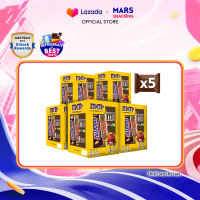
Mars Daily Delights Chocolates Box | M&Ms Snickers and Twix 98g (Bundle of 5) | Imported Chocolates
₱594.00₱599.00
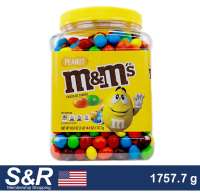
M&Ms Peanut Chocolate Candies 1757.7g
₱1,486.00
Buy on Lazada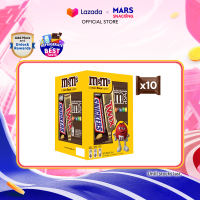
Mars Daily Delights Chocolates Box | M&Ms Snickers and Twix 98g (Bundle of 10) | Imported Chocolates
₱1,187.00₱1,198.00
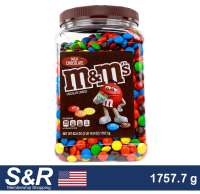
M&Ms Milk Chocolate Candies 1757.7 g
₱1,885.00
Buy on Lazada![M&Ms® Milk Chocolate Links 14.5g [Bundle of 50] | Imported Chocolates | Case Selling](https://ph-live.slatic.net/p/c6404cca24b1f60f8189a9b38f45e52b.jpg_200x200q80.jpg)
M&Ms® Milk Chocolate Links 14.5g [Bundle of 50] | Imported Chocolates | Case Selling
₱1,007.00₱1,017.00
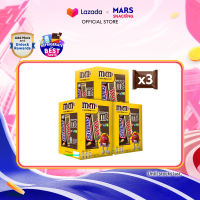
Mars Daily Delights Chocolates Box | M&Ms Snickers and Twix 98g ( Bundle of 3 ) | Imported Chocolates
₱357.00₱360.00
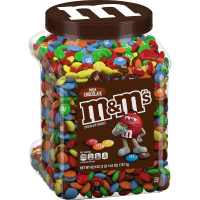
M&M Milk Chocolate Pantry Size 62 Ounce Jar (1.76kg)
₱1,999.00₱2,023.50
![M&Ms® Milk Chocolate Links 14.5g [Bundle of 10] | Imported Chocolates | Chocolate Bundle for Christmas Gift Ideas](https://ph-live.slatic.net/p/5152d27502831232cefecea6538ac6d1.jpg_200x200q80.jpg)
M&Ms® Milk Chocolate Links 14.5g [Bundle of 10] | Imported Chocolates | Chocolate Bundle for Christmas Gift Ideas
₱202.00₱204.00
About M&M’s
M&M’s is an American confectionery brand best known for its small, colourful chocolate candies encased in a hard candy shell. Owned by Mars, Incorporated, it stands as one of the company’s most prominent global snack brands.1 The candies are instantly recognisable by their distinctive round shape, bright colours, printed lowercase “m”, and the anthropomorphic characters featured in advertising and branding.1
Basic information
| Category | Details |
|---|---|
| Brand | M&M’s |
| Industry | Confectionery / snacks |
| Product type | Chocolate candies and related confectionery |
| Founded | 1941 |
| Origin | United States |
| Parent company | Mars, Incorporated |
| Founding company | M&M’s Limited |
| Headquarters / corporate parent | United States |
| Original product | M&M’s Plain Chocolate Candies |
| Major markets | Global |
| Best known for | Colourful chocolate candies with a hard shell |
| Official website | mms.com |
History
Origins
M&M’s was introduced in 1941 when Forrest E. Mars Sr. established M&M’s Limited in Newark, New Jersey.1 The original product was marketed as M&M’s Plain Chocolate Candies. The concept was commercially significant: enclosing chocolate in a protective candy shell made it easier to handle and carry without melting.
The brand also has historical ties to the U.S. military. Records indicate that the first M&M’s Plain Chocolate Candies were produced for the U.S. military in 1941, helping to establish the product as a durable chocolate snack.1
The name “M&M’s”
The brand name derives from the surnames of the founders: Mars and Murrie. Forrest Mars Sr. represented the Mars family business, while Bruce Murrie was the son of William Murrie, then president of Hershey. This partnership combined Mars’ confectionery expertise with access to chocolate production capabilities.
The famous “m”
A defining feature of M&M’s is the tiny lowercase “m” printed on every candy. By around 1950, the brand had achieved sufficient popularity that imitation products became a concern. In response, M&M’s added an identifying “m” to each piece, accompanied by the slogan “Look for the m on every piece.”1
Originally printed in black, the letter was later changed to white, creating the visual identity strongly associated with the modern brand. This mark serves multiple purposes:
- Identifies the candy as an authentic M&M’s product
- Provides a distinctive visual identity for each piece
- Reinforces brand recognition without packaging
- Functions as one of the most recognisable marks in the confectionery industry
Product development
While M&M’s began with plain chocolate candies, the range has expanded significantly over the decades.
1950s — Peanut M&M’s
In 1954, M&M’s introduced Peanut Chocolate Candies, featuring a whole peanut beneath the chocolate and candy shell.1 This variant became one of the brand’s most important products and demonstrated that the format could be adapted to different fillings.
1980s — International expansion
During the 1980s, M&M’s expanded into international markets including Asia-Pacific, Australia, Europe and Russia. In 1989, Peanut Butter M&M’s were introduced in the United States.1
1990s — More colours and formats
The 1990s saw significant experimentation with personalisation and colour. M&M’s Colorworks offered consumers a wide array of candy colours, while M&M’s Minis entered production in 1997.1
2000s — Personalisation
M&M’s increasingly integrated physical products with digital customisation. The My M&M’s service allowed consumers to personalise candies with messages and, subsequently, photographs.1 This development shifted the brand’s positioning from a standard packaged confection to a potential personalised gift and event product.
2010s and beyond
New flavours and formats continued to launch; for example, M&M’s Caramel Candies were introduced in 2017.1 Mars currently lists varieties including Milk Chocolate, Peanut, Dark Chocolate, Almond and Peanut Butter, although specific product ranges vary by market.1
Colours
Colour is a defining characteristic of M&M’s. Rather than producing uniform batches, the brand uses multiple colours within its products to create visual distinction and variety.
Colour has also served as a marketing tool. In 1995, blue was introduced as a new colour in the United States, marked by illuminating the Empire State Building in blue.1 In 2002, a global consumer vote selected purple as a new colour over aqua and pink, with approximately 10 million ballots reported.1 This initiative reinforced the idea of direct consumer participation in the brand’s evolution.
The M&M’s characters
Beyond the candy itself, the fictional M&M’s characters are central to the brand’s identity. The candies are anthropomorphised into distinct personalities, allowing advertising campaigns to treat different colours and varieties as characters in comedic narratives.
Key characters include:
- 🔴 Red — confident, sarcastic and self-assured
- 🟡 Yellow — friendly, innocent and somewhat naïve
- 🟢 Green — historically associated with a flirtatious personality
- 🟤 Brown — sophisticated and composed
- 🔵 Blue — cool, laid-back and confident
- 🟣 Purple — introduced as a new character in the 2020s
Ms. Brown made her major debut during the 2012 Super Bowl, becoming another prominent figure in the brand’s advertising universe.1 These characters effectively transform M&M’s from a food product into an entertainment-oriented brand.
Advertising and brand personality
Humour has historically been a central marketing strategy for M&M’s. Advertisements frequently depict the candies as living characters interacting with humans and each other, rather than focusing exclusively on taste.
This approach offers several advantages:
- Memorability: Characters make advertisements easier to recognise.
- Personality: Each colour represents a distinct attitude or trait.
- Storytelling: Campaigns can revolve around conflicts, jokes and relationships.
- Cross-generational appeal: Characters appeal to children while humour targets older audiences.
Consequently, the overall brand image is associated with fun, humour, colour, personality and sharing.
M&M’s and popular culture
M&M’s has maintained a significant presence in popular culture through various high-profile associations.
Space
In 1981, M&M’s chocolate candies were selected as part of the food supply for the first Space Shuttle astronauts, making M&M’s the first candy in space according to Mars.1 This remains one of the brand’s most famous historical milestones.
Olympics
In 1984, M&M’s Plain and Peanut Chocolate Candies became the “Official Snack Foods of the Olympic Games.”1
FIFA World Cup
In 1990, M&M’s chocolate candies were among the Mars brands announced as official sponsors of the football World Cup in Italy.1
These partnerships elevated M&M’s beyond ordinary supermarket confectionery into major international events.
M&M’s as a global brand
Although originating in the United States, M&M’s has become a truly international brand. Mars states that its iconic snack brands, including M&M’s, are enjoyed in more than 180 countries.1
Product ranges and branding often vary between countries. Different markets may receive distinct:
- Flavours
- Package sizes
- Seasonal products
- Colours
- Promotional campaigns
- Limited editions
This strategy allows M&M’s to maintain a consistent global identity while adapting to local preferences.
M&M’s and Mars, Incorporated
M&M’s is a key brand within Mars, Incorporated, the privately held global company behind numerous food, confectionery and pet-care labels. Mars lists M&M’s alongside brands such as Snickers, Skittles, Twix, Milky Way, Extra and Maltesers.1
The company describes M&M’s as one of its iconic snack brands, identifying the colourful, shell-covered chocolate pieces as the core of the product.1
My M&M’s and personalisation
My M&M’s represents one of the brand’s most innovative extensions. This service allows consumers to create customised products using different colours and personalisation options. Mars states the service offers 24 custom candy colours alongside options for personalised messages, photographs and themed designs.1
This makes M&M’s particularly suitable for:
- Birthdays
- Weddings
- Corporate events
- Parties
- Holidays
- Promotional merchandise
- Personalised gifts
The concept demonstrates how a mass-market confectionery product can function as a customisable gift product.
Brand identity
M&M’s possesses one of the most distinctive visual identities in the confectionery industry. Key elements include:
The “m”
The lowercase m printed on the candy functions as a miniature trademark.
Bright colours
Red, yellow, green, blue, orange, brown and other hues create an instantly recognisable appearance.
Rounded candies
The small, button-like shape distinguishes M&M’s visually from chocolate bars and many other confections.
Characters
Anthropomorphic candies provide an entire fictional world surrounding the product.
Humour
Advertising emphasises jokes, personality and entertainment rather than traditional product promotion.
Together, these elements ensure M&M’s remains recognisable even when packaging or the brand name is not immediately visible.
Major milestones
| Year | Event |
|---|---|
| 1941 | M&M’s Plain Chocolate Candies introduced |
| 1941 | M&M’s made for the U.S. military |
| 1950 | The famous “m” marking becomes an authenticity identifier |
| 1954 | Peanut M&M’s introduced |
| 1981 | M&M’s becomes the first candy in space |
| 1984 | M&M’s becomes an Official Snack Food of the Olympic Games |
| 1989 | Peanut Butter M&M’s introduced in the U.S. |
| 1995 | Blue M&M’s introduced in the U.S. |
| 1997 | M&M’s Minis enter production |
| 2002 | Global colour vote selects purple |
| 2004 | My M&M’s customisation service launched |
| 2008 | Photo personalisation added |
| 2012 | Ms. Brown debuts at the Super Bowl |
| 2017 | M&M’s Caramel introduced |
| Today | M&M’s operates as a major global Mars confectionery brand |
Factors in brand success
Several factors contribute to the brand’s longevity:
1. A simple core product
The fundamental concept is easy to understand: chocolate surrounded by a colourful shell.
2. Strong visual recognition
Colours, shape and the lowercase “m” make the candy immediately identifiable.
3. Product variety
The brand introduces new flavours and fillings without abandoning its basic identity.
4. Strong characters
Red, Yellow, Brown and other characters provide an identity extending beyond food.
5. Customisation
My M&M’s allows the product to function as a personalised gift as well as a snack.
6. Global marketing
M&M’s has repeatedly connected itself with major cultural events, entertainment and international markets.
7. Long history
Having existed since 1941, the brand has accumulated decades of consumer recognition and nostalgia.1
Cultural significance
M&M’s represents a particular approach to consumer-brand storytelling. While many confectionery brands focus primarily on taste, ingredients or quality, M&M’s sells a world of characters, colours and humour alongside the product itself.
The product is the candy; the brand is the world surrounding the candy.
This distinction is a primary reason M&M’s has remained culturally recognisable across generations.
Summary
M&M’s is a global confectionery brand originating in the United States in 1941 and owned by Mars, Incorporated.1 It began with plain chocolate candies designed around a protective shell and grew into a vast international brand encompassing multiple flavours, colours, products, characters and personalisation services.1
Its most significant brand assets include its colourful appearance, lowercase “m,” distinctive characters and humorous advertising style.1 Historical milestones include becoming the first candy in space, participating in major sporting events, expanding internationally and introducing consumer-selected colours.1
Today, M&M’s remains one of Mars’ flagship snack brands, recognised worldwide as a symbol of chocolate, colour, fun and playful brand personality.1