Shop on Lazada
Majorette products
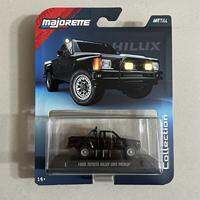
Collectible Alloy Car Model 1/64
₱661.00
Buy on Lazada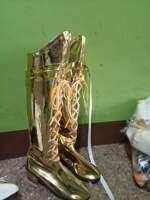
MAJORETTE BOOTS PHP800 16 TO 2INCHES
₱1,350.00
Buy on Lazada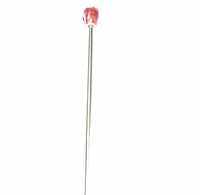
MAJORETTE Baton Twirler 18inch 20” 22” and 25 inches metal rods with colored tops white tips
₱100.00
Buy on Lazada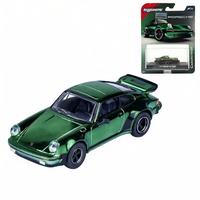
Diecast Alloy Model Cars
₱1,097.00
Buy on Lazada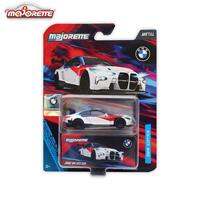
Replica Alloy BMW Model Car Toy
₱854.00
Buy on Lazada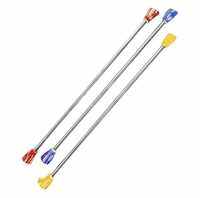
MAJORETTE BATON TWIRLER 25inch
₱130.00
Buy on Lazada
MAJORETTE- RANDOM CARS 2PCS FOR 199
₱199.00
Buy on Lazada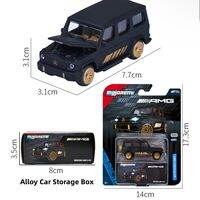
Majorette |AMG A35 G63 SL63 Simulation Alloy Mini Car
₱693.00
Buy on LazadaAbout Majorette
Overview
Majorette is a French-origin toy and die-cast model vehicle brand best known for its small metal cars, trucks, emergency vehicles, construction equipment, racing cars, and playsets. Founded in Lyon, France, in 1961 by Émile Véron, it has grown into one of Europe’s most recognised names in small-scale die-cast vehicles. Since 2010, Majorette has been owned by the German Simba Dickie Group.1
Today, the brand occupies a unique position bridging children’s toys and collector-grade die-cast models. Its vehicles are generally around 7.5 cm long and marketed in the 3-inch scale, with many models corresponding approximately to the familiar 1:64 category.2
Basic Information
| Field | Information |
|---|---|
| Brand | Majorette |
| Origin | France 🇫🇷 |
| Founded | 1961 |
| Founder | Émile Véron |
| Original company | Rail-Route Jouets |
| First Majorette cars | 1964 |
| Name adopted | 1967 |
| Industry | Toys and die-cast collectibles |
| Main products | Die-cast cars, trucks, emergency vehicles, construction vehicles, racing vehicles, playsets |
| Typical size | About 7.5 cm / 3 inches |
| Parent company | Simba Dickie Group |
| Parent since | 2010 |
| Major production base | Thailand |
| Main audience | Children from age 3 and collectors |
| Heritage | French |
The Simba Dickie Group currently describes Majorette as a 3-inch die-cast vehicle brand, emphasising its metal construction, licensed replicas, playsets, and dual appeal to both children and collectors.3
Origins: Rail-Route
The history of Majorette began in 1961 when French entrepreneur Émile Véron established a company called Rail-Route in Lyon. Initially, the firm focused on model railway products rather than miniature cars; the name “Rail-Route” reflected this dual interest in railways and road vehicles.
Véron was already a significant figure in French model manufacturing, having previously co-founded Norev, another renowned French miniature-vehicle manufacturer, alongside his brothers Joseph and Paul.4 This experience helped shape the direction that would eventually define Majorette: producing relatively small, affordable models of real-world vehicles.
The Birth of Majorette Cars
A pivotal moment arrived in 1964 with the release of the first small cars under the Majorette name. The company gradually shifted its focus away from model railways towards miniature road vehicles, and by 1967, it had officially adopted the Majorette name.5
This transition marked the beginning of the brand’s characteristic product line: small, predominantly metal, mass-market miniature vehicles designed for both play and collecting. This concept placed Majorette in direct competition with brands such as Matchbox, while its French origins provided a strong connection to European automobiles.
The French Miniature-Car Era
Throughout the 1960s and 1970s, Majorette established itself as a leading miniature-car manufacturer in France. Its models frequently depicted vehicles that European children saw on local roads, making French manufacturers and cars particularly central to the brand’s identity.
Over time, Majorette expanded its catalogue to include a broad range of international manufacturers from Europe, America, and Japan. This diversification helped transform it from a domestic French toy company into an international miniature-vehicle brand.6 The models were typically compact enough to be inexpensive and portable for children, while their metal bodies offered significantly greater durability than standard plastic toys.
Distinctive Characteristics
Majorette’s identity developed around several key features that distinguished it from competitors.
Metal Construction
Traditional Majorette vehicles feature a die-cast metal body combined with plastic components for the interior, windows, chassis, and wheels. The company continues to emphasise metal construction and durability as core elements of its brand identity.7
Small Scale
Specialising in compact vehicles approximately 7.5 cm in length, Majorette currently describes its principal portfolio as being in the 3-inch scale.8 This places the brand in the same general market segment as Matchbox and other small-scale die-cast manufacturers.
Real-World Vehicles
Rather than focusing exclusively on fantasy designs, Majorette has traditionally based its products on recognisable real-world vehicles. Its catalogue encompasses passenger cars, SUVs, vans, trucks, buses, police vehicles, fire engines, ambulances, construction equipment, racing cars, commercial vehicles, and special-purpose vehicles. The modern brand also produces coordinated playsets centred around these vehicle types.9
Playability
Majorette is not solely a collector’s brand. Features such as opening doors, suspension systems, and moving components have historically been incorporated to ensure the vehicles function as engaging toys rather than merely static display models.10 This dual identity as both a toy and a collectible remains one of Majorette’s defining characteristics.
Growth in the 1970s
Majorette continued to expand throughout the 1970s. A significant milestone occurred in 1976 when the company produced its first television advertising campaign for its die-cast cars. Television advertising helped establish miniature vehicles as a mass-market children’s product and strengthened Majorette’s visibility within France.11 By this period, the company had evolved beyond a small French model manufacturer into a significant toy-car brand with international ambitions.
Acquisition of Solido
One of the most consequential events in Majorette’s history took place in 1980 with the acquisition of Solido, another historic French model-vehicle manufacturer. Solido held a strong reputation for detailed, collector-oriented models. The acquisition united two important traditions within French miniature vehicles: Majorette’s smaller, accessible, play-focused die-cast vehicles and Solido’s more detailed scale models aimed at collectors.
During the 1980s, Majorette also expanded into advertising and promotional models.12 The connection to Solido remains a significant chapter in the broader history of both brands.
Expansion into Thailand
Another major transformation occurred in 1987 when production was transferred to Thailand. Thailand eventually became the central manufacturing hub for Majorette, reflecting the broader shift in the late 20th-century toy industry as European manufacturers increasingly moved large-scale production to Asia.
According to the Simba Dickie Group, most Majorette products are currently manufactured by approximately 600 employees at a 13,000 m² facility in Thailand, although some playsets continue to be produced at the Smoby factory in France.13
Diversification and Financial Challenges in the 1990s
The 1990s proved considerably more difficult for Majorette. The company diversified beyond conventional miniature cars, introducing garages, vehicles with lights and sound, expanded playsets, and other toy categories. However, by 1992, Majorette encountered serious financial difficulties and entered insolvency proceedings.
In 1993, the company was acquired by Idéal Loisirs, which subsequently came under the control of Triumph-Adler in 1996. This decade marked a major transition from Majorette’s status as an independent French company to its modern existence within larger corporate structures.
Developments in the 2000s
During the early 2000s, Majorette continued to broaden its product range to include model railways, radio-controlled vehicles, playsets, and other toys. In 2003, Majorette and Solido became part of the Smoby Group, operating under the name Smoby Majorette.
However, the new organisation also faced financial instability and entered insolvency in 2007. In 2008, the French investment company MI 29 acquired Majorette, though this ownership period was relatively short-lived.
Simba Dickie Group Acquisition
The most significant modern turning point occurred in 2010 when Majorette joined the Simba Dickie Group. This acquisition integrated Majorette into a major international toy group whose portfolio includes Simba, Dickie Toys, Smoby, BIG, Schuco, Jada Toys, Märklin, Eichhorn, and Zoch. For Majorette, this provided access to extensive resources, global distribution networks, and manufacturing infrastructure.
The 2011–2012 Thailand Floods
A critical event in Majorette’s modern manufacturing history unfolded around 2011–2012 when the company’s Thai factory was severely affected by monsoon flooding. The facility was subsequently rebuilt with new machines, moulds, and production equipment. This reconstruction served as an opportunity to modernise Majorette’s manufacturing capabilities.
The 2015 Relaunch
Following its integration into the Simba Dickie Group, Majorette underwent a substantial product and visual refresh. By 2015, the company had almost completely revised its product range and introduced new packaging and retail presentation concepts.
The objective was to reposition Majorette for a new generation while retaining the core characteristics that made the brand recognisable: metal construction, realism, playability, and collectability.
Majorette in the 2020s
In recent years, Majorette has increasingly positioned itself as a brand combining play, collecting, and automotive culture rather than simply a producer of inexpensive toy cars. The company has developed dedicated retail experiences such as Build Your Car stores, where customers can participate directly in creating and customising their own miniature vehicles. According to the Simba Dickie Group, the first Build Your Car flagship store opened at Europa-Park in Rust, with additional locations following later.14
60th Anniversary
In 2024, Majorette celebrated its 60th anniversary. The milestone was marked by exclusive products and a brand campaign honouring six decades of miniature vehicles.15 This longevity is notable, as relatively few die-cast brands have maintained such continuous presence across multiple generations of children and collectors.
2025 Brand Relaunch
In 2025, Majorette underwent another significant brand relaunch. According to the Simba Dickie Group, this initiative involved a new brand identity, a modernised visual image, greater emphasis on emotional retail experiences, digital interaction with the community, and new product presentation concepts. The updated positioning retains the brand’s traditional emphasis on metal vehicles while aiming to make Majorette more relevant to contemporary collectors and younger consumers.16
The current slogan is:
“READY FOR THE RIDE? Genuine. Genuine metal. Genuine MEGA!”
This messaging deliberately highlights the brand’s metal construction and energetic character as both a toy and a collectible.17
Product Philosophy
Majorette’s modern philosophy can be summarised through four core pillars.
Authenticity
The company seeks to reproduce real vehicles and their distinctive designs rather than creating generic toy cars. Licensed automotive brands form an essential part of the range.18
Durability
Metal construction remains central to the brand’s identity. A Majorette car is intended to withstand ordinary children’s play while remaining attractive enough for adult collectors.
Playability
Majorette does not attempt to reproduce every detail of a real car at the expense of play value. Opening parts, suspension systems, playsets, and accessories ensure the products remain interactive.
Collectability
Simultaneously, Majorette appeals to collectors through different colours, limited or special editions, licensed models, variations, series, detailed liveries, and themed sets. This gives the brand an unusual position straddling the toy aisle and the collector shelf.
Scale
One aspect of Majorette that can cause confusion is its scale. While commonly associated with 1:64-scale die-cast cars, Majorette’s official modern description generally uses the term “3 Inch scale.”19
A three-inch car does not necessarily mean every model is exactly 1:64. Because real cars vary in dimensions, a fixed physical length means different models may have somewhat different actual scales. For example, a small city car and a large SUV may both be approximately 7.5 cm long despite substantially different real-world proportions. Therefore, it is more accurate to view modern Majorette as a 3-inch or approximately 1:64-class toy-car ecosystem rather than assuming mathematical precision across all models.
Comparison with Other Brands
Majorette is often discussed alongside Matchbox and Hot Wheels, but each brand possesses distinct characteristics.
| Brand | General Identity |
|---|---|
| Majorette | French-origin, realistic European vehicles, metal construction, play + collecting |
| Matchbox | Realistic everyday vehicles, strong emphasis on real-world subjects |
| Hot Wheels | Performance, fantasy, customization, racing and collector culture |
| Tomica | Japanese-origin, highly detailed small-scale vehicles |
| Siku | German-origin, robust die-cast toys with strong European vehicle coverage |
Majorette’s strongest cultural identity lies in its European and French heritage combined with realistic vehicles and rugged toy construction.
Significance of European Cars
Historically, Majorette’s relationship with European automobiles has been a key strength. French brands naturally occupy an important place in the company’s heritage, while European marques more broadly have provided a vast source of subjects. Consequently, older Majorette collections are particularly interesting to collectors focused on European automotive history, effectively serving as miniature snapshots of the cars that populated European roads across different decades.
Manufacturing Today
Majorette’s French identity can sometimes cause confusion because current production is not primarily located in France. Although the brand originated in Lyon, the majority of manufacturing now takes place in Thailand under the Simba Dickie Group’s infrastructure. Some playsets are still produced in France at the Smoby Toys factory in Arinthod.20
Thus, Majorette is best described today as a French-origin international brand rather than a purely domestic French manufacturer.
Quality and Construction
The company emphasises modern manufacturing technology, durability, and compliance with international toy-safety standards. According to the Simba Dickie Group, Majorette products are manufactured in the group’s own factories and tested according to its quality and safety requirements.21
Basic construction typically combines a die-cast metal body with a plastic chassis, interior, and components, along with wheels, axles, and printed or applied decoration. Higher-detail models may incorporate additional features and components.
Collectors and Vintage Models
Although Majorette began primarily as a children’s toy brand, vintage examples have developed a substantial collector following. Enthusiasts may focus on vintage French Majorette, early 1960s–70s models, 1980s releases, specific vehicle manufacturers, emergency and commercial vehicles, racing models, promotional items, rare colours, factory variations, packaging differences, limited editions, or unusual regional releases.
Condition is particularly important for older examples. A loose vintage car with heavy paint loss and missing parts may be worth significantly less than a rare example in excellent condition with original packaging.
Cultural and Historical Value
Vintage Majorette is collectible not merely due to age but because it provides an interesting record of European automotive culture. Collectors can use these models to explore how miniature manufacturers represented French domestic cars, European family cars, police fleets, fire departments, delivery vehicles, construction equipment, racing cars, and commercial transport. In this sense, Majorette sits at the intersection of toy history, industrial design, automotive history, and popular culture.
Corporate History Timeline
The ownership history of Majorette can be summarised as follows:
- 1961 — Rail-Route founded by Émile Véron
- 1964 — First Majorette cars released
- 1967 — Majorette becomes the official company name
- 1980 — Solido acquired
- 1987 — Production moves to Thailand
- 1992 — Insolvency
- 1993 — Acquired by Idéal Loisirs
- 1996 — Idéal Loisirs comes under Triumph-Adler
- 2003 — Majorette/Solido acquired by Smoby
- 2007 — Smoby Majorette insolvency
- 2008 — Acquired by MI 29
- 2010 — Acquired by Simba Dickie Group
- 2012 — Thai factory rebuilt after flooding
- 2015 — Major product and packaging relaunch
- 2024 — 60th anniversary
- 2025 — New brand identity and relaunch22
Current Status
As of 2026, Majorette remains an active brand within the Simba Dickie Group. Its current portfolio centres on 3-inch die-cast vehicles and playsets featuring licensed automobiles, emergency vehicles, construction vehicles, and racing models. The brand explicitly targets both children aged 3+ and collectors of all ages.23
Majorette’s greatest historical achievement is arguably its longevity. The brand has survived major changes in the toy industry, multiple ownership transitions, financial difficulties, production relocation, and shifting consumer tastes while retaining its core product: the small metal car.
References
- À propos de Majorette
- Discover the variety of Majorette
- About Majorette
- Majorette (entreprise)
- Émile Véron
- À propos de Majorette – fr.majorette.com
- Majorette (toy manufacturer)
- Our history | SIMBA DICKIE GROUP
- 1/64 Scale Diecast History: Origins & Top Brands | Motorsport Maranello
- Majorette (toy manufacturer) — Wikipedia Republished // WIKI 2
- Balado : la fascinante histoire des petites autos Majorette – Le Guide de l’Auto
- La fascinante histoire des petites autos Majorette | JDQ
- Miniature Curbside Classic: Spotlight On Majorette – Curbside Classic
- Odkryj różnorodność zabawek Majorette
- SIMBA DICKIE GROUP – We love to make toys
- Retrouvez des Collection en ligne | Majorette
- Toys for kids & toddlers | Official Majorette Shop
- Brands & Licenses | Majorette
- VINTAGE – MAJORETTE COLLECTION PREMIUM – Marques & Produits – fr.majorette.com
- Toys for kids & toddlers | Official Majorette Shop
- Über Majorette
- A proposito di Majorette – it.majorette.com
- Spielwaren & Spielzeug kaufen | Offizieller Majorette Shop