Shop on Lazada
Maisto products
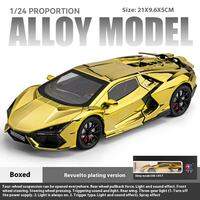
1:24 Lamborghini Revuelto Spray Plating Version With Water Spray Fog Effect Realistic Simulation Alloy Model Boy Gift
₱832.75₱1,469.56
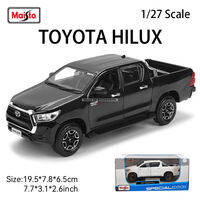
Maisto 1:27 New style Toyota Hilux simulation alloy car model crafts decoration collection toy tools gift
₱1,041.45₱1,715.92
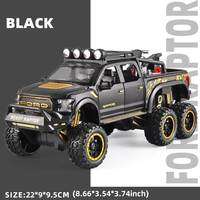
1:24 Pickup Trucks for Boys F150 Raptor Diecast Metal Model Car with Sound and Light for Kids Age 3 Year and up Blue
₱568.66₱1,054.26
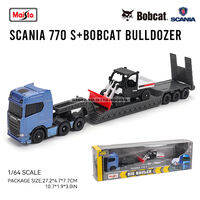
Maisto 1:64 SCANIA 770 S Volvo Forklift Transport Vehicle Excavator die-cast precision model car Model collection gift
₱630.36₱1,127.98

Maisto | Deco 118 Chevrolet Camaro 2016 Ss Model Car
₱3,369.29₱5,034.57
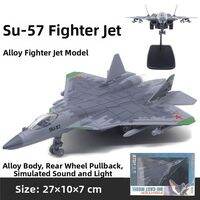
Realistic Military Model Toy
₱679.00
Buy on Lazada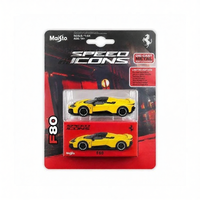
Maisto | 1/64 Scale Ferrari Replica Alloy Car Model
₱751.00₱1,315.00
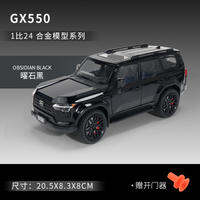
1:24 GX550 Off-Road Vehicle Sound and Light Model Ornament Toy Gift Diecast Alloy Car Model Collectible
₱1,012.99₱1,570.21
About Maisto
Maisto is an international brand best known for producing die-cast scale models, toy vehicles, and radio-controlled (RC) vehicles, particularly replicas of automobiles and motorcycles. The brand is part of May Cheong Group (MCG), a Hong Kong–based, family-owned toy and replica-vehicle manufacturer.
Maisto is especially recognizable among die-cast collectors because it combines licensed vehicle designs, relatively accessible prices, broad international distribution, and a large range of scales. Its products range from inexpensive small-scale toys to considerably more detailed collector-oriented models.
Overview
| Category | Information |
|---|---|
| Brand | Maisto |
| Parent company | May Cheong Group |
| Parent company founded | 1967 |
| Maisto brand registered | 1990 |
| Origins | Hong Kong |
| Major U.S. operation | Fontana, California |
| Industry | Toys, die-cast models, scale replicas, RC vehicles |
| Main products | Cars, motorcycles, trucks, aircraft and RC vehicles |
| Notable scales | 1:12, 1:18, 1:24, 1:43, 1:64 and others |
| Market | Children, hobbyists and collectors |
| Parent-company manufacturing | China |
| Other MCG brands | Bburago, Maisto Tech, Polistil, Muscle Machines, BB Junior |
The May Cheong Group says it operates factories in Dongguan and Shaoguan, China, with headquarters in Hong Kong and sales offices including the United States and France. The company says its products are distributed internationally and that it produces millions of vehicles annually.1
History
Early history: May Cheong
The story of Maisto really begins with May Cheong, rather than with the Maisto name itself.
May Cheong was founded in Hong Kong in 1967 by brothers P.Y. Ngan and Y.C. Ngan. The company began as a small toy factory with around 10 workers. According to May Cheong, the business eventually developed into a vertically integrated manufacturer of toys and replica vehicles.
During its early decades, the company manufactured toys and progressively expanded into die-cast vehicles. May Cheong states that 11 years after its founding, it produced its first die-cast toy and its first motorized die-cast vehicle in Hong Kong.2
The company subsequently expanded its manufacturing capabilities and international distribution.
1990: The Maisto name
A major milestone came in 1990, when the Maisto brand name was registered by May Cheong.3
This is an important distinction:
May Cheong Group is the parent company; Maisto is one of its brands.
The brand subsequently became associated particularly strongly with die-cast cars and motorcycles.
May Cheong also established Maisto International Inc. in Fontana, California, in 1992, helping establish a significant presence in the North American market.4
Why Maisto became important in die-cast collecting
One of Maisto’s major historical achievements was helping make larger-scale die-cast replicas more accessible.
May Cheong describes Maisto as the first Hong Kong company to produce the highly collectible 1:18 scale.5
The 1:18 format became particularly important because it provides enough physical size to reproduce features such as:
- opening doors
- opening hoods
- engine compartments
- detailed interiors
- steering wheels
- suspension components
- detailed wheels and brakes
- rubber tires
- exterior badges and trim
Maisto therefore occupied an interesting position between children’s toy vehicles and serious scale-model collecting.
Rather than concentrating exclusively on expensive premium models, the company built its reputation around making recognizable licensed vehicles available at comparatively accessible prices.
What does Maisto actually manufacture?
Although Maisto is most famous for cars, its product portfolio is broader.
Main categories include
Automobiles
- sports cars
- supercars
- hypercars
- classic cars
- muscle cars
- luxury cars
- racing cars
- SUVs
- pickup trucks
- modern production vehicles
Motorcycles
- sport bikes
- cruisers
- touring motorcycles
- classic motorcycles
- racing motorcycles
Commercial and specialty vehicles
- trucks
- emergency vehicles
- transport vehicles
- other specialized vehicles
Aircraft and other vehicles
Radio-controlled vehicles
Build-it-yourself models
The modern Maisto brand therefore isn’t simply a “model car company.” It is better described as a toy and scale-replica vehicle brand with a particularly strong position in die-cast automobiles and motorcycles.
Scale system
Scale is one of the defining characteristics of Maisto’s product range.
Common Maisto scales include:
1:18
One of Maisto’s historically significant formats.
A 1:18 car is approximately 18 times smaller than the real vehicle.
For example, a real 4.5-meter automobile would theoretically be around:
4.5 m ÷ 18 ≈ 25 cm
This scale is popular with collectors because the model is large enough to accommodate substantial exterior and interior detailing.
1:24
Another extremely common Maisto scale.
1:24 models are smaller and generally less expensive and space-consuming than 1:18 models.
They are arguably one of the most accessible formats for someone beginning a die-cast collection.
1:43
A traditional collector-car scale.
Because the models are considerably smaller, collectors can display many more vehicles in the same space.
1:64
The small-scale end of the range.
1:64 models compete more directly for the space traditionally occupied by small die-cast toy cars.
1:12
Large-scale motorcycles and selected vehicles can also be found in this format.
A 1:12 model is substantially larger than a 1:18 model and allows considerably more physical detail.
Maisto’s product philosophy
One of the most interesting things about Maisto is its position between mass-market toys and hobby models.
There are essentially three broad audiences:
Children
Maisto produces vehicles that can function primarily as toys.
Casual vehicle enthusiasts
Someone may simply want a miniature version of their favorite Porsche, Lamborghini, Ford, Mercedes-Benz, BMW, Ducati, etc.
Serious collectors
Collectors may care about:
- scale accuracy
- paint quality
- panel lines
- interior detail
- engine detail
- working suspension
- opening parts
- wheels
- brake details
- manufacturer licensing
- production variations
- packaging
- rarity
Maisto’s portfolio has historically attempted to serve all three groups.
Model detail
The level of detail varies substantially depending on the particular Maisto series and scale.
A more detailed Maisto model may feature:
- opening doors
- opening hood
- opening trunk
- steerable front wheels
- working suspension
- rubber tires
- detailed wheels
- brake discs
- brake calipers
- detailed engine
- detailed dashboard
- decorated seats
- carpeting effects
- interior door panels
- exterior logos
- transparent headlights and taillights
For example, Maisto’s own product material for models such as the Ford GT, Mustang GT and Audi R8 V10 Plus highlights features including detailed dashboards, interiors, engines, brake discs, calipers, steering wheels and suspension.6
This illustrates the basic Maisto philosophy: the model should visually communicate the identity and important mechanical/design features of the real vehicle without necessarily being positioned as a museum-grade miniature.
Licensed vehicles
Licensing is extremely important to Maisto.
Instead of creating generic vehicles that merely resemble real automobiles, Maisto produces officially licensed replicas of recognizable manufacturers and vehicle models.
Over the years, Maisto/May Cheong has worked with numerous automotive and entertainment properties.
Its product history has included vehicles associated with manufacturers such as:
- Ferrari
- Lamborghini
- Ford
- Mercedes-Benz
- Audi
- BMW
- Porsche
- Chevrolet
- Volkswagen
- Ducati
- Harley-Davidson
- and many others
Licensing arrangements can change over time, however, so a manufacturer appearing in an older Maisto catalog does not necessarily mean Maisto currently holds the same license in 2026.
A good example of the importance of licensing is Maisto’s historical work with Lamborghini, including models celebrating Lamborghini’s 50th anniversary.7
Maisto and Ferrari
Ferrari is a particularly interesting case in the history of the May Cheong Group.
In 2014, May Cheong announced an exclusive Ferrari license, with the company’s announcement indicating that the resulting replica products would be marketed through its Bburago operation.8
This is significant because it demonstrates that Maisto’s parent company does not treat all vehicle replicas as belonging exclusively under the Maisto name.
The group has multiple brands, and different products can be positioned under Maisto, Bburago or other MCG brands.
Maisto and Bburago
This is one of the most important relationships to understand if you’re interested in die-cast models.
Bburago is an Italian-origin die-cast brand that became part of May Cheong Group.
May Cheong acquired Bburago in 2005/2006; the company’s own historical materials identify the acquisition as part of the group’s expansion into the international scale-model market.
Today, Maisto and Bburago are two of the major brands within May Cheong Group.9
They are related, but they are not simply the same brand with different packaging.
Broadly speaking:
Maisto
→ broad toy/collector vehicle portfolio
→ cars, motorcycles, RC and other products
→ strong mass-market presence
Bburago
→ particularly strong identity in die-cast model cars
→ Italian heritage
→ extensive collector-oriented automobile portfolio
The distinction can become complicated because both brands operate across multiple scales and price points.
Maisto Tech
May Cheong later expanded into radio-controlled vehicles under Maisto Tech.
The parent company explains that, in the early 2000s, it recognized the increasing importance of technologically advanced toys and created Maisto Tech as a home for its radio-controlled products.10
Consequently, the Maisto name isn’t restricted to static die-cast models.
You can encounter:
Maisto
→ static scale replicas
Maisto Tech
→ RC vehicles
This allowed the company to participate in both traditional die-cast collecting and electronic/toy vehicle markets.
Other May Cheong brands
Maisto exists within a much larger brand ecosystem.
May Cheong Group currently identifies brands including:
- Maisto
- Bburago
- Maisto Tech
- Muscle Machines
- BB Junior
- Polistil11
Muscle Machines
May Cheong acquired the tooling and intellectual property of Muscle Machines in 2012. The line is known for exaggerated, stylized American muscle-car designs rather than conventional realistic replicas.
Polistil
Polistil is another historic Italian vehicle/toy brand that became part of the May Cheong portfolio.
BB Junior
BB Junior is focused more toward younger children and preschool vehicles and was launched by MCG in 2017.
Manufacturing
Maisto is fundamentally a large-scale industrial manufacturer, rather than a small artisanal model-maker.
Its parent company operates large manufacturing facilities in China. May Cheong currently identifies factories in Dongguan and Shaoguan, while its corporate headquarters are in Hong Kong.14
This manufacturing scale is a major reason Maisto can produce large quantities of models at relatively accessible prices.
The production process involves many stages, including broadly:
- vehicle licensing
- product research
- CAD/design work
- tooling
- die casting
- plastic-component production
- painting
- printing/decal application
- assembly
- quality control
- packaging
- international distribution
The exact process differs by product.
Die-cast construction
The term die-cast refers primarily to the manufacturing process used to produce metal components.
A metal alloy is injected into a mold under pressure, producing the main body or other components of the model.
The result is a miniature vehicle with a substantial metal component rather than one made entirely from plastic.
A typical Maisto die-cast model combines:
Zinc/alloy body
+
plastic components
+
rubber tires
+
transparent plastic
+
printed/decorated surfaces
+
metal/plastic mechanical components
The exact materials vary by model.
This construction gives Maisto models the characteristic weight and tactile feel that distinguishes die-cast models from inexpensive all-plastic toy cars.
Maisto’s position in the collector market
Maisto occupies an interesting middle ground.
A simplified way of viewing the die-cast market would be:
Basic toy
→ small, inexpensive, limited detail
Maisto / similar mainstream die-cast
→ licensed vehicle + reasonable detailing + accessible price
Higher-end collector models
→ more expensive + greater accuracy + more intricate construction
Premium/museum-style models
→ extremely high detail + very high prices
Maisto is therefore not usually considered the absolute top end of the die-cast industry.
Instead, its major strength is value for money and breadth.
That makes it particularly attractive to collectors who want to build a large collection without spending premium-model prices on every vehicle.
Maisto’s greatest strength: variety
If there is one characteristic that defines Maisto, it is arguably variety.
The company has produced an enormous range of:
- everyday cars
- exotic cars
- supercars
- hypercars
- classic cars
- American muscle cars
- European cars
- Japanese cars
- motorcycles
- trucks
- racing vehicles
- RC vehicles
- licensed entertainment vehicles
This breadth means two collectors can both collect “Maisto” while having completely different collections.
One person might collect only 1:18 European supercars.
Another might collect 1:24 American muscle cars.
Another might collect 1:12 motorcycles.
Another might simply buy inexpensive 1:64 models.
All can reasonably be considered Maisto collecting.
Entertainment licenses
Maisto has also used licenses outside the automotive industry.
For example, the company announced a partnership with Marvel in 2010 covering die-cast vehicles and other products associated with Marvel properties.
It later announced a licensing agreement with Rovio for vehicles associated with Angry Birds, including pull-back and RC products.
This demonstrates that Maisto’s business model is broader than simply reproducing real-world automobiles.
A particularly unusual project: China’s Jade Rabbit
One of the more unusual projects associated with May Cheong was the Jade Rabbit lunar rover.
May Cheong worked with the Chinese Lunar Exploration Program to produce replicas of the Yutu (Jade Rabbit) lunar rover following its 2013 lunar mission.
The company describes versions including a detailed 1:8 replica and even a 1:1-scale replica, with the latter intended for educational and promotional purposes.12
This is a fascinating example of how the company’s replica-manufacturing capabilities extend beyond conventional toy cars.
Quality
It is difficult to describe “Maisto quality” as a single standard because the company sells products across numerous price points and series.
Generally, quality depends heavily on:
- scale
- series
- age of the tooling
- intended audience
- number of opening parts
- production year
- price point
A basic Maisto model may have relatively simple detailing.
A more sophisticated model can have:
- excellent proportions
- detailed interiors
- opening panels
- suspension
- detailed engines
- rubber tires
- printed logos
- detailed wheels and brakes
Therefore, “Maisto” does not automatically mean either high quality or low quality.
The individual model matters considerably.
Maisto for beginners
Maisto is often a good entry point into die-cast collecting because it provides a relatively easy way to explore different scales and vehicle types.
A beginner might start with:
1:64
→ inexpensive and space-efficient
1:24
→ good balance between size, detail and display space
1:18
→ larger collector display models
1:12
→ particularly large models, especially attractive for motorcycle collectors
The ideal scale depends heavily on available display space and collecting goals.
Maisto vs. other die-cast brands
Maisto is often discussed alongside brands such as:
- Hot Wheels
- Matchbox
- Bburago
- Welly
- Solido
- Norev
- AUTOart
- Minichamps
- Kyosho
- GreenLight
- Jada Toys
But these brands don’t all occupy the same market segment.
For example:
Hot Wheels / Matchbox
→ strongly associated with small-scale toy cars
Maisto / Bburago / Welly
→ broad range of affordable-to-midrange scale replicas
Solido / Norev / Minichamps
→ generally more collector-focused
AUTOart
→ historically positioned much further toward premium collector models
This isn’t an absolute hierarchy—each brand has different product lines—but it gives a useful picture of where Maisto sits.
Collectability
Not every Maisto model is automatically rare or valuable.
This is important.
Because Maisto has produced large quantities and distributes internationally, many ordinary Maisto models have relatively modest secondary-market values.
Collectability can increase when a model has:
- discontinued production
- unusual color
- unusual specification
- limited production
- older tooling
- historically significant vehicle
- desirable license
- unusual packaging
- excellent condition
- original box
- particularly good proportions/detail
- production variation
So a 20-year-old Maisto model isn’t necessarily valuable simply because it is old.
Rarity and collector demand are much more important.
Packaging
Packaging is also an important part of the Maisto identity.
Depending on the series, models have appeared in:
- window boxes
- blister packaging
- collector-style boxes
- assembly kits
- special promotional packaging
For collectors, keeping the original packaging can matter because it preserves information about:
- model number
- scale
- series
- licensing
- production period
- color
- marketing artwork
Consequently, “mint in box” and “loose” Maisto models can be treated quite differently by collectors.
Environmental and quality initiatives
May Cheong has also invested in formal quality and environmental-management systems.
The group reports certifications and systems including ISO 9001 quality management and ISO 50001 energy management. Its ISO 50001 material discusses efforts to improve energy efficiency, measure energy use and reduce manufacturing waste.13
This is relevant because Maisto is not a small-scale hobby producer; it operates as part of a large industrial manufacturing organization.
Global distribution
Maisto has a genuinely international presence.
May Cheong states that its products are distributed to 115 countries worldwide and that the group maintains international offices and distribution networks.15
This broad distribution is one reason Maisto models are familiar to collectors across North America, Europe, Asia and other markets.
The company describes Maisto as one of the world’s most widely distributed vehicle brands.16
Corporate structure
A simplified corporate tree looks like this:
The exact brand portfolio can evolve, but this illustrates where Maisto sits within the larger MCG organization.17
Maisto’s importance in the die-cast world
Maisto isn’t necessarily famous because it produces the most expensive or most technically perfect models.
Its importance comes from something different:
Accessibility + scale + licensing + variety
The company helped make larger-scale die-cast replicas widely accessible while maintaining a huge catalog of recognizable vehicles.
Its 1:18 history is particularly significant, while its 1:24 and smaller models have made the brand accessible to much broader audiences.
In other words, Maisto helped make collecting miniature versions of real automobiles a mainstream hobby rather than an exclusively high-end niche.
Maisto today
As of 2026, Maisto remains one of the principal brands of May Cheong Group. The parent company currently lists a 2026 Maisto catalog, indicating that the brand continues to actively develop and sell new products rather than simply maintaining a legacy catalog.18
May Cheong continues to operate its large manufacturing infrastructure and international distribution network, with Maisto remaining alongside Bburago as one of its flagship vehicle brands.19
Quick facts
Maisto
- 🏢 Parent: May Cheong Group
- 🇭🇰 Corporate roots: Hong Kong
- 📅 May Cheong founded: 1967
- 📅 Maisto brand registered: 1990
- 🇺🇸 Maisto International: established in California in 1992
- 🏭 Manufacturing: primarily through MCG facilities in China
- 🚗 Specialty: die-cast vehicle replicas
- 🏍️ Also known for: motorcycle models
- 🎮 RC division: Maisto Tech
- 📏 Major scales: 1:12, 1:18, 1:24, 1:43, 1:64 and others
- 🏷️ Related brands: Bburago, Polistil, Muscle Machines, BB Junior
- 🌎 Distribution: international
- 👥 Target audiences: children, casual enthusiasts and collectors
- ⭐ Major historical contribution: helping popularize accessible larger-scale die-cast replicas
Maisto is best understood not simply as a toy-car maker, but as one of the major global vehicle-replica brands built around the May Cheong manufacturing and distribution network. Its defining characteristic is the combination of huge model variety, official vehicle licensing, multiple scales, mass-market accessibility and a substantial collector following.20
References
- MAISTO | ROVIO ENTERTAINMENT
- MAISTO | 50TH ANNIVERSARY
- MAISTO – Brand – May Cheong Group
- MAISTO | MUSTANG GT
- MAISTO | 2017 FORD GT
- MAISTO | AUDI R8 V10 PLUS
- MAISTO | HURACÁN POLIZIA
- MAISTO | EXCLUSIVE FERRARI LICENSE
- MAISTO | MUSCLE MACHINES
- MAISTO | MARVEL
- MAISTO | ROVIO ENTERTAINMENT
- MAISTO | JADE RABBIT
- MAISTO | ISO50001 CERTIFICATE
- MAISTO | ROVIO ENTERTAINMENT
- 关于我们 – 美昌集团
- 主页 – 美昌集团
- 主頁 – 美昌集團
- Maisto Diecast Models and Radio Control Model Cars | Wonderland Models
- Maisto – Inkofoods Ltd.
- Maisto Explained