Shop on Lazada
Marukome products
![[MARUKOME]Japanese Miso Soup Assorted Pack 4 flavors 12 Servings ″AWASE MISO″](https://ph-live.slatic.net/p/d7f0d344c7be80ba1c76ce80513ea817.jpg_200x200q80.jpg)
[MARUKOME]Japanese Miso Soup Assorted Pack 4 flavors 12 Servings ″AWASE MISO″
₱534.00₱744.00
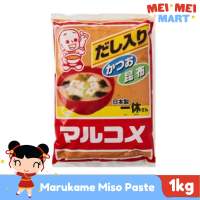
JAPANESE Marukome Miso Ikkyu Miso Paste Soup Dashi White Soybean Paste 1kg
₱270.00
Buy on Lazada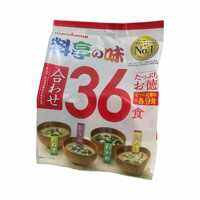
Marukome Instant Miso Soup 4 Flovos (36 packets)
₱410.00
Buy on Lazada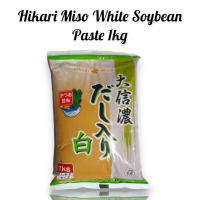
CMH Marukome Ikkyu-san Miso Paste & Hikari Miso Soybean Paste 1kg
₱195.00₱300.00
[MARUKOME] Japanese Miso Soup Assorted Pack 4 flavors ″LOW SODIUM″ 12 Servings ″SUITABLE FOR HIGH BLOOD″
₱534.00₱744.00
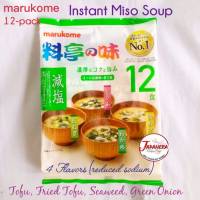
Marukome Instant Miso Soup 4 flavors (12 sachets)
₱190.00
Buy on Lazada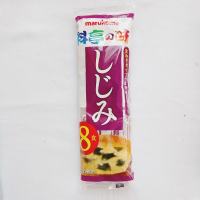
Marukome Instant Miso Soup packets
₱95.00
Buy on Lazada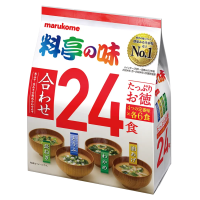
Marukome Ryotei No Aji Instant Miso Soup Assorted Flavor Value Pack 12/24Servings Directly from Japan
₱957.09₱1,339.93
About Marukome
Marukome Co., Ltd. (Japanese: マルコメ株式会社, Marukome Kabushiki-gaisha) is a Japanese food manufacturer best known for its miso, instant miso soup, and other fermented-food products. Headquartered in Nagano City, Nagano Prefecture, Japan, the company traces its origins to 1854, when it began producing miso and soy sauce. It has subsequently expanded from traditional miso production into products based on rice koji, soybeans, plant-based foods, and other fermented ingredients.1
Marukome is one of Japan’s best-known miso companies and has developed a significant international presence. Its products are distributed in 24 countries across five continents, according to its U.S. operation.2
Company profile
| Item | Information |
|---|---|
| Japanese name | マルコメ株式会社 |
| English name | Marukome Co., Ltd. |
| Founded | 1854 |
| Headquarters | Nagano City, Nagano Prefecture, Japan |
| President | Tokio Aoki |
| Capital | ¥100 million |
| Employees | 484 |
| FY2026 sales | ¥55.882 billion |
| Main businesses | Miso, instant miso soup, koji products, soybean products, overseas food products |
| Major international subsidiary | Marukome USA, Inc. |
The latest company profile published by Marukome reports ¥55.882 billion in sales for the fiscal year ending March 2026 and 484 employees.
History
Origins: 1854
Marukome’s history begins in 1854, during the Edo period of Japanese history. According to the company’s history, Tamiemon Aoki began making miso in Nagano Prefecture. His family had experience with rice and soybean cultivation, and Aoki developed his expertise in miso fermentation.1
The business eventually passed through several generations of the Aoki family. Miso and soy sauce production became the foundation from which the modern Marukome company developed.
Incorporation
In 1948, the business was formally incorporated as Aoki Miso and Soy Sauce Co., Ltd. The company subsequently expanded its production facilities and distribution network.1
A significant period of modernization followed World War II. In 1960, Marukome changed its miso distribution from traditional wooden barrels to cardboard packaging. In 1963, it developed a packaging machine for pillow-shaped miso packages, and in 1972 it developed packaging technology for standing pouches. These innovations helped make miso more convenient for modern retail distribution.
Adoption of the Marukome name
In 1967, the company changed its name to Marukome Miso Co., Ltd. It later became Marukome Co., Ltd. in 1990.1
The name Marukome itself has a connection to the company’s principal ingredients. “Maru” (丸) means “round” and refers to the rounded soybean, while “kome” (米) means “rice” and refers to rice used to produce koji. Together, the name reflects two fundamental ingredients involved in traditional miso production.
Rise to Japan’s leading miso company
One of the most important moments in Marukome’s modern history came in 1982, when it introduced Ryotei-no-Aji, a miso product incorporating dashi stock.
Rather than requiring consumers to prepare miso and dashi separately, the product combined the two components. Marukome describes it as the first miso paste containing dashi in Japan, and credits the product with helping the company reach the No. 1 position in Japan’s miso industry.1
The company continued emphasizing convenience and new forms of miso. Its product development subsequently included instant miso soup, freeze-dried miso soup, liquid miso and other convenient formats.
By 1978, Marukome had already become the leader of Japan’s miso industry, according to the company’s corporate history. Sales later exceeded ¥40 billion in 2016.
Products and businesses
Although Marukome is strongly associated with miso, its current business extends considerably beyond conventional miso paste.
Miso
Miso remains the company’s core product category. Marukome produces miso for both household consumers and food-service customers, in addition to processed miso ingredients for food manufacturers.1
Miso is made by fermenting soybeans with koji and salt. Marukome’s production process involves steaming soybeans, combining them with koji and salt, and allowing the mixture to ferment for months.
The company produces different varieties and formats intended for different culinary applications, ranging from traditional miso to convenient liquid and instant products.
Instant miso soup
Marukome is also a major producer of instant miso soup. The company entered this category during the development of its instant-miso facilities in the 1960s and later introduced freeze-dried miso soup products.
This category is particularly important to Marukome’s strategy of adapting traditional Japanese fermented foods to modern lifestyles.
Koji products
Koji is another central component of Marukome’s business.
Koji is a culture used in the fermentation of numerous Japanese foods and beverages. Marukome produces products based on rice koji and has expanded into categories such as koji amazake, shio koji and other koji-related products.1
This represents an important shift in the company’s identity: Marukome increasingly presents itself not simply as a miso manufacturer but as a company specializing in Japanese fermentation technology and food culture.
Soybean and plant-based products
The company also develops soybean-related foods, including soy meat and soy flour. Marukome’s current global product categories include:
- Miso
- Koji
- Koji amazake
- Soy meat
- Soy flour
- Other fermented-food products
This expansion allows Marukome to use its knowledge of soybeans and fermentation in areas beyond traditional miso.
Manufacturing and technology
Despite its traditional origins, Marukome operates modern industrial production facilities.
The company has multiple production facilities in Japan and established manufacturing capabilities in the United States. Its U.S. operation states that Marukome’s Japanese and American factories collectively use approximately 30,000 tons of non-GMO soybeans annually.
Marukome’s production facilities combine traditional fermentation methods with automated and modern manufacturing technologies. Its fermentation facilities include large numbers of tanks for controlled aging, while its quality-control systems are designed to maintain consistency across industrial-scale production.
At the same time, Marukome maintains facilities such as its Miasa Highland Fermentation Warehouse in Nagano, which emphasizes natural fermentation rather than solely high-volume industrial production.3
International expansion
Marukome began developing its overseas business as part of a broader effort to introduce Japanese fermented foods to international consumers.
A major milestone was the establishment of Marukome USA. The company completed its U.S. manufacturing facility in Irvine, California, in 2007, allowing miso to be manufactured locally for the North American market.1
Marukome’s international distribution has since expanded substantially. Its U.S. operation currently lists markets across North America, Europe and other regions, with distribution reaching 24 countries across five continents.2
The international strategy is not simply based on exporting traditional Japanese products. Marukome has also adapted formats and product concepts to international eating habits, while promoting miso and koji as globally useful ingredients.
The Marukome brand
The Marukome brand is strongly associated with Japanese miso and fermentation.
Its corporate messaging emphasizes bringing Japanese food culture to future generations and sharing the benefits of fermented foods internationally. The company’s global website describes its three core business areas as miso, rice koji and soybeans.
This gives Marukome a distinctive position in the food industry: its brand heritage is deeply traditional, but its product strategy is oriented toward convenience, health-conscious eating, plant-based foods and international cuisine.
Marukome-kun
One of Marukome’s most recognizable pieces of branding is its mascot, Marukome-kun (マルコメ君).
The character was introduced around 1955 and has evolved over the decades. According to Marukome, the character is connected to the historical association between miso making and training for young monks in Japanese temples.
Marukome-kun became an important part of the company’s advertising and public identity, making the traditionally serious image of a fermented-food manufacturer more approachable to families and younger consumers.
Corporate identity and philosophy
Marukome’s modern corporate identity is built around the idea of connecting Japanese fermentation traditions with contemporary lifestyles.
The company describes its purpose in terms of bringing elements such as surprise, excitement and wellness to consumers and sharing Japanese food culture with the world.
This philosophy can be seen in the company’s product development:
Traditional ingredients → modern processing → convenient products → international markets
For example, the fundamental ingredients of soybeans, rice koji and salt remain closely connected to traditional miso, while Marukome applies modern packaging, industrial fermentation, research and product development to make these foods suitable for contemporary consumers.
Research and innovation
Innovation has been a recurring feature of Marukome’s history.
Some notable examples include:
- 1960: Transition from barrel to cardboard packaging for miso.
- 1963: Development of a patented pillow-package machine.
- 1972: Development of a patented standing-pouch packaging machine.
- 1982: Introduction of Ryotei-no-Aji, miso with dashi.
- 1988: Introduction of freeze-dried block miso soup.
- 1989: Completion of a central research laboratory.
- 2009: Introduction of liquid miso.
- 2012: Introduction of the Plus Koji series.
- 2015: Introduction of the Daizu Lab series.
These developments illustrate how Marukome has repeatedly attempted to modernize a traditionally prepared food without abandoning its underlying fermentation heritage.
Marukome in Japanese food culture
Miso itself has a very long history in Japan and is one of the country’s most important fermented seasonings. Marukome’s role has been particularly significant in commercializing and standardizing miso for mass consumption.
Rather than positioning miso solely as an artisanal or regional product, Marukome helped make it a convenient everyday ingredient through standardized packaging, instant products, dashi-containing miso and other consumer-friendly formats.
This combination of traditional Japanese food culture and mass-market convenience is arguably the defining characteristic of the Marukome brand.
Marukome today
As of 2026, Marukome remains a privately held Japanese food company headquartered in Nagano. Its business has expanded considerably from the original miso-and-soy-sauce operation founded in 1854.
The company now operates across several interconnected areas:
Miso → Koji → Soybeans → Plant-based foods → Fermented-food ingredients → International markets
Its FY2026 corporate figures report ¥55.882 billion in sales and 484 employees, while its international business distributes products across multiple continents.1
The company’s long-term transformation can therefore be summarized as:
From a 19th-century Nagano miso brewery to a global Japanese fermentation-food company.
Marukome is best understood as more than a miso brand. It is a Japanese food manufacturer whose identity is built around fermentation, particularly miso and koji. Founded in Nagano in 1854, the company spent more than a century developing traditional miso production before becoming a major industrial food producer. Its breakthrough with dashi-containing miso in 1982 helped establish its leading position in Japan, while subsequent innovations in instant soup, liquid miso, koji products and soybean foods expanded its portfolio.1
Today, Marukome combines traditional Japanese fermentation knowledge, modern food manufacturing, convenience-oriented product development and international distribution, making it one of the most recognizable Japanese companies associated with miso and fermented foods.1