Shop on Lazada
Marlboro products
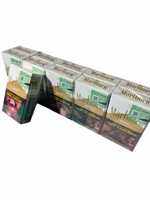
MARLBORO Gold Ft 1ream (10pack x 20sticks)
₱2,310.00₱2,810.00

MARLBORO Ice Blue Crafted 1ream (10packs x 20sticks)
₱2,168.00₱2,668.00

MARLBORO Iceblast Mega 1ream (10packs x 20sticks)
₱2,310.00₱2,810.00

MYST - Marlboro Cigarettes FTB - Ream
₱2,150.00
Buy on Lazada
MARLBORO Black Menthol Ft 1ream (10packs x 20sticks)
₱2,310.00₱2,810.00
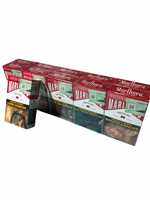
MARLBORO Red Crafted Ft 1ream (10packs x 20sticks)
₱2,168.00₱2,668.00

Marlboro Gold ft 1pack
₱231.00₱599.00

MARLBORO Iceblast Ft 4reams (40packs x 20sticks)
₱9,040.00₱9,640.00
About Marlboro
Marlboro is an American-origin cigarette brand that has become one of the most recognizable tobacco brands worldwide. Introduced in 1924 by Philip Morris & Co., it is currently managed by two separate entities depending on the market: Philip Morris USA, a subsidiary of Altria, handles the brand within the United States, while Philip Morris International (PMI) oversees it in international markets, including the Philippines. PMI describes Marlboro as the world’s best-selling international cigarette brand.1
Note: Marlboro is a tobacco/nicotine brand. Cigarettes contain nicotine, which is addictive, and smoking causes serious disease and premature death.
Basic information
| Attribute | Information |
|---|---|
| Brand | Marlboro |
| Product category | Cigarettes / tobacco |
| Origin | United States |
| Introduced | 1924 |
| Original company | Philip Morris & Co. |
| U.S. owner/manufacturer | Philip Morris USA / Altria |
| International company | Philip Morris International |
| International presence | About 170 markets |
| Major historical symbol | The Marlboro Man / cowboy |
| Positioning | Premium cigarette brand |
| Famous packaging | Red-and-white Marlboro pack |
| Current status | Major global cigarette brand |
PMI reports that Marlboro is sold in approximately 170 markets and held a 10.7% global market share in 2025.
History
Origins of the Philip Morris company
The history of Marlboro is intrinsically linked to the older Philip Morris tobacco business. In 1847, Philip Morris opened a tobacco shop on Bond Street in London. The company subsequently expanded its operations, eventually establishing a presence in the United States.
The name Marlboro is generally associated with Great Marlborough Street in London, the site of a Philip Morris factory. The trademark was registered in the United States in 1908, several years prior to the commercial launch of the cigarette itself.1
Launch in 1924
Marlboro cigarettes were commercially introduced in 1924. The original product positioning differed significantly from the modern brand identity. Rather than targeting male smokers, early advertising positioned Marlboro toward women, utilizing the slogan “Mild As May” to emphasize a refined and fashionable image.1 This strategy achieved limited success, and Marlboro remained a relatively minor brand for decades.
The major transformation
The most pivotal era in Marlboro’s history occurred during the 1950s. As scientific research increasingly linked smoking to lung cancer and other health issues, manufacturers began promoting filtered cigarettes. However, Marlboro faced a challenge: its filtered variant carried a feminine association that alienated many male smokers.1
In response, Philip Morris executed a dramatic strategic shift to reposition Marlboro as a masculine cigarette brand. The advertising agency Leo Burnett was instrumental in developing this new identity, moving the focus away from the filter itself to create a powerful visual personality for the brand.1
The Marlboro Man
The cornerstone of the new marketing strategy was the Marlboro Man. The campaign featured rugged male figures, eventually centering on the American cowboy. This imagery associated the brand with concepts such as independence, freedom, adventure, ruggedness, masculinity, the American West, and individualism.
This campaign is considered one of the most influential examples of lifestyle branding in advertising history. Instead of merely communicating product attributes, the advertising sought to convey what consumers could symbolically represent by choosing the brand. The cowboy became so synonymous with the product that the term “Marlboro Man” entered popular culture.
The Marlboro package
Packaging is a fundamental component of Marlboro’s identity. The classic design features a white package with a red geometric “roof” or chevron-like element alongside the wordmark. This distinctive visual identity—combining red, white, black typography, and geometric design—became one of the most recognizable in the industry.
Philip Morris USA notes that the redesigned 1950s Marlboro incorporated a cork-tip filter and a flip-top box with a red roof design.
Rise to global dominance
The repositioning strategy proved extraordinarily successful, transforming Marlboro into one of the largest cigarette brands globally. According to PMI’s historical timeline, it became the world’s best-selling cigarette brand in 1972.
This success was driven by strong brand recognition, consistent packaging, large-scale advertising, international expansion, premium positioning, and highly distinctive imagery. Consequently, Marlboro evolved beyond a mere product name to become a globally recognized consumer trademark.
Brand identity
Marlboro’s historical brand identity is summarized by the following association chain:
Marlboro → Cowboy → American West → Freedom → Independence → Masculinity
This association was deliberately constructed through decades of advertising. It is important to note that this represents brand positioning rather than a description of actual product qualities or health effects. Consumers should not assume that differences in flavor, packaging, or labeling imply that any cigarette is safer than another.
Major Marlboro variants
Throughout its history, Marlboro has been sold in numerous varieties and market-specific versions, with names and availability varying substantially by country. Common historical or contemporary variants include:
- Marlboro Red: Traditionally associated with the brand’s full-flavor identity.
- Marlboro Gold: Historically associated with the former “Lights” positioning.
- Marlboro Silver: Associated in some markets with lower-yield variants.
- Marlboro Menthol: Available historically in some markets, subject to local regulations.
- Various 100s, flavor, capsule, and market-specific versions.
Product names and formulations often change due to national tobacco regulations. In the United States, for example, descriptors such as “Light,” “Ultra Light,” or “Mild” can no longer be used in ways that imply reduced risk.1
Ownership structure
A critical distinction regarding Marlboro is that Altria and Philip Morris International are now separate companies.
United States
Within the United States, Marlboro is manufactured by Philip Morris USA, which is part of the Altria Group.
International markets
Outside the United States, including in the Philippines, Marlboro is primarily associated with Philip Morris International (PMI). PMI and Altria separated completely in 2008. PMI focuses exclusively on non-U.S. markets, while Altria’s Philip Morris USA manages the U.S. cigarette business. Therefore, stating simply that “Philip Morris owns Marlboro” can be misleading, as the corporate ownership depends entirely on the geographic market.
Marlboro in the Philippines
Marlboro holds a particularly prominent position in the Philippines. PMFTC Inc., the Philippine affiliate of Philip Morris International, identifies Marlboro as its leading cigarette brand. PMFTC operates manufacturing facilities and sales operations within the country, maintaining a portfolio that includes Marlboro alongside brands such as Fortune, Champion, Hope, More, and Jackpot.
PMI’s product information for the Philippines likewise designates Marlboro as the company’s best-selling international cigarette brand in the local market.
Marketing and advertising
Marlboro occupies a significant place in advertising history because its strategy demonstrated how an ordinary consumer product could be transformed into a powerful cultural identity. Historically, its advertising relied heavily on imagery rather than technical explanations, following the formula: Product → personality → lifestyle → cultural symbol.
The cowboy imagery was particularly effective as an instantly understandable visual representation of rugged individualism. This approach distinguished Marlboro from competitors and established an identity recognizable even without prominent display of the brand name.
Sponsorship and popular culture
Marlboro also gained fame through extensive motorsport sponsorship, particularly in Formula One. For decades, the brand appeared prominently in international motor racing, associating with major teams and drivers. Tobacco advertising restrictions eventually necessitated substantial changes to these arrangements.
Additionally, Marlboro imagery has appeared extensively in films, television, photography, music culture, and other forms of popular media.
Controversies
Marlboro’s commercial success has made it central to broader controversies surrounding the tobacco industry. Key issues include:
- The addictive nature of nicotine
- Health consequences of cigarette smoking
- Advertising targeted at specific demographic groups
- Historical marketing practices
- Sponsorship of sporting events
- Use of lifestyle imagery to promote tobacco
- Government regulation of tobacco advertising and packaging
The historical repositioning of Marlboro is particularly significant in this context, as its marketing successfully associated smoking with desirable traits like freedom and independence despite the known health risks.
Health effects
Like all combustible cigarettes, Marlboro contains nicotine, which is addictive. Smoking causes numerous serious diseases, including cancers, cardiovascular disease, and respiratory disease.
Different varieties of the brand should not be interpreted as indicating safety. PMI states that consumers should not assume differences between cigarette products mean one is less harmful or less addictive. Brand image and perceived product characteristics are not equivalent to health effects.
Brand significance
Marlboro is frequently studied as an exemplary case of successful brand repositioning. Its history illustrates key marketing concepts:
- Repositioning: Transforming a women’s cigarette into a masculine lifestyle brand.
- Emotional branding: Selling an identity rather than product characteristics.
- Visual identity: Creating instantly recognizable packaging and colors.
- Consistency: Maintaining recognizable themes over decades.
- Storytelling: Utilizing the cowboy and American West as recurring narratives.
- Globalization: Evolving an American-origin brand into an international icon.
- Cultural symbolism: Achieving recognition outside the context of tobacco.
Timeline
- 1847: Philip Morris opens a tobacco shop in London.
- 1908: The Marlboro trademark is registered in the United States.
- 1924: Marlboro cigarettes are introduced.1
- 1930s: The brand is promoted toward women using the “Mild As May” positioning.1
- 1950s: Philip Morris dramatically repositions Marlboro toward men.
- 1950s onward: The cowboy/Marlboro Man becomes central to the brand’s advertising identity.1
- 1972: Marlboro becomes the world’s best-selling cigarette brand.
- 1987: Philip Morris International is incorporated as an international operating company.
- 2008: Philip Morris International separates from Altria.
- 2025: PMI reports Marlboro at 10.7% global market share and confirms sales in about 170 markets.
- 2026: Marlboro remains PMI’s leading international cigarette brand, while Philip Morris USA continues to identify it as the leading brand in its U.S. portfolio.