Shop on Lazada
Matchbox products
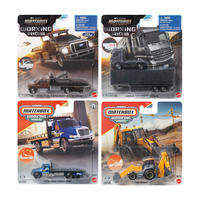
Matchbox | Versatile Engineering Vehicle Model
₱2,453.00
Buy on Lazada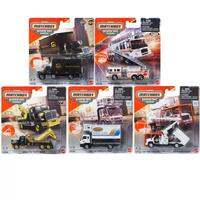
Realistic Boys Engineering Truck Model
₱2,728.00
Buy on Lazada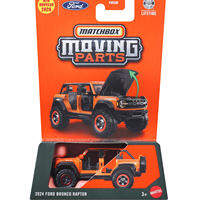
Matchbox | Collectible Door Openable Jeep Alloy Car Model
₱721.00
Buy on Lazada
Matchbox 1:75 Basic Car
₱149.75
Buy on Lazada
Firefighter Jet Alloy Helicopter
₱920.00
Buy on Lazada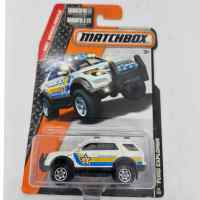
FORD SUV - EXPLORER - EXPEITION - POLICE CAR
₱399.00₱499.00
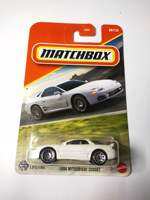
Matchbox assorted die cast cars
₱399.00
Buy on Lazada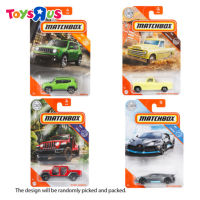
Matchbox 1:75 Basic Car
₱149.75
Buy on LazadaAbout Matchbox
Matchbox is a British-origin brand of die-cast toy vehicles best known for its small-scale model cars, trucks, construction equipment, emergency vehicles, aircraft, and playsets. Created by Lesney Products in England in 1953, the brand is currently owned by Mattel, Inc., which also owns the competing die-cast brand Hot Wheels 16. Matchbox is particularly associated with realistic everyday vehicles, compact packaging, affordability, and a strong emphasis on authenticity. Over seven decades, it has evolved from a children’s toy line into a major collectibles brand with a large international community of adult collectors.
Quick facts
| Matchbox | |
|---|---|
| Brand | Matchbox |
| Industry | Toys / die-cast models |
| Founded | 1953 |
| Country of origin | United Kingdom |
| Original company | Lesney Products |
| Key inventor | Jack Odell |
| Current owner | Mattel, Inc. |
| Acquired by Mattel | 1997 |
| Best known for | Small die-cast vehicles |
| Famous series | 1–75, Superfast, Models of Yesteryear, King Size |
| Typical scale | Approximately 1:64 (varies by model) |
| Main audience | Children, hobbyists, and collectors |
| Current status | Active global brand |
Mattel lists Matchbox among its major franchise brands alongside Barbie, Hot Wheels, Fisher-Price, American Girl, and UNO.
Origins
Jack Odell and Lesney
The history of Matchbox begins with Jack Odell, an English engineer and automotive enthusiast, and Lesney Products, a British manufacturing company founded by Leslie Smith and Rodney Smith 1. Lesney initially manufactured die-cast products and toys before developing miniature vehicles. Odell became pivotal to the company’s future due to his ability to create extremely small die-cast models.
The famous Matchbox origin story dates to 1953. Odell’s daughter attended a school where children were allowed to bring toys only if they fit inside a matchbox. In response, Odell crafted a tiny die-cast steamroller that met this requirement 78. Other children requested similar toys, and this concept became the foundation of the brand. The name “Matchbox” derived literally from this packaging concept, as the miniature vehicles were sold in boxes resembling those used for matches 1.
The original Matchbox concept
The success of Matchbox stemmed from combining several key ideas rather than simply manufacturing small cars. The concept integrated a very small physical size, low manufacturing cost, realistic vehicle designs, mass-market affordability, compact packaging, and a wide variety of subjects 2. This approach allowed children to build collections of vehicles rather than purchasing single expensive toys. The earliest range eventually became known as the 1–75 series because it contained up to 75 different models 9. Collecting numbered miniature vehicles became one of the defining characteristics of the brand.
Early product lines
1–75 Series
The original Matchbox miniature range achieved significant success. Early vehicles included road rollers, dump trucks, cement mixers, tractors, buses, delivery vehicles, police cars, fire engines, and passenger cars 7. Unlike later competitors that often emphasized fantasy or high-performance automobiles, Matchbox focused on ordinary vehicles seen in everyday life. This aesthetic distinction helped establish its unique identity in the die-cast market.
Packaging
Packaging was fundamental to the brand’s identity. Early Matchbox cars were sold in small cardboard boxes designed to look like boxes of matches, making the brand name immediately recognizable 1. This packaging made the vehicles easy to display, transport, and collect, while keeping manufacturing costs low. The box itself eventually became a significant aspect of Matchbox collecting, with enthusiasts studying variations in artwork, printing, labels, colors, and packaging eras.
Growth and expansion
Matchbox expanded rapidly following its introduction. In 1956, the company introduced its first accessory and playset concept: a fuel station. This began a long tradition of Matchbox play environments where vehicles could be used together rather than merely collected individually. During the 1960s, Matchbox became one of the dominant brands in the global die-cast toy market, expanding its portfolio beyond basic small cars into several scales and specialized series.
Major product lines
Throughout its history, Matchbox has produced numerous distinct ranges.
Regular Wheels and Superfast
The classic 1–75 range remains historically significant as the foundation of Matchbox collecting culture. In the late 1960s, Matchbox introduced Superfast models, partly in response to the growing popularity of Hot Wheels, which Mattel had launched in 1968 4. Superfast models featured faster-rolling wheels and axles, providing a competitive answer to the performance-oriented image of Hot Wheels. The transition from traditional Regular Wheels to Superfast represents one of the most important dividing points in vintage Matchbox collecting.
Models of Yesteryear and King Size
Models of Yesteryear was a historically oriented series that reproduced older automobiles and commercial vehicles rather than contemporary models. This line helped establish Matchbox as a manufacturer of miniature automotive history rather than solely a children’s toy maker. King Size models were substantially larger than traditional miniatures, allowing for greater detail in construction equipment, trucks, buses, and heavy machinery 11. The larger scale enabled designers to incorporate features impossible on the tiny 1–75 models.
Sky Busters
Matchbox expanded into aviation with Sky Busters, a line including military aircraft, passenger planes, cargo aircraft, and helicopters. Mattel notes that Matchbox introduced die-cast aircraft in 1973, establishing an aviation line that continues within the brand’s broader portfolio.
Matchbox versus Hot Wheels
A significant chapter in Matchbox history is its relationship with Hot Wheels. Created by Mattel in 1968, Hot Wheels was originally a competitor to Matchbox, and the two brands developed distinct identities 46. Matchbox traditionally emphasized real-world utility vehicles, emergency services, construction equipment, authentic proportions, and educational play. Conversely, Hot Wheels focused on performance cars, racing, custom designs, fantasy styling, and track-based spectacle. While both brands have produced various vehicle types, these distinctions became central to their respective identities. Ironically, the two former competitors eventually became sister brands under Mattel ownership.
Corporate history
Decline of Lesney
By the late 1970s and early 1980s, Lesney encountered serious financial difficulties due to changing international markets and increased competition from Asian manufacturers. In 1982, Lesney entered bankruptcy, and the Matchbox brand was acquired by Universal Toys, which continued operations under Matchbox International 3. This marked the end of the original Lesney era, which remains highly regarded by collectors.
Universal, Tyco, and Mattel
Following the Lesney era, ownership passed through Universal Toys and subsequently Tyco Toys in the early 1990s 5. Mattel ultimately acquired Matchbox in 1997, bringing Matchbox and Hot Wheels under the same corporate ownership 56. This acquisition was historically significant as it united two of the most important die-cast toy brands. Under Mattel, Matchbox has continued as a distinct brand centered on exploration, realism, and authenticity, rather than becoming a secondary version of Hot Wheels.
Brand characteristics
Realism and scale
Realism is a core component of Matchbox identity. A typical assortment might include a police car, garbage truck, ambulance, excavator, city bus, pickup truck, and family SUV, reflecting the philosophy that the real world is full of interesting vehicles. Mattel describes the modern brand as offering realistic details, licensed vehicles, and authentic decorations.
Although strongly associated with the 1:64 scale, Matchbox vehicles are not uniformly scaled. Historically, vehicles were designed to fit a specific physical size and packaging format rather than adhering strictly to one mathematical scale 10. Consequently, actual scales vary depending on the real vehicle being represented. Collectors generally categorize Matchbox within the “1–75/1:64-ish” miniature vehicle category rather than treating it as a uniform scale-model manufacturer.
Play and collecting
Despite its status as a serious collecting hobby, Matchbox remains fundamentally a children’s toy brand. Its play philosophy encourages recreating real-world scenarios such as city driving, construction, emergency response, and aviation. Modern playsets often connect vehicles with places and occupations rather than focusing solely on racing tracks. Simultaneously, the brand maintains a substantial adult collecting community. Collectors may specialize in Lesney-era models, specific casting numbers, promotional editions, packaging variations, or factory errors. The historical depth of the brand means collectors are often preserving specific manufacturing eras or pieces of automotive history.
Manufacturing and sustainability
Early Matchbox production was strongly associated with British manufacturing under Lesney. Production increasingly moved outside the United Kingdom as the global toy industry changed, with the transfer to Macau following the Universal acquisition marking a significant milestone. Today, Matchbox products are manufactured through international supply chains.
Sustainability has become a visible part of the modern brand. Mattel states that Matchbox is working toward using 100% recycled, recyclable, or bio-based plastic materials by 2030. Notable initiatives include the introduction of electric and hybrid vehicle models and EV charging station playsets. The Matchbox Tesla Roadster was introduced as the brand’s first die-cast made with 99% recycled materials and certified as a CarbonNeutral product.
Cultural significance and media
Matchbox helped establish the concept of owning miniature representations of the real world, popularizing collectible versions of everyday transportation infrastructure. This relevance has persisted for over 70 years, culminating in the brand’s 70th anniversary in 2023. Expanding beyond physical toys, Matchbox is now part of Mattel’s entertainment strategy. Matchbox: The Movie, a live-action film produced by Apple Original Films, Skydance Media, and Mattel Studios, is scheduled to premiere on October 9, 2026, on Apple TV. Directed by Sam Hargrave and starring John Cena, the film represents a major expansion of the brand into broader entertainment.
Comparison with Hot Wheels
| Feature | Matchbox | Hot Wheels |
|---|---|---|
| Origin | 1953, Lesney | 1968, Mattel |
| Current owner | Mattel | Mattel |
| Traditional emphasis | Real-world vehicles | Racing, performance & fantasy |
| Brand personality | Realistic / exploratory | Energetic / extreme |
| Construction vehicles | Very important | Present but less central |
| Emergency vehicles | Very important | Present |
| Everyday vehicles | Very important | Present |
| Fantasy designs | Limited historically | Major component |
| Collector market | Very strong | Very strong |
| Typical miniature category | ~1:64 | ~1:64 |
| Relationship | Sister brand | Sister brand |
While distinctions have become less rigid over time, the historical differences remain useful for understanding each brand’s positioning.
Timeline
| Year | Event |
|---|---|
| 1947 | Lesney Products established by Leslie Smith and Rodney Smith |
| Early 1950s | Jack Odell develops extremely small die-cast vehicles |
| 1953 | Matchbox introduced; 1–75 concept begins 16 |
| 1956 | First Matchbox playset/accessory concept (fuel station) |
| 1960s | Matchbox becomes a dominant global die-cast brand |
| 1968 | Mattel introduces Hot Wheels |
| Late 1960s | Matchbox introduces Superfast |
| 1973 | Expansion into die-cast aircraft with Sky Busters |
| 1982 | Lesney collapses; Matchbox acquired by Universal 3 |
| 1990s | Matchbox becomes associated with Tyco 5 |
| 1997 | Mattel acquires Matchbox 56 |
| 2000s–2010s | Continues as a distinct Mattel die-cast brand |
| 2022 | Introduction of recycled-material Tesla Roadster |
| 2023 | 70th anniversary celebration |
| 2026 | Matchbox: The Movie scheduled for release |
References
- Matchbox (brand) – Wikipedia
- Matchbox (toy) – Wikipedia, the free encyclopedia – Linguateca
- Matchbox (brand) – Wikipedia
- Matchbox (brand) – Wikipedia
- Matchbox (brand) – Wikipedia
- Matchbox (brand) – Wikipedia
- Matchbox (toy) – Wikipedia, the free encyclopedia – Linguateca
- Matchbox (toy) – Wikipedia, the free encyclopedia – Linguateca
- Matchbox (brand) – Wikipedia
- Matchbox (brand) – Wikipedia
- Matchbox (brand) – Wikipedia