Shop on Lazada
One Piece products
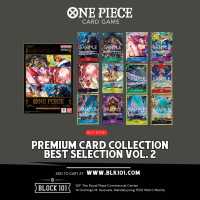
One Piece Card Game Premium Card Limited Collection – Best Selection Vol. 2 (Japanese)
₱2,000.00₱3,000.00
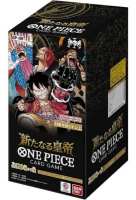
Emperors in the New World Booster Box (JP) One Piece TCG
₱8,999.00₱20,000.00

Devil Fruits Collection Vol. 1 - One Piece TCG Collection Sets
₱6,999.00₱15,000.00

The Worlds Strongest Warriors OP17 One Piece Booster Pack (1pc)
₱320.00
Buy on Lazada![One Piece Card Game – Starter Deck – 3D2Y – [ST-14] (Japanese)](https://ph-live.slatic.net/p/8d6d2ee9ab04486c1ef7ae7d49469a41.jpg_200x200q80.jpg)
One Piece Card Game – Starter Deck – 3D2Y – [ST-14] (Japanese)
₱850.00
Buy on Lazada
One Piece Jersey DRIFIT SHORT 2 POCKETS for MEN and WOMEN
₱106.92₱115.00
![One Piece Card Game Starter Deck - Green Yellow Yamato - [ST-28] Japanese Version](https://filebroker-cdn.lazada.com.ph/kf/S66e9a28eab094a08a6a945982476b7acN.jpg_200x200q80.jpg)
One Piece Card Game Starter Deck - Green Yellow Yamato - [ST-28] Japanese Version
₱670.00
Buy on Lazada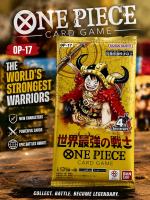
One Piece TCG OP17 The worlds Strongest Warriors Booster Pack (1pc)
₱320.00
Buy on LazadaAbout One Piece
One Piece (Japanese: ONE PIECE, ワンピース; Wan Pīsu) is a Japanese manga and anime franchise created, written, and illustrated by Eiichiro Oda. It is an adventure, action, fantasy, and comedy-drama series focused on pirates, exploration, freedom, friendship, and the pursuit of the world’s greatest treasure, the One Piece.
The manga began serialization in Shueisha’s Weekly Shōnen Jump on July 22, 1997, and has since become one of the longest-running and most commercially successful manga series in history.1
The television anime adaptation, produced by Toei Animation, premiered in Japan on October 20, 1999, and remains in production.2
Note: This overview describes the franchise broadly and avoids major late-story spoilers.
Infobox
| Information | Details |
|---|---|
| Title | One Piece |
| Japanese title | ONE PIECE / ワンピース |
| Creator | Eiichiro Oda |
| Origin | Japan |
| Original medium | Manga |
| Manga publisher | Shueisha |
| Original magazine | Weekly Shōnen Jump |
| Manga debut | July 22, 1997 |
| Anime studio | Toei Animation |
| Anime debut | October 20, 1999 |
| Genres | Adventure, action, fantasy, comedy-drama |
| Main protagonist | Monkey D. Luffy |
| Main group | Straw Hat Pirates |
| Central objective | Finding the legendary treasure known as the One Piece |
| Franchise | Manga, anime, films, television specials, games, merchandise, live-action adaptation, and other media |
Premise
One Piece is set in a vast fictional world dominated by enormous oceans, islands, pirate crews, kingdoms, revolutionary movements, and a powerful global government.
The story follows Monkey D. Luffy, an energetic young pirate who dreams of becoming the King of the Pirates. His ultimate goal is to find the legendary treasure called the One Piece, which was associated with the previous Pirate King, Gol D. Roger.3
Luffy sets out to sea and gradually gathers a crew known as the Straw Hat Pirates. Together, they travel through increasingly dangerous regions of the world, encountering other pirates, governments, criminals, warriors, kingdoms, mysterious civilizations, and individuals pursuing their own dreams.
Although finding the One Piece is the overarching objective, the narrative extends far beyond a conventional treasure hunt. Each major adventure introduces its own conflict while gradually revealing information about the world’s history, political structure, mysteries, and mythology.
The World of One Piece
The setting of One Piece is primarily an oceanic world. Rather than being divided into conventional continents like Earth, its geography is dominated by enormous seas and unusual island environments.
The Four Blues
The world contains four major oceans:
- East Blue
- West Blue
- North Blue
- South Blue
Luffy’s journey begins in East Blue before he enters the more dangerous routes of the Grand Line.
The Grand Line
The Grand Line is an enormous and unpredictable sea route that crosses the world. It serves as the principal setting for much of the series.
The Grand Line is famous for:
- Unpredictable weather
- Unusual islands
- Powerful pirates
- Dangerous sea creatures
- Strange navigation conditions
- Competing pirate crews
- Powerful nations
- Mysterious historical sites
It is divided broadly into two portions by the Red Line, with the second half commonly known as the New World.
The Red Line
The Red Line is a gigantic continent-like geographical formation that encircles the world. The intersection between the Red Line and the Grand Line is especially significant to the world’s geography and political structure.
The Pirate Era
The modern age of the story was shaped by the legendary pirate Gol D. Roger. Roger became known as the Pirate King after reaching the end of the Grand Line and accumulating enormous fame and wealth.
Before his execution, Roger made a declaration concerning his treasure. His final words helped ignite the Great Pirate Era, encouraging countless people to sail in search of the legendary One Piece.
This established the central environment of the series where pirates compete for treasure, freedom, territory, fame, power, and ultimately the opportunity to become the next Pirate King.
Luffy enters this world not simply because he desires wealth, but because he associates the title of Pirate King with being the freest person on the sea.
Monkey D. Luffy
Monkey D. Luffy is the protagonist of One Piece and the captain of the Straw Hat Pirates.
Luffy is characterized by extraordinary optimism, recklessness, loyalty, courage, an intense love of adventure, an enormous appetite, and a strong sense of personal freedom. As a child, he was inspired by the pirate Shanks, who left a profound influence on his ambitions.
Luffy eventually acquired the ability to stretch his body like rubber after consuming what he believed to be a particular Devil Fruit. This ability became one of his defining characteristics.4
His ultimate dream is to become King of the Pirates by reaching the legendary treasure, the One Piece.
The Straw Hat Pirates
The Straw Hat Pirates are the central pirate crew of the story, named after Luffy’s distinctive straw hat. The core members include:
Monkey D. Luffy
- Role: Captain
- Dream: Become the King of the Pirates
Roronoa Zoro
- Role: Swordsman
- Dream: Become the world’s greatest swordsman
Zoro is Luffy’s first major crewmate and one of the crew’s primary fighters.
Nami
- Role: Navigator
- Dream: Create a complete map of the world
Nami provides the crew with the navigation skills necessary to survive the Grand Line.
Usopp
- Role: Sniper
- Dream: Become a brave warrior of the sea
Usopp is known for his storytelling, inventions, marksmanship, and occasionally exaggerated personality.
Sanji
- Role: Cook
- Dream: Find the legendary All Blue
Sanji combines exceptional culinary abilities with powerful martial arts.
Tony Tony Chopper
- Role: Doctor
- Dream: Become a doctor capable of curing any disease
Chopper is a reindeer who possesses human-like intelligence and abilities because of a Devil Fruit.
Nico Robin
- Role: Archaeologist
- Dream: Discover the true history of the world
Robin is particularly important to the series’ deeper historical mysteries.
Franky
- Role: Shipwright
- Dream: Build a ship capable of traveling around the world
Franky is a cyborg shipwright and the creator of the crew’s major ship, the Thousand Sunny.
Brook
- Role: Musician
- Dream: Reunite with Laboon
Brook is a living skeleton whose personality combines comedy, music, swordsmanship, and tragedy.
Jinbe
- Role: Helmsman
- Dream: Contribute to a future of greater coexistence between humans and fish-men
Jinbe is an experienced former pirate captain and martial artist who eventually becomes a Straw Hat.
Devil Fruits
One of the most recognizable concepts in One Piece is the Devil Fruit system. Devil Fruits are mysterious fruits that grant supernatural abilities to whoever eats them.
Examples include powers involving stretching, fire, ice, darkness, transformation, controlling objects, creating elements, manipulating environments, and transforming into animals or mythical creatures.
The major drawback is that Devil Fruit users lose their ability to swim effectively, making the power particularly ironic in a world dominated by pirates and oceans.
Devil Fruits are divided into broad categories:
Paramecia
Fruits that provide a wide variety of supernatural abilities.
Zoan
Fruits that allow users to transform into animals or animal-like forms.
Logia
Fruits associated with transforming into, creating, and controlling certain natural elements or phenomena.
The Devil Fruit system is one of the primary mechanisms through which One Piece combines fantasy powers with its pirate-adventure setting.
Haki
Another major power system is Haki, a supernatural ability associated with spiritual willpower and perception. The three primary forms are:
Observation Haki
Allows users to sense the presence, emotions, intentions, and movements of others.
Armament Haki
Allows users to reinforce their bodies or weapons with a form of spiritual power, greatly increasing their offensive and defensive capabilities.
Conqueror’s Haki
A rare ability associated with an overwhelming force of will. It allows particularly powerful individuals to exert their presence over others.
Haki becomes increasingly important as Luffy and the Straw Hats encounter stronger opponents.
Major Powers
The world of One Piece contains several competing organizations.
World Government
The World Government is the dominant political organization of the world. It consists of numerous affiliated nations and maintains powerful military and governmental institutions. Its forces include the Marines, who serve as the principal military authority opposing pirates.
Marines
The Marines are the World Government’s military organization responsible for enforcing its laws and combating piracy. Marine officers range from ordinary soldiers to extraordinarily powerful individuals. The organization is therefore one of the primary forces opposing Luffy’s journey.
Four Emperors
The Four Emperors, commonly called the Yonko, are among the most powerful pirate leaders in the world. Their influence extends across enormous territories and their crews can rival the world’s greatest military powers. The identities of the Emperors change throughout the story as the balance of power shifts.
Revolutionary Army
The Revolutionary Army is an organization opposing the World Government. It is led by Monkey D. Dragon, Luffy’s father. Unlike the Straw Hats, whose primary objective is adventure and freedom, the Revolutionary Army is directly concerned with changing the world’s political order.
The One Piece
The One Piece is the legendary treasure at the heart of the entire story. Its exact nature was deliberately kept mysterious for most of the series.
What is known is that Gol D. Roger and his crew reached the final island and discovered something associated with the One Piece. The treasure’s existence is the central mystery driving the Great Pirate Era and Luffy’s journey.
Importantly, the One Piece is not simply a generic metaphor for “friendship” or “the journey.” The series treats it as an actual treasure whose discovery has enormous implications.
Major Themes
Despite its colorful art style and frequent comedy, One Piece explores surprisingly serious themes.
Freedom
Freedom is arguably the central theme. Luffy’s desire to become Pirate King is closely connected to his desire to live without being controlled by others.
Dreams
Nearly every major character has a dream. The characters’ individual dreams give their journeys emotional meaning beyond simply becoming stronger.
Friendship and Loyalty
The Straw Hats repeatedly risk their lives for one another. The crew’s relationships are one of the emotional foundations of the series.
Oppression
Many arcs examine authoritarian governments, slavery, discrimination, exploitation, and the abuse of political power.
Racism and Discrimination
The relationship between humans and fish-men is used to explore prejudice and inherited hatred.
Freedom vs. Authority
The series repeatedly places individuals seeking freedom against governments, rulers, pirates, and other institutions seeking control.
History and Memory
The world contains a mysterious historical period whose secrets have enormous political consequences. Characters such as Nico Robin make the recovery of lost history a central component of the story.
Manga
The original One Piece manga was created by Eiichiro Oda and began publication in Weekly Shōnen Jump in 1997.4 It subsequently became one of the most successful manga properties ever published.
Shueisha publishes the Japanese collected volumes under its Jump Comics imprint. Individual volumes contain chapters originally serialized in Weekly Shōnen Jump.5
As of 2026, the manga remains ongoing. Current reference listings record more than 100 collected volumes, reflecting the extraordinary length of the series.6
Anime
The television anime is produced by Toei Animation. It began broadcasting in Japan on October 20, 1999.7
Unlike many anime adaptations that end after a relatively short run, One Piece has continued for decades. Toei currently lists the television series as having 1,000+ episodes and still in production.6
The anime has also been distributed internationally in more than 80 countries, according to Toei Animation’s franchise information.6
Films and Other Media
The One Piece franchise extends far beyond the manga and television series. It includes theatrical animated films, television specials, OVAs, video games, trading cards, toys, clothing, collectibles, music, promotional collaborations, live-action adaptations, and other licensed merchandise.
Toei describes One Piece as a broad media franchise encompassing theatrical films, home video, games, and a large range of licensed merchandise.8
Notable theatrical films include:
- One Piece: The Movie
- One Piece: Strong World
- One Piece Film: Z
- One Piece Film: Gold
- One Piece: Stampede
- One Piece Film: Red
One Piece Film: Red, released in 2022, became a particularly significant commercial success. Toei reports that it earned more than ¥19.7 billion in Japan, making it the highest-grossing film in Toei Animation’s history at that time.9
International Popularity
One Piece developed from a successful Japanese manga into a worldwide pop-culture phenomenon. Its popularity has resulted in international manga publication, dubbed and subtitled anime releases, theatrical film releases, video games, collectibles, clothing and fashion collaborations, theme-park attractions and events, worldwide fan communities, and a Netflix live-action adaptation.
Toei reports that the manga has surpassed 500 million copies sold and that more than 100 volumes have been published, illustrating the enormous scale of the franchise.10
The Live-Action Adaptation
The franchise was also adapted into a live-action television series produced for Netflix. The adaptation retells the beginning of Luffy’s journey with real actors and a large-scale production.
The live-action version is a separate adaptation rather than a replacement for the manga or anime. It introduces the world and characters to audiences who may not traditionally watch anime.
Significance
One Piece is notable because it combines an extremely long-running narrative with an unusually large fictional world. The series begins as a relatively straightforward pirate adventure but gradually develops into a story involving pirates, kingdoms, global politics, ancient history, inherited will, mythology, freedom, and the mystery of the world’s origins.
Its enormous cast also allows Oda to tell many different kinds of stories. One arc might be primarily comedic, while another can focus on war, political oppression, discrimination, family, tragedy, or historical mystery.
This combination of adventure, humor, emotional storytelling, world-building, mystery, and long-term narrative planning is a major reason for the franchise’s enduring popularity.
Basic Story Structure
A simplified way of understanding One Piece is:
- Luffy leaves home
- Forms the Straw Hat Pirates
- Explores the Grand Line
- Encounters rival pirates and powerful governments
- Builds alliances and defeats enemies
- Learns more about the world’s hidden history
- Enters increasingly dangerous conflicts
- Moves closer to the final mystery
- Searches for the One Piece
The story therefore operates on two levels:
- The surface story: A pirate crew traveling the world in search of treasure.
- The deeper story: A gradually unfolding mystery about freedom, history, power, the World Government, the Void Century, the mysterious “D.” initial, and the true meaning of the One Piece.
Legacy
Few manga and anime franchises have achieved the same combination of longevity, sales, cultural influence, and global recognition as One Piece. The manga debuted in 1997, while its anime adaptation began in 1999 and has continued for more than two decades.11
For Toei Animation specifically, One Piece has become one of its defining works; the company identifies it among its major long-running animated properties.12
Today, One Piece is not simply a manga or anime. It is a multimedia entertainment franchise and one of the defining works of modern Japanese popular culture.
In summary, One Piece is Eiichiro Oda’s epic pirate adventure about Monkey D. Luffy and the Straw Hat Pirates, whose quest to find the legendary treasure One Piece gradually becomes a much larger journey involving freedom, friendship, forgotten history, political power, inherited dreams, and the mysteries of the world itself.13
References
- VIZ | One Piece Manga
- One Piece
- ONE PIECE – TOEI ANIMATION LIST OF WORKS
- ONE PIECE – Toei Animation
- ONE PIECE 26/尾田 栄一郎 | 集英社 ― SHUEISHA ―
- Toei Animation
- TOEI ANIMATION’S “ONE PIECE” MAKES FRANCHISE HISTORY WITH
- ONE PIECE 115/尾田 栄一郎 | 集英社 ― SHUEISHA ―
- ONE PIECE 27/尾田 栄一郎 | 集英社 ― SHUEISHA ―
- ONE PIECE 26/尾田 栄一郎 | 集英社 ― SHUEISHA ―
- ONE PIECE 16/尾田 栄一郎 | 集英社 ― SHUEISHA ―
- 第1話 俺はルフィ!海賊王になる男だ! | TVアニメ | ONE PIECE.com(ワンピース ドットコム)
- ONE PIECE 1/尾田 栄一郎 | 集英社 ― SHUEISHA ―