Shop on Lazada
Matilde Vicenzi products
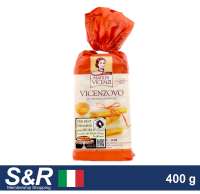
Matilde Vicenzi Vicenzovo Italian Ladyfinger Biscuits 400g
₱205.00
Buy on Lazada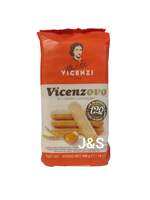
Matilde Vicenzi Vicenzovo Lady Fingers 400g
₱339.00₱389.00
Matilde Vicenzi Vicenzovo Ladyfingers (200g) - authentic Italian Savoiardi biscuits
₱329.00₱399.00
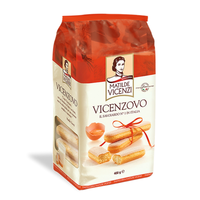
Matilde Vicenzi Lady Fingers 400g
₱329.00₱429.00
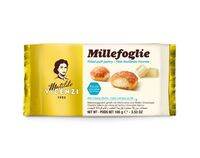
Matilde Vicenzi Millefoglie Filled Puff Pastry 100g
₱189.00₱229.00
About Matilde Vicenzi
Matilde Vicenzi is an Italian brand specialising in fine pastries, biscuits, and confectionery, originating in San Giovanni Lupatoto near Verona, Italy. The brand traces its roots to 1905, when Matilde Vicenzi established a small bakery and pastry workshop dedicated to traditional Italian sweets such as savoiardi (ladyfingers), amaretti, and puff pastries.1
Today, Matilde Vicenzi serves as the principal heritage brand of Vicenzi Group, a family-owned Italian confectionery company. It is particularly associated with Italian fine pastry, including Vicenzovo ladyfingers, amaretti, and puff pastry products like Millefoglie di Matilde. Its products are sold internationally, and the company continues to emphasise the connection between traditional Italian pastry-making and modern industrial production.1
Overview
| Category | Information |
|---|---|
| Brand name | Matilde Vicenzi |
| Founded | 1905 |
| Founder | Matilde Vicenzi |
| Origin | San Giovanni Lupatoto, Verona, Italy |
| Industry | Food / confectionery / bakery |
| Specialization | Italian fine pastries, biscuits and puff pastry |
| Parent company | Vicenzi Group |
| Notable products | Vicenzovo Savoiardi, Amaretti, Millefoglie di Matilde |
| Corporate group founded | 2005 |
| Headquarters | San Giovanni Lupatoto, Verona, Italy |
| Heritage | More than 120 years |
The Italian Chamber of Commerce’s historical-enterprise registry records Vicenzi’s business activity as confectionery production and cites 1905 as the beginning of the company’s operations.
History
Foundation in 1905
The history of Matilde Vicenzi began in 1905, when Matilde Vicenzi operated a small bakery and artisan pastry workshop in San Giovanni Lupatoto, in the province of Verona. Her original production included ladyfingers, amaretti, and puff pastries, establishing the product categories that would later become closely associated with the Vicenzi name.1
Matilde’s business was notable for its period not only because of its products but also because of its founder. Historical accounts portray Matilde as an early example of female entrepreneurship in Italian food production, with her confectionery business eventually becoming a multigenerational family enterprise.1
A significant artefact from this era is Matilde’s handwritten recipe book, or Ricettario. The company states that the original manuscript is preserved in its museum and represents an important link between the present-day brand and its artisanal origins.1
The Vicenzi family
Following Matilde’s generation, the business passed through her family. Her son Angelo became involved in the company, while the next generation included Giuseppe Vicenzi, who would ultimately play the decisive role in transforming the small family bakery into an industrial confectionery business.1
Giuseppe Vicenzi was born in 1932 and grew up around his grandmother’s pastry business. According to the company’s historical account, he developed an early interest in mechanised biscuit production and sought to combine the family’s traditional pastry-making knowledge with modern manufacturing technology.1
From artisan bakery to industrial producer
A major turning point occurred in 1946, when Giuseppe received a Melzi biscuit-making machine. This acquisition helped move the company beyond purely handmade production towards industrial biscuit manufacturing.1
During the 1950s, Giuseppe looked outside Italy for new ideas in the bakery industry. In 1955, he travelled to England to visit an international trade fair and study developments in the production of dry sweet products.1
This combination of traditional Italian recipes and industrial technology became a defining characteristic of the Vicenzi business.
The 1960s and Vicenzovo
During the 1960s, the company expanded its manufacturing capabilities and developed a larger-scale production operation in San Giovanni Lupatoto.
One of its best-known products became Vicenzovo, the company’s version of the traditional Italian savoiardo or ladyfinger biscuit. Vicenzi describes the product as becoming one of the most widely distributed savoiardi in the world.1
The development of this product was significant because ladyfingers are an essential component of classic Italian desserts, most notably tiramisù.
Millefoglie di Matilde
Another defining product of the brand is its puff pastry.
During the 1970s, Vicenzi expanded industrial production of puff pastry. According to the company’s history, Giuseppe travelled to Japan in 1975 to obtain machinery suitable for producing laminated puff pastry on an industrial scale.1
The resulting Millefoglie di Matilde became one of the company’s signature products.
Vicenzi states that its traditional Millefoglie contains 192 layers of pastry, with butter incorporated between the layers. The lamination process is designed to create the characteristic crisp and light texture associated with the product.1
The number 192 has consequently become strongly associated with the brand’s puff-pastry identity.
Connection with Verona
Although Matilde Vicenzi developed into an international food brand, the company has maintained a strong connection with Verona.
In 1980, Vicenzi began a long-running relationship with the Arena di Verona opera festival. The company has described this sponsorship as an expression of its connection with its home territory.1
The relationship between the company and Verona is also reflected in its historical communications, packaging, and corporate identity.
Creation of Vicenzi Group
A distinction is important when discussing the company: Matilde Vicenzi dates to 1905, but Vicenzi Group in its present corporate form dates to 2005.
In 2005, on the occasion of Matilde Vicenzi’s centenary, Giuseppe Vicenzi acquired the bakery business of Parmalat. The transaction brought the Grisbì and Mr. Day brands into the company.1
This created the modern Vicenzi Group, whose portfolio consists of three principal brands:
- Matilde Vicenzi — Italian fine pastry and traditional confectionery.
- Grisbì — filled shortbread biscuits.
- Mr. Day — snack products based largely around sponge cake.1
Thus, Matilde Vicenzi is both a stand-alone consumer brand and the heritage brand from which the wider Vicenzi corporate story developed.
Products
Matilde Vicenzi’s product range is centred on traditional Italian pastry and biscuits.
Savoiardi
The Vicenzovo Savoiardo is one of the company’s flagship products. It is a traditional Italian ladyfinger biscuit and is particularly suitable for desserts such as tiramisù.
Amaretti
Amaretti were among the products produced by Matilde Vicenzi’s original bakery and remain part of the brand’s heritage.1
Millefoglie
The Millefoglie di Matilde is the brand’s signature puff pastry, distinguished by its multilayered construction and buttery, crisp texture. The company identifies the 192-layer structure as one of its defining characteristics.1
Filled pastries and biscuits
The modern Matilde Vicenzi range also includes various filled puff pastries, assorted pastries, and biscuits, extending the brand beyond its historic products.
Food-service products
The brand also produces products intended for the HoReCa sector—hotels, restaurants, and cafés—as well as individually packaged products for vending and other food-service channels.1
Brand identity
Matilde Vicenzi’s identity is strongly based on the concept of Italian fine pastry.
The image of Matilde herself has played an important role in the brand’s visual identity. In 2010–2011, Vicenzi undertook a major redesign of the Matilde Vicenzi brand and packaging, presenting a more refined and elegant visual style while retaining the historical association with Matilde. The logo was subsequently revised again in 2023, partly in response to changing digital-media consumption.
The brand’s positioning can be understood through several recurring themes:
- Italian pastry tradition
- Family heritage
- Artisanal inspiration
- Premium positioning
- Verona and Italian cultural identity
- Industrial expertise
- International distribution
Rather than presenting itself simply as a biscuit manufacturer, Matilde Vicenzi positions its products within the broader tradition of Italian pasticceria.1
International presence
Although the brand originated as a local bakery in the Verona area, Matilde Vicenzi has developed into an international brand.
Vicenzi Group’s current corporate information states that its products are exported to 97 countries, while another corporate page cites a figure of more than 90 countries. The company’s website also notes participation in international food-industry trade fairs.1
The international strategy has allowed products originally rooted in Italian pastry culture—particularly savoiardi and puff pastry—to reach consumers outside Italy.
The brand is consequently positioned internationally as an example of Italian confectionery and pastry tradition rather than merely as a domestic Italian biscuit label.
Manufacturing and corporate structure
The modern Vicenzi Group operates production facilities in Italy and encompasses the Matilde Vicenzi, Grisbì, and Mr. Day brands. Its activities include the manufacture of pastries, biscuits, snacks, and food-service products.1
The group’s headquarters remain in San Giovanni Lupatoto, the same area where Matilde Vicenzi’s original workshop was established in 1905. The continuity of location is an important element of the company’s historical narrative.1
Family ownership and succession
Family continuity remains an important part of the Vicenzi story.
The company identifies Giuseppe Vicenzi as the central figure in its transition from a small artisanal business to an industrial confectionery company. In the current generation, his daughters Giuliana, Beatrice, and Valeria have been involved in the group’s governance.1
This makes Matilde Vicenzi notable not simply for its age but for the continuity of a family-controlled Italian food business across multiple generations.
120th anniversary
In 2025, Matilde Vicenzi celebrated its 120th anniversary.
The anniversary marked 120 years since Matilde Vicenzi established her original bakery in 1905. Vicenzi presented the milestone around the themes of tradition, family, Italian identity, and innovation, while continuing to emphasise the brand’s international presence.1
The anniversary is particularly significant because relatively few Italian food brands can trace their commercial history continuously back to the beginning of the 20th century while retaining the founder’s name as the consumer-facing identity.
Significance of the brand
Matilde Vicenzi can be understood as a representative example of the evolution of Italian food businesses during the 20th and 21st centuries.
Its history follows a recognisable trajectory: family bakery, artisanal pastry business, mechanised biscuit production, industrial confectionery manufacturer, and finally, international Italian food brand.
What distinguishes the company is the attempt to maintain the identity of an artisan pastry tradition while operating at industrial scale.
The brand’s most important historical products—savoiardi, amaretti, and puff pastry—are closely connected with broader Italian dessert culture. This has helped Matilde Vicenzi market its products internationally as expressions of Italian culinary tradition.1
Timeline
| Year | Event |
|---|---|
| 1905 | Matilde Vicenzi establishes her bakery and artisan pastry workshop in San Giovanni Lupatoto. |
| 1932 | Giuseppe Vicenzi, Matilde’s grandson, is born. |
| 1946 | A Melzi automated biscuit machine helps accelerate the transition toward industrial production. |
| 1955 | Giuseppe visits a trade fair in England to study developments in biscuit production. |
| 1960s | Vicenzi expands industrial production and develops its Vicenzovo ladyfinger business. |
| 1970s | Industrial puff-pastry production expands; the Millefoglie tradition develops. |
| 1975 | Giuseppe travels to Japan to acquire machinery associated with the company’s puff-pastry production. |
| 1980 | Vicenzi begins its long-running association with the Arena di Verona opera festival. |
| 2005 | The modern Vicenzi Group is established following the acquisition of Parmalat’s bakery business, including Grisbì and Mr. Day. |
| 2010–11 | Matilde Vicenzi undergoes a major brand and packaging redesign. |
| 2023 | The Matilde Vicenzi logo is revised again. |
| 2025 | The brand celebrates its 120th anniversary. |
| 2026 | Matilde Vicenzi continues to operate internationally as the heritage brand of Vicenzi Group.2 |