Shop on Lazada
Lavazza products
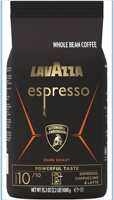
Lavazza Whole Bean Coffee Blend 2.2 Pound Super Crema Espresso Crema E Aroma Top Class Dek
₱2,700.00
Buy on Lazada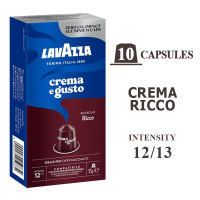
Lavazza Nespresso Compatible Capsulesfor Nespresso Original Line Machines 10 Caps Italy
₱409.00
Buy on Lazada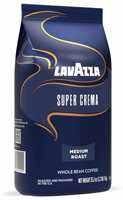
Lavazza medium roast Coffee Espresso Super Crema Whole Beans 2.2lb Ground Coffee 2lb
₱2,300.00₱2,500.00
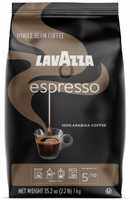
Lavazza Espresso Whole Bean Coffee Blend Medium Roast 2.2lbs Premium Quality Non GMO 100% Arabica Rich bodied
₱1,800.00₱2,000.00
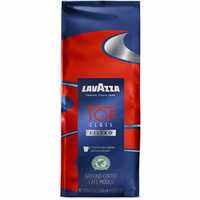
Lavazza Ground Coffee 8oz Crema E Gusto Rossa Gran Riserva Top Class Gold Class Dek Classico
₱700.00
Buy on Lazada
Lavazza Suerte Ground Coffee Beans from Italy
₱379.00₱399.00
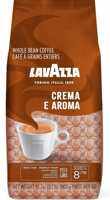
Lavazza Roasted Coffee Beans Crema E Aroma 2.2lb
₱2,200.00
Buy on Lazada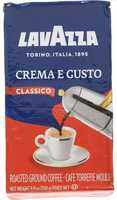
LAVAZZA CREMA E GUSTO Classico 8.8oz Ground Italian Coffee Espresso 250g
₱630.00
Buy on LazadaAbout Lavazza
Overview
Lavazza, formally Luigi Lavazza S.p.A., is an Italian coffee company and one of the world’s most recognised premium coffee brands. Founded in Turin, Italy, in 1895 by Luigi Lavazza, the business began as a small grocery and coffee shop before evolving into a multinational group that remains family-owned.1 Today, Lavazza is closely associated with Italian espresso culture, coffee blends, roasted coffee, capsules and professional coffee systems. The Lavazza Group reports that its products are sold in more than 140 countries, with revenue reaching €3.9 billion in 2025.2
Basic information
| Brand | Lavazza |
| Full corporate name | Luigi Lavazza S.p.A. |
| Founded | 1895 |
| Founder | Luigi Lavazza |
| Founded in | Turin, Piedmont, Italy |
| Industry | Coffee and beverages |
| Headquarters | Turin, Italy |
| Ownership | Family-owned |
| Main products | Ground coffee, whole-bean coffee, espresso, capsules, coffee systems and professional coffee solutions |
| Global presence | 140+ countries |
| 2025 revenue | €3.9 billion |
| Current CEO | Antonio Baravalle |
| Chairman | Giuseppe Lavazza |
History
The beginning: 1895
Lavazza’s history dates to 24 March 1895, when Luigi Lavazza opened a small grocery and coffee business in the historic centre of Turin on Via San Tommaso.4 At the time, coffee was typically sold by individual origin. Luigi Lavazza became interested in the varying characteristics of beans from different regions and began experimenting with combining them. This led to one of the company’s most significant innovations: the coffee blend. Rather than relying on a single origin, he combined coffees to create a more consistent flavour profile suited to customer preferences, an approach Lavazza regards as foundational to its subsequent development.5
From shop to company
As the business expanded, Luigi Lavazza gradually shifted from artisanal retailing to industrial coffee production. In 1927, the company was formally established as Luigi Lavazza S.p.A., with Luigi, his wife Emilia and their children all involved in the family enterprise.6 The company continued to experiment with packaging and roasting technology; among its early innovations was the use of Pergamin, an oil-resistant paper designed to help preserve coffee aroma.7
Luigi Lavazza and Brazil
A pivotal episode in the company’s history occurred when Luigi Lavazza travelled to Brazil, one of the world’s major coffee-producing countries. The trip allowed him to observe coffee production firsthand and understand the origins of the raw material on which his business depended. According to Lavazza’s historical account, he was deeply affected by witnessing coffee being wasted and subsequently developed an enduring sensitivity towards the environmental and social issues surrounding coffee production.8 This experience later informed the company’s narrative around responsible coffee production and sustainability.
Post-war expansion
After World War II, Lavazza began transforming from a family-run firm into a major Italian industrial business. During the economic expansion of the 1950s, Beppe and Pericle Lavazza helped scale production industrially, and by the late 1950s Lavazza had become Italy’s leading coffee company.9 In 1965, the company opened a major roasting facility in Settimo Torinese, near Turin, described at the time as the largest roasting plant in Europe.10 This period established a defining characteristic of Lavazza’s business model: Italian coffee tradition combined with industrial-scale production.
Internationalisation
Lavazza’s expansion outside Italy accelerated during the 1980s. The company opened its first headquarters outside Italy in Vincennes, France, in 1982, followed by subsidiaries in Germany, Austria, the United States and the United Kingdom.11 This move was strategically significant as Lavazza increasingly treated Europe as a unified market rather than simply exporting Italian coffee abroad. The brand’s international positioning emphasised Italian authenticity and premium coffee quality, with advertising and communications helping to embed “Italian coffee” as a core element of its global identity.12
Advertising and cultural partnerships
Advertising has played an unusually important role in Lavazza’s brand development. One of its best-known campaigns was “Paradiso”, launched in Italy in 1995 and associated with the brand for more than two decades.13 Lavazza also cultivated strong ties with art, photography and design. In 1993, it introduced the Lavazza Calendar, initially created in collaboration with photographer Helmut Newton; the calendar became an important annual expression of the company’s connection with contemporary photography and visual culture.14 The brand has also collaborated with prominent chefs and designers. In 2000, its partnership with Spanish chef Ferran Adrià helped popularise the concept of coffee design, exploring coffee as a creative culinary medium rather than merely a beverage.15
The capsule revolution
One of Lavazza’s most significant modern developments has been its move beyond traditional ground coffee. In 2003, it launched BLUE, a capsule system designed particularly for offices and professional environments. In 2007, it introduced A Modo Mio, a capsule system intended to bring an Italian espresso-style experience into consumers’ homes.16 This allowed Lavazza to participate in the rapidly growing single-serve market while maintaining its association with espresso. The company subsequently developed systems serving homes, offices, hotels, restaurants, cafés, vending environments and other professional settings.
The Lavazza Group
The modern Lavazza business extends considerably beyond the original coffee brand. During the 2010s, the company pursued an acquisition strategy that broadened its geographic reach and capabilities. Acquired companies included Kicking Horse Coffee in Canada, Espresso Service Proximité in France, Nims in Italy, Blue Pod Coffee Co. in Australia and the Mars Drinks business, subsequently associated with Lavazza Professional.17 These acquisitions helped Lavazza expand beyond consumer retail into professional coffee services, office coffee and international specialty coffee markets, evolving from a traditional Italian manufacturer into what it describes as a global “Pure Premium Coffee Company.”18
Products
Lavazza’s portfolio covers several major coffee formats.
Whole-bean coffee
Whole beans are primarily targeted at consumers who grind their coffee immediately before brewing, as well as cafés and professional users.
Ground coffee
Ground coffee remains central to Lavazza’s traditional Italian offering, with blends designed for espresso, moka and other brewing methods.
Espresso
Espresso is arguably the product category most strongly associated with Lavazza’s Italian identity. The company develops blends using coffees from different producing countries to achieve specific flavour, aroma, body and intensity characteristics.
Coffee capsules
Lavazza has developed proprietary capsule systems such as A Modo Mio and BLUE, while also participating in the broader capsule market.
Professional coffee
Through Lavazza Professional, the Group operates in office coffee, vending and other workplace and professional environments.
New formats
In 2025, Lavazza introduced Tablì, described as a system based on a 100% coffee tab and a specially designed machine, presented as the creation of a new category within coffee preparation.19
Notable products and ranges
Some of the better-known names associated with Lavazza include:
- Qualità Rossa — one of the brand’s historically important blends.
- Qualità Oro — positioned around a more refined, aromatic Italian coffee experience.
- Crema e Gusto — associated with fuller-bodied espresso-style coffee.
- Espresso Italiano — emphasises traditional Italian espresso.
- ¡Tierra! — Lavazza’s sustainability-oriented coffee range.
- A Modo Mio — Lavazza’s home capsule system.
- BLUE — a professional capsule system.
- Lavazza Professional — coffee solutions for workplaces and professional environments.
The exact product portfolio varies by country.
Competitive identity
Lavazza’s competitive identity rests on several pillars.
Italian heritage
The company has more than 130 years of history, originating in Turin in 1895.20 Rather than presenting itself simply as a coffee manufacturer, Lavazza uses its Italian heritage as a key component of its brand identity.
Blending expertise
The company’s origins are closely connected with the development of commercial coffee blending. Combining coffees from different origins to produce a particular sensory profile remains central to Lavazza’s philosophy.
Espresso culture
Lavazza is strongly associated internationally with the Italian espresso tradition, positioning itself between traditional Italian café culture and modern global coffee consumption.
Innovation
Innovation has been part of Lavazza’s identity since Luigi Lavazza experimented with blends and packaging. Later examples include capsule systems, coffee machines, coffee design, sustainable packaging, new brewing technologies and formats such as Tablì. Lavazza describes innovation as a hallmark of its entrepreneurial approach.21
Sustainability
Sustainability has become an important component of Lavazza’s corporate strategy. The company describes its approach as “Blend for Better”, incorporating environmental, social and economic considerations into its business activities.22 Its sustainability work covers climate protection, responsible sourcing, coffee-growing communities, sustainable agriculture, resource efficiency, packaging, social inclusion and employee engagement. Lavazza’s environmental strategy traces part of its inspiration back to Luigi Lavazza’s experiences in coffee-producing countries in the 1930s.23
The Lavazza Foundation
In 2004, the company established the Giuseppe and Pericle Lavazza Foundation, a nonprofit organisation focused on improving conditions in coffee-producing communities. Projects include sustainable agricultural practices, improving coffee quality and productivity, supporting producers, strengthening producer organisations, improving social and economic conditions, and environmental initiatives. Lavazza reports that its Foundation has supported projects involving more than 178,000 people and currently lists 32 projects in 16 coffee-producing countries. The ¡Tierra! project is one of the best-known manifestations of this approach, linking coffee quality with social and environmental initiatives in producing communities.24
Global presence
Lavazza is no longer primarily an Italian domestic company. Its products are sold in more than 140 countries, giving it a substantial international footprint.25 Key markets include Italy, other European countries, North America, Australia, Japan, China and other international territories. The Group has also developed production and commercial operations outside Italy, with international growth supported by both organic expansion and acquisitions.26
Lavazza today
As of 2026, Lavazza remains a privately held, family-controlled Italian coffee group. Its 2025 financial results demonstrate the scale it has achieved:
- Revenue: €3.9 billion
- EBITDA: €340 million
- Net profit: €92 million
- Revenue growth: 15.7% compared with 2024
- Presence: 140+ countries27
The year 2025 was particularly significant as it marked Lavazza’s 130th anniversary and the tenth anniversary of the Lavazza Group structure.28 Current leadership includes Giuseppe Lavazza as Chairman and Antonio Baravalle as CEO.29
Brand positioning
Lavazza occupies a space between mass-market packaged coffee and high-end specialty coffee. Its positioning can be summarised as Italian heritage + premium quality + espresso culture + innovation + global accessibility. The brand competes not only on taste but on the broader experience and symbolism associated with Italian coffee, frequently emphasising concepts such as Italian lifestyle, espresso, craftsmanship, quality, family heritage, design, innovation and sustainability.
Brand identity layers
Lavazza’s brand identity can be understood through three layers:
Heritage
“We are an Italian coffee company founded in 1895.” This provides authenticity and historical credibility.
Product expertise
“We understand coffee.” The company’s history of blending, roasting, espresso and brewing technology supports this positioning.
Modern global brand
“Italian coffee for the world.” Lavazza has transformed from a Turin coffee shop into a global company without abandoning its Italian identity, a combination that is arguably the most important element of the brand.
Timeline
| Year | Milestone |
|---|---|
| 1895 | Luigi Lavazza starts the business in Turin |
| 1922 | Lavazza acquires an industrial roasting machine |
| 1927 | Luigi Lavazza S.p.A. is formally established |
| 1934 | Luigi Lavazza travels to Brazil |
| 1950s | Industrial expansion accelerates |
| 1957 | Lavazza becomes Italy’s leading coffee company |
| 1965 | Major roasting facility opens in Settimo Torinese |
| 1982 | First headquarters outside Italy opens in France |
| 1987–1990 | Expansion into Germany, Austria, U.S. and UK |
| 1993 | First Lavazza Calendar |
| 1995 | Paradiso advertising campaign begins |
| 2000 | Collaboration with Ferran Adrià |
| 2003 | BLUE capsule system launches |
| 2004 | Lavazza Foundation established |
| 2007 | A Modo Mio launches |
| 2017–2018 | Major international acquisitions |
| 2020 | Roadmap to Zero sustainability strategy announced |
| 2025 | 130th anniversary; Tablì introduced |
| 2025 | Revenue reaches €3.9 billion |
Summary
Lavazza is a Turin-based Italian coffee company founded by Luigi Lavazza in 1895. Beginning as a small grocery shop, it became a pioneer of coffee blending and subsequently developed into one of Italy’s most prominent coffee businesses. Over the 20th and 21st centuries, Lavazza expanded internationally, invested heavily in espresso and coffee technology, entered the capsule and professional coffee markets, and acquired companies in several countries. Today, the family-owned Lavazza Group sells coffee in more than 140 countries and combines Italian coffee heritage with premium positioning, product innovation and sustainability initiatives. Its identity is built around the idea of bringing Italian coffee culture to a global audience.31
References
- The History | Lavazza
- The origins of Lavazza | Lavazza Group
- Results
- 2025 SUSTAINABILITY REPORT
- Lavazza – MuseoTorino
- The environment
- The History | Lavazza
- Lavazza: the 1990s and the new Millennium | Lavazza Group
- The Group’s journey
- Lavazza Group – Mission and Approach | Lavazza
- Sustainability
- The Sustainability Report | Lavazza Group
- Tierra Collection Faq
- Modern Slavery and Human Trafficking Policy | Lavazza
- LAVAZZA GROUP: FINANCIAL RESULTS AS AT 31st DECEMBER 2025
- Lavazza 2025 Results: Revenue Growth Despite Coffee Price Volatility
- Lavazza, nel 2025 fatturato sale a 3,9 miliardi, l’utile netto a 92 milioni – Notizie – Ansa.it
- Lavazza bilancio 2025: ricavi a 3,9 miliardi, utili in crescita
- The History | Lavazza
- Coffee Defenders Our Philosophy | Lavazza
- 1895. Lavazza. Turin. Italy.
- Lavazza Museum – An Interactive and Multisensory experience
- La Historia | Lavazza
- Luigi Lavazza (Murisengo, Alessandria, 1859-1949) – MuseoTorino
- Lavazza Caffè Espresso Italiano dal 1895
- Istorie | Lavazza
- Notre histoire | Lavazza
- La Historia | Lavazza
- About us | Lavazza’s rich history
- Lavazza Group | Brands, Results, Projects
- Who we are