Shop on Lazada
Meade products
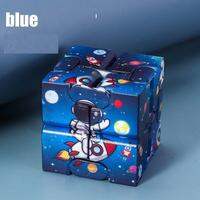
Infinity Cube Flip Adhd Toys Anxiety Toy Fingertips for Game Puzzle Antistress Magic Finger Fidget Autism Hand Gifts Children
₱120.72₱181.08
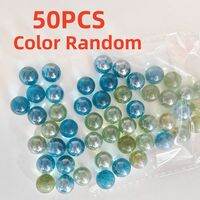
50PCS 14mm Colorful Glass Marbles Toy Kids Marble Balls Run Game Solitaire Toy Accs Vase Filler&Fish Tank Home Toys Gift
₱143.45₱215.17

10 Pcs Mini Bean Bags Colorful Portable Cloth Sandbag Toss Toy for Kids Interactive Plaything for Fun Sports Outdoor Family Game
₱192.79₱289.18

Montessori Rainbow Wooden Spoon Sensory Toy Color Matching Balance Game Kid Early Educational Wooden Toy Preschool Teaching Aids
₱145.77₱218.66
10/50PCS 25/14mm Colorful Glass Marbles Toy Kids Marble Balls Run Game Solitaire Toy Accs Vase Filler&Fish Tank Home Toy Gift
₱235.42₱353.13
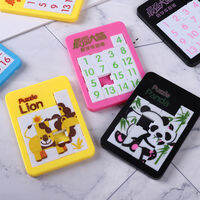
6PCS Random Number Puzzle Plastic Moving Sliding Early Education Animal Childrens Jigsaw Puzzle Toy School Kindergarten Gift
₱133.00₱199.50
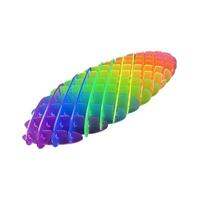
3D Decompression Elastic Mesh Toys Solid Printed Radish Decompression Healing Toys Stretch Anti Stress Small Toy Ornaments
₱120.84₱181.25
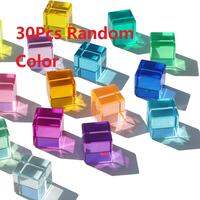
30Pcs Rainbow Crystal Acrylic Cubes Stacking Gem Blocks Sensory Building Blocks for Kids Learning Color Light Shadow Toy
₱292.85₱439.28
About Meade
Overview
Meade Instruments, commonly referred to as Meade, is an American brand specialising in astronomy and consumer optics. It is best known for its telescopes, computerised astronomical mounts, astrophotography equipment, binoculars, and related optical accessories. Founded in 1972 by John Diebel, the company expanded from a small mail-order business into one of the world’s most recognised manufacturers of amateur astronomical instruments. At its peak, Meade was described as the largest telescope manufacturer globally.1
The brand became particularly influential in the amateur astronomy market through its Schmidt-Cassegrain telescopes, computerised GoTo systems, compact ETX telescopes, and Advanced Coma-Free (ACF) optical designs. Its principal historical rival was Celestron, and competition between the two companies helped drive the development and commercialisation of increasingly sophisticated amateur telescopes.1
Meade’s corporate history involves multiple ownership changes, bankruptcy proceedings, and eventual integration into the Orion/Optronic group. While the brand and its historical products remain significant in amateur astronomy, manufacturing operations have since ceased.
Company profile
| Field | Information |
|---|---|
| Brand name | Meade |
| Company | Meade Instruments |
| Founded | 1972 |
| Founder | John Diebel |
| Country of origin | United States |
| Original base | California |
| Later headquarters | Watsonville, California |
| Industry | Astronomy / consumer optics |
| Main products | Telescopes, mounts, binoculars, astrophotography equipment, accessories |
| Notable series | LX200, LX90, ETX, ACF |
| Major historical rival | Celestron |
| Notable subsidiary/brand | Coronado solar telescopes |
| Historical owner | Ningbo Sunny / Sunny Optics |
| Later owner | Orion / Optronic Technologies |
| Current significance | Major historical amateur-astronomy brand |
History
Foundation
Meade was established in 1972 by John Diebel, an engineer formerly employed at Hughes Aircraft. Diebel initially operated the business as a small mail-order company selling astronomical equipment, primarily small refracting telescopes and accessories manufactured by Japan’s Towa Optical Manufacturing Company.1
The business originally focused on making astronomy equipment more accessible to ordinary consumers. Rather than beginning as a large-scale manufacturer, Meade developed from a small supplier of equipment and accessories. By the mid-1970s, the company began developing and manufacturing its own telescope products. In 1977, it introduced 6-inch and 8-inch reflecting telescopes, establishing itself as a genuine manufacturer rather than solely a distributor.1
Entry into Schmidt-Cassegrain telescopes
A pivotal moment in Meade’s development occurred around 1980 when the company entered the Schmidt-Cassegrain telescope (SCT) market. This segment was previously dominated by Celestron, and Meade’s entry initiated a long-standing rivalry between the two California-based manufacturers.1 The Schmidt-Cassegrain design appealed to amateur astronomers because it offered a relatively large aperture within a compact tube.
Meade’s 2080, an 8-inch Schmidt-Cassegrain, became a key product in the company’s expansion. The firm continued refining this design, eventually developing increasingly sophisticated computerised SCT systems.2
Product lines and technology
LX200 series
The LX200 is arguably Meade’s most renowned telescope family. Introduced in the early 1990s, it combined a Schmidt-Cassegrain optical system with advanced computerised controls, becoming a defining product for the advanced amateur-astronomy market.1 The LX200 popularised the concept that an amateur telescope could automatically locate celestial objects using computerised positioning. Instead of manually searching, observers could select an object from the telescope’s database and allow the mount to slew towards it. This technology helped establish what is now commonly known as GoTo astronomy.
Targeted primarily at serious amateurs, observatories, and astrophotographers, the LX200 family saw multiple generations with improvements to computerised positioning, motors, tracking, optical systems, mount design, GPS integration, autoguiding, and astrophotography capabilities. Its reputation helped cement Meade’s status as a premium manufacturer.
ETX series
The ETX series represented the portable segment of Meade’s offerings. Designed to make sophisticated observing accessible to a broader audience, the name was associated with the concept of “Everybody’s Telescope.”3 These compact instruments were particularly popular during the 1990s and 2000s.
Notable models included:
- ETX-60
- ETX-70
- ETX-80
- ETX-90
- ETX-105
- ETX-125
The ETX-90 and ETX-125 developed strong followings due to their combination of compact size, optical performance, computerised mounts, and portability. Compared to larger LX systems, ETX telescopes were easier to transport and appealed to beginners, families, students, casual observers, travellers, and amateurs seeking a secondary portable scope.
LX90 series
Positioned below the LX200 in the product hierarchy, the LX90 aimed to provide many advantages of computerised Schmidt-Cassegrain astronomy at a lower price point and in a more accessible package. Models incorporating GPS technology were notable for their ability to automatically determine location and assist with alignment.4
Advanced Coma-Free (ACF) optics
Meade later developed the Advanced Coma-Free (ACF) optical system to improve edge-of-field performance in its Schmidt-Cassegrain-type telescopes. ACF reduced coma and provided a flatter, more corrected field compared to traditional SCT configurations. Incorporated into major telescope lines during the 2000s, ACF became particularly associated with the company’s higher-end LX200 and related systems.1
Astrophotography and digital imaging
Meade played a significant role in amateur astrophotography, producing astronomical cameras such as the Deep Sky Imager (DSI) series of CCD cameras intended to simplify digital imaging for amateur observers.4 The product ecosystem expanded beyond visual astronomy to include planetary imaging, deep-sky photography, CCD imaging, electronic guiding, computerised telescope control, and digital astronomy. The company increasingly developed integrated systems comprising optics, mounts, electronics, software, and imaging equipment.
Solar telescopes
In 2004, Meade acquired Coronado Technology Group, expanding its presence in dedicated solar observing equipment.1 Coronado telescopes and filters were designed for observing the Sun in specific wavelengths, particularly hydrogen-alpha (H-alpha) solar astronomy.
Binoculars and other optics
Although telescopes defined the brand, Meade historically sold a broader range of consumer optical products including binoculars, spotting scopes, microscopes, eyepieces, filters, camera adapters, mounts, CCD cameras, and other accessories. Historical corporate filings describe Meade as a multinational consumer-optics company rather than solely a telescope manufacturer.4
Technological contributions
Meade’s significance in amateur astronomy stems partly from making sophisticated technology commercially accessible.
Computerised telescopes
Meade helped popularise computer-controlled telescopes among amateurs. Traditional telescopes require manual object location, whereas computerised Meade systems used celestial databases and motorised mounts to point automatically. This reduced the learning curve for finding planets, stars, double stars, nebulae, galaxies, star clusters, and other deep-sky objects.
GPS integration
The incorporation of GPS into several telescope systems allowed automatic geographic location determination and streamlined the alignment process.
Digital imaging transition
Through products like the DSI camera series, Meade contributed to the transition from traditional visual astronomy towards digital amateur astrophotography.4
Optical engineering
Major optical developments included Schmidt-Cassegrain systems and later ACF designs. The company also developed an extensive portfolio of accessories, mounts, eyepieces, filters, and imaging equipment.
Rivalry with Celestron
Meade’s history is closely linked to its rivalry with Celestron. Both were major American telescope manufacturers competing heavily in the amateur market across Schmidt-Cassegrain telescopes, computerised mounts, GoTo technology, optical designs, pricing, patents, and product features. The rivalry intensified during the 1990s and 2000s and involved patent disputes and litigation concerning telescope technologies.1 This competition helped push the industry towards modern computerised instruments.
Corporate changes and acquisition
Meade’s corporate history became complex during the 2010s. In 2013, the company entered a transaction involving Ningbo Sunny Electronic and its affiliates, ceasing to be a publicly traded independent entity.4 In 2019, a federal jury found Ningbo Sunny and Meade liable in an antitrust case involving alleged suppression of competition and price fixing. The judgment contributed to severe financial difficulties, and Meade filed for bankruptcy in December 2019.1
Acquisition by Orion
In 2021, Orion Telescopes & Binoculars acquired the assets of Meade Instruments. Meade’s UK organisation announced that the acquisition took effect on 1 June 2021, with trademarks retained and plans for continued product development, support, warranties, repairs, and parts.5 This placed Meade alongside Orion under the broader Optronic organisation.
Cessation of operations
In 2024, reports indicated that the Optronic group had closed its California facilities and laid off employees. Subsequent reporting suggested that assets associated with Meade, Coronado, and Orion were being prepared for liquidation or auction, marking the end of the group’s operations in their previous form.1 Consequently, it is necessary to distinguish between the Meade brand, the original Meade Instruments Corporation, and the various entities that subsequently owned or operated the brand.
Reputation and legacy
Among amateur astronomers, Meade is associated with serious consumer astronomy, offering equipment ranging from beginner telescopes to sophisticated observatory-class systems. Its strongest historical associations include Schmidt-Cassegrain telescopes, the LX200, LX90, ETX, ACF optics, GoTo computerised mounts, astrophotography, and Coronado solar astronomy. Meade equipment remains common on the used market, where older LX200, LX90, and ETX instruments continue to interest amateurs.
Meade’s primary contribution was bringing advanced astronomical technology into the consumer market. Features such as computerised object databases, motorised tracking, GPS, and digital imaging were once associated primarily with professional or institutional astronomy. Meade helped make these technologies available to enthusiasts, occupying an important place in the transition from manual telescopes to motorised instruments, then to computerised GoTo telescopes, and finally to digitally controlled astrophotography systems.
As of 2026, Meade is best understood as a legacy astronomy brand with a significant historical product base rather than a large-scale operating manufacturer. Historical resources continue to document Meade products, and existing owners continue to use and trade older equipment. For those encountering a Meade telescope today, the specific model and production generation matter considerably; a 1990s LX200, a later LX200 ACF, an ETX-90, and a modern entry-level model can have vastly different optical, mechanical, and electronic characteristics.3
From its origins as a small mail-order business in 1972, Meade evolved into a major international manufacturer whose products helped popularise computerised astronomy, large-aperture consumer telescopes, portable GoTo instruments, and accessible digital astrophotography. The LX200, LX90, ETX, and ACF systems remain among the most recognisable products associated with the company. Meade’s historical importance lies in making increasingly sophisticated astronomical technology accessible to ordinary enthusiasts, transforming the backyard telescope from a simple optical instrument into a computerised gateway to the night sky.